The Ukrainians Have Room to Maneuver in Peace Deal Proposal
Written by Mark Antonio Wright
The plan on offer is better than originally reported. Ukraine should work to make the Russians say no.
Share this story
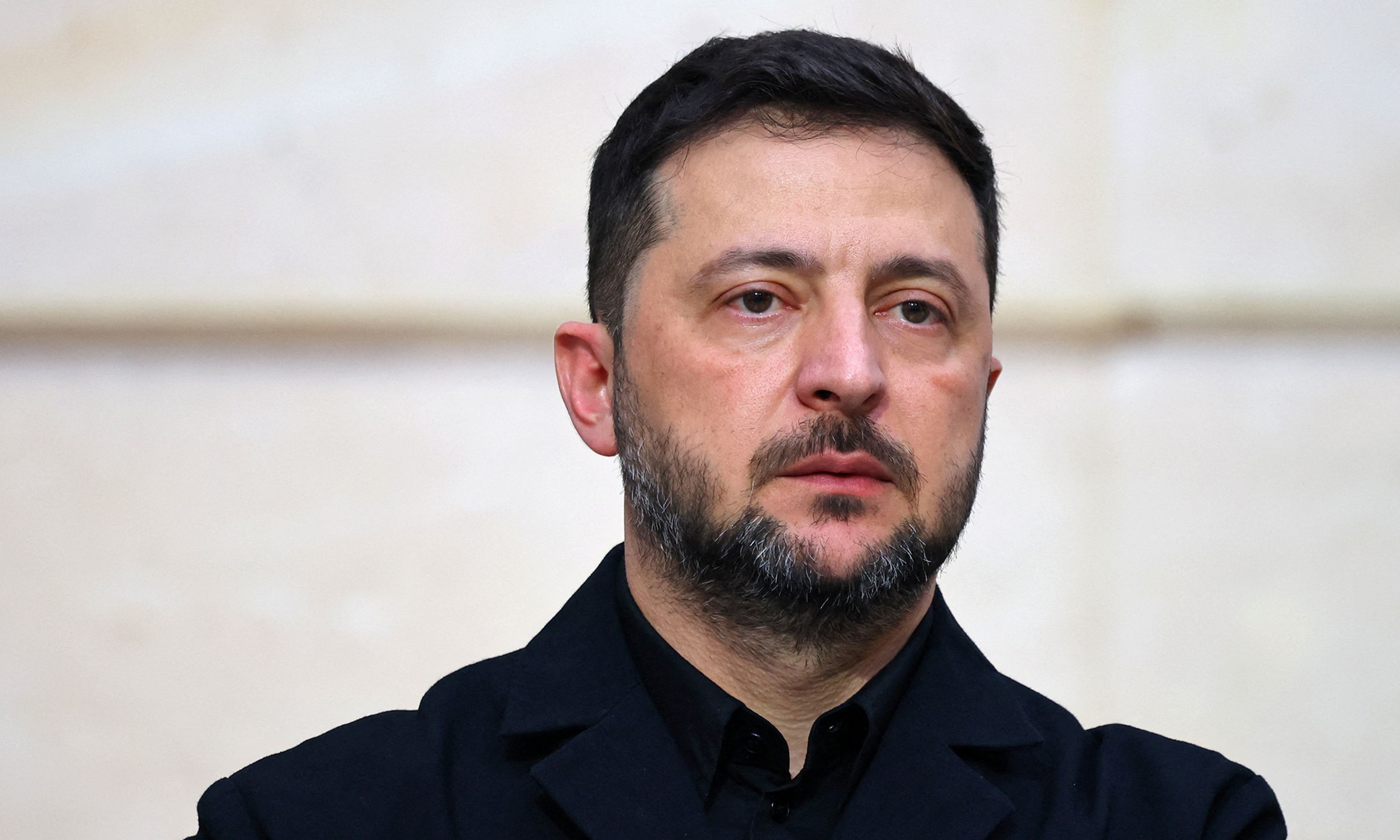
Ukrainian President Volodymyr Zelenskiy attends a joint press conference with French President Emmanuel Macron at the Elysee Palace in Paris, France, November 17, 2025.
Kyiv, Ukraine — On Thursday, I wrote about the shock and astonishment here in Kyiv as news broke about the so-called peace deal to end the war in Ukraine.
The existence of the deal was first reported by Axios and then the purported text was published by the Financial Times. Because the terms reportedly called, most significantly (a) for Ukraine to cede large chunks of unoccupied territory in the east to the Kremlin, in addition to areas already controlled by the Russian army; and (b) for the Ukrainian army to be cut in size, by as much as 50 percent, and that certain weapons, such as cruise missiles that could hurt Russia, be denied to the Ukrainians, I wrote that the deal was being uniformly seen as dead on arrival here in Ukraine.
Indeed, Thursday evening, my colleagues and I, who are here on a reporting trip sponsored by the humanitarian aid group Razom, had dinner with opposition members of the Rada, the Ukrainian parliament. Their consternation over the deal, as it had been reported, was palpable. They were visibly frustrated, and it was clear that they felt they stood on the edge of an unforgivable American betrayal. The domestic politics, they said, were impossible. One MP told me that if President Zelensky agreed to the American-brokered deal and took it to the Rada for ratification, he would be “committing political suicide.”
The reaction in the West was much the same. The New York Times reported that European capitals were disturbed, even angry, at the news of the terms as they were known at the time. The Institute for the Study of War, a U.S.-based organization that has done some of the best work analyzing this war, wrote that the terms amounted to “full capitulation” for Ukraine.
As Friday dawned here in Kyiv, however, it appears that the initial reporting was inaccurate on some key facts. At this point, we can only speculate — and believe me, there is immense speculation on this matter in Ukraine right now — but it appears that the peace deal that was leaked on Thursday may have been a draft of Russia’s opening bid. The text that has been reported today, which was what was formally delivered to Zelensky by a U.S. delegation led by Secretary of the Army Daniel P. Driscoll, is significantly different.
Under this deal’s terms, the Russians would get substantially less territory currently controlled by the government in Kyiv. The Ukrainian army would be capped at 600,000 men (down from something like 1 million men currently in the field) instead of a 50 percent reduction. There is no mention of restrictions on offensive weapons that could be possessed by Ukraine. The official recognition of the Russian language and the Kremlin-controlled Russian Orthodox Church have been dialed back to requiring Ukraine to adopt “EU rules on religious tolerance and the protection of linguistic minorities.” Perhaps most importantly, the deal as outlined would establish “reliable security guarantees” backed by both European nations and the United States. (We will come back to this point in a moment.)
Americans should not misunderstand the situation: This deal is still going to be a very bitter pill for the Ukrainian people to swallow. The deal grants international de facto recognition to Russian control of large swaths of Ukrainian territory. The deal would, under certain circumstances, relieve the sanctions that have currently been imposed on the Russian economy. The deal invites Russia back into the G-8 and the community of nations. Perhaps most galling, the deal would grant amnesty for all the many, many war crimes committed by the invading Russian army at Vladimir Putin’s behest, including the massacres at Bucha, at Irpin, and the removal of thousands of Ukrainian children into the Russian interior for forced reeducation.
But it must be said that that deal is indeed materially better than what was originally reported on Thursday — so much so that it’s now notable that the Kremlin has given no official sign — as of this moment — that the Russian government will agree to the terms.
So is this deal still a nonstarter for Ukraine, as I wrote was the universal sentiment here in Kyiv on Thursday?
Well, Zelensky has indicated that the current terms are something that his government can at least work with. Late Thursday, Zelensky said that Ukraine would engage “constructively, honestly, and operationally” in the negotiations. My sense in talking to Ukrainians this morning is that there is relief that the terms in this deal aren’t as bad as yesterday’s reportedly catastrophically bad terms. And there is cautious hope that there is a workable deal that is now possibly in view.
Let me repeat: The devil will be in the details. Most importantly, the Ukrainians want to know just what the United States means by “reliable security guarantees.”
One young woman, who had fled from her village in Kherson Oblast after it was overrun by the Russians, told me that even if Trump gives Ukrainians his word, “How are we to know that he can make Putin do anything?”
“It’s Putin that we are afraid of.”
People are also wondering why, if the guarantees on offer are as ironclad and “reliable” as those in, say, NATO’s Article V, then why is NATO membership itself off the table?
Indeed, as this post was about to be published, the text of the security guarantees broke online. The critical language is as follows: "The United States affirms that a significant, deliberate, and sustained armed attack by the Russian Federation across the agreed armistice line into Ukrainian territory shall be regarded as an attack threatening the peace and security of the transatlantic community."
The Russians can send a lot of little green men through "significant, deliberate, and sustained." The Ukrainians must work to strengthen that language.
And there’s a widespread sense that the Americans still don’t understand the Russians.
A protestant pastor, who is originally from Crimea, told me that, unfortunately, “Westerners are a little naive.” Westerners, he told me, stand by their word and expect others to do so too. But “that is not the Soviet culture. Putin’s word means nothing.”
Another question is: Why are the Russians (at least presumably) interested in this particular deal at all? As of today, the Russians are fighting a nation, Ukraine, which does not have an operative, explicit American commitment to defend it from Russian aggression.
(I will for now set to one side the 1994 Budapest Memorandum, which guaranteed Ukraine’s security in exchange for Kyiv’s giving up its nuclear weapons. That U.S. commitment was, shall we say, not muscularly enforced in the breech.)
But this agreement, if signed and implemented, would change that fundamental dynamic. Why would the Kremlin agree to such a thing? There are some plausible explanations. The Russians could be hurting economically more than is realized in the West. The Kremlin could simply need the sanctions relief. Perhaps more cynically, the Russians could be thinking that any new, ironclad “reliable security guarantees” won’t actually be enforced by the Trump administration (or some future American administration) if push ever came to shove. At this point the Russian thinking is unclear. We certainly don’t yet know that Vladimir Putin is prepared to go all the way and sign on to this deal.
From the Russian perspective, if they need a break to refit and reconstitute, why not simply stop attacking the Ukrainians and freeze the front in place? Why not turn this war into a “frozen conflict” akin to the situations in Georgia, in Moldova, or in Ukraine from 2015 until February 2022? That would at least avoid an explicit Western security guarantee for Ukraine.
There is much that can go wrong or unravel in the next days and weeks. The Ukrainians could find the terms, in the end, unacceptable. The Russians could back away from the table. Things could fall apart in unexpected ways. But there is more hope today — a cautious, unsteady, brittle hope — but a hope indeed that there is a light at the end of this very dark tunnel.
President Zelensky and the Ukrainians appear to have learned from the debacle in the Oval Office last spring. They know that their best chance is to play ball with the Americans if it’s at all possible to find a solution. The single best outcome for Ukraine is that they manage to improve the deal from this starting point via negotiations, get the Americans and Europeans to sign on, and then have the Russians walk away. Such a situation would likely result in more support for them from President Trump than they are currently getting, and thus they’d be in a stronger position.
The second-best outcome is that Ukraine improves the deal, signs on — and then the Kremlin signs on, too. The Ukrainians can then get a breather via a cease-fire and turn their attention to building the strongest military possible in order to deter future Russian aggression.
Therefore the very best play for Ukraine — and for those in the West who support the Ukrainian cause — is to work within the constraints of the deal that is on offer, improve it as much as possible, and make the Russians walk away.
If this thing blows up, the Ukrainians should make sure that it’s the Russians lighting the match on the dynamite.

About the Author
Mark Antonio Wright is the executive editor of National Review.
Featured Tags
Advertisement
Advertisement

Comments