Share this story
Roman Genn
• Just wait till they see his plans to turn the Ellipse into a pitch and putt.
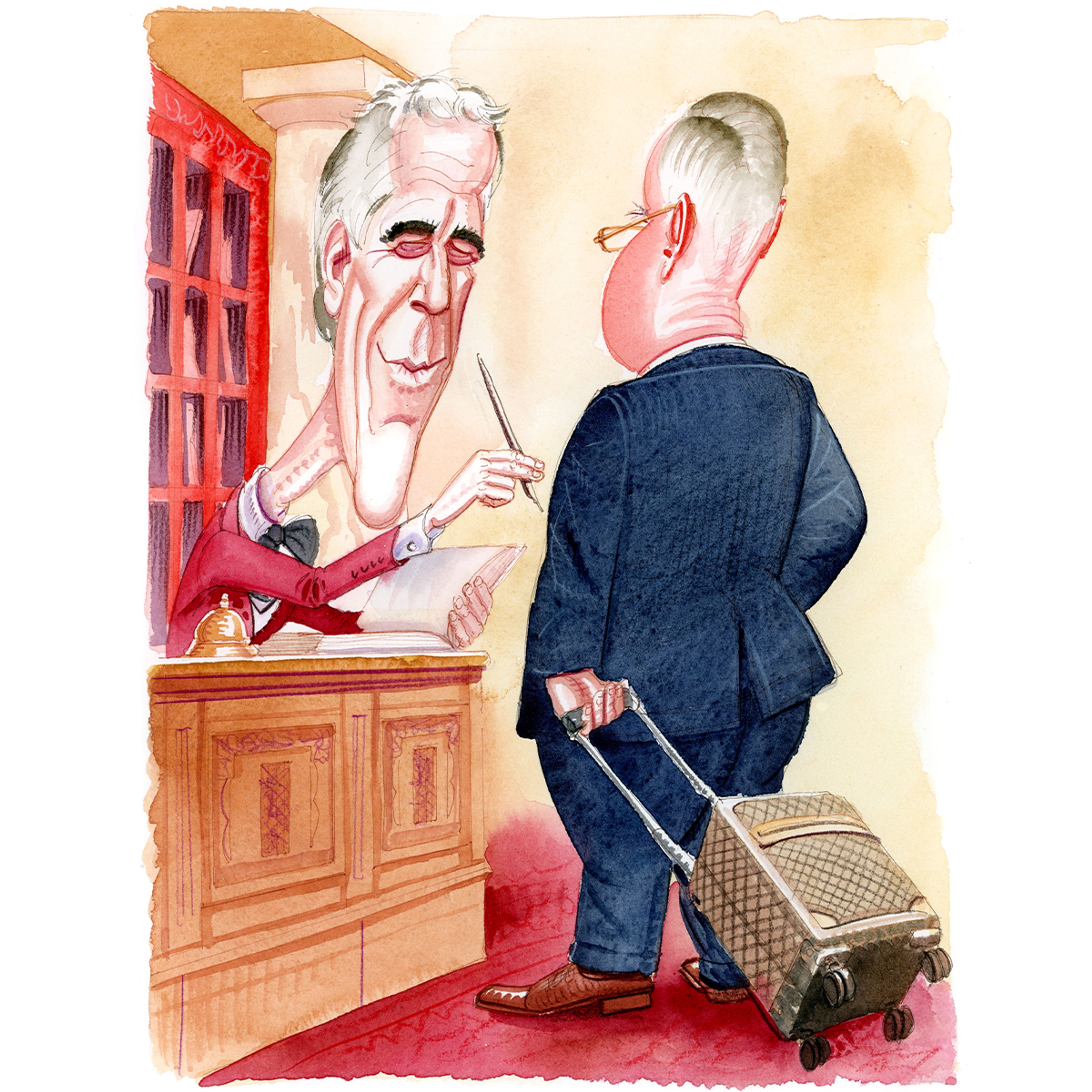
• The season of the leaked message is upon us. First up was Jay Jones, the Democrats’ candidate for attorney general in Virginia, who was caught telling a colleague that he’d like his colleagues to die, that he hoped to “piss on their graves,” and that he hoped that the children of Republican politicians in the state might need to die to usher in political change. (NR’s Audrey Fahlberg broke the story.) Next were the “young” Republicans -- some of them state representatives -- whose group chat, which involved praise for Hitler, the use of grotesque terms to describe African Americans, and jokes about gassing Jews, was released to Politico by a rival. And, finally, there was Graham Platner, a Democrat in Maine who wishes to become a senator in that state but was caught describing himself as a communist, calling all rural white people “racist” and “stupid,” and suggesting that all cops are “bastards.” In response to these mistakes, both parties condemned and disavowed their authors. Just kidding. Jay Jones is still running for attorney general. JD Vance defended the GOPers as rambunctious kids. And Graham Platner insisted that his words were mere childish indiscretions. Stay tuned for the consequences of this indifference.
• In October, the United States, along with a handful of other nations, played host to a series of “No Kings” rallies. The target of the protests was President Donald Trump. But this presented a few problems. Abroad, many organizers realized late that their countries had monarchies. To avoid offending them, the organizers changed the event’s name to “No Tyrants.” At home, no such problems obtained. Nevertheless, to make the case against royalty, progressives across the country were obliged to praise America’s Founders -- a group that, until it became temporarily convenient, had been dismissed as a bunch of rich, hypocritical, slave-owning white guys. For his part, Trump declined once again to take the high road, choosing instead to post an AI-generated video of himself flying a fighter jet over the protesters and dropping excrement on their heads. In theory, America would benefit from an earnest bipartisan movement to reduce the power of the executive branch, irrespective of who is in office. Alas, this was not that.
• Once Trump fired a reluctant prosecutor and publicly rebuked his attorney general for failing to prosecute the top tier of his enemies list, the indictments burst forth. In Alexandria, Va., Trump replaced the ousted U.S. attorney -- veteran prosecutor Erik Siebert, his own nominee -- with 36-year-old Lindsey Halligan, a former Florida insurance lawyer and Trump White House staffer who had never prosecuted a criminal case. Days later, she convinced a grand jury to indict two felony charges against former FBI Director James Comey. The statutes invoked are lying to and obstructing Congress, though the factual recitation of what Comey allegedly did remains incoherent. That defect has been raised, along with vindictive prosecution and the likely infirmity of Halligan’s appointment as interim U.S. attorney, in pretrial motions to dismiss. Shortly afterward, Halligan charged another Trump bête noire, New York Attorney General Letitia James, on what, if viable, appear to be inflated bank-fraud charges based on documentary misstatements about whether James intended to occupy or rent a small Virginia home. On the prosecution’s theory, James risked prison and her political career to save about $50 per month in payments; Halligan charged offenses that carry a potential 60-year prison sentence. The indictment just brought against John Bolton in Maryland federal court by more seasoned prosecutors is every bit as vindictive. Yet it is a more colorable set of allegations: Trump’s former national security adviser turned political nemesis is accused of illegally transmitting and retaining top secret intelligence. Allegedly, Bolton composed contemporaneous diary-style entries during his tenure, which he then crafted into notes, emailed to family members, and used to generate his virulently anti-Trump memoir. The president and his minions at the FBI and DOJ vow that the legal retribution has only just begun.
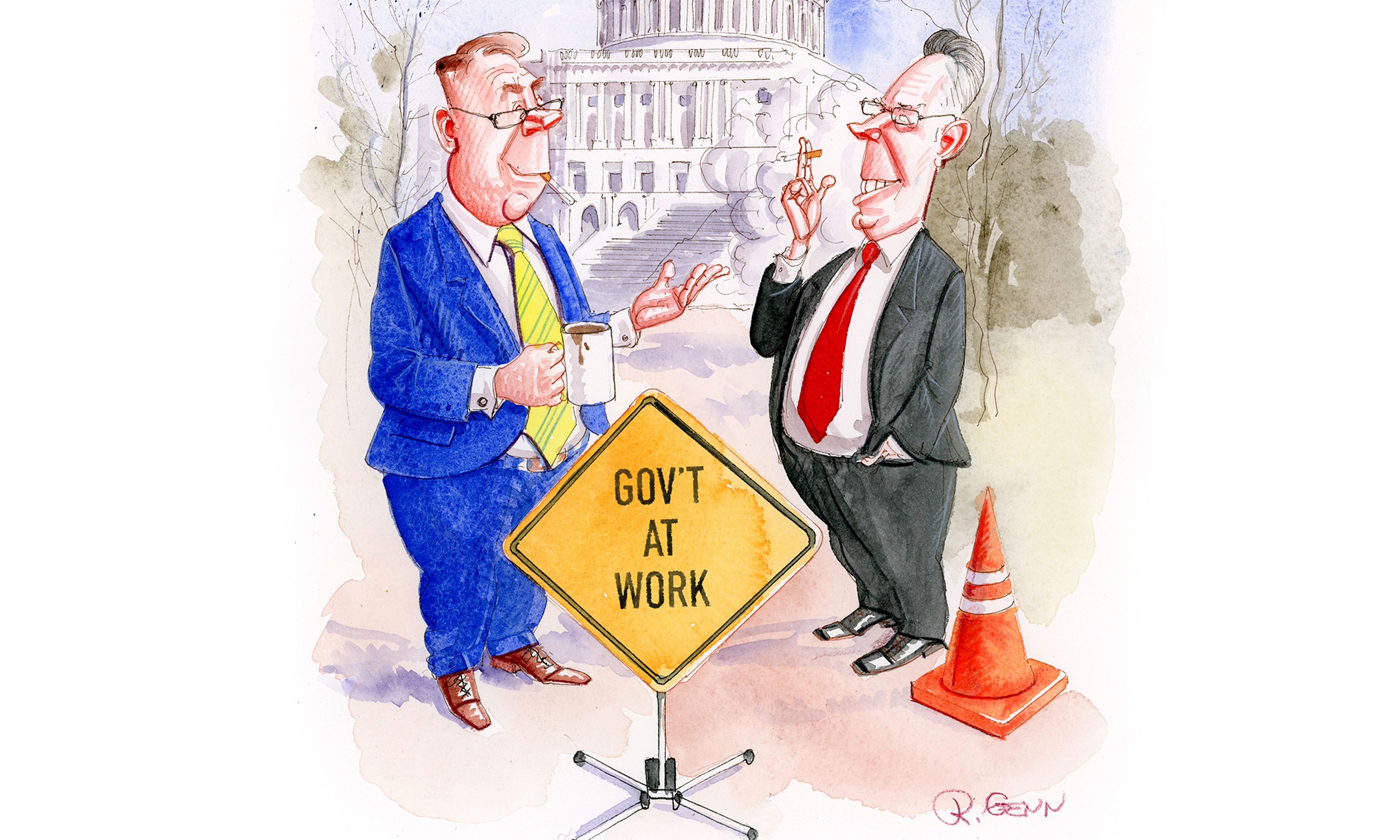
• The reasoning behind Senate Minority Leader Chuck Schumer’s decision to force a government-shutdown fight is clear enough, if not particularly noble. Back in March, Schumer announced that while he didn’t like the Republican-backed spending bill, a shutdown would be more detrimental to the country. Progressive Democratic grassroots activists reacted as if it was the biggest surrender since the Japanese on the deck of the USS Missouri. So now Schumer fights on. As of this writing, we’re four weeks into a federal government shutdown, the U.S. House of Representatives is not in session, and the two sides aren’t even meeting for negotiations. Not that the country has much noticed. “Most of my constituency back in Texas doesn’t know the government is shut down, except for delays in air traffic,” Texas Senator John Cornyn (R.) told Semafor. One of the issues most likely to spur a public outcry -- paychecks for military personnel -- has been at least temporarily resolved by an executive order diverting other already-appropriated Pentagon funds. Senate Democrats are filibustering to block continuing resolutions that would reopen the government, convinced that the public will blame the Republicans for being obstinate. But polling is showing that if the Democrats are getting any advantage out of the shutdown, it’s a small one. An Associated Press poll released in mid-October showed that 58 percent of respondents said Trump and congressional Republicans have “a great deal” or “quite a bit” of responsibility for the shutdown, while 54 percent say the same about congressional Democrats. Increasingly, it appears that the embattled Schumer has taken a hostage that Trump and the Republicans aren’t all that motivated to rescue.
• For four decades, state legislatures have been whipsawed between courts telling them that considering race in drawing districts for Congress and state legislatures is mandatory under Section 2 of the Voting Rights Act and that it is unconstitutional. In fact, neither the Constitution nor the VRA has ever required race-conscious gerrymandering. Moreover, since the Supreme Court acknowledged in 2019 that partisan gerrymanders are beyond the remedial powers of federal courts, states have been able to admit what actually motivates their map-drawing. The Court, which by a 5–4 vote in 2023 avoided resolving the conflict between the Constitution and the VRA, heard arguments on October 15 in Louisiana v. Callais almost entirely for the benefit of Justice Brett Kavanaugh, the swing vote in 2023. Kavanaugh and his colleagues are mulling whether racial gerrymandering as a remedy for old discriminations has some end point. He should count as a strike in favor of that view that Congress never authorized it. Indeed, even in 2025, most arguments for VRA districts are based on long-ago injustices. Yet VRA “minority-majority” districts are now a racial anomaly: Largely white political minorities such as Democrats in West Virginia or Iowa or Republicans in Connecticut or Massachusetts cannot ask for the same set-aside districts as black Democrats in Alabama or Louisiana. The Court should say that nothing compels this unconstitutional tradition -- and get out of the business for good.
• The courts have had their hands full with Trump’s effort to deploy the National Guard on various pretexts to states and cities that don’t want it. While the administration bills these deployments as responses to crime and disorder, the narrow legal basis for them is the need to protect federal officers and facilities -- in most cases, Immigration and Customs Enforcement officers who have been the target for protests and violence. It’s a vicious cycle: The administration stages high-profile immigration raids, which draw protests, which justify the federalization of the National Guard. The escalation of ICE raids in Chicago, where there have been more than a thousand recent arrests, seems calculated to heighten these tensions. A district judge in Oregon blocked a deployment to Portland; the U.S. Court of Appeals for the Ninth Circuit reversed that order but has yet to rule on another order by the same judge. Another district judge in Illinois blocked a deployment to Chicago -- a ruling the administration is appealing to the Supreme Court. The justices will sooner or later need to resolve these disputes, ideally in ways that make clear the rules of the road going forward.
• Cardinal Robert McElroy said the annual Red Mass at St. Matthew’s Cathedral in Washington to pray for the judiciary and the legal system at the start of the Supreme Court’s term. Unlike in years past, because of security concerns none of the justices attended. That seems prudent after a 41-year-old New Jersey man, who had previously been barred from the cathedral, was arrested outside St. Matthew’s with some 200 homemade explosives and a reported record of “hostility and disdain for the Supreme Court, U.S. Immigration and Customs Enforcement, the Catholic Church and Jewish people.” Meanwhile, the Justice Department was asking for a 30-year sentence for the armed assassin who was arrested outside Brett Kavanaugh’s house in 2022 and who had carefully plotted to kill as many as four justices after the Dobbs leak in order to preserve Roe v. Wade. But District Judge Deborah Boardman, noting as a mitigating factor that the defendant’s family had come to accept him as a transgender woman, sentenced him to only eight years. The lenient sentence should be overturned on appeal, and Republicans such as Senator Ted Cruz are calling for Boardman’s impeachment. Given the grave threat posed by assassination attempts to judicial independence, it’s a debate worth having.
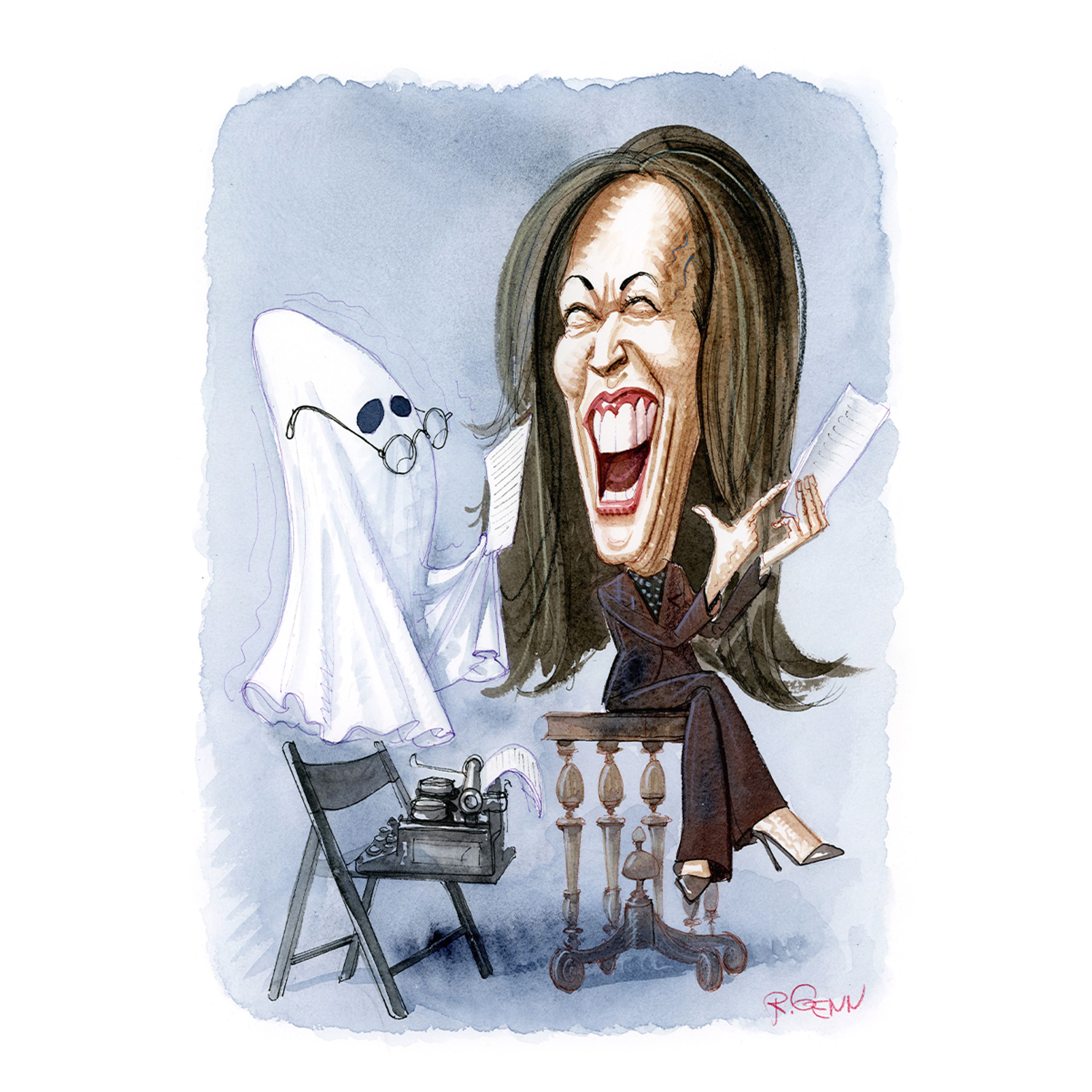
• Bari Weiss was recently named editor in chief of CBS News, and the liberal hysteria that’s followed her since her New York Times days has flared up once again. Weiss, who resigned from the Times in 2020, citing a hostile workplace environment, went on to launch her own journalistic venture. What began as a Substack newsletter eventually grew into the highly successful Free Press. A somewhat disillusioned liberal herself, Weiss has long attracted controversy for her heterodox views. She drew some of her harshest criticism for her cautious defense of Brett Kavanaugh during his contentious confirmation hearings. Weiss, a staunch defender of Israel and a vocal critic of “wokeness,” has told the CBS staff that, under her leadership, the outlet will pursue journalism that is “fair, fearless, and factual.” This is a positive prescription for CBS, given that the outlet has struggled with transparency in the past -- most recently via its deceptive edit of a 60 Minutes interview with former Vice President Kamala Harris. Weiss reportedly stunned the Sunday night show’s staffers when she asked them why the country thinks the program is biased toward Democrats. With public trust in the media at historic lows, Weiss’s appointment could be an opportunity to reform mainstream journalism from within. Adding to her recent successes, Paramount Skydance has also purchased the Free Press for $150 million. It’s a good time to be Weiss, and a bad one to be woke.
• After two years, Israelis and Jews everywhere, and all people of goodwill, rejoiced at the freeing of the last living Israeli hostages: 20 men between the ages of 21 and 47. It was impossible to watch their reunions with their loved ones without shedding tears. And then came the remarkable videos of the men well enough to be released from the hospital to begin their lives anew. Evyatar David had been seen in a harrowing hostage video, skeletal, forced to dig his own grave in a tunnel. Now here he was, onstage at a seaside concert, playing guitar alongside a popular Israeli singer. Here were Gali and Ziv Birman, twins who were separated in captivity, being welcomed back to their community by a singing, dancing, flag-waving crowd. Here was Omri Miran, wading in the surf with his wife and two little daughters, a family made whole. There are, of course, the tragic homecomings of the murdered hostages. The remains of others are yet to be released; these include two Israeli Americans, Omer Neutra and Itay Chen. And for the 20 celebrating their freedom -- seeing the sky above their heads -- no doubt a long road of recovery lies ahead. But this we know: They are no longer hostages. They are survivors. They are men.
• Venezuelan opposition leader María Corina Machado has won the 2025 Nobel Peace Prize. Machado is a 58-year-old industrial engineer who was unfairly blocked from running for president in 2024 by Venezuelan courts. The courts were acting as a cat’s-paw of dictator Nicolás Maduro, who, to the ruination of his country, has been in power since 2013. Machado dedicated the award to the entire society of Venezuela -- and to Trump for his “decisive support for our cause.” The United States is one of the few countries that do not recognize Maduro’s legitimacy. The White House has made it no secret that Trump believes that the prize ought to have been awarded to him. “President Trump will continue making peace deals, ending wars, and saving lives,” White House spokesman Steven Cheung said. “The Nobel Committee proved they place politics over peace.” Even if Trump’s open jealousy is unbecoming, he’s not wrong to point out that Barack Obama was given the peace prize just for getting elected president. Trump has been a catalyst for negotiating agreements that ended Cambodia and Thailand’s border clashes, a peace deal between Rwanda and the Democratic Republic of the Congo, a cease-fire after the Kashmir standoff between India and Pakistan, and the Nagorno-Karabakh accord between Armenia and Azerbaijan, along with the cease-fire between Israel and Hamas. Rather than seek vindication from the Nobel Committee, he must look to history for his laurels as a peacemaker.
• Donald Trump/Vladimir Putin/Ukraine. Charlie Brown/Lucy van Pelt/football. Exasperated by the insulting aftermath of his Alaska meeting with the Russian dictator, Trump edged toward using the threat of delivering Tomahawk cruise missiles to Ukraine as a lever to bring Russia back to the negotiating table -- a sensible approach. Putin then called Trump the day before Ukraine’s Volodymyr Zelensky was due to meet with Trump in the White House. Whatever Putin said temporarily worked, and Trump’s meeting with Zelensky reportedly went badly. Tomahawks were taken off the agenda, replaced by plans for Putin and Trump to talk in Budapest. But as of this writing, a second Trump–Putin summit is off: Trump says he wants to avoid a “wasted meeting” with a recalcitrant Kremlin. The threat of Tomahawk missiles was a display of strength. As Putin’s speedy, almost panicked reaction proved, it worked. Trump’s wish to see an end to the war that Russia started is understandable, but the only way to persuade Moscow to agree to terms that have a chance -- however remote -- of both enduring and securing the survival of a fully sovereign Ukraine is to show strength, something that Putin respects.
• As we go to press, Trump has now ordered missile attacks against at least seven vessels in the Caribbean Sea. The estimated death toll is 32. Despite the lack of any military threat against the United States, Trump is striking unilaterally after deploying warships, F-35 fighters, a nuclear submarine, and 10,000 troops, including a Marine Expeditionary Unit for potential ground combat. The chain of reasoning is a thing to behold. The president equates narcotics shipments to the U.S., which he insists without proof that the vessels were conducting, with hostile enemy weapons-of-mass-destruction strikes. In addition, he has designated the cartels that he maintains are behind the shipments as foreign terrorist organizations and claims -- abracadabra -- the authority to kill “narco-terrorists” on the high seas as if they were enemy combatants. But the importation of illegal narcotics is a federal crime, not an act of war, nor analogous to a 9/11-style attack on the homeland. Moreover, narcotics trafficking is not included within Congress’s extensive definitions of terrorist activity. Even if it were, the designation of a foreign terrorist organization would not convey authorization to use military force -- it enables prosecutions and seizure of assets. Meanwhile, the Defense Department quietly repatriated two missile-strike survivors, knowing it could not justify detaining them as war criminals, nor prosecute them in criminal court without exposing the fictions behind the military operation. Admiral Alvin Holsey, head of Southern Command, which overseas U.S. military operations in Latin America, will retire in December after less than a year in command, reportedly because of his concerns about the campaign. Rather than vindicate Congress’s war powers, Trump’s Republican allies continue thwarting inquiries into this recklessness -- a profound dereliction of duty.
• On September 30, Pete Hegseth, the secretary of defense, convened a gathering of nearly all U.S. generals and admirals in Quantico, Va. Hegseth wanted to speak to his senior subordinates in person as he announced a renewed focus for the Pentagon: a merit-based culture and high standards of physical fitness and training in order to deter and, if necessary, win wars. “No more identity months, DEI offices, dudes in dresses,” Hegseth declared. “No more climate change worship, no more division, distraction, or gender delusions.” “We are done with that sh**,” the secretary of defense said, turning to rather blue language that will no doubt be popular with the troops. In addition to new PT requirements and changes to the way grooming standards will be enforced, Hegseth announced that each service will ensure that every “designated combat arms position returns to the highest male standard only.” Unfortunately, Trump followed up Hegseth’s tight remarks with an hour-and-15-minute-long rambling political stump speech that was unseemly from a commander in chief speaking to that audience in that setting. Much depends on the details and execution, but if implemented with both verve and prudence, Hegseth’s commonsense reforms will profit the American profession of arms.
[slideshow slideshow="1887243" /]
• Almost every major media organization has rejected Hegseth’s new Pentagon media memorandum. Under the new rules, a Department of Defense “appropriate authorizing official” would have to approve “information” for public release by any DOD personnel “even if it is unclassified.” Fox News, Hegseth’s former employer, issued a statement alongside ABC News, CBS News, NBC News, and CNN repudiating the new requirements, which the organizations said would “restrict journalists’ ability to keep the nation and the world informed of important national security issues.” Although Hegseth calls the new rules “commonsense,” press outfits ranging from the Daily Caller to the New York Times say the rules would handicap journalists and require them to report only on what the Trump administration deems appropriate. As we go to press, only a few news organizations, such as the Trump-favorite One America News Network, have been willing to relinquish control of their editorial judgment to the administration. While the Pentagon and its press corps have often had a testy relationship, Hegseth should remember that an independent press, at its best, is critical to holding government accountable.
• Well, it could have been worse. The White House announced what the president described as a “pro-life” policy to encourage in vitro fertilization. And although Trump health official Dr. Mehmet Oz predicted an upcoming “Trump babies” boom, there were no mandates and no subsidies included. The Oval Office press conference heralded a trade deal making for cheaper drugs, but employers are only encouraged to offer fertility plans, which can include IVF or alternatives that address the root causes of infertility. The crucial point neglected at the White House is that IVF typically involves the deliberate destruction of many “excess” human embryos -- a point that pro-lifers have their work cut out for them in publicizing.
• Former Congressman George Santos may not be the worst recipient of a pardon or commutation from Trump, but he may be the least defensible. There is no question of Santos’s guilt. He pleaded guilty to fraud charges of the sort that customarily carry a substantial prison sentence. There is no case that Santos is an otherwise upstanding citizen who made a single mistake: It is almost certain that the crime to which Santos pleaded guilty -- campaign finance fraud aimed at scamming public funding for his congressional race, then blowing a chunk of the money not on the campaign but on OnlyFans subscriptions, Botox, and spa treatments -- is only a subset of the crimes. There is little reason to think that Santos was singled out for prosecution, given that the authorities had been after him in the past for check-kiting. There is no argument that Santos has been punished enough or has reformed in prison; the habitual liar was sprung from jail after serving just 84 days of his 87-month sentence. He holds no great accomplishments to his name that could offset his crimes. Trump gave away the game in announcing that “at least Santos had the Courage, Conviction, and Intelligence to ALWAYS VOTE REPUBLICAN!” Swing-seat New York Republicans, who were left to clean up Santos’s mess (including in his now Democratic-held district), have been rightly dismayed that this is bad politics in addition to being worse justice.
• Zohran Mamdani has a commanding and growing lead in every major poll in the New York City mayoral race and an enthused base of voters -- many of them young people and working families struggling with the city’s cost of living. Voters rate him highest on trust, empathy, and the ability to deliver needed change. His ascent is bringing prestige to the left wing of his party; his endorsers and champions include Alexandria Ocasio-Cortez and Bernie Sanders. But it is also a nerve-wracking election for many of the city’s residents. Mamdani has implied that he does not want pro-Israel voters in his coalition, objecting to those who are “progressive except Palestine.” That’s an extravagant stance to take given that the mayor of New York has no official role in the Middle East, though he does have a serious one in safeguarding the more than a million Jewish residents of his city, who are already disproportionately the victims of hate crimes. Mamdani won’t have pro-Israel people in his coalition, but he does accept the support of Imam Siraj Wahhaj, who has defended Islamist governance. Former Governor Andrew Cuomo has lamely tried to publicize the imam’s anti-gay comments. But far more troubling is his consistent apology for jihad and barbarism. With Mamdani’s election all but certain, New York City should brace for a perilous new era.
• Argentina’s President Javier Milei has given his country its best chance in decades of reversing its long decline. He has also unambiguously realigned Argentina with the United States. Much of Milei’s ability to continue his remarkable progress will depend on how his party and its allies fare in legislative elections shortly after we go to press. A convinced free marketeer, Milei has been propping up the country’s perennially battered currency in order to preserve inflation’s (more or less) downward trajectory -- which some would call free-market heresy. After the opposition Peronists -- as poisonous as ever -- did much better than expected in local elections in Buenos Aires province, it triggered a crisis of confidence in the peso, which dollar-strapped Argentina does not have enough reserves to stem. This is why the United States Treasury has been intervening in the markets to support the peso and has agreed to set up swap lines with Argentina of up to $20 billion as an additional line of defense. The administration is also trying to corral private sector money to help out with another $20 billion. Argentina will be a strategically invaluable ally if Milei can weather the current storm and continue his reforms. This is a gamble worth taking, but a great deal is resting on those midterms.
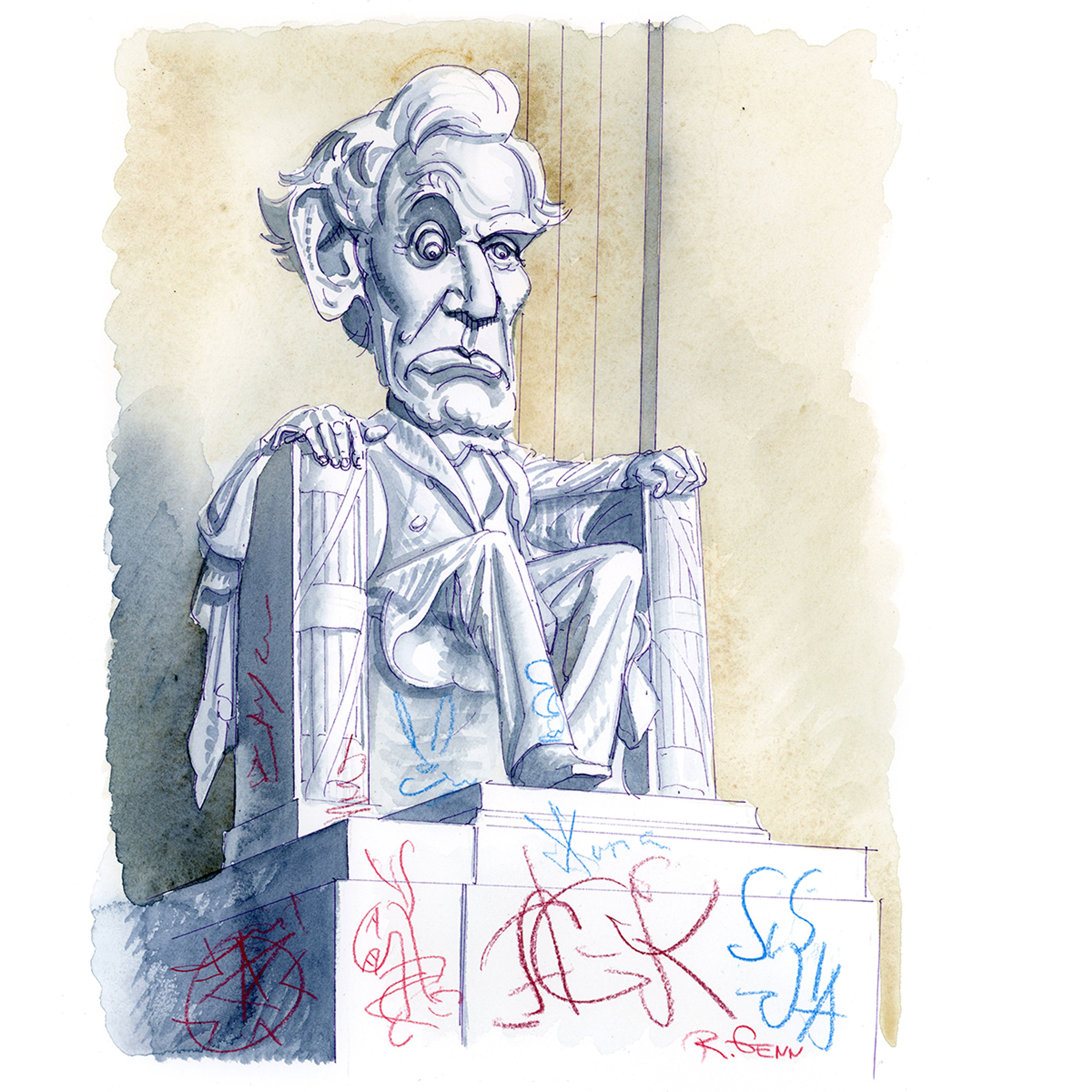
• There are certain unwritten rules in American life, and one of them is that before your face is featured on the nation’s currency, you are first obliged to die. There is no constitutional provision that mandates this, nor any law written tightly enough to guarantee it. But, as a general matter, we have shied away from putting living figures on our notes and coins, on the grounds that it is monarchical behavior and that the United States is not a monarchy. Unsurprisingly, this salutary tradition is not of great interest to the Trump administration, which intends to put an image of Trump on both sides of a commemorative $1 coin that will be produced for the 250th anniversary of the Declaration of Independence. On one side, Trump will appear in profile. On the other, he will appear pumping his fist, with the words “Fight Fight Fight” along the coin’s perimeter. Answering questions about the plan, Trump’s press secretary, Karoline Leavitt, said that she was unsure whether Trump had seen it but that she was “sure he’ll love it.” He will. But that’s not really the important point, is it?
• Wait, who exactly is Bad Bunny?
• As dawn broke over Paris on October 19, thieves robbed the Louvre of eight pieces of priceless Napoleonic-era jewelry. A ninth object -- Empress Eugénie’s gold crown with more than 1,000 diamonds -- was dropped in the course of the escape and recovered outside the museum. According to authorities, the burglars posed as construction workers and ascended a truck-mounted ladder, used power tools to break into a second-floor window, and then entered the Galerie d’Apollon. Inside, they intimidated the guards by brandishing their angle grinders, smashed two display cases, and grabbed the jewelry. They exited by going down the ladder and then sped off on scooters with two accomplices who were standing by. The heist lasted less than ten minutes, according to authorities. At present, more than 60 investigators are working on the case. Très embarrassant.
• Baseball has never seen quite the likes of Shohei Ohtani. The two-way star for the Los Angeles Dodgers, via Japan, outdid himself in Game 4 of the NLCS when the juggernaut Dodgers completed a sweep of the Milwaukee Brewers. Ohtani pitched six scoreless innings with ten strikeouts, a notable performance in this era when complete games are a distant memory. But he also went 3–3 with three home runs, a historic night at the plate (only twelve players have hit three home runs in a postseason game). Combine what he did on the mound with what he did in the batter’s box, and it almost defies description. The home runs weren’t cheap shots, by the way, but mammoth blasts, including one that exited Dodger Stadium. The only comparison is with Babe Ruth, who pitched to a 9–5 record with the Red Sox in 1919 while leading the league in home runs, RBIs, and OPS. But when Ruth entered his offensive prime with the Yankees, he wasn’t pitching anymore. Ohtani has done both at a high level throughout his career. It’s so rare that, in football terms, it isn’t like playing both wide receiver and cornerback but like being an excellent quarterback and a talented edge rusher. Cooperstown should prepare for him to ascend bodily into the Hall of Fame.
• In the 1970s, the explosive theatrics and painted faces of KISS revolutionized rock and roll stagecraft. But one member of the band also had a profound musical influence on the genre: Ace Frehley, the Bronx-born lead guitarist. With his scorching solos, melodic riffs, and effortlessly inventive licks, he inspired generations of future stars in rock, metal, and pop. Frehley performed with the group from 1973 to 1982, then again from 1996 to 2002. An entirely self-taught musician, Frehley joined KISS when he answered an advertisement in the Village Voice: “Lead guitarist wanted with flash and ability.” No two qualities better defined his work. Onstage, he rigged his guitar to shoot fireworks from its head and emit smoke from its body. He wore a black and silver costume decorated with glitter, which reflected his love of science fiction. Each member of KISS adopted a persona, and Frehley deemed himself the “Spaceman” or “Space Ace.” He said he was an alien from the planet “Jendell,” which helped explain his many personal quirks. He struggled to walk in a straight line, laughed in a birdlike cackle, and once claimed to have been punched in the face by a ghost. These idiosyncrasies made him an often hilarious presence in interviews, but addictions to drugs and alcohol amplified many of his eccentricities. In 2006, he conquered these demons and remained sober until his death. That was perhaps a greater achievement than any of the awards he earned throughout his life, most recently a place in the 2025 Kennedy Center Honors scheduled to take place this December. Dead at 74. R.I.P., Spaceman.
• Actress Diane Keaton passed away on October 11 at age 79 from pneumonia. With her passing, we bid a further farewell to the stars and spirit of cinema’s second golden age, the rebellious era of the 1970s. Keaton -- born Diane Hall, she took her mother’s maiden name as her stage name -- carved her own unique path through an era of independent cinema with her first serious role as Kay Adams in Francis Ford Coppola’s The Godfather and (especially) The Godfather, Part II. But she truly made her mark playing alongside and opposite Woody Allen during the mid-to-late Seventies in movies such as Annie Hall and Manhattan -- becoming a style icon in the bargain. Annie Hall, in fact, is of particular relevance to this magazine. In one scene, Keaton’s character summons Allen to her apartment to kill a spider in the bathroom. He’s shocked when she hands him an issue of NR to use as a weapon. “I like to try to get all points of view,” Keaton’s Annie says; even in fiction, she was resolutely independent in mind and spirit. The bien-pensants at the New York Times may prefer to focus on her turn as communist fellow traveler Louise Bryant in Warren Beatty’s Reds -- and she is the sole bright spot in a film whose ideological sympathies are wildly misplaced. We, however, prefer to remember Keaton as an actress whose grace, lightness, and nuance shone throughout her entire career. R.I.P to a Hollywood great.
• In any institution that survives its birth trauma, the founders -- and outside observers -- will wonder after a time, where is the next crop coming from? Who will carry on? John Coyne belonged to NR’s next crop, coming aboard in the Sixties as conservatism began to enjoy success in politics. He left us to work for Spiro Agnew, then for Agnew’s boss, Richard Nixon. But we most prized him for the work he did here: the graceful reporting, the excellent unsigned editorial paragraphs, the ever-present wit. One essay found him interviewing a Mr. John Coyne -- an aged Irishman guarding the door of McSorley’s Ale House in New York City against feminists who wished to violate the sanctum. John delighted in the coincidence. In later years, he gave his talents to titans of industry who needed someone who knew the language as well as they knew the market. Dead at 90, R.I.P.
• Jeffrey Meldrum was a respected professor of anatomy and anthropology at Idaho State University. He was an expert on foot morphology and bipedal locomotion in primates -- a very specialized subfield, which of course made it all the more interesting that this otherwise mainstream academic decided to attempt to apply rigorous scientific research methods to the search for Bigfoot. He began his academic inquiries in the late Nineties after he examined a set of 15-inch footprints near Walla Walla, Wash. His lab at Idaho State later held hundreds of artifacts including foot casts, hair samples, and scat. In his 2007 book, Sasquatch: Legend Meets Science, Meldrum argued that there were good scientific, anatomical reasons to think that whatever it was that appeared in the famous Patterson-Gimlin “Bigfoot” film, it was likely not a man in an ape suit. The book was, shall we say, controversial among his academic peers. But it received a respectful hearing from Jane Goodall, who said she had an open mind about Sasquatch and appreciated Meldrum’s efforts to bring “a much needed level of scientific analysis” to the question. Dr. Meldrum died of cancer at 67. But the search will go on. R.I.P.
• William Murchison was a Texan. His father and grandfather were both mayors of Corsicana. But instead of pursuing office, Murchison took to his pen. For 25 years, he was a conservative columnist for the Dallas Morning News. (A former editor of that newspaper once described Murchison as Dallas’s William F. Buckley.) After retirement, Murchison taught journalism at Baylor. He thought deeply about how America could recover traditional morality and became a senior editor at the Human Life Review. Devoted to faith, family, and the country he loved, Bill Murchison has died at 83. R.I.P.
The Cease-Fire
Triumph in Gaza
In his jubilant address to the members of the Israeli Knesset, Donald Trump attributed the success of his efforts to secure a cease-fire deal in the Gaza Strip primarily to the work of the Israel Defense Forces. Primarily, but not entirely.
“So, we dropped 14 bombs on Iran’s key nuclear facilities,” the president recalled. Without those strikes, the cease-fire “wouldn’t happen because the other Arab and Muslim nations really wouldn’t feel comfortable making the deal that we have now.”
Trump’s assertion is impossible to disprove, but it rings true. In the hours that followed the president’s diplomatic triumph, Biden administration officials, including the former president himself, attempted to reclaim the lion’s share of the credit for Trump’s diplomatic breakthrough. They insisted that Trump had merely built on their previous frameworks for peace. Nonsense.
The “take it or leave it” deal that Joe Biden attempted to impose on Israeli Prime Minister Benjamin Netanyahu bears little resemblance to the one that is being implemented, albeit in fits and starts, in Gaza. It would have released the hostages in stages -- stages that tend not to progress beyond the first. It would have left fighting-age males, as well as the bodies of deceased captives, behind in Hamas custody. The agreement would have compelled Israel to withdraw from Gaza entirely at the outset of what promised to be “painstaking deliberations” to establish a more durable modus vivendi with Hamas in Gaza. And even though Netanyahu’s government reluctantly submitted to Biden’s strong-arming, Hamas continually revised its demands on Israel and America, scuttling the whole initiative.
That dynamic -- American vacillation, Israeli deference, and Hamas’s recalcitrance -- typified the war that Iran’s terrorist proxies started on October 7, 2023. Trump upended it not just by joining the war against Iran but by unshackling Israel. Jerusalem’s freedom of action was best exemplified by its air strikes on a Hamas hideout inside Qatar. That strike was a tactical failure (the Hamas leaders it targeted escaped death), but it was a strategic success. It conveyed to Hamas’s tacit sponsors in places like Doha and Ankara that the war in Gaza would not be limited to Gaza, and it was time for Hamas to come to the table in earnest.
The Trump administration has played a deft and, at times, unsavory game with Qatar. After the Israeli strike, the White House sought to mollify Doha by compelling Netanyahu to make personal amends for it. In the days that followed, the president signed an executive order committing the U.S. to Qatar’s defense and provided the Qatari air force with access to training facilities at Mountain Home Air Force Base in Idaho. Given Qatar’s efforts to propagandize and radicalize Americans against our strategic partners like Israel, it’s hard to begrudge anyone who looks askance at an effort to provide the Qataris with more opportunities to introduce agents of influence into the United States. But others have argued that the maneuvers draw Qatar further into the West’s orbit and contribute to the transformation of the Middle East.
And the Middle East is transforming. Israel is no longer surrounded by Iran’s terrorist network. Tehran’s nuclear weapons program is in shambles. The Iran-backed Assad regime in Syria is no more. Throughout Israel’s longest war, the Middle East’s Sunni Arab states only deepened their cooperation with the Israeli government -- a partnership that appears set to continue with the resumption of normalization agreements that the 10/7 massacre and the wars that followed it merely postponed.
Trump deserves the victory lap he allowed himself in Jerusalem. By appealing to force of arms first and diplomacy second, the president created the conditions for an enduring peace.
Anniversary
National Review at 70
Seventy begins to be a venerable age for a magazine, as for a man. In the lead editorial of our first issue, our founder, William F. Buckley Jr., wrote that we meant to stand athwart history, yelling Stop! History never stops, of course. What was it in the world of 1955 that we wished to stop? What do we wish to stop now?
The churn of the world ever breeds external civilizational dangers. On Day One and for decades thereafter, the foreign threat was communism -- wrong, bloody, and Godless. Communism of the first incarnation is gone, though its orphans, Russia and China, are still hostile powers. Jihad -- wrong, bloody, and pledged to its own god -- seeks every opening for conquest, from slaughtering Christians in Nigeria to duping college students on Ivy League campuses.
The ally of these enemies, often though not always unwitting, is shame -- shame not for the failings of America and Western civilization but for their virtues. Toppling statues and defiling temples are only the consequences of sly analysis and abusive polemics. Even as NR condemned Khrushchev, Mao, and Osama bin Laden, so we critiqued the ideas and idea-mongers that made resisting them seem pointless.
Our work has not been all negative, however. Life, especially in our dear country, is filled with beauty and good work and is always open to grace. We prize great art, sober statesmanship, and human flourishing. Bach, Lincoln, your labor, and your child are worth celebrating, and so we have.
We began in a mediascape dominated by broadsheet newspapers, weekly magazines, and two television networks. Now everything from porn to Plato is in everyone’s pants pocket. Through it all we have labored to assemble the best words -- clear, amusing, stirring whenever we can. We remember the great writers who passed through these pages and have passed away; we delight in presenting the next young tunesmiths to come along. At 70 we give thanks -- to our colleagues over the years; to our supporters and readers; to the United States of America; and to the God of victories, and of mercy.
The Stat
11,695,303 -- the number of Obamacare exchange enrollees who did not use their health coverage at all in 2024, according to the Centers for Medicare and Medicaid Services.
The number of people enrolled in Obamacare exchange plans who did not use their coverage at all -- never once seeing a doctor, receiving a prescription, or purchasing any medical service through their insurance -- was stable at around 3.2–3.5 million per year between 2019 and 2021. Then, after Democrats expanded Obamacare subsidies in 2021 (supposedly temporarily, for Covid), the number surged to 5 million in 2022. After Democrats extended those subsidies through 2025, the number leaped to 8.7 million in 2023 and then 11.7 million in 2024. Now, 35 percent of Obamacare exchange enrollees do not use their health coverage at all. Not using insurance in a given year is not necessarily evidence that the insurance is useless, but the spike in zero-claim enrollees following the expansion of subsidies suggests that many of these enrollees are what the Paragon Health Institute calls “phantoms.” The zero-claim rate for private plans is much lower, at around 15 percent. Obamacare small-group plans, which were not eligible for the expanded subsidies, also saw negligible change in their zero-claim rate between 2019 and 2024. Paragon’s analysis suggests that much of the surge is fueled by enrollees who are unaware that they have coverage because brokers signed them up without their knowledge. While there was modest growth in the past few years in the number of younger enrollees, who are more likely to be zero-claim patients, Paragon found “the growth in this age group to be far too small to explain the rise in phantom enrollment.” Insurance companies love phantom enrollees because they get the full taxpayer-funded subsidy without ever paying out for any claims. Obamacare has been successful at signing lots of people up for health insurance. It has been less successful at actually facilitating health care.
by Dominic Pino

About the Author
NR Editors includes members of the editorial staff of the National Review magazine and website.
Featured Tags
Advertisement
Advertisement

Comments