Share this story
Roman Genn
• Like FDR, AOC has now bombed in Germany.
• In a speech at this year’s Munich Security Conference, Secretary of State Marco Rubio made a much-needed attempt to calm things down after months of acrimony between the U.S. and its European allies. He may have succeeded. Rubio had to toe the Trump administration’s line on Europe while offering the Europeans something of an olive branch. He managed this by balancing the substance, much of which could have been drawn up in the Oval Office, with a tone markedly more emollient than anything that Europeans have heard from the White House for quite some time. If it has the desired effect, the speech will pave the way for a more constructive discussion of how Europe can assume greater responsibility for its own defense. This would allow the U.S. to dedicate more resources to dealing with growing threats elsewhere, particularly China. This would be a pragmatic division of resources -- not an American abandonment of Europe that Vladimir Putin and Xi Jinping are likely hoping for.
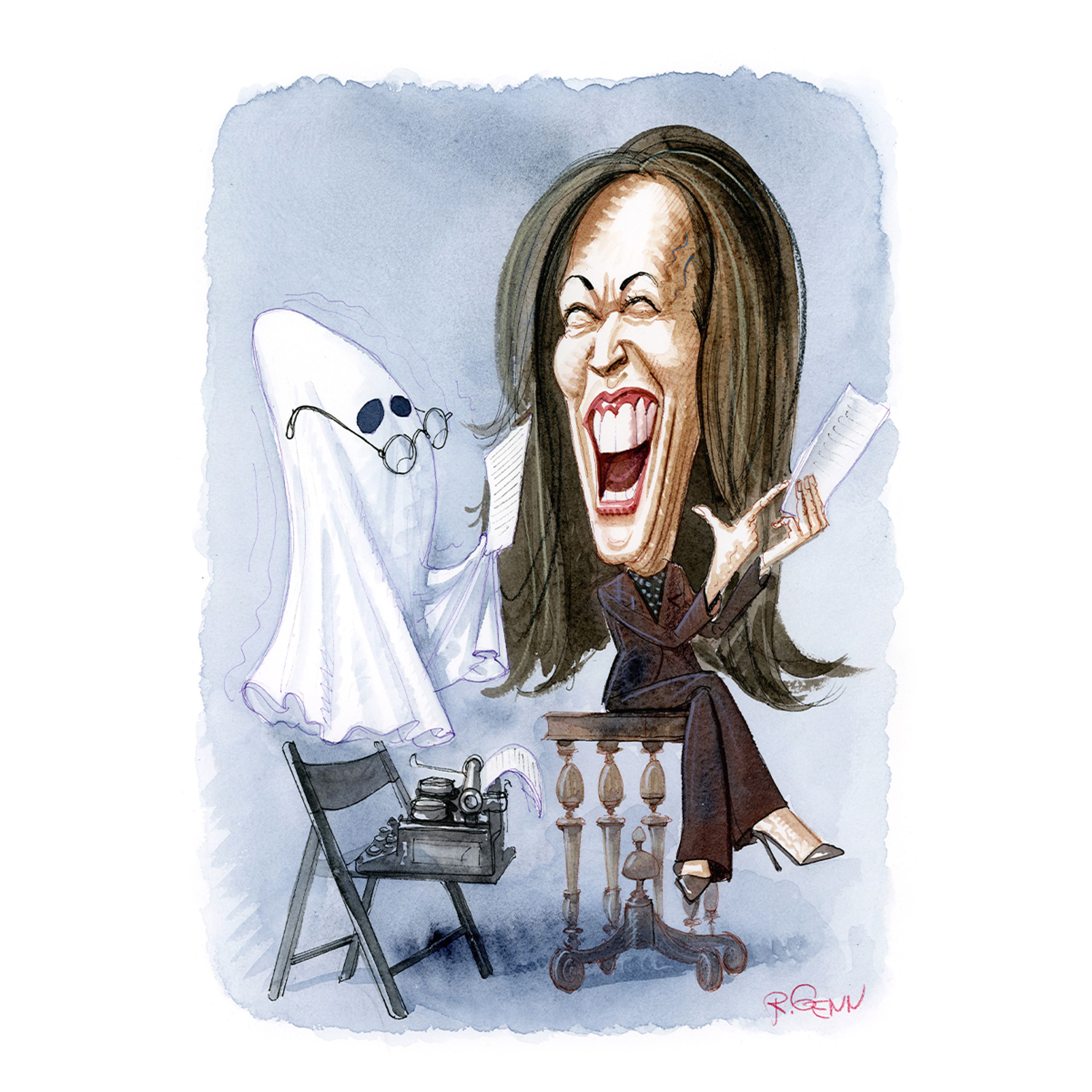
• Two ambitious Democrats attended the Munich Security Conference to showcase their frivolity. Representative Alexandria Ocasio-Cortez (N.Y.) flubbed a predictable question about Taiwan and criticized the arrest of Nicolás Maduro on the grounds that America had committed “acts of war just because the nation is below the equator,” which Venezuela is not. It got worse: She said that “completely unconditional” American aid to Israel “does not make sense.” “I think it enabled a genocide in Gaza,” she declared. California Governor Gavin Newsom turned his attention to Immigration and Customs Enforcement agents: “I want to remember all those images of masked men, the secret police, something familiar in Germany.” Newsom explicitly and AOC by implication compared American domestic and foreign policy to the greatest crimes of the past century, in the country where those crimes were committed. Germans can get arrested for loose references to the Nazi period, but Americans, thanks to our First Amendment, are free to commit drive-by history.
• United States Customs and Border Protection agents fatally shot Alex Pretti, a 37-year-old Minneapolis resident, within weeks of the killing of Minneapolis resident Renee Good by ICE agents. Partly as a result, public opinion seems to have turned against President Donald Trump’s deportation tactics. In the days that followed, Secretary of Homeland Security Kristi Noem was sidelined. Trump adviser Stephen Miller conceded that the agents “may not have been following protocol” -- a shift from officials’ earlier, evidence-free insistence that Pretti had been bent on killing. The social media provocateur at the head of the operation, CBP agent Gregory Bovino, was reassigned. And Trump dispatched border czar Tom Homan to Minnesota. There, Homan promptly took the temperature down. “I have staff from CBP and from ICE working on a drawdown plan,” he announced within a week of Pretti’s shooting. The federal government has the obligation to enforce federal law, and opponents of immigration-enforcement agencies should protest peacefully -- rather than impede or threaten officers. Still, the Trump administration’s decision to shift away from spotlight-seeking dragnets in Minnesota and toward less antagonistic enforcement operations led by Homan is wise and prudent, if belated.
• Former CNN anchor Don Lemon inserted himself into a story in Minneapolis and now faces criminal charges. In mid-January, anti-ICE protesters disrupted an ongoing church service in the city, targeting it on the theory that an assistant pastor worked for ICE. The protest unquestionably trespassed on church property and interrupted worship services; the government further alleges that protesters blocked stairways and separated terrified children from their parents. That’s disgraceful, especially in an era when church and school shootings have become alarmingly common. Charges were appropriate, and Minneapolis prosecutors weren’t likely to bring them, so the Department of Justice did instead. More controversial is the DOJ’s decision to charge Lemon, who was on hand with advance knowledge (he claimed on his live stream of the protest to have conducted “reconnaissance” beforehand) and told his viewers that he was with “resistance protesters.” The First Amendment gives journalists no immunity for participating in a crime, but the charges allow Lemon to posture as a journalistic martyr. Prosecutors had better have strong enough evidence to justify charging him.
• Someone needs to remind Secretary Noem that surveillance cameras exist. Last month, ICE officers were pursuing a target who fled a traffic stop in Minneapolis when, the officers said, two other illegal immigrants came out of a nearby apartment building and began attacking them with a broom handle and a snow shovel, prompting one of the officers to open fire in self-defense. One of the alleged assailants was struck in the leg. Noem rushed to accuse the illegal immigrants of the “attempted murder of federal agents.” Now that attorneys for the men have produced surveillance video that disproves the agents’ account, the DOJ has decided to drop all charges. The video shows that the illegal immigrant who was struck in the leg was standing in his doorway, far from where the agents were scuffling with their target. The agents are being placed on leave and may be charged for making “untruthful statements” under oath. Noem’s false statements -- this is just the latest in a long line of misleading descriptions of incidents involving federal agents -- serve only to delegitimize her agency’s efforts to enforce immigration law.
• A federal grand jury in Washington, D.C., thwarted the DOJ’s attempt to indict six congressional Democrats over a video that, while potentially disruptive of military discipline, was legally unimpeachable. Led by Senators Elissa Slotkin (Mich.) and Mark Kelly (Ariz.), the lawmakers -- all of whom have intelligence or military experience -- declared that our troops are not required to obey illegal orders. Our forces, of course, needed no such reminder. The Democrats neglected to point to any specific allegedly illegal order, though they seemed to hint at the air strikes against drug boats in the Caribbean. It was crass political messaging. Trump’s response was unhinged. He accused the six of “SEDITIOUS BEHAVIOR, punishable by DEATH!” His prosecutors -- who by now know the drill -- tried to prosecute. Worse, the armed forces joined in the lawfare by administratively proceeding against Kelly, a retired Navy captain still subject to military law. The case was patently meritless: It is not incitement of insubordination or lawlessness to urge troops to follow the law. And the executive’s leveraging of law enforcement powers against members of Congress in the absence of an obvious crime profoundly offends the separation of powers. The Democrats will certainly impeach Trump if they retake the House, but he is writing the articles for them.
• Trump has become one of the world’s richest crypto entrepreneurs, making the Biden family’s $27 million influence-peddling scandal look penny-ante. To pull it off, shortly before the 2024 election he started a crypto enterprise, World Liberty Financial, with Steve Witkoff, his New York real estate pal and current special envoy to the Middle East. It was secretly seeded with half a billion dollars from Sheikh Tahnoon bin Zayed al Nahyan, the deputy to and intelligence chief for his brother Sheikh Mohamed, the king of the United Arab Emirates. Concurrently, WLF -- ostensibly run by sons Eric Trump and Zach Witkoff -- got help building the blockchain infrastructure from Changpeng Zhao. Zhao had been convicted of felony money laundering for allowing his crypto exchange (Binance, now banned in the U.S.) to become a covert funding channel for “terrorists, cybercriminals, and child abusers,” in the words of the DOJ. When WLF rolled out USD1, its new stablecoin (a form of cryptocurrency pegged to the value of the dollar), Tahnoon -- whose government was lobbying Trump to pardon Zhao -- bought an astonishing $2 billion of the untested coin, investing it in Zhao’s Binance. Stablecoin operates like a bank: issuers like WLF invest the purchase proceeds. Trump and Witkoff therefore stand to make $80 million per year from Tahnoon’s purchase. Subsequently, Zhao got his pardon, and the UAE got access to the advanced microchip technology from which Biden security officials and congressional Republicans had blocked it over concerns about Tahnoon’s ties to Beijing. If Democrats take control of the House this fall, expect to hear a lot more about this.
• During a late-night social media jaunt, the president reposted a video from an anonymous account about election-related conspiracy theories that cut to an AI-generated cartoon in which Trump and his political opponents are depicted as various members of the animal kingdom bopping to the Tokens’ 1961 hit “The Lion Sleeps Tonight.” (We wish we could end this paragraph here.) That Trump was portrayed as a lion was merely puerile. That the Obamas were portrayed as monkeys was plainly racist: Congressional Republicans such as Senator Tim Scott (S.C.) and Representative Mike Lawler (N.Y.) made it clear that this was unacceptable. White House officials mumbled about the carelessness of an unnamed staffer and deleted the post from the president’s account. Perhaps Trump hadn’t watched the whole video before reposting it or requesting that it be reposted. Still, he should have realized by now that the hyperactivity of his thumbs -- and those of some of his colleagues -- is a generalized problem for which he deserves the lion’s share of the blame.
• The Bureau of Labor Statistics released a pair of monthly reports showing promising developments. The agency found that the U.S. economy added 130,000 jobs in January, the largest increase in more than a year and more than half the number of jobs added in all of 2025. Year-over-year inflation continued to cool, declining from around 3 percent for much of the past two years to 2.4 percent in January. (The Federal Reserve’s target is 2 percent, so there is still work to be done.) Last summer, Trump fired Erika McEntarfer, the previous commissioner of the BLS, after receiving data he didn’t appreciate, claiming preposterously that McEntarfer had cooked the books to hurt his political standing. Now that the same procedures have yielded happier numbers, the president is trumpeting the agency’s reports as vindication of his economic mastery. Yet there are troubling signals. Almost all job gains in the past year have been concentrated in health-care industries, such as hospitals and nursing homes, which are likely to be funded indirectly by public entitlement programs. Meanwhile, employment in several other sectors that are more reliant on private demand either declined or stayed flat. On the inflation front, prices of tariff-sensitive goods ticked higher as companies increasingly pass on higher costs to consumers. Trump should hold off on the victory lap.
• The market’s initial response to Kevin Warsh’s nomination as chairman of the Federal Reserve, summed up by a jump in the dollar, is encouraging. Warsh was appointed the youngest-ever Fed governor in 2006. With experience and good connections on Wall Street, Warsh was well equipped to help navigate the global financial crisis that soon followed. The steps taken -- the bailouts and all the rest -- will be debated for decades, but, however painfully, we did get to the other side. Warsh left the Fed in 2011, but he has never abandoned his critique that the institution is doing too much. Since then, the central bank has often seemed more concerned with promoting “inclusion,” fighting climate change, and pursuing other frivolous missions than with inflation. The Fed, Warsh wrote in 2025, “has acted more as a general-purpose agency of government than a narrow central bank.” We agree. Not so incidentally, so does Treasury Secretary Scott Bessent. The question for Warsh, who we should note has only one vote on the board, is how his long-standing hawkishness on inflation -- some of it, when he was at the Fed, of the boy-who-cried-wolf variety -- can be reconciled with the views of a president for whom, it sometimes seems, no interest rate can be too low. Warsh’s desire to see a smaller Fed balance sheet is praiseworthy, but it will be hard to square with lower interest rates. He has a delicate balancing act ahead of him, and that’s before he gets confirmed.
• Republicans are pushing the Safeguard American Voter Eligibility (SAVE) Act, which appears to have majority support in the Senate. Its goal is popular and necessary: ensuring that only U.S. citizens vote in federal elections by requiring specific forms of proof of citizenship to register to vote. But it is already a federal crime as well as a deportable offense for noncitizens to vote in federal elections, or to represent themselves as citizens when registering. Violations happen, and a proof-of-citizenship requirement would make them easier to detect and catch, but the incidence is low -- think dozens, not thousands. The Constitution wisely places primary responsibility for running elections in the states rather than in Washington; federal rules are only a backstop. The 1993 “motor voter” National Voter Registration Act (NVRA) required states to register voters merely upon proof of residency, such as a utility bill. The Supreme Court ruled in 2013 that the NVRA prevents states from imposing their own proof-of-citizenship requirements; Congress could fix that. Congress could also enforce the REAL ID Act of 2005, with which five states still don’t comply. But calls for Republicans to end the Senate filibuster in order to pass the SAVE Act would cause great mischief in exchange for very modest ends. Senate Republicans should not sell their patrimony for this mess of pottage.
• Even by the low standards of gerrymandering, what Democrats are doing in Virginia is both outrageous and legally dubious. Abigail Spanberger, the state’s new, supposedly moderate governor, is scheming with Democrats in the legislature to create an expected ten-to-one Democratic House district map. Currently, Virginia’s eleven congressional districts send six Democrats and five Republicans to the House. Republicans won 40.9 percent of the House seats over the past four cycles, winning four seats in 2018 and 2020 and five seats in 2022 and 2024, so Virginia’s existing congressional maps can hardly be said to have favored the GOP. But Democrats would prefer that Alexandria, Arlington, and the rest of the D.C. suburbs -- currently represented by three heavily blue districts -- be able to control the rest of the state. So, under the new map proposed by Spanberger in a naked partisan power grab, five different districts snake their way to the Beltway. Virginia isn’t even pretending to do this for any reason other than to benefit Democrats -- and unlike the majority parties in California or Texas, they can’t claim a long-standing mandate from voters for governance by just one side. They ought to be ashamed, and they ought to be defeated.
• The annual Census Bureau estimates of national and statewide population growth from July 2024 to July 2025 paint a picture that should alarm blue America. The nationwide growth rate dropped by half, from 1 percent in 2023–24 to 0.5 percent in 2024–25. Only two states, West Virginia and Montana, bucked that trend. That’s almost entirely the result of tighter borders: Net international migration peaked in 2024, with 2.7 million more people entering the United States than leaving it. That number dropped to 1.3 million in 2025 and is projected to keep plunging. The foreign-born population dropped from 53.3 million to 51.9 million just between January and June of 2025. As usual, the list of fast-growing states is predominantly red, and the list of lagging states is predominantly blue. Per the American Redistricting Project, solidly red states (led by Texas and Florida) stand to gain eight House seats and electoral votes in 2032, with three more gained by North Carolina, Georgia, and Arizona. Blue states stand to lose nine seats, with two more lost by swing states Pennsylvania and Wisconsin. That reflects both a likely blue-to-red shift and a shift among swing states from the Rust Belt to the Sun Belt. If demographics isn’t destiny, it’s a powerful current.
• Former Miss USA contestant Carrie Prejean Boller got into a contentious back-and-forth at an interfaith working group meeting of Trump’s Religious Liberty Commission. Prejean Boller denounced Zionism, castigated the “Zionist slaves” who are beholden to that philosophy, and defended Candace Owens’s antisemitism. The head of the commission, Texas Lieutenant Governor Dan Patrick, accused her of trying to “hijack” the proceedings “for her own personal and political agenda” and kicked her off the panel. As of this writing, Prejean Boller is forecasting her untimely death at the hands of Zionist assassin squads. We hope she gets the help she needs, if not the attention she seeks.
• The Trump administration revoked the Obama administration’s 2009 finding that six greenhouse gases pose a danger to the public by exacerbating global warming. This “endangerment finding” gave the Environmental Protection Agency the authority, under the Clean Air Act, to issue manifold rules limiting greenhouse gas emissions from sources across the U.S. economy. Most notably, the finding was cited to justify ever-tightening standards for new vehicles’ carbon dioxide emissions, including the electric vehicle mandate that the Biden administration tried to sneak through. Yet greenhouse gases such as carbon dioxide, a natural component of the atmosphere, cannot be considered air pollutants. Neither are such substances threatening, if the word has any limits to its meaning, as they do no injury to those who breathe them in. America has a federal government of limited powers and even more limited capabilities. Controlling global temperatures was never one of either. The Trump administration deserves credit for finally telling the EPA to stick to actual air pollution.
• If you’re planning to have a baby in the next three years, the president wants you to sign your child up for a Trump Account. You’ll find $1,000 in there, courtesy of the U.S. Treasury, and you can deposit additional money to invest tax-free in your child’s future. All American children born between the start of 2025 and the end of 2028 are eligible for Trump Accounts, which become available on July 4, 2026. Although investments within a Trump Account will grow tax-free, withdrawals will be taxed as regular income. Critically, individual contributions will not be tax-deductible. No withdrawals can be made until the child turns 18, and after that, withdrawals before age 59½ will be considered early and face a 10 percent penalty. It’s a well-intentioned policy, but it would make more sense to expand existing tax-advantaged savings accounts than to create another category of them and to give parents any aid through a larger child credit. After the Trump Accounts program expires in 2029, the government should shift focus to enable families to spend and invest their own money as they see fit.
• Aluminum is now approximately 60 percent more expensive in America than in the rest of the world. This is the natural result of protectionist tariffs, which currently sit at 50 percent for aluminum. American aluminum producers love the policy, as it enables them to charge higher prices. Everyone else loses, including the many more companies in downstream industries that purchase and process aluminum to manufacture other goods. Workers, more of them in those industries than the aluminum business itself, pay the price in lost jobs and lower wages, and consumers ultimately bear the burden of subsidizing economic inefficiency. Trump might have belatedly gotten the message, as his administration is reportedly thinking of paring back the aluminum tariffs. He should do one better by rescinding them entirely.
[slideshow slideshow="1921297" /]
• The Federal Aviation Administration announced a halt to all flights to and from El Paso International Airport for ten days for “special security reasons.” This would have been the biggest shutdown of flights in the U.S. since 9/11. The very next day, the FAA abruptly lifted the closure. Less than an hour later, Transportation Secretary Sean Duffy posted on X, “The FAA and [Department of War] acted swiftly to address a cartel drone incursion. The threat has been neutralized, and there is no danger to commercial travel in the region.” CBS News reported that the airspace closure was not because of cartel drones but because of a planned test by the Pentagon of new anti-drone technology: “Two sources identified the technology as a high-energy laser,” it reported. One would think that the Pentagon could find a testing site that isn’t adjacent to a major civilian airport. But if this disruption was in fact caused by a cartel drone incursion, that’s deeply disturbing and warrants further explanation to the public. In any event, everyone involved needs a refresher on clear and timely communication.
• Mayor Zohran Mamdani’s promise to bring the “warmth of collectivism” to New York City hasn’t panned out for mentally ill and drug-addicted New Yorkers who are wandering the streets this winter. A prolonged cold snap that settled over much of the eastern half of the United States claimed the lives of at least 20 homeless people in the city. The city’s permissiveness toward them and their self-endangerment is mindless and morally bankrupt. Mamdani has opposed breaking up homeless encampments, preferring policies that provide housing to those who can’t care for themselves. But this assumes that the city’s homeless want shelter. Not all do, even if that puts their lives at risk. Mamdani is now saying he will reverse his policy, but the god-awful deaths on the streets of New York City are unlikely to be the last foreseeable and preventable disaster under the new mayor.
• Major victories for common sense have been achieved in debates about transgenderism in the past month. First, Algerian Olympic boxer Imane Khelif acknowledged in a recent interview that he has male chromosomes. Khelif, who won gold at the 2024 Paris Olympics after brutally beating his female opponents, said he has undergone hormone treatments to lower his testosterone levels and plans to comply with future testing requirements. Olympic officials had permitted him to compete based on gender identity rather than sex. The admission vindicates concerns over men’s participation in women’s sports while discrediting a determined media campaign of obfuscation. Second, a detransitioner secured a $2 million verdict in a medical malpractice case in New York against her plastic surgeon and psychologist and their medical practices over a double mastectomy performed on her when she was a minor -- a ruling likely to encourage similar lawsuits in the years ahead. The jury’s verdict affirmed that doctors and psychologists ignored the plaintiff’s underlying psychological conditions and rushed her to undergo the surgery, causing permanent harm. Finally, the American Society of Plastic Surgeons became the first major medical organization to issue a statement opposing “gender-affirming” surgeries for patients under 19. The American Medical Association followed suit with a similar recommendation. After years of deference to ideology, reality is beginning to reassert itself -- one admission, one court ruling, and one policy shift at a time.
• The monstrous sentence -- 20 years -- handed down by a Beijing-controlled Hong Kong court to democracy campaigner Jimmy Lai, a 78-year-old man in failing health, is an affront to human decency, a display of raw power, and an insult to international law. In 1995, Lai founded Apple Daily, a newspaper that, like Lai himself, became a prominent voice in the increasingly dangerous fight for democracy in Hong Kong. As Beijing’s ratchet tightened, Lai, a rich man who could easily have moved elsewhere (he took British citizenship in 1996), stayed put. After years of harassment that ranged from his arrest to the petrol-bombing of his house, he was arrested in 2020 and held in solitary confinement. His new sentence is for supposed conspiracies to publish seditious publications and to collude with a foreign country to endanger national security: all under a vague national security law imposed ex post facto. Given his age, his health, and the even tougher conditions he can expect as a convict, the length of his term, the harshest ever imposed under that law, is effectively a life sentence. The best hope for Lai is that the numerous appeals for his release from figures such as Trump and Rubio will persuade China to let the old man go into exile. Set this brave man free as soon as possible.
• Japanese Prime Minister Sanae Takaichi won big in a snap parliamentary election. Her conservative Liberal Democratic Party gained 316 seats in the 465-member House of Representatives, the lower house of Japan’s bicameral parliament, marking the first time since World War II that a party has won more than two-thirds of the seats. Takaichi is an enthusiastic fan of Trump. The president responded to her election by wishing her “great success.” A lot of traditional U.S. allies in Europe are irked with the Trump administration, sometimes with good reason. But in a world full of trouble, at least the U.S.-Japanese relationship remains strong.
• Xi Jinping tightened his grip on China’s military with the shocking purge of its most senior uniformed official, Zhang Youxia. Zhang, once considered Xi’s most trusted military ally, was accused of leaking information about the country’s nuclear weapons program to the U.S. (If that’s true, that’s a sterling accomplishment for America’s spies.) Xi has cut a swath through the Chinese military’s upper echelon. He is creating a Chinese force that is bigger, more powerful, and absolutely loyal to him. The removal of experienced generals might represent a setback to Chinese military readiness. At the same time, however, the removal of senior personnel who until now moderated Chinese foreign policy -- and their replacement with younger, more ideological, and more risk-prone officers -- might increase the likelihood of an imminent invasion or blockade of Taiwan. Takaichi’s victory in Japan, meanwhile, was helped by voters’ anger over China’s bullying reaction to her comment that an attack on Taiwan could be an existential threat to her country -- which would permit a military response under Japan’s otherwise pacifist constitution. Deterrence can keep the peace, too.
• The Andrew W. Mellon Foundation -- the United States’ largest backer of the humanities -- is deploying its $7.7 billion endowment to support progressive education initiatives. Recent grants include $500,000 to the University of Utah for research on “transgender and queer of color critique” and an $8 million project titled “Visualizing Abolition” at the University of California, Santa Cruz. As more and more students flock to Southeastern Conference schools like Alabama and Clemson, in part because of the more traditional educational experiences on offer, the Mellon Foundation’s activism only deepens the divide. The people who complained about the Kochs’ influence on campuses are of course almost all unconcerned.
• The media world recoiled in shock at the news of massive layoffs at the Washington Post. The cries are utterly predictable and notable only for their monolithic nature: Owner Jeff Bezos is truly to blame, not only for his “sickening efforts to curry favor with President Trump” (in the words of ex–Post editor Marty Baron) but for his unwillingness to pay for these journalists to write work that goes unread. Why can’t one of the world’s richest men just continue to send checks to the Post’s reporters and be content with losing money? Implicit in the complaint is the idea that the Washington Post is a “public good” of a higher sort -- like a waterworks or highway system. It is not. Since recasting itself as a “Democracy Dies in Darkness” organ of resistance to the first Trump administration, the Post has dug itself a very large hole in terms of branding. Without a doubt, it is deeply unfortunate when people lose their jobs, particularly in an industry where there are fewer jobs than ever to go around. But Bezos is a businessman. He is not required to absorb limitless financial losses, particularly to maintain an institution whose ideological focus he feels is misplaced. Demanding that he act otherwise reeks of entitlement.
• Pop singer Billie Eilish won a Grammy Award. As she collected her trophy, she bleated out a half-baked thought: “No one is illegal on stolen land.” Does she mean that America is, essentially, illegitimate? If so, are America’s immigration laws the only laws that are null and void? What about the Constitution’s property protections? Eilish’s luxury Los Angeles home supposedly sits on the ancestral land of the Tonga tribe. Strangely, she seems in no rush to return it. Perhaps Eilish didn’t devote a moment’s thought to what she blurted onstage. Nor, it seems, did anyone in the audience who foolishly nodded along.
• Robert Duvall’s first film role was a famously nonspeaking one: as Arthur “Boo” Radley in To Kill a Mockingbird (1962). He carried himself on-screen with an energy far different from that of his younger peers such as Robert De Niro, Al Pacino, and Dustin Hoffman. Duvall’s career began to take off in the late ’60s with small but significant supporting roles in films such as True Grit and M*A*S*H, but it exploded when he was cast as Tom Hagen in The Godfather. From that point on, he brought conviction and intensity to every role he played. The list of films he starred in -- Apocalypse Now, Network, The Great Santini -- is practically a cursus honorum of classic mid- to late-’70s cinema. His greatest role might have been on television, as Augustus McCrae in CBS’s adaptation of Larry McMurtry’s Lonesome Dove. As McCrae said on his deathbed: “My God, it’s been quite the party.” Dead at 95. R.I.P.
• Edward H. Crane’s influence on the cause of liberty was profound. In 1974, he became chairman of the Libertarian National Committee and shaped the identity of the Libertarian Party. His most consequential decision came in 1977, when he left the committee to found the Cato Institute alongside Charles Koch and Murray Rothbard. Crane was Cato’s president from its founding until 2012, and his leadership transformed the organization into one of the world’s most influential think tanks. A tireless advocate of political and economic freedom, he has died at 81. R.I.P.
• Jesse Jackson, born to a single mother in South Carolina, became a Baptist minister and a young follower of Martin Luther King Jr. Post-Sixties, he dabbled in Chicago politics, and he promoted black businesses nationally via a scheme that was a double shakedown -- to profit from his harassment of white-owned companies, black businessmen had to pay him off. These activities were lost in the blaze of his first presidential campaign in 1984. Walter Mondale won the Democratic nomination, but Jackson won the applause contest. He could be eloquent, in the manner of the pulpit. He could also be demagogic and careless. He abandoned his opposition to abortion to make himself a leftmost candidate, and casually referred to New York City as “hymietown.” In 1988, he ran for president again, but his performance thinned and stiffened. The first successful black presidential candidate was the Ivy League–educated, memoir-writing Barack Obama; the first successful amateur presidential candidate was Donald Trump. Jackson was a harbinger of identity politics, a practitioner of personality-driven populism, and -- at his rare best -- a ringing voice. Dead at 84. R.I.P.
Politics
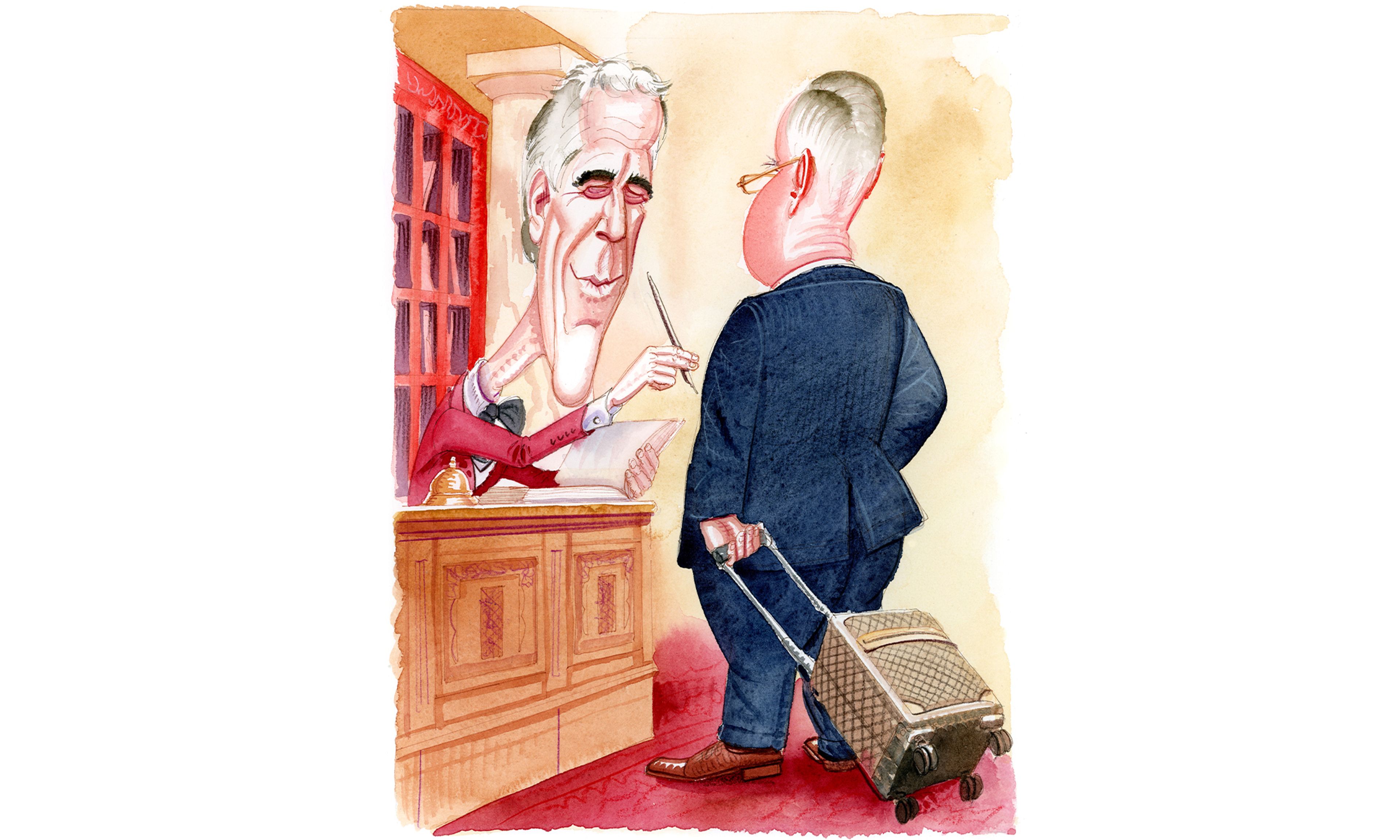
The Book of Epstein
The avalanche of information released in accordance with the Epstein Files Transparency Act -- 3 million pages, 30 gigabytes, pick your metric -- adds innumerable details to a picture that was already fairly clear and dismayingly sordid.
Jeffrey Epstein was a financier, social climber, and convicted sex offender. These strands of his career interwove and reinforced one another like ropes in a knot. Savvy investing made him a fortune and enabled him to give money and advice to others. He used each donation he made and person he met to bring him into contact with yet more contacts. He stood ready to help those he knew with services of all kinds (the description that appeared in recent coverage was “concierge”) -- tips, trips on his airplane or to his various properties, introductions, personal shopping, and sex. Over the years, he assembled for his own pleasure a number of young women, some of them underage. These he might have shared with selected friends. He was, in short, a pimp.
The acquaintances who battened on his sexual favors tended, as Ezra Klein and other commentators have noted, to be Nerd Masters of the Universe: men who were smart, successful, or both, and who imagined that whatever pinnacle they attained would look like a Playboy Mansion party circa 1975. When they found that, because of their own awkwardness, this was not so, Epstein was there to assuage their disappointment.
Donald Trump’s many enemies confidently expected him to number among the damned, though the file dump supports his claim that he had warned authorities about Epstein early on. Whether from outraged morality or enlightened self-interest, good for him. (Trump associates Steve Bannon and Commerce Secretary Howard Lutnick did not keep Epstein at arm’s length, even after a guilty plea.) The president who was a frequent flyer on Air Epstein was Bill Clinton, who had, after all, pre-scandalized himself. Andrew Mountbatten Windsor, Charles III’s younger brother, lost his royal titles thanks to his dealings with the man. The list of the implicated goes on.
So, unfortunately, does the list of innocent bystanders. In a blowhard speech on the House floor, Representative Ro Khanna (D., Calif.), backed by Representative Thomas Massie (R., Ky.), read off six previously redacted names of “wealthy, powerful” Epstein associates. Except that four of them turned out to have nothing at all to do with Epstein. Such is the danger of mining raw files. If Khanna had not enjoyed the immunity of speaking on the House floor, he would soon be one much less wealthy and powerful man. Monsters like Epstein prey on women who are wretched and unstable and who become more so thanks to their entrapment. Their tales of woe must all be subject to verification.
The Epstein affair adds one more log to the bonfire of antisemitism that lights the internet. Epstein was Jewish, former Israeli Prime Minister Ehud Barak was demonstrably linked to him, so Candace Owens concludes that Epstein worshipped Baal. (Not a very Jewish thing to do, according to 1 Kings 18.) For true believers, all events enforce conviction.
Lust, as Jimmy Carter correctly suggested, is everywhere, and the rich have the means to gratify, conceal, and propagate it. American sex scandals spin through the Clinton and Kennedy White Houses, Hollywood, Stanford White’s rape of Evelyn Nesbit, and back to the Founding era: when cousins Richard and Nancy Randolph were accused of having an affair, notwithstanding Richard’s marriage to Nancy’s sister Judith, and murdering the newborn who resulted. Their lawyers, Patrick Henry and John Marshall, got them off. Epstein’s depravity is the latest addition to this list. His adroitness and his acquaintances’ insecurities complicate things. The rest is an old, ruinous tale.
The Stat
50.5 percent -- the proportion of individual income tax revenue that will be spent paying interest on the national debt in 2036, according to the Congressional Budget Office.
The CBO’s latest ten-year budget baseline document, updated to include the tax and spending changes from last year’s One Big Beautiful Bill Act, projects that the federal government will spend $2.144 trillion on net interest on the national debt in 2036. (It spent $970 billion in 2025, which was $77 billion more than it spent on defense.) In 2036, the CBO projects that individual income taxes, the largest source of federal revenue, will raise $4.249 trillion. This means that just over half (50.5 percent) of individual income tax revenue in 2036 will be used to finance spending that already happened. And the CBO projections are an optimistic scenario. They aren’t supposed to be realistic projections of what will happen but rather what would happen if today’s policies generally stayed in place. They assume that there will be no recessions or wars or new government programs for the next ten years. They also assume that interest rates will remain stable and relatively low. Even under those generous assumptions, the CBO projects that the budget deficit will be 6.7 percent of GDP in 2036. That’s more than double the average deficit from 1976 to 2025 and higher than any year of the 1930s. So in ten years, the U.S. will be running deficits greater than those it ran during the Great Depression while half of your income tax dollars will be going to interest payments -- and that’s assuming everything goes pretty well.
by Dominic Pino

About the Author
NR Editors includes members of the editorial staff of the National Review magazine and website.
Featured Tags
Advertisement
Advertisement


Comments