Tom Stoppard, the Real Thing
Written by John O’Sullivan
By the time of his death, he was the Mount Everest of a Himalayan range of gifted playwrights
Share this story
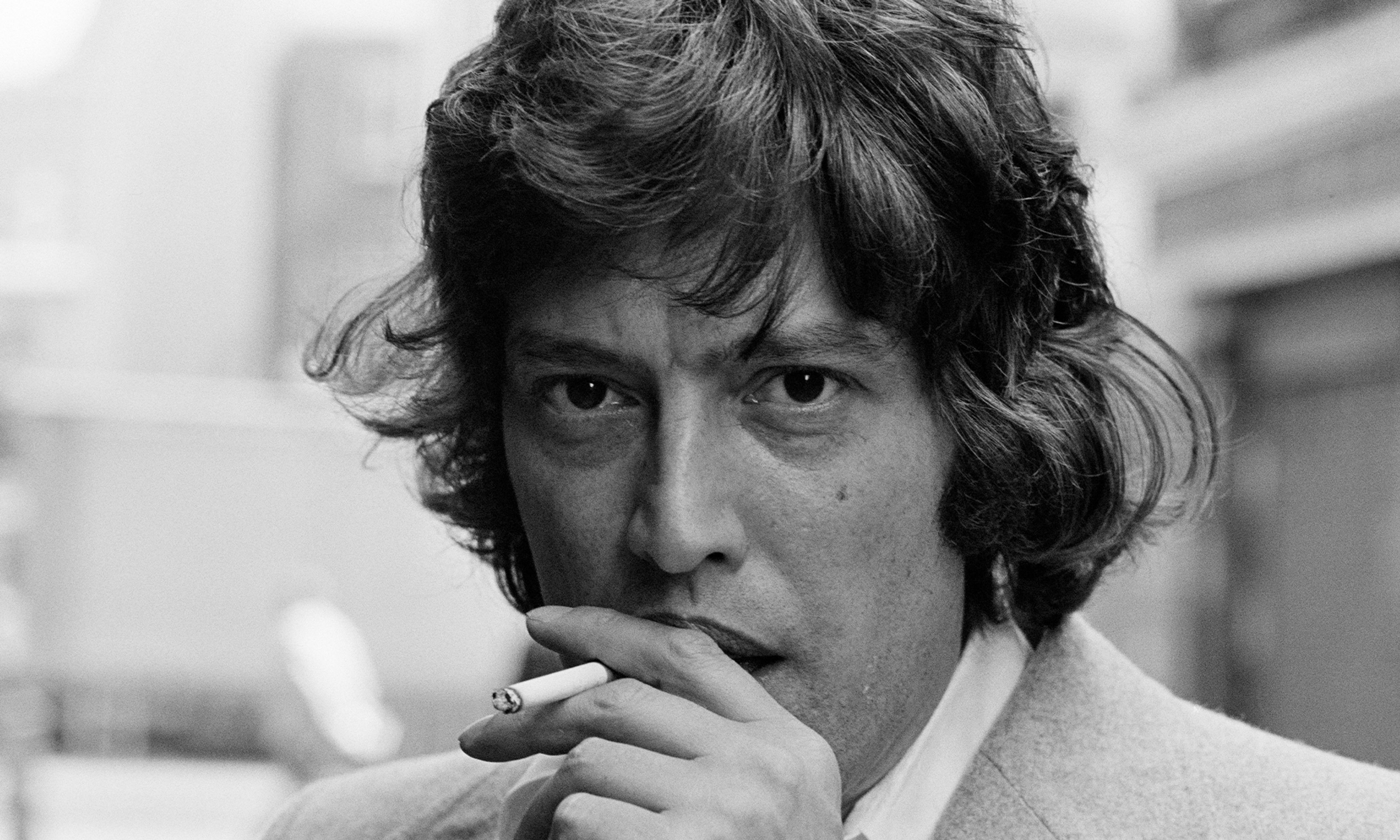
Tom Stoppard
Given the rivalries, resentments, and sheer bitchiness that suffuse the worlds of theater and literature, the almost universal outpouring of grief, love, admiration, and gratitude for the life and works of Sir Tom Stoppard on his death, at home in Dorset in late November, was truly extraordinary. Almost every obituary from around the world declared that his greatest plays -- Arcadia, Jumpers, Travesties, Rosencrantz and Guildenstern Are Dead, The Real Thing, Night and Day, The Coast of Utopia, The Invention of Love, and Leopoldstadt -- have secured his reputation as one of Britain’s greatest playwrights, of this or any period. Fault-finding critics, professional rivals, and grateful actors and directors alike told tales of his kindnesses, repeated his jokes, and competed to claim his friendship.
“It is actually one of Tom’s achievements that one envies him nothing, except possibly his looks, his talents, his money, and his luck,” said his friend and fellow playwright Simon Gray. “To be so enviable without being envied is pretty enviable.”
And that makes the tributes more impressive. From the 1956 performance of John Osborne’s Look Back in Anger to the present, Britain has been home to the greatest explosion of playwriting talent since Shakespeare. A short personal list would include, in addition to Osborne and Gray, Peter Nichols, Harold Pinter (a Nobel Prize winner), Alan Ayckbourn (whom the French call “the English Chekhov”), Shelagh Delaney, Alan Bennett, Michael Frayn, Peter Shaffer, Anthony Shaffer, Caryl Churchill, James Graham, and Richard Bean. Not long after Stoppard’s breakthrough with the 1966 performance of Rosencrantz and Guildenstern Are Dead, he entered that fellowship near the summit.
In those early days he allowed that Pinter was his superior. But Pinter had only one trick: the theater of the unspoken menace. Stoppard was a fountain of words in the service of a multiplicity of tricks, styles, and genres. He constantly tried new things. And as his succession of major plays emerged, he saw his name become an adjective in the Oxford Dictionary -- Shakespearean, Pinteresque, Stoppardian. By the time of his death, he was the Mount Everest of a Himalayan range of gifted playwrights.
None of this meant he lacked critics. The criticism that dogged him from the first was that his plays were too intellectual, too chilly, too hard to understand. Someone had asked of Rosencrantz and Guildenstern, “What’s it about?” He replied, “It’s about to make me very rich.” Which it did.
But Stoppard’s lightheartedness also froze critical opinion in amber, directing it away from the truth, namely that his plays were nearly always about important things: the difficulty of really knowing a person or of grasping a concept, such as whether beauty is intrinsic to art (Artist Descending a Staircase); the inadequacy of modern philosophy as a guide to moral conduct (Jumpers); the love of truth and the search for knowledge for their own sake, especially since you don’t know whether they will be useful a hundred years hence (Arcadia); the defense of free speech against censorship from organized political opinion, including from organizations of journalists (Night and Day); and the necessity for an artist not to use temporary political issues, usually left-wing ones, as a crutch and substitute for writing something true and original (Travesties but also Stoppard passim). What misled this school of critics was that in Stoppard’s hands such ideas and themes were not sermons or manifestos. His plays fizz with plot twists, puns, jokes, and ideas from all directions while presenting characters who advance and divert the plots by their passions, follies, amours, and sometimes their moral decency and rebellion against reigning orthodoxies.
Romantic love and commitment are in those plays too, but as secondary to the main or other themes. When he came to deal with them directly in The Real Thing, he drew on his experience of three marriages (one tragedy, one betrayal, one calm and prosperous voyage) and two serious love affairs. The result was a play that starts with a “Stoppardian” playwright dealing coolly and wittily with evidence of infidelity only to fall tearfully apart when the real thing comes along. He comes together again, revived in part by his duty to write well: in a brilliant speech, he compares good writing to the construction of a cricket bat so that, when the ball is hit right, it sends it off singing. It brought the house down nightly. Whether or not it reflected his own romantic experiences, audiences didn’t doubt that real feelings were playing out on the stage.
Criticism of Stoppard’s chilly intellectualism was perhaps also invited by his stance as a writer who uses modernist techniques -- from unreliable narrators (Travesties) to parallel narratives (Arcadia) -- for traditionalist purposes, and sometimes to undermine the spirit of modernism. An example is After Magritte, which opens in the style of a Magritte painting in which a policeman peers through a window into a surrealist scene containing a woman playing a tuba, a man in full evening dress down to the waist and standing on one leg, etc. The lights go out, then come on again to show a hilarious fast-moving farce that ends with the original scene -- except that all of its oddities have perfectly reasonable explanations. That subversion was just fun; sometimes Stoppard has more serious intentions.
In Stoppard, cheerfulness keeps breaking in on meaningless despair, followed by meaning, even if both have to be cloaked in mystery. That’s what Stoppard delivered in one of his most interesting plays, Artist Descending a Staircase, in which he constructs a debate between three artists, one a modernist, one a traditionalist, and one who returns in his old age from modernism to traditionalism. The debate allows Stoppard to hurl some sharply skeptical remarks at modernism. For instance: “It is not hard to understand modern art. If it hangs on a wall it’s a painting, and if you can walk around it it’s a sculpture.” But the exchanges take place amid attempts to solve a possible murder, an actual suicide, and the deathbed conversion to traditionalism, in all of which the main clue is the answer to the question: Is beauty vital to art? The artist in love with Sophie, the character who is the symbol of beauty in the play, returns to traditionalism when he realizes that the answer is yes.
“Skill without imagination is craftsmanship and gives us many useful objects such as wickerwork picnic baskets,” one of the artists says. “Imagination without skill gives us modern art.” Usually seen as a criticism of modern art, this can be interpreted equally well as a defense of craftsmanship. That interpretation also defends Stoppard against the snobbish charge that he wasted his prodigious talents by employing them on minor works, for obscure outlets, and in script-doctoring failing Hollywood blockbusters. To reply that he earned vast sums by using a craft mastered over years in “the wings” is defense enough. Poverty is not a sign of genius but of either failure or bad luck. His work for Hollywood improved the enjoyment of millions of cinemagoers as well as his bank balance. Stoppard himself was unembarrassed by it. Once asked if Shakespeare would write screenplays, he replied “No, he would re-write them.”
Stoppard, however, was far more than a craftsman. But in the service of what? He was famously reluctant to discuss the general ideas that drove his writing. But critics who loved the paradoxes, wit, learning, and invention of his plays found it hard to square those qualities with what appeared to be suspiciously conservative opinions on a range of issues. He detested communism, for instance. That opinion is expressed repeatedly throughout his work.
His BBC television play Professional Foul -- which can still be found on the internet -- has an unlikely hero in an apolitical Oxbridge philosophy professor of mildly liberal views who accepts an invitation from the Czech communist government to speak at a conference in Prague almost solely because that enables him to attend the Czechoslovakia-England soccer match. Having encountered the oppressive reality of life under communism, he throws away his abstract lecture on technical philosophy and embarks on a defense of freedom of thought. The authorities are forced to sound the fire alarm to clear the hall and silence him. The plot twist of having a communist government shout “Fire” in a crowded theater to silence a liberal academic is one of Stoppard’s best jokes -- though not quite a laughing matter in today’s Britain.
Liberals could forgive Stoppard his anti-communism, but his other offenses were more serious. Though he avoided talking directly on politics, he was pretty clearly a conservative, even a Tory. In the 1980s he shocked most of the theater world by saying kind words about Margaret Thatcher. In recent years he resisted wokeness and cancel culture. But his conservatism went deeper than politics. As Charles Moore has written in The Spectator, he confessed as much in a 2015 address to the Rectory Society, “a fan club for existing and former clergy houses.” Stoppard, who owned one himself, said: “There is always a tension between our desire to conserve and our need to progress . . . and yet I know myself to be a conservative.”
In that speech and elsewhere, he admitted to a deep love of England and its language, his pleasure in becoming English, and his pride -- which he also put in the mouth of one of his Russian exiles in Victorian London in The Coast of Utopia -- that the English had somehow blundered into liberty without having a proper theory of it.
That pride was already rare at the moment of Stoppard’s first success. In the early 1960s, John Osborne had departed the country (briefly) with a curse -- “Damn you, England!” -- and many other writers followed his example. The sheer awfulness of traditional Britain, salvageable only by immigration and reparations, is an orthodoxy in culturally advanced circles -- and patriotism a heresy prosecutable in court. Yet it was the coolly sophisticated ironist Stoppard, the country’s greatest playwright, who persisted in emotional expressions of love for England that were almost sentimental, even nostalgic.
In Stoppard’s final play, Leopoldstadt, he returned to his Jewish roots and Central European history. It contains many of his characteristic touches and fizzing one-liners: “Why must Jews choose between being pushy and humble?” But these are set amid the tragic history of a Viennese Jewish family, from the optimism of Franz Joseph’s time to destruction in the Holocaust. Stoppard’s own family fled Czechoslovakia when he was two; he ended up in England via Singapore and India. In the play, the character of a young man who also ends up in England, and also discovers his Jewish roots, is close to Stoppard’s story. This is the play, terribly true to history, that most completely refutes the image of Stoppard as a cold and detached observer. It also happens to be a great play.
And how do we ensure that such things don’t happen again? If Stoppard mostly avoided giving a simple synopsis of his broad political outlook, in a 1977 New Yorker interview with Kenneth Tynan, he did let down his guard and declared his support for “Western liberal democracy, favoring an intellectual elite and a progressive middle class and based on a moral order derived from Christian absolutes.” In the context of 1977 and the Cold War, that implies a liberal conservative disposition plainly preferable to most of the then-available alternatives. But Stoppard had already depicted in Jumpers the implicit contradictions in that formulation and how they were likely to play out: liberalism and democracy would turn on each other, the intellectual elite would be corrupted by politics and turn away from every kind of truth, the middle class would become radicalized, and the moral order, embarrassed by its Christian roots, would evolve into an amoral self-interested pragmatism. Today’s Britain is scarcely different from, if less colorful than, Jumpers’ fictional one, in which the Radical Liberal Party wins a landslide election victory even as a two-man British moon shot malfunctions (leaving only enough fuel for one to return to Earth) -- at which point its Captain Scott boots out his subordinate Oates and takes off to ensure his own survival. Its initial audience would have known what every English schoolboy once knew -- that when Captain Scott’s 1912 expedition to the South Pole went awry, Captain Oates, who felt his weakened condition was endangering his companions, left the tent saying, “I am just going outside and may be some time,” and walked off into the blizzard in the hope they would survive. Alas, they didn’t. Will we? For, as Stoppard suggests, we are likely to have far fewer men like Captain Oates in a country whose elites don’t respect those Christian virtues.
And that answers the question “Why didn’t Stoppard win the Nobel Prize?” that John Maier asks in a brilliant UnHerd article. It is because Stoppard, in two ways, was on the side of the people against the corrupted elites. He wanted to please them by giving them the best work he could -- he wanted to dazzle them, and he succeeded in doing so. He also refused, in shaping his art, to pay tribute to the unholy trinity of race, class, and sex (and the oppression therefrom). The Nobel committee was on the opposite side of that barricade.
Stoppard was awarded the Order of Merit, where he joins the much more exalted company of Winston Churchill, T. S. Eliot, and . . . Margaret Thatcher.
To end on the great playwright’s own words is only fitting. From The Real Thing:
Words . . . They’re innocent, neutral, precise, standing for this, describing that, meaning the other, so if you look after them you can build bridges across incomprehension and chaos. But when they get their corners knocked off, they’re no good any more. . . . I don’t think writers are sacred, but words are. They deserve respect. If you get the right ones in the right order, you can nudge the world a little or make a poem which children will speak for you when you’re dead.
Which is why rumors of Tom Stoppard’s death are greatly exaggerated.
About the Author
John O’Sullivan is a senior fellow at National Review Institute and a contributing editor of National Review.
Featured Tags
Advertisement
Advertisement




Comments