Share this story
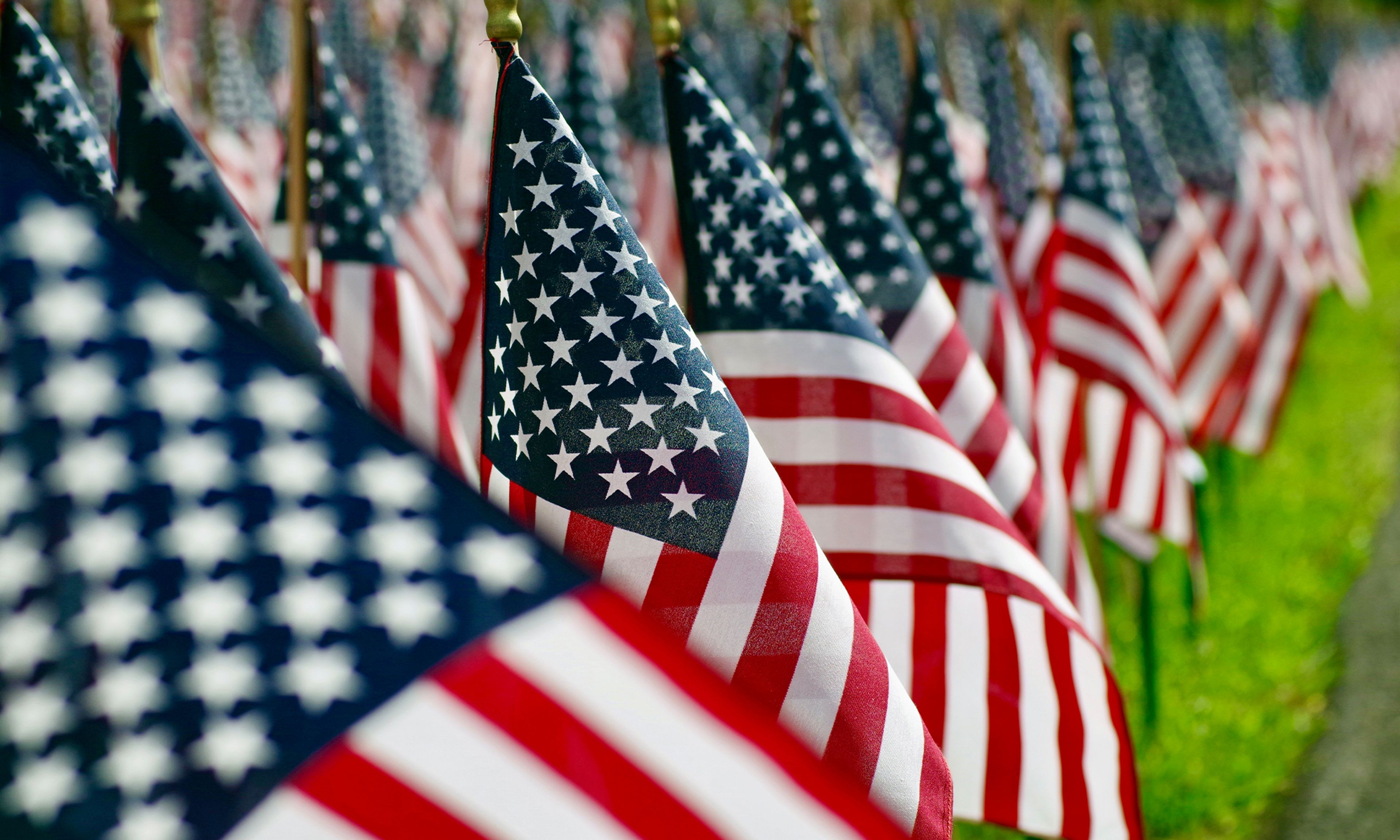
Adrienne Bresnahan/Getty Images
On January 30, ten days after the second Trump administration began, the secretary of homeland security, Kristi Noem, traveled to the Northeast. She visited the Haskell Free Library and Opera House, which straddles the U.S.-Canadian border. On one side is Derby Line, Vermont; on the other is Rock Island, Quebec. The Haskell family built the structure on the border because they wanted Americans and Canadians to have equal access.
Throughout the building, there is a black line, indicating the border. On her visit, Secretary Noem hopped from one side to the other. “U.S.A. No. 1,” she said on the American side. “The 51st state,” she said on the other. She did this over and over.
Was this patriotism? If you’re really No. 1, do you have to thump your chest about it? Do you have to belittle someone else? How should a great and good country behave?
One of Donald Trump’s projects, this time around, is to make Canada our 51st state. Naturally, this has caused an upsurge of patriotism in Canada. It saved the incumbent Liberal government from electoral defeat. The Conservatives had been way ahead in the polls, but Canadians rallied ’round their flag, and their government.
You recall how their anthem begins: “O Canada! / Our home and native land! / True patriot love in all of us command!” (When I was growing up, that line was “in all thy sons command,” which I like better, but that is a different article.)
Other people have patriotism too -- this was a point often stressed by William F. Buckley Jr. They have their national pride, a sense of dignity. Usually, WFB made this point when talking about Latin America, where we Yanks have sometimes swaggered. He had lived in Latin America; he knew. (Also, he married a Canadian.)
On his first day in office, this time around, Trump signed an executive order renaming the Gulf of Mexico the “Gulf of America.” This was capricious, Caesaristic. The Gulf of Mexico has been called the “Gulf of Mexico” for some 500 years.
Mobutu renamed his country “Zaire.” Trujillo renamed his country’s capital after himself. This renaming business is a study unto itself.
The Associated Press decided that it would keep “Gulf of Mexico” in its stylebook. For this offense -- this act of lèse-majesté -- the White House banned the AP from presidential news conferences and similar events.
On February 9, Trump proclaimed “the first ever Gulf of America Day.” On May 8, the U.S. House passed a bill codifying “Gulf of America.” Its sponsor was Marjorie Taylor Greene, the Georgia Republican. Only one Republican voted against the bill: Don Bacon of Nebraska. “It just seems juvenile,” he said. “We’re the United States of America. We’re not Kaiser Wilhelm’s Germany or Napoleon’s France. We’re better than this. It just sounds like a sophomore thing to do.”
When does patriotism degenerate into jingoism? We could examine this question at length -- or simply quote Justice Stewart, who (referring to hardcore pornography) said, “I know it when I see it.”
The hat says “Make America Great Again.” Leaving aside the question of “again,” we could have a long, contentious discussion of what makes America great.
In the first weeks of his second term, Trump moved to abolish many institutions and programs, including Radio Free Asia, PEPFAR, and the National Endowment for Democracy. RFA is one of our broadcasting services, of course. PEPFAR is the anti-AIDS program instituted by President George W. Bush in 2003. NED was founded at the instigation of President Reagan in 1983.
As some of us see it, these are jewels in the American crown, things that reflect a national greatness. Elon Musk, President Trump’s senior adviser, declared NED an “evil organization.” Americans have wildly different ideas of good and evil, right and wrong.
Renaming the Gulf of Mexico? Bullying Canada? Threatening war against Denmark over Greenland? To me, these are not expressions of greatness but signs of a smallness. They diminish America. This “might makes right” business is unexceptional -- bog-standard throughout history -- rather than exceptional.
Consider the arena of international trade. When President Trump complains that America has been “treated very badly” -- “ripped off” -- for decades and decades, this is America the Small. America as victim. The U.S. of A., victimized by such predators as Bangladesh and Thailand? Talk about “a pitiful, helpless giant,” as Nixon warned us not to be.
Here’s Reagan:
Our peaceful trading partners are not our enemies; they are our allies. We should beware of the demagogues who are ready to declare a trade war against our friends -- weakening our economy, our national security, and the entire Free World -- all while cynically waving the American flag.
Here’s some more:
The expansion of the international economy is not a foreign invasion; it is an American triumph, one we worked hard to achieve, and something central to our vision of a peaceful and prosperous world of freedom.
Consider a different arena, immigration. Many of us are for strict control of our borders while valuing immigration as part and parcel of our national story. Last year, the two major presidential nominees were Donald Trump and Kamala Harris. Three of their four parents were immigrants (and the fourth was the son of an immigrant).
More Reagan: “The blood of each nation courses through the American vein.” An earlier Republican president spoke of blood, too. Actually, he did so in 1858, two years before he was elected.
Immigrants are “our equals in all things,” said Lincoln. They have no connection to the Founders “by blood,” but they certainly have a connection to the truths enunciated in the Declaration of Independence. They can claim these truths “as though they were blood of the blood, and flesh of the flesh, of the men who wrote that declaration.”
Over and over in last year’s campaign, Trump said that immigrants “are poisoning the blood of our country.” Poisoning the blood. Think of it. Is it possible to oppose illegal immigration, strongly, without stating or believing such a thing? Of course it is.
In 2016, 2020, and 2024, Trump refused to say that he would accept the result of the election. (Call him consistent.) Late in the 2016 campaign, Pat Buchanan -- a spiritual godfather of Trumpism -- wrote that the “populist-nationalist Right” was “moving beyond the niceties of liberal democracy to save the America they love.”
To some of us, America would not be America without the “niceties,” or necessities, of liberal democracy: the rule of law, limited government, the separation of powers, the Bill of Rights. Constitutionalism is as American as apple pie -- more than.
On May 4 this year, Mike Pence accepted the John F. Kennedy Profile in Courage Award. “To forge a future together, we have to find common ground,” he said, and “whatever differences we may have as Americans, the Constitution is the common ground on which we stand.”
Pence received the award, said the JFK Library Foundation, “for putting his life and career on the line to ensure the constitutional transfer of presidential power on January 6, 2021.”
In 2022, writing about the election two years before, Trump said, “A Massive Fraud of this type and magnitude allows for the termination of all rules, regulations, and articles, even those found in the Constitution.” More recently -- February 2025 -- Trump put out this statement: “He who saves his Country does not violate any Law.”
Back to January 6 -- when a mob assaulted the U.S. Congress for the purpose of halting a constitutional process. They succeeded in doing so, for several hours. All the while, the president, in the White House, watched it unfold on television. He tweeted, “These are the things and events that happen when a sacred landslide election victory is so unceremoniously & viciously stripped away from great patriots.”
He has always hailed the rioters as “patriots.” When they were defendants and convicts, he called them “political prisoners.” After October 7, 2023 -- when Hamas attacked Israel -- he started calling them “hostages.” An obscenity, some of us think.
And on Inauguration Day of his new term -- when he was renaming the Gulf of Mexico and signing other orders -- he granted clemency to them all.
We all have different ideas of patriotism, as we have different ideas of American greatness. Judge Royce C. Lamberth is a conservative of the old school. He was appointed by Reagan to the district court in D.C. Many years later, at the beginning of 2024, he resentenced one of the January 6 rioters. In accompanying notes, he reviewed the facts of that day and stated, “This was not patriotism; it was the antithesis of patriotism.”
Even benign and luminous words can take on different coloration in different contexts, or in different mouths. In late October 2018, just before the midterm elections, President Trump ordered troops to the southern border to confront a caravan of migrants. This was called “Operation Faithful Patriot.” What is concordant to one ear can be discordant, even creepy, to another.
I always thought the worst thing about the USA PATRIOT Act -- the 2001 national security law -- was its name.
A lapel pin can be a lovely expression: sincere, idealistic, grateful. It can also be . . . what, performative? I recall John Kelly, Trump’s first homeland security secretary (a very different person from Kristi Noem, fans of both can agree). He had been a Marine Corps general. He had lost a son in Afghanistan. Before his confirmation hearing, it was suggested to him that he wear an American-flag lapel pin. Kelly replied, “I am an American flag.”
Taking the stage at CPAC, in 2020, Trump hugged the American flag. And kissed it. Sort of “slow-danced” with it, some observed. (Some had more ribald observations.) Was this patriotic? Or something else?
To adapt an old phrase, patriotic is as patriotic does.
If you want an example of patriotism, look to the Ukrainians, I say. They have set an example of patriotism -- and courage, and self-sacrifice -- for all time. I think of a phrase used by Kyle Parker, of the U.S. Helsinki Commission, in a podcast with me: “this valorous defense of hearth and home.”
They have also set an example of nationalism: insisting on their independence, their right to exist, fighting and dying to avoid conquest by a merciless empire.
The men and women of the Trump movement regard themselves as patriots and nationalists. What is their attitude toward the Ukrainians?
Americans have been arguing about patriotism since colonial days (and human beings have been arguing about it since Genesis). There are numerous quotable comments on the subject. Perhaps my favorite comes from Carl Schurz, the German immigrant who became a Union general, a U.S. senator, etc.: “My country, right or wrong -- when right, to be kept right; when wrong, to be set right.”

About the Author
Jay Nordlinger was a senior editor of National Review and a book fellow at National Review Institute.
Featured Tags
Advertisement
Advertisement

Comments