U.N.’s Global Carbon Tax Should Be a Wake-Up Call to Fight International Climate Extremism
Written by Daren Bakst
The United States should take necessary action to kill off the IMO global carbon tax.
Share this story
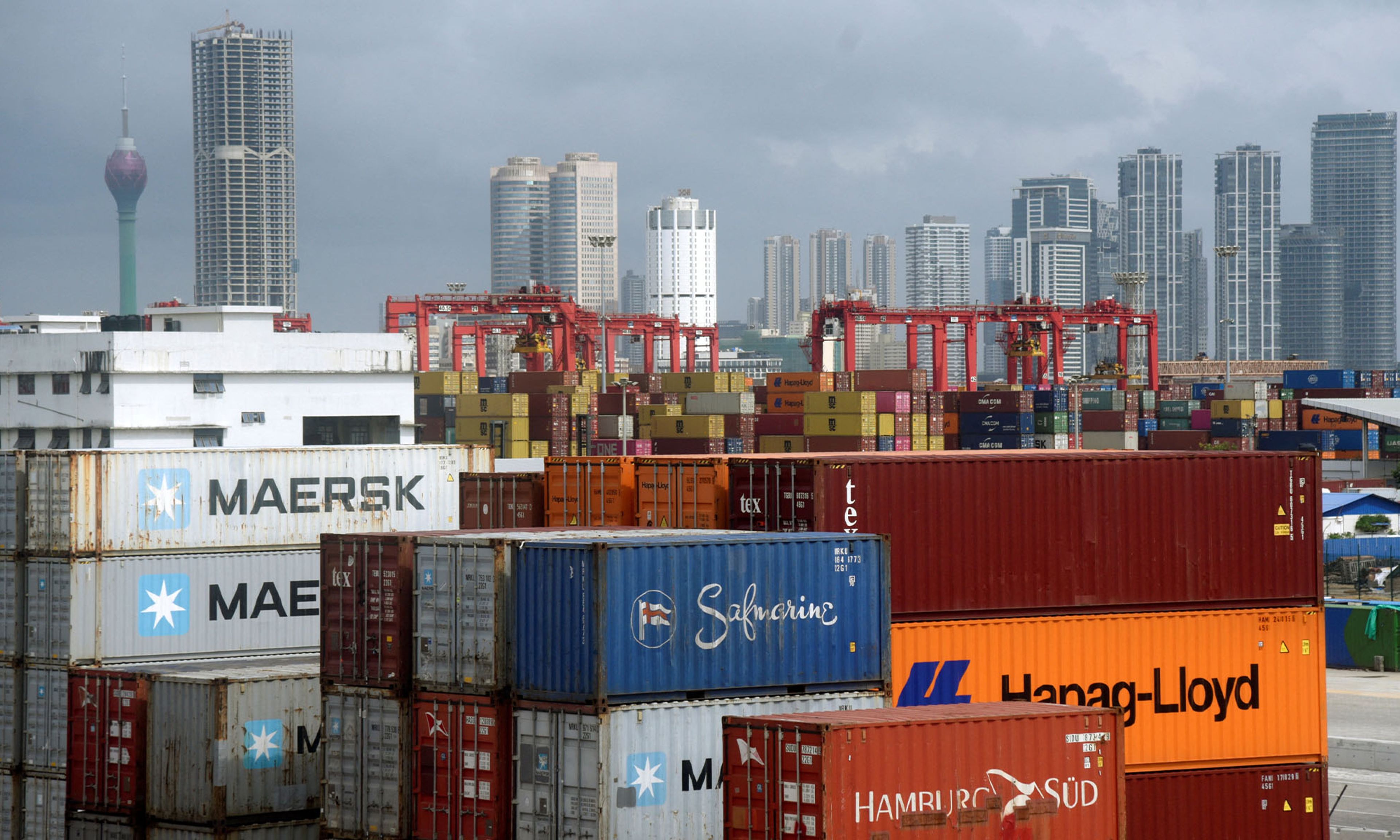
Shipping containers are stacked at the Adani-led deepwater Colombo West International Terminal, in Colombo, Sri Lanka, September 17, 2025.
The United States should be an international leader in the fight against energy poverty and for energy freedom.
Because, as of now, many countries are using their power through international bodies to impose their harmful, anti-energy climate agenda on countries who don’t share their ideological objectives.
This problem has recently been highlighted by the International Maritime Organization’s (IMO) proposed global carbon tax on the shipping industry. Until just a few days ago the IMO, a specialized agency of the United Nations, was set to impose its “Net-Zero Framework,” what is in effect a tax on carbon dioxide emissions from ships that exceed certain thresholds to be paid for by shipping companies. The IMO would have collected the revenue and then distributed it for such things as rewarding “low-emission ships” and for U.N. income redistribution schemes to “mitigate negative [climate] impacts on vulnerable States.”
This tax is especially egregious because it is a violation of the sovereignty of the U.S. and other nations. A U.N. international body would be imposing a tax on Americans, something that appears to be a first. The tax, according to the State Department, could increase global shipping costs by 10 percent or more.
It's also yet another example of Europe and the U.N. trying to dictate the domestic climate policies of other countries. The State Department made it clear that it understood the fundamental problem this posed when it stated that the U.S. would penalize nations “that sponsor this European-led neocolonial export of global climate regulations.”
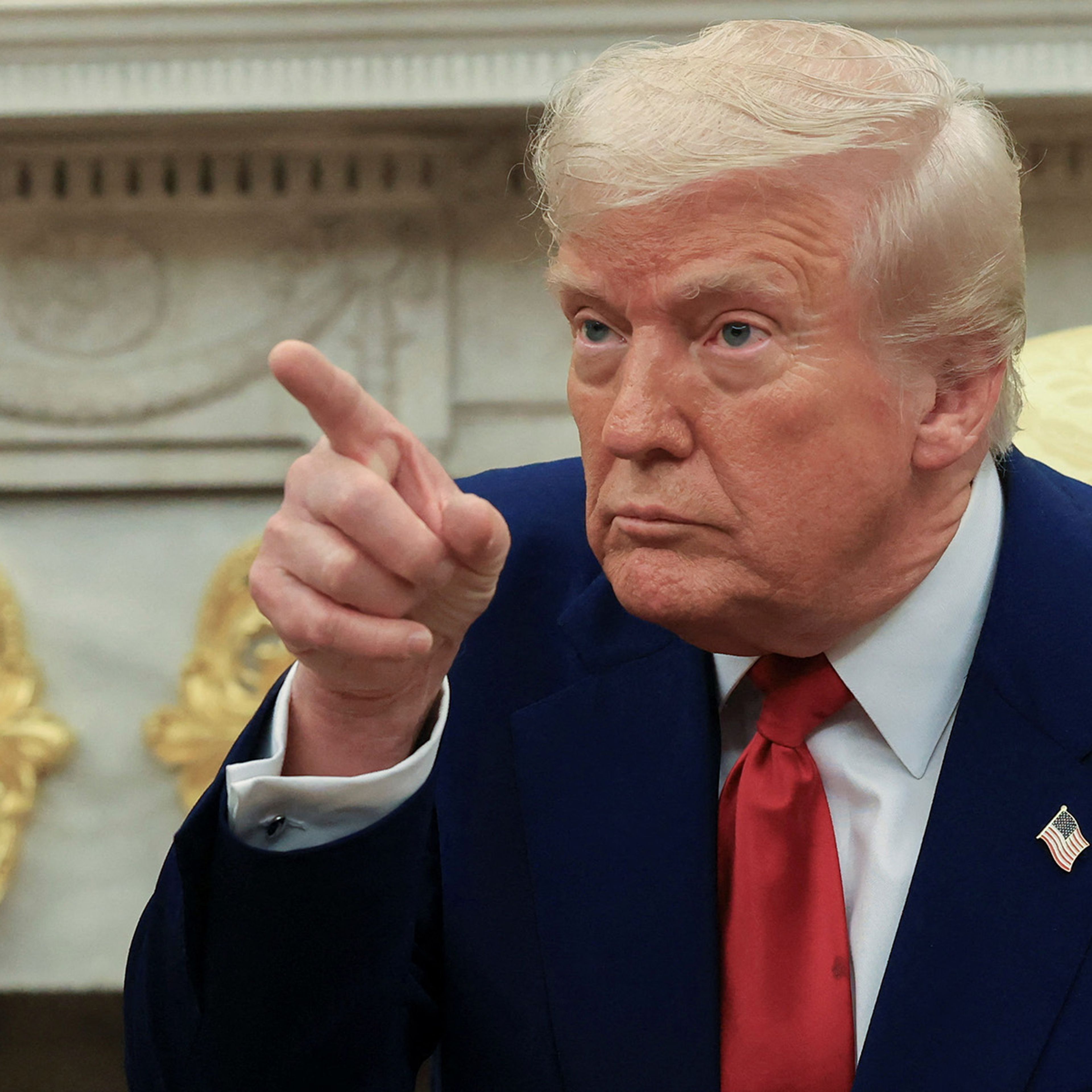
Fortunately, the Trump administration helped to delay a vote on the IMO tax plan for a year, but it is still looming. A tax delayed is not a tax canceled.
The IMO tax, though, is far from the only effort to impose climate policies on other countries. This past July, the U.N.’s top court, the International Court of Justice, issued a nonbinding advisory opinion that reads more like a climate manifesto than an example of logical legal reasoning. It concluded that member states have a duty to reduce and regulate greenhouse gas emissions.
It also stated the “failure of a State to take appropriate action to protect the climate system from GHG [Greenhouse Gas] emissions — including through fossil fuel production, fossil fuel consumption, the granting of fossil fuel exploration licenses or the provision of fossil fuel subsidies — may constitute an internationally wrongful act which is attributable to that State.”
While a nonbinding opinion, there is a very real possibility that this opinion will be used in various ways to justify greenhouse gas regulation in policy contexts across the world, as well as in litigation in other jurisdictions.
Then there’s the European Union’s carbon border adjustment mechanism, which is in effect a carbon tax imposed on goods based on their carbon intensity (i.e. how much carbon dioxide is emitted during production). The EU’s reason for the tax is clear: “to encourage cleaner industrial production in non-EU countries.”
Once again, here's that “European-led neocolonial export of global climate regulations.” The EU isn’t imposing a tax based on the specific attributes of a good itself. Instead, it’s trying to use trade to influence and change the climate policies and production methods of other countries, in part to protect what remains of European industries as decarbonization bites.
It isn’t enough that EU nations have adopted harmful policies that punish energy use and increase prices for their own citizens. They need to make sure other countries hurt themselves too, including developing countries that need fossil fuels to advance the well-being of their citizens.
The world can go down a misguided path of restricting energy to address climate change. Or nations can collaborate to unleash energy, innovation, and abundance to improve the lives of individuals today while also being in a much better position to address any real environmental challenges that arise, including any connected to climate change.
The United States should certainly take whatever action is needed to kill the IMO global carbon tax as well as the climate hysteria that is engrained right now in almost all of the work of the U.N. It also shouldn’t tolerate the EU’s carbon tax on goods.
But our country can’t just be on defense, we need to be on offense, too. This requires leading nations in an effort to reject climate extremism and to help solve energy poverty by allowing countries to use energy as they deem fit to meet their own objectives.
There are around 750 million people in the world without electricity. According to the World Bank, there are about 2 billion people “without access to safely managed drinking water services.” There are also about 700 million people who live in extreme poverty, defined as surviving on less than $2.15 per day.
Developing countries have more important issues to worry about than climate change. Getting rid of affordable and reliable energy isn’t just unjustified, it is, given the struggles of so many of their people, immoral. And the need for affordable and reliable energy is certainly not limited to developing countries. It’s a necessity for all nations.
The IMO’s proposed global carbon tax should be a wake-up call to the U.N.-EU attempt to impose a sweeping radical climate agenda on all countries.
The Trump administration has done a great job in fighting the IMO global carbon tax. Now it should lead a new international effort to fight for energy abundance and the economic prosperity that will inevitably follow.
About the Author
Daren Bakst is the director of the Competitive Enterprise Institute’s Center for Energy and Environment.
Featured Tags
Advertisement
Advertisement

Comments