Warner Bros. Shareholders Set to Increase Streaming Competition
Written by Michael Toth
Progressive efforts to derail the Paramount merger are baseless.
Share this story
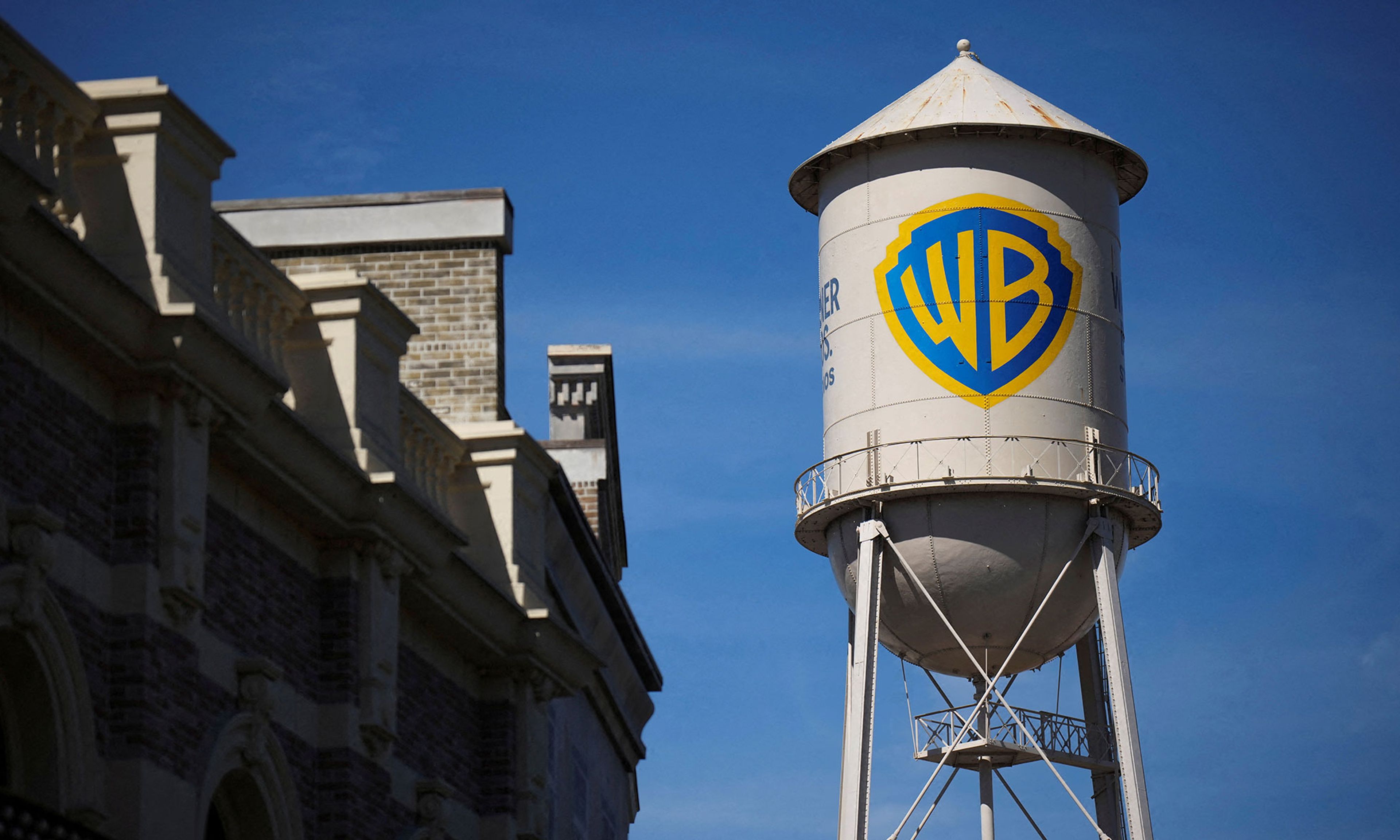
The Warner Bros. Water Tower at Warner Bros. Studios in Burbank, Calif., February 27, 2026.
Blue-state attorneys general (AGs), led by California’s Rob Bonta, are eyeing an eleventh-hour move to derail the blockbuster Paramount–Warner Bros. Discovery (WBD) merger, a $111 billion tie-up that would place HBO Max, a portfolio of cable channels including CNN, and WBD’s extensive film library and studio operations under the control of Paramount CEO David Ellison.
With a crucial April 23 shareholder vote looming, Bonta is reportedly in talks with other state AGs about how they can push back against this media merger. It won’t be their first rodeo. Last month, Bonta’s office led a coalition of eight Democratic AGs in opposing the proposed tie-up of rival TV broadcasters Nexstar Media and Tegna.
Paramount’s general counsel, Makan Delrahim, a former assistant attorney general overseeing the Department of Justice’s Antitrust Division, should be preparing for a fight. Bonta is coordinating with New York’s Letitia James. Together, they run two of the largest state AG offices in the country. Size matters in antitrust prosecutions, which require a stable of experts and large trial teams. California and New York have the horsepower that’s needed to go toe-to-toe with a deep bench of company lawyers and are fresh off a victory in the Nexstar merger, which a Sacramento federal judge has preliminarily blocked pending drawn-out proceedings at the trial court or an appeal.
The states would also have air cover from congressional Democrats and Hollywood liberals. This week, New Jersey Senator Cory Booker, ranking member of the Senate Judiciary Antitrust Committee, convened an unofficial “spotlight hearing” featuring critics of the deal, including actor Mark Ruffalo, who warned that the “concentrated oligarchic control this merger represents is a threat to free press, an informed populace, and democracy itself.” Senator Booker’s hearing came days after more than 3,000 members of the entertainment industry signed on to a letter organized by Jane Fonda in opposition to the merger.
As he did in the Nexstar-Tegna merger, Bonta is using the Paramount-WBD deal to cast himself as a pro-consumer watchdog while blasting the Trump administration’s generally business-friendly approach to corporate consolidations. Bonta has accused Team Trump of “abdicating its responsibility to enforce antitrust law” and “picking winners and losers.”
Don’t buy it.
The Paramount-WBD deal isn’t a grab for monopoly power. It’s about survival.
The streaming market is saturated with major players that can afford to spend massive amounts of money protecting their turf. Last year, streaming giants Disney, Amazon, and Netflix spent $23 billion, $22 billion, and $18 billion, respectively, just on content. That’s roughly twice the total annual revenue that WBD’s entire streaming business generated last year and ten times the total earnings of Paramount’s streaming service.
The scale and deep pockets of the top streaming companies have driven a wave of industry consolidation that long predates the Paramount-WBD merger. After Netflix showed that Americans were willing to “cut the cord,” the rest of the streaming business has been chasing the California-based behemoth, often turning to acquisitions to narrow the gap with the industry’s leader in member subscriptions. Disney’s 2019 acquisition of National Geographic, FX, Hulu, and other 21st Century Fox assets, Amazon’s 2022 purchase of MGM, and the creation that same year of WBD through the merger of Warner Media and Discovery were all designed with the same objective in mind: to capture more market share from Netflix and other competitors by offering a wider range of compelling content to viewers.
The Paramount-WBD merger is no different. The deal would bring together the fourth- and fifth-largest streaming services to create a viable competitor to Netflix, which, with roughly 325 million global streaming subscribers, remains the industry’s largest streaming service by a wide margin. Once merged, Paramount-WBD would have around 200 million streaming subscribers, making it the second-largest streaming service measured by subscribers, ahead of Disney and Amazon Prime Video.
The increased scale would give Paramount-WBD the capacity to keep pace with the massive investments that leading streaming platforms are pouring into new content. The combined company will also be able to draw on a deep and varied catalog — from HBO originals to live sports to a vast library of classics that can be rebooted or turned into a franchise with multiple sequels. As former Utah Attorney General Sean Reyes observes, Paramount-WBD could attract new customers through its “complementary intellectual property portfolios” and thereby “stabilize streaming prices, drive new content investment, and compete more effectively for creators and talent, precisely the kind of procompetitive outcome the consumer welfare standard is designed to permit.”
The deal may or may not pan out from a business perspective, but antitrust law is about stopping consolidations that harm consumers, not preventing companies from making big bets that their directors and shareholders approve. Under the Supreme Court’s ruling in United States v. Philadelphia National Bank (1963), mergers that result in a company with a market share of 30 percent or greater are presumptively anticompetitive. Paramount and WBD’s combined market share (measured by percent of total streaming subscribers) is 22 percent, well under the Philadelphia National Bank threshold.
AG Bonta is nonetheless raising concerns over potential price increases and the loss of jobs in WBD’s studio movie business, which Paramount is also buying as part of the deal. These claims are misplaced.
The reality is that a merger isn’t necessary for the largest streaming services to hike their subscription costs. Streaming prices have already been rising to cover the cost of new content and stem the losses that platforms faced after pouring capital into growth. There is no indication that blocking the Paramount-WBD merger will prevent streaming costs from continuing to head north. Last year, the top two streaming services, Netflix and Disney, hiked subscription fees by 38 and 172 percent, respectively. Just weeks after withdrawing its own bid to purchase WBD, Netflix increased the prices of its plans for U.S. subscribers again.
Blocking the merger won’t revive the studio business either. Box-office movie-ticket sales peaked in 2002 — five years before Netflix debuted the first streaming service — and are off by nearly 50 percent from their levels in 2000. While Paramount chief Ellison has said that the merged entity company plans to release 30 movies in the theaters, how long these movies remain in the theaters and the kinds of ticket revenues needed to increase the number of studio-made big-screen releases ultimately will depend on consumer demand.
As the antitrust case against the Paramount-WBD merger appears dubious on the merits, some analysts have suggested that AG Bonta may be more interested in using the threat of a lawsuit to extract concessions, including job protections for the home-state studio business. The company should hold the line. Consumers will thank them. After all, they are the ones who end up paying the “merger tax” in the form of higher prices, degraded service, and, ultimately, less competition when political stunts trump the rule of law.

About the Author
Michael Toth is the director of research at the Civitas Institute at the University of Texas, Austin.
Featured Tags
Advertisement
Advertisement

Comments