Share this story
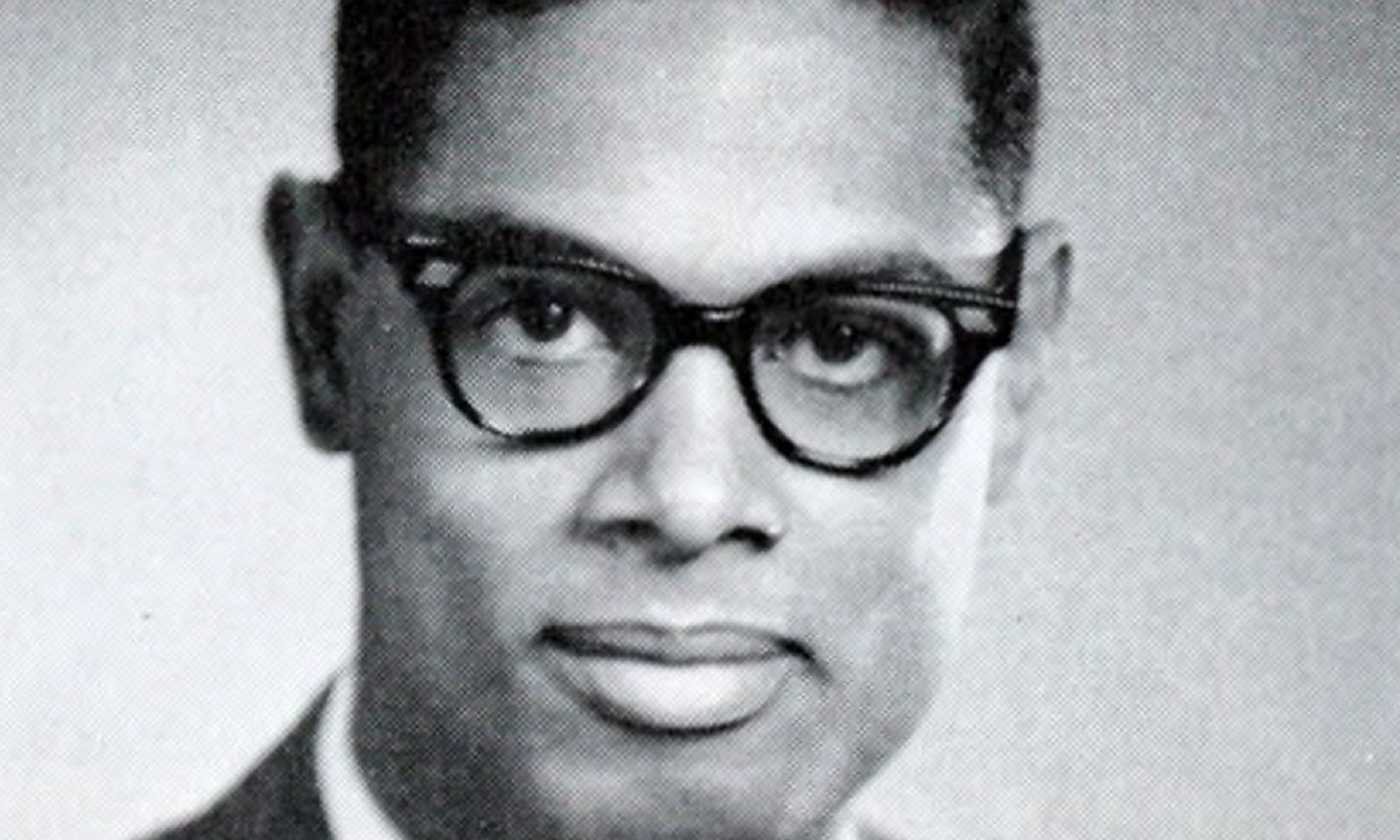
Thomas Sowell, 1964
To say that Thomas Sowell has written many books that have influenced the U.S. conservative movement would be an understatement worthy of the great man’s own autobiography.
Sowell is the author of 45 original books. Among these are Black Education: Myths and Tragedies (1972), a discussion of which schools and teachers have managed -- and which have failed -- to educate black American children; Ethnic America (1981), a winner of the Mencken Award for Best Book and perhaps the seminal history of America’s core populations; Preferential Policies (1990), one of very few analyses of affirmative action from a global perspective; Migrations and Cultures (1996), which introduced “culturalism” as a theory of human variation on par with, and rival to, both genetic hereditarianism and Ibram Kendi–style racial complaint; and Black Rednecks and White Liberals (2005), a fascinating summary of the historical roots of the disruptive ghetto culture common to the hood and the holler.
A crowded field! But if I, as a fan, had to choose only one book with which to introduce a new reader to Sowell’s catalogue, it would be The Vision of the Anointed. This 1995 hardback contains, in some form, virtually all of the core themes that made Tom’s name a famous one.
In it, he explores the idea that different political factions are motivated by very different understandings of human nature, his “culturalist” position that such mundane differences between population groups as average age and rate of study time explain variations in their performance better than either “oppression” or genes alone, and the related “never be univariate” idea that raw comparisons between (say) blacks and whites are worthless without statistical adjustment for the well-known differences between such populations. Sowell even dedicates a full chapter to his contempt for contemporary statistical trickery, which he lards with amusing descriptions of common mathematical dodges.
The Vision of the Anointed opens with one of Sowell’s more enduring contributions to the social scientific and public intellectual literature: his discussion of what exactly the “vision of the anointed” is compared with the rival “tragic,” or “constrained,” vision of human nature. Citing thinkers from Jean-Jacques Rousseau and Nicolas de Condorcet to Thomas Hobbes and Adam Smith, he argues that there has long been an intellectual contest between these two views of humanity, each of which he attempts to define.
To those with what Sowell calls the vision of the anointed, human nature is something close to a blank slate, and any person can be easily trained to behave in a variety of ways -- an idea at least as old as Rousseau’s charming and absurd Émile. Bad behavior, like aggression or military adventurism, is generally seen as the result of malicious training: “oppression” in some form, or the codified teaching of misunderstanding. And, since humans presumably can be made perfect but so far have not been, the intelligent should be suspicious of the past and its outmoded ideas such as Catholicism, Zen Buddhism, and “the two-parent father-headed family.” The true heroes according to this view are progressive intellectuals who have developed the “scientific” theories -- socialism, radical feminism, gentle parenting, planned parenthood -- that will usher in an eternally bright future.
Against this we may set the tragic vision. While the stereotypical advocate of the worldview of the anointed might be a young poet or sociologist, supporters of the tragic vision -- including Sowell and, for that matter, myself -- tend to be quants who are developing some grizzle in their beard. Over the years and decades, many of us have noticed that a plethora of popular future-building theories have completely failed to create utopia. Latter-wave feminism correlated directly with the U.S. divorce rate’s surging past 40 percent and the illegitimacy rate to 35 percent among native whites. Communism, meanwhile, killed perhaps 100 million people globally.
Even far less sweeping campaigns, like closing the moderate gap in black and white IQ test scores in the U.S., have proven challenging. From these basic facts, we Sowellians deduce certain unpleasant but obvious realities. First, there is a fairly set and highly predatory human nature, very much of the kind that all major religions and the more empirical social scientists identify. People, therefore, respond to logical incentives.
War and crime are the results not of confusion but of the plain fact that human beings enjoy taking things from fighting-age people they don’t much like -- and the best way to stop them from doing this is superior force. In this complex and oft-contested world, gaps between large populations can be due to any number of historical (who won the last war?), cultural, genetic, and stochastic factors alongside currently preferred variables like prejudice. Perhaps most important: those things that have actually worked to regulate the behavior of our rowdy species in the past, such as marriage, should be treasured rather than dismissed as primitive.
Sowell points out that the baseline assumptions of the tragic vision can be directly tested against those of the vision of the anointed. Take the case of the American criminal-justice system, for example, which was rapidly revamped in the 1960s.
The cases Mapp v. Ohio (in which the Supreme Court ruled that the inadmissibility of evidence obtained by violating the Fourth Amendment constrains state prosecutors as well as federal ones), Escobedo v. Illinois (which established suspects’ right to counsel during police questioning, based on the Sixth Amendment), Miranda v. Arizona (the origin of the eponymous warning given to criminal suspects about their rights), and Gideon v. Wainwright (which established the right of criminal defendants who cannot afford an attorney to have one provided by the state) were all decided within half a decade (1961–66). During almost the same chunk of time, the insanity defense was established, and mean sentence length was cut in half. Much of this was done, very openly, by reformers who held the vision of the anointed -- to “boost trust, by establishing that law was fair and worthy of respect,” as Sowell explains, among those “otherwise alienated from society.”
So, what happened? Pretty much what any sane housewife or country doctor would predict: crime skyrocketed. The murder rate doubled between 1961 and 1974. Rates of major violent crime, overall, tripled. Cop-killings increased 300 percent. This trend -- this new normal for crime -- accelerated after 1975: between the mid-1960s and the mid-1990s, crime went up 400–500 percent, and by more than that among African Americans. By 1991, the murder rate was 10 per 100,000 individuals, annually, and the black homicide-victimization rate often five times that.
And how did the Anointed respond? As Sowell puts it, primarily by denying and obfuscating realities that anyone who had to ride a city train could see. Higher crime numbers were attributed entirely to “better data collection,” the discussion of crime was rendered increasingly socially unacceptable, and the focus of every academic conversation turned to presumptive “root causes” such as “the degradation of slum life.” As our author notes, no explanation was provided about why these same problems had not caused as much crime in the past, nor was any evidence offered to suggest that these “root causes” had worsened since the 1950s or the Great Depression.
Noting that the same pattern just detailed has obtained with regard to trends ranging from sex education and the sexual revolution to the liberalization of the judiciary, Sowell -- perhaps a bit tongue in cheek? -- posits what I call the pattern of our age. In sequence: (1) young, shiny reformers notice normal human behavior (e.g., crime exists, older teenagers have sex), (2) this behavior is declared to be a crisis caused by Oppression, which only the Anointed can fix, (3) an Anointed solution (e.g., stop locking up criminals, to boost social trust, or introduce highly explicit sex ed in schools) is implemented, (4) the original problem gets much worse, and (5) talking about the problem and the failed solution becomes taboo -- and those who dare to do so are tarred as racists or flint-hearted upper-class enclosers of the commons. Sound familiar?
Definition and empirical analysis of the two quarreling visions, as defined by Sowell, makes up the core of The Vision of the Anointed, but the author also devotes a valuable chapter to calling out the major statistical tricks deployed by partisans -- for example, univariate analyses without controls (such as those showing that black mothers are more likely to die in childbirth than are white mothers), misleading groupings of disparate things, claims that group disparities are entirely explained by proven discrimination, and the use of data from constantly shifting groups of people (i.e., “the rich”) to make points about the nature of society.
Calling out one excellent example of the univariate problem and of poorly constructed comparisons at the group level, Sowell points to black mothers’ (slightly) higher maternal death rate (compared with that of white mothers), which is often seen as evidence of serious racism against non-whites and used to argue for such policies as free prenatal care. However, a closer look at the data reveals not only that the risk for all groups is low -- 22 deaths per 100,000, during a full six months after pregnancy -- but also that Hispanic and Asian women face less risk than white women do. Simply adding two other large groups to the analysis, so that it can be conducted properly, completely defeats progressive activists’ point.
And yet this sort of methodological sloppiness persists. A major paper published in 2020 in the Proceedings of the National Academy of Sciences argued that black babies are more likely to die if cared for by a white doctor, and it rattled all of obstetric medicine. A competent reanalysis revealed that the original researchers intentionally did not adjust for the birth weight of the babies, thereby ignoring the primary trait of high-risk infants. Moreover, high-risk infants are more likely to be cared for by older, whiter, generally more skilled doctors. And again, Asian and certain Hispanic babies fared “better” than white ones.
Such examples are not few. A great many data points on group performance, which can be used in an itemized, broken-out fashion to argue that modern racial bigotry causes group disparities, have very different implications when looked at in proper context. For example, the publicly available data show that white Americans currently earn annually an average of $74,932 per household, compared with black American households that earn “just” $46,774. However, the household incomes of Indian Americans ($152,341), Chinese Americans ($101,728), Persians ($99,678), and Ghanaians ($82,758) surpass the white average by healthy margins. There is no coherent way to claim that bigotry explains this pattern. Sowell, on the other hand -- examining cultural, historical, regional, stochastic, and other variables -- offers far better explanations.
The Vision of the Anointed, full of such gems of intellectual solidity, stands out even for Sowell.

About the Author
Wilfred Reilly is an associate professor of political science at Kentucky State University and the author, most recently, of Lies My Liberal Teacher Told Me.
Featured Tags
Advertisement
Advertisement

Comments