When New Art’s Really Old: From the Valley of the Kings to Pompeii to a Rubens in a Paris Closet
Written by Brian T. Allen
Some of 2025’s biggest art discoveries, plus the Swamp art scene spills into 2026.
Share this story
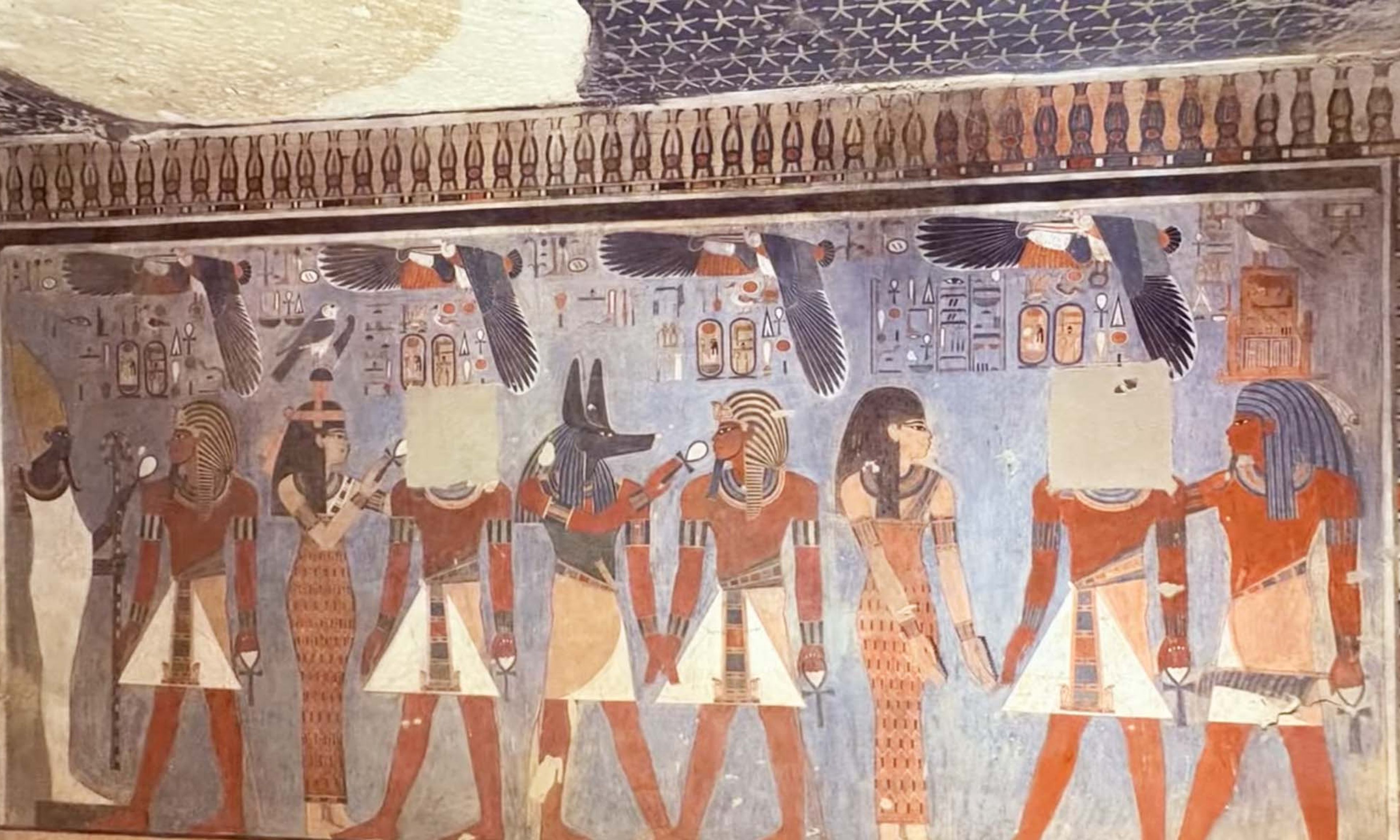
Robbers couldn’t swipe the frescoes from the walls of a pharaoh’s tomb, so Amenhotep III’s still look good.
I’m always chipper around Christmas and New Year’s, times of gift giving, snow, revelation, reflection, and renewal. Revelation isn’t just about prophets channeling God. I follow Biblical archaeology but also Greek and Roman discoveries, believing that there’s so much we don’t know, plus technology has advanced so much. AI, ground penetrating radar, drones, magnetology, and DNA science are a few of the new ways to marry technology to the human eye and touch and the scholarly mind and to read what’s underground. Egypt’s Valley of the Kings has been combed for hundreds of years, thousands counting tomb raiders, but just a few months ago archaeologists there confirmed they’d found the tomb of Thutmose II, who ruled during, we think, the 1480s b.c. It’s the last missing tomb of an Eighteenth Dynasty pharaoh and the first discovered since King Tut’s tomb in 1922. The dynasty ran from around 1550 to 1292 b.c. and was ancient Egypt’s golden age.
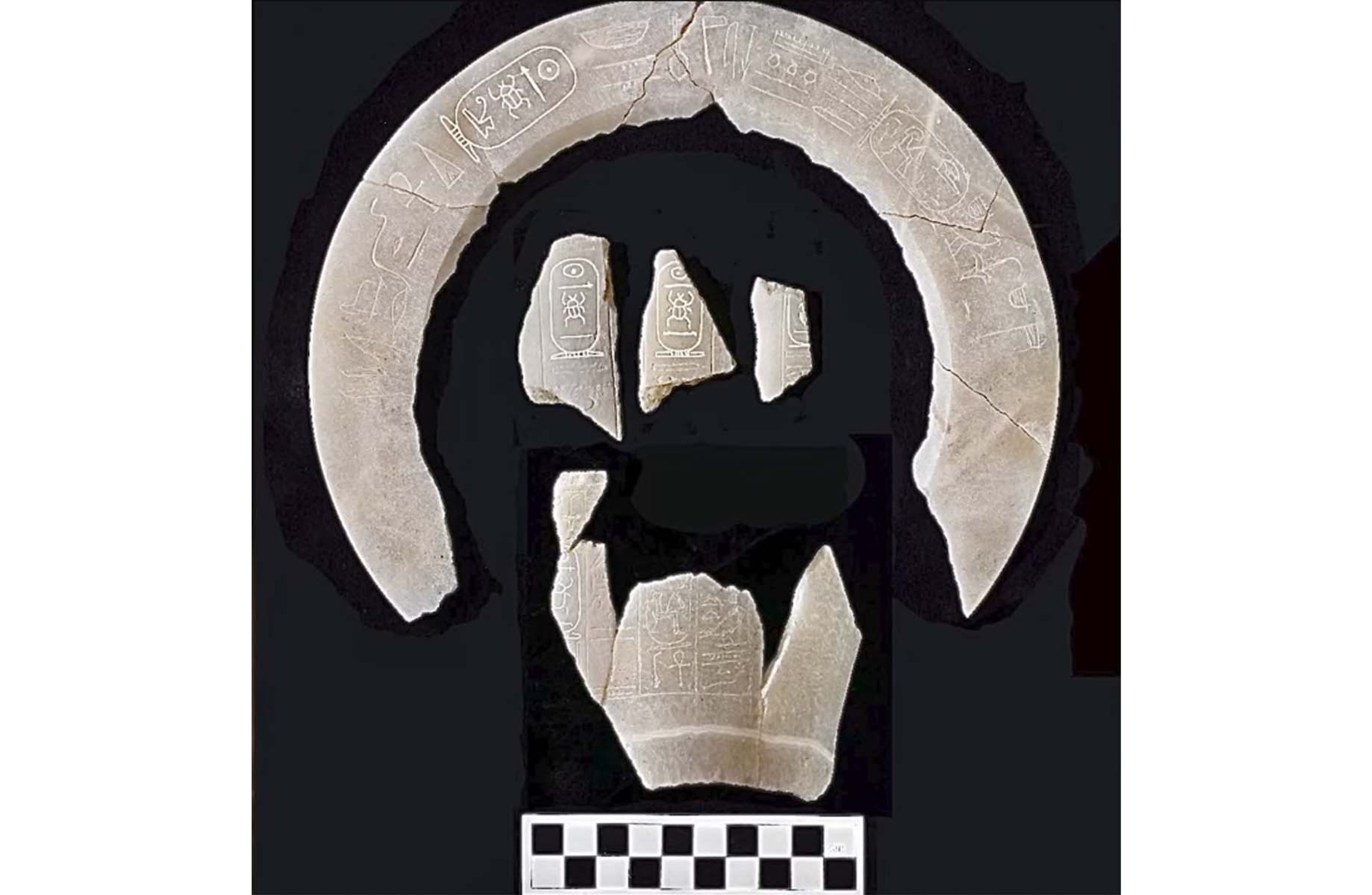
The evidence? The neighborhood’s right but the proof starts in the paint -- a patch of ceiling painted blue with gold stars. The color and design are reserved for royal tombs. Scenes from the Book of the Dead reserved for pharaonic tombs had disintegrated into bits on the floor, though small passages are still on the walls. Good puzzle skills and AI reassembled them. An inscription on a fragment of an alabaster pot salutes “the Son of Re, Thut,” but the rest hasn’t been found. There were several Thutmose pharaohs, but a fragment from another pot links the tomb to the husband of Hatshepsut, possibly the ruling queen in her own right, possibly any ninth Hatshepsut but we know of all the capo di capi called Thutmose, only Thutmose II had a wife named Hatshepsut. Thutmose’s daughter or granddaughter might have been the princess who discovered baby Moses in a basket, but a clique of Egyptologists and Biblical archaeologists think Thutmose II might have been Pharaoh during the Exodus. Timelines are sometimes set in sand, not stone.
A joint British and Egyptian team is doing the excavation. Lots more needs to be done at the tomb, which seems to have been prone not to robbers but to flooding. It’s thought that its contents, including the king’s mummy, were moved not long after Thutmose’s burial. It’s all good fun to follow. I’m not focused on verifying Biblical events as much as on the art, artifact, and historical secrets the ground beneath our feet hides, sometimes after thousands of years.
Egypt, its economy on life support, relies on tourism and baksheesh from Uncle Sam and a sheik here and there to forestall ruin. The government is spending a bundle to bring tourists back after the Arab Spring fiasco and terrorism fears. It just opened the new, billion-dollar Grand Egyptian Museum to show treasures of the pharaohs, among them Tutankhamun, or King Tut. Amenhotep III’s tomb opened in late October after a 20-year restoration. He ruled from the late 1380s or so to the early 1350s b.c. and was among the biggest enchiladas of the 18th Dynasty and thought to be the richest man in the world. The tomb was discovered by the French in 1799, already sacked. They documented and sealed it, everyone forgot about it, and it was rediscovered in 1915 but never restored until now. Its frescoes are now magnificent thanks to Japanese archaeologists and money and UNESCO, which does something good once a dynasty.
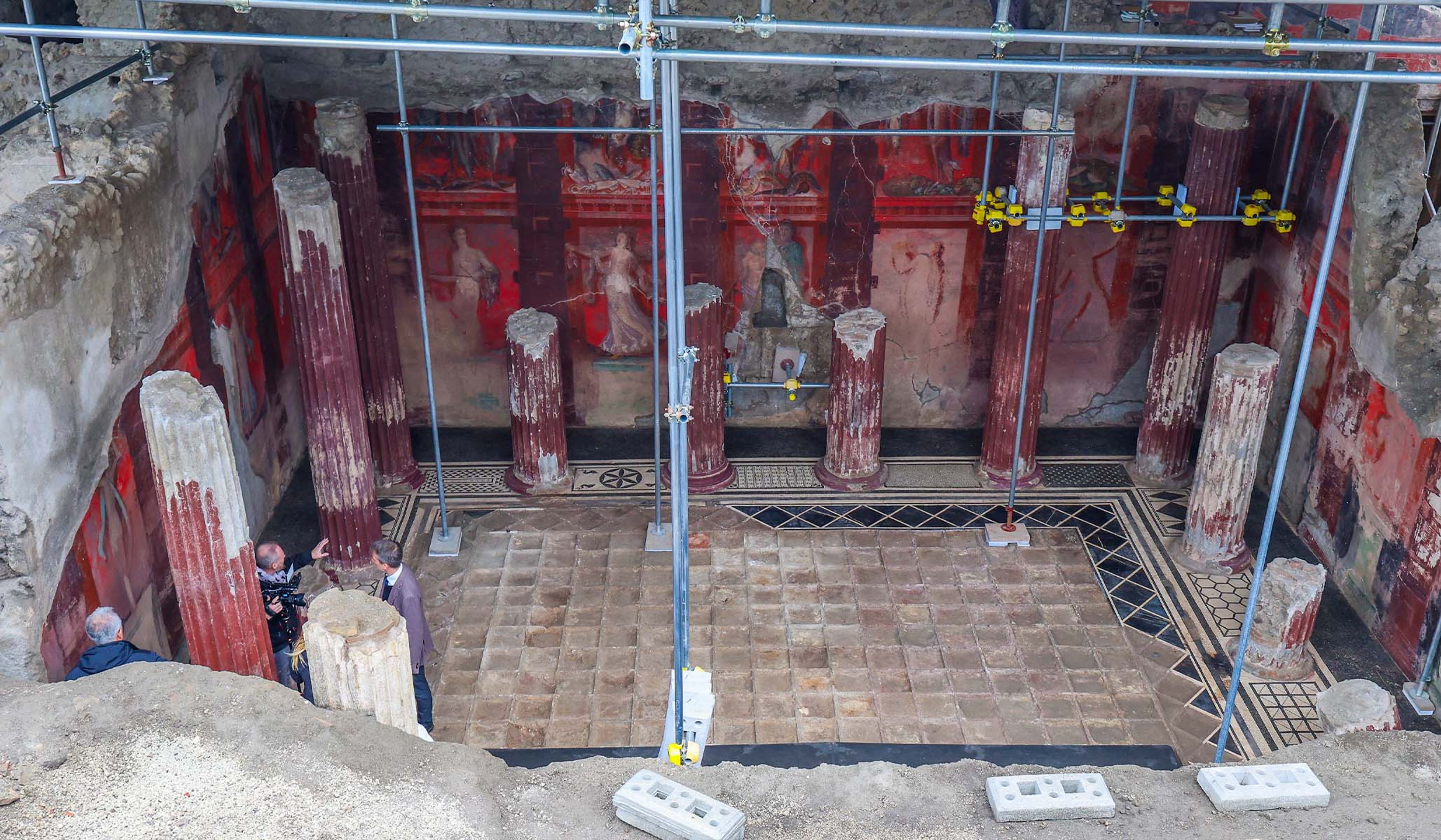
I visited the archaeological parks at Pompeii and Paestum in late 2024 and have been following news there. What news can Pompeii possibly offer, destroyed in 79 a.d. by the eruption of Vesuvius and buried in as much as 30 feet of ash? A lot. Digging there started in the 1740s, but a third of the ancient city is still buried. In 2025, archaeologists showed the art press a sumptuous private home spa located in what was a 30-room house. With a boiler, hot and warm water rooms, and a cold plunge pool, it’s among the fanciest discoveries and in good shape owing to nearly 2,000 years sealed by ash. Walls are a vibrant red, floors are mosaic. The floor in the hot room is suspended over a cellar to which the boiler supplied sauna-standard air. Pipes and taps are intact. Slaves fed the fires to keep water hot. Hey, wasn’t slavery invented in America? Walking through Princeton University’s new art museum, which I’ll review on Saturday, you’d think so!
The Pompeii house, luxuriously fitted with a spa and an elegant dining room, must have been the resort town’s Mar-a-Lago. We think it was owned by a powerful Roman pol who vacationed in Pompeii. Parts of the complex seem to have been undergoing a reno since piles of construction supplies were in some of the rooms.
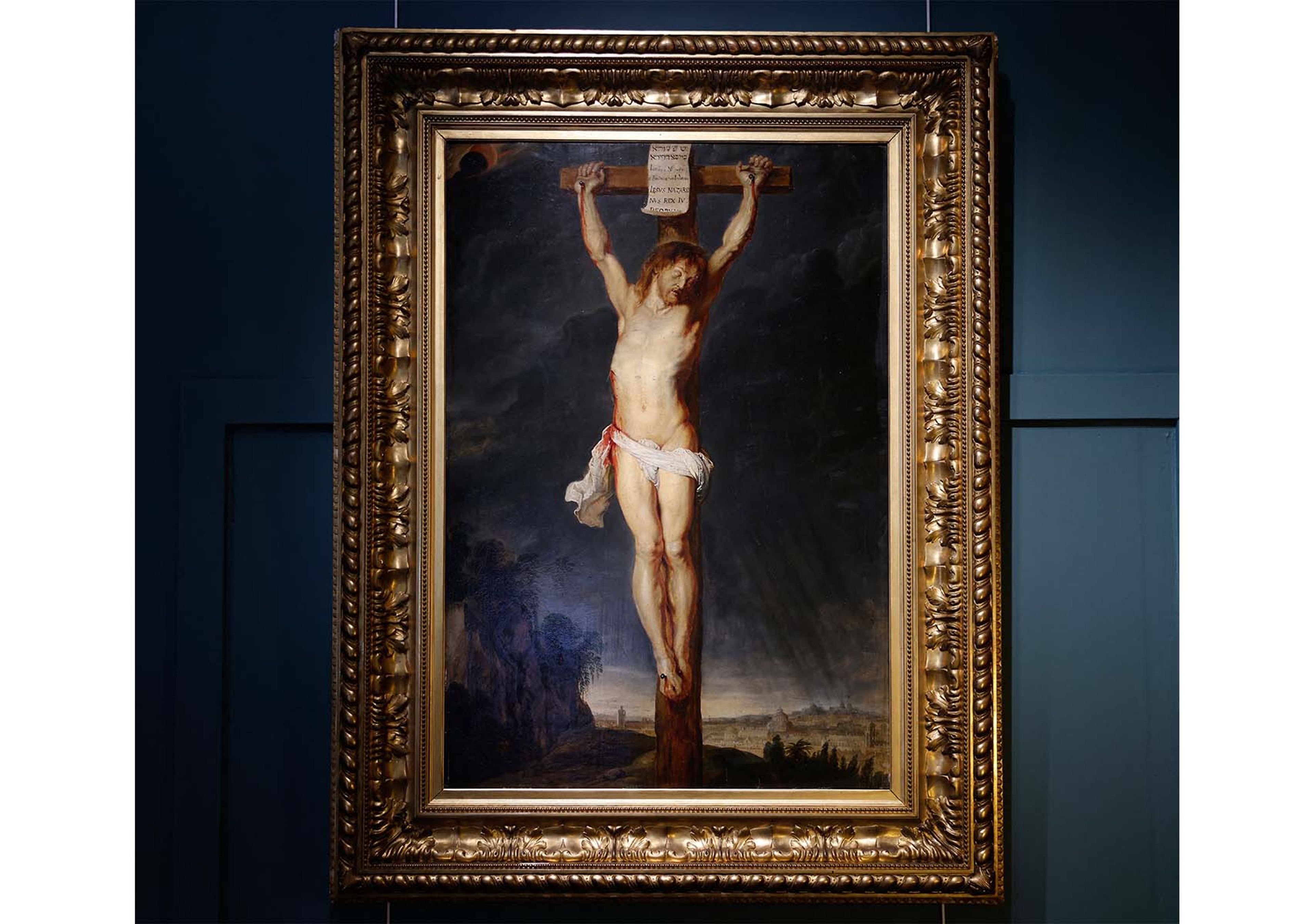
We’re barely past Christmas, days before Epiphany, and months before Good Friday, so I’m getting ahead of myself, but the discovery -- in a closet in a Paris townhouse -- of Christ on the Cross from 1613, painted by Peter Paul Rubens, is big news. The Paris auctioneer Jean-Pierre Osenat was cataloguing the house’s contents for an estate sale when he found what he remembered from an engraving as the long-lost painting by Rubens (1577-1640), probably done for an Antwerp patron, rare for Rubens in that Christ is dead as opposed to in agony and beseeching. At 41 by 29 inches, it’s not small. I looked in my closets today -- hope springs eternal -- and did find Bounty paper towels printed with scenes from Noah’s Ark, priceless to me but, alas, not a gusher.
Nils Büttner, the head of the Corpus Rubenianum and keeper of the flame, authenticated the picture through chemical analysis of the paint and the panel surface, paint handling, and enough X-rays to have killed Madame Curie. At the November 30 sale, it sold for €2.3 million, around $2.7 million, on a €1-2 million estimate. My spies tell me a very private English collector bought it. A discerning one, I’ll add.
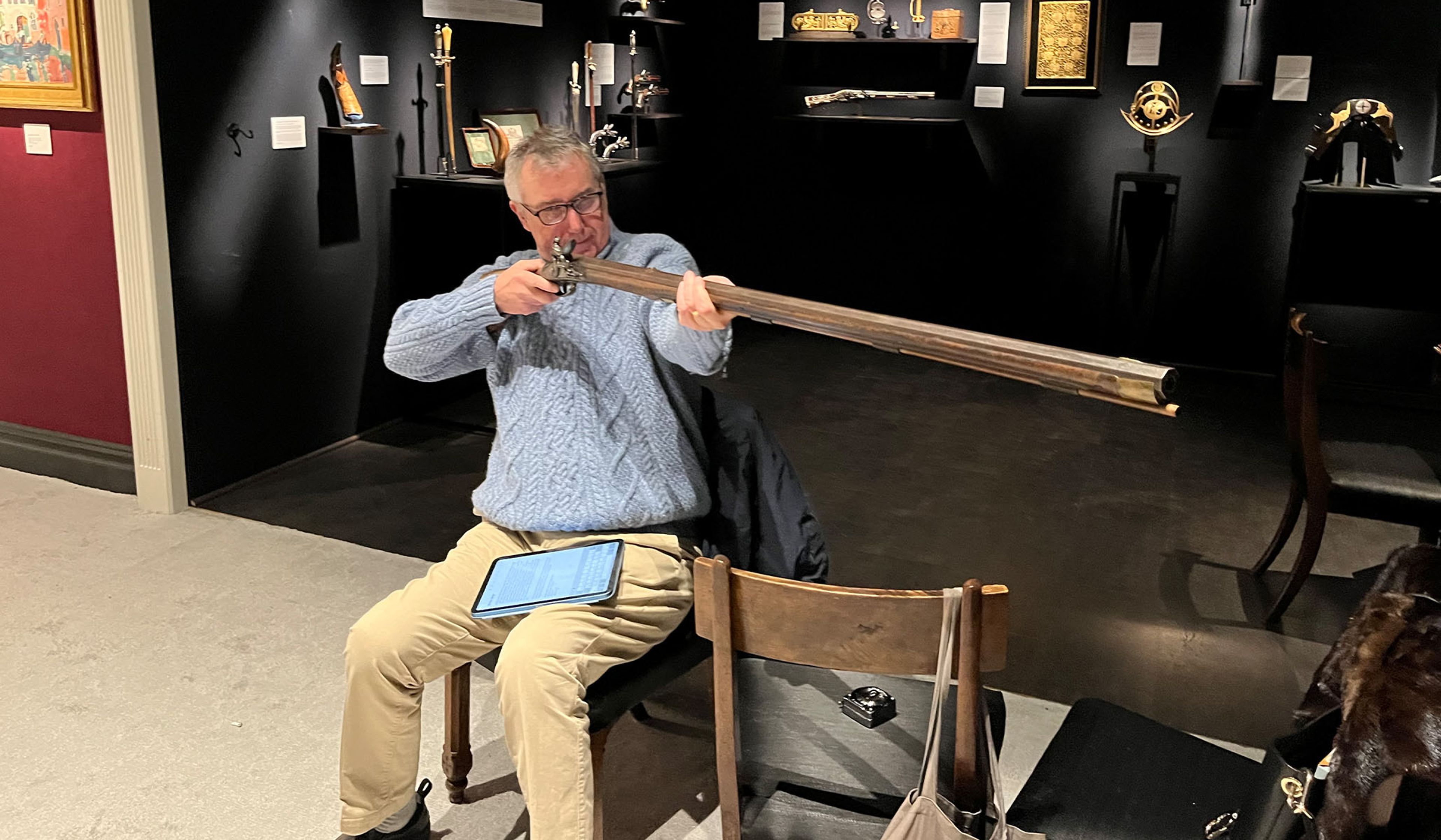
Readers, friends, and family ask me how I decide topics for my twice-a-week pieces. My interests are catholic and I like to be challenged. Plus I’m peripatetic and it’s a big country. I think I’m the only art critic -- ever -- committed to covering the visual arts in all 50 states. I hit Delaware, Jersey, Wisconsin, and New Mexico in 2025. Some exhibitions like Sargent in Paris at the Met and Rembrandt’s Time at the Norton in West Palm Beach are so good and sumptuous that I double dip, mellowed when it comes to art, verboten with a cracker at a reception. Starting this past July 4, I’ve focused on America 250 topics with stories on Mount Vernon, Colonial and Federal period spots in Boston, and the 250th anniversary of the U.S. Marines. I might have started my own work on the subject when I reviewed the Winter Show in New York in January 2025. Then, I held a 1776 Kentucky rifle for my fiercest photograph.
Then there are openings like the Frick’s after a long redo. I love writing about the art market and art freshly for sale after decades, even centuries, in private hands.
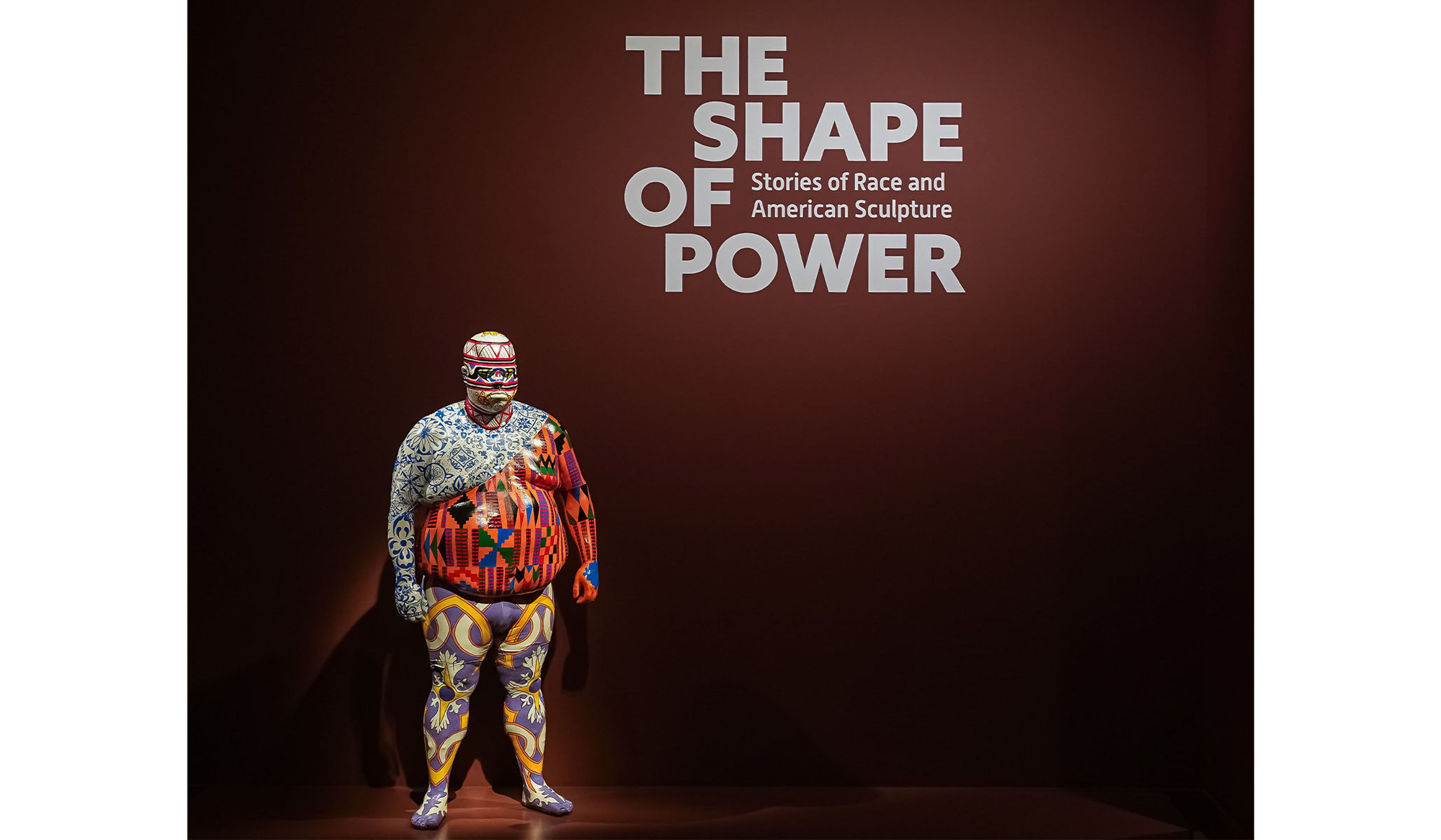
I’m a Methodist -- stern and rigorous -- and not a Flagellant, so there are only so many bad exhibitions I can see and then review. There are so many ways to be bad, though. There was incoherence at the Amon Carter in Fort Worth, and bluster and bloviation -- as well as incoherence -- at the Smithsonian’s American Art Museum. There were one-trick ponies -- racism rules the land -- at Newark and Baltimore and, at the Met Gala, freak couture. There was the new, useless, and dishonest Climate Museum in New York. How can we as a nation survive without knowing how changes in the climate affect trans teens of color? The venerable Brooklyn Museum’s anchor 200th anniversary shows were touted -- not by me -- as “bold” but, as my very Tory grandmother would say, “Bold means bad.” Then there’s bad, no, abysmal, psychotic governance. I’ve never known leadership as perverse as the Philadelphia Art Museum’s.

Then there’s the news, especially 2025’s art news from the Swamp. DOGE’s evisceration of the Institute of Museum and Library Services (IMLS) was the low point. Of the three core federal arts agencies -- IMLS, the National Endowment for the Humanities (NEH), and the National Endowment for the Arts (NEA) -- IMLS is the one that actually functioned at a high standard. Millions of dollars in good grants were rescinded willy-nilly only because they bore the stigma of Joe Biden’s senile, lowdown, lying rule. That the grants were eventually restored has to be counted as an embarrassment for the new order. I’m all for doing things chop chop, but very few IMLS grants have anything to do with fads.
The three agencies might be forgotten, but don’t think they’re gone. Their billion dollars in congressional appropriations are still with us, about to be renewed by Congress. Is the money used as a slush fund for projects like the Heroes Sculpture Garden, a triumphal arch in Washington, or the American pavilion at the Venice Biennale? I have nothing against monuments, but we have too many. If there’s spare money, it ought to be spent restoring monuments desecrated during the Black Lives Matter miasma.
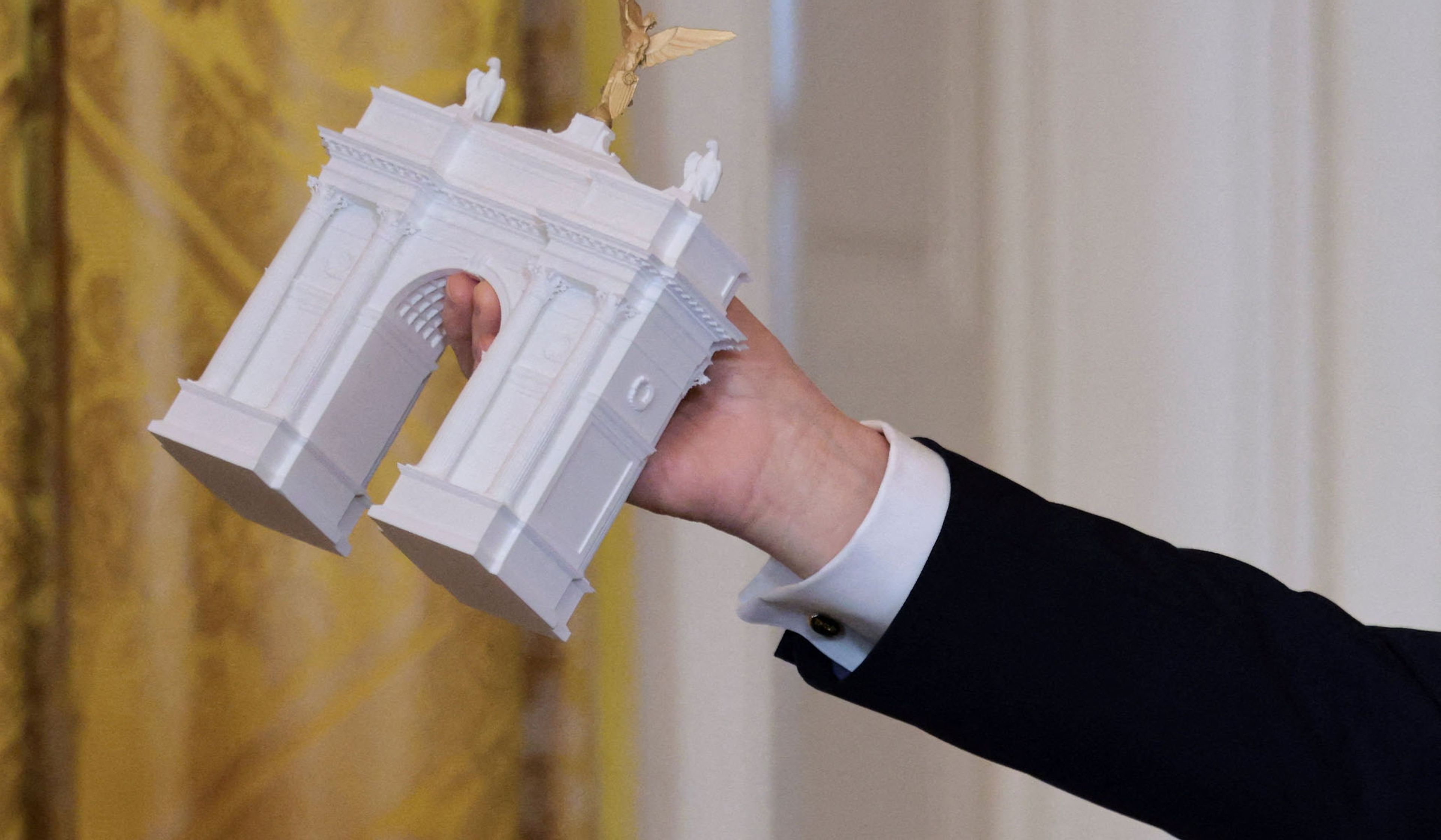
That said, much as I believe in drill, baby, drill as a directive from God, I think build, baby, build -- the new White House ballroom -- might be too much of a good thing. A thousand seats? Won’t the hinterland tables reach Culpepper? I like bringing people to glitzy White House events, but less is more. A thousand-person event isn’t exclusive. There’s already been an architectural upheaval. Fusses over a ballroom, a heroes sculpture garden, a triumphal arch, a Nobel Peace Prize, the Ukraine cesspool, the ultimate money pit, and other sideshows not only detract but seem to mock the concerns of us simple country souls.
I’ve been to the Kennedy Center, now the Trump Kennedy Center, only a couple of times. After writing earlier this year that it was middlebrow, friends suggested otherwise, so I visited the next time I was in the Swamp. It’s the home of our very good National Symphony. It’s got the grandeur of a national performance hall. It can accommodate operas, plays, and symphonies, drawing great crowds, but having other, smaller-scale spaces can attract performances that can’t fill a big space, or can’t afford it, or aren’t suited for it.
I don’t think public buildings should bear the name of anyone who’s still with us. We’re all sinners. Best to acknowledge a heroic person with a naming when that last breath extinguishes, more or less, the chance for sin and shame. I’d use the commemorative first-class stamp rule -- three years after death, by which time wills are probated, bastards and bigamy exposed, and incriminating papers shredded. In ye olde North Haven in Connecticut, where I grew up, served on a dozen town boards, and learned the gold standards of good governance, no public buildings were named after anyone, living or dead.
Federal cultural institutions, though, like the Smithsonian museums, tend to name additions, galleries, loading docks, curatorial positions, even bathrooms after the living since these things usually happen through philanthropy. The big-ticket items are, to be crass, sold after personal checks with lots of zeros at the end. President Trump has chaired the Kennedy Center board for all of eight months. I’m sure he was essential in Congress’s appropriation of $247 million in the Big Beautiful Bill to renovate the building.
There’s a lawsuit now about whether or not the name change is legal. And the renovation hasn’t happened. The sudden name change seems indecorously timed. The statute naming the place the Kennedy Center seems to require congressional action to change it. I asked its press office whether or not the Big Beautiful Bill did so and haven’t heard back. Otherwise, when the left gets back in, and it will eventually, though I hope not in my lifetime, off to the smelter a chunk of the new name will go.
I hope the impresarios and marquee names canceling performances get slapped with fat lawsuits. They’re punishing the public but mostly musicians, actors, and back-of-house people who won’t get paid.
For months I heard nothing about the White House’s demands that the Smithsonian museums quit pushing Swamp prosecco politburo talking points. I’ve seen lots of Smithsonian exhibitions, mostly at the National Portrait Gallery, the American Art Museum, and the Renwick Gallery. Many are preachy, duplicitous, and redundant. The White House asked good questions about how Smithsonian programs evolve but, as I suggested might happen, the Smithsonian seemed to stonewall, hoping the head of the Office of Management and Budget (OMB), Russell Vought, would move on. I suspect Vought has a sophisticated tickler file with alert sounds more like the William Tell Overture than wind chimes. A few days ago, Vought wrote asking for answers.
Sometimes bureaucrats need the slap of unyielding, emphatic supervision. The Smithsonian isn’t independent. No part of the government, much less one getting a billion dollars a year from Congress, can prance la-di-da while it does what it wants.
There are two searches now underway at the Smithsonian, one for the director of the National Portrait Gallery (NPG) and the other for the director of the American Art Museum. Left on its own, the masters of the Smithsonian will pick more of the same. I’d suggest the White House get involved, fast and hard.
I’d also suggest OMB push the Smithsonian to sue the San Francisco Museum of Modern Art and artist Amy Sherald, and sue the heck out of ’em, for pulling their splashy Sherald show from the NPG because the Smithsonian merely “suggested” Sherald’s full-length picture of a trans Statue of Liberty might be impolitic given the times and would certainly need enhanced interpretation. Sherald and SF MoMA left the Smithsonian with empty galleries a few weeks before it was slated to open. The NPG made Sherald famous when it commissioned her to paint Michelle Obama’s portrait. Where’s Roy Cohn when you need him?
Six of the Smithsonian’s citizen trustees are either up for reappointment in 2026 or term limited and out the door in 2026. These trustees are picked by a joint congressional resolution. The place needs not a tsunami of a flush but a good housecleaning starting at the top. Congress and the White House need to get their ducks in order and a “quack, quack” alert won’t do for those tickler files to be activated. One with the “Dun Dun, Dun Dun” tune from Jaws seems right to me.

About the Author
Brian T. Allen is National Review’s art critic.
Featured Tags
Advertisement
Advertisement


Comments