A Good Day for the Ten Commandments — and a Better One Could Be Coming
Written by Andrea Picciotti-Bayer
Share this story
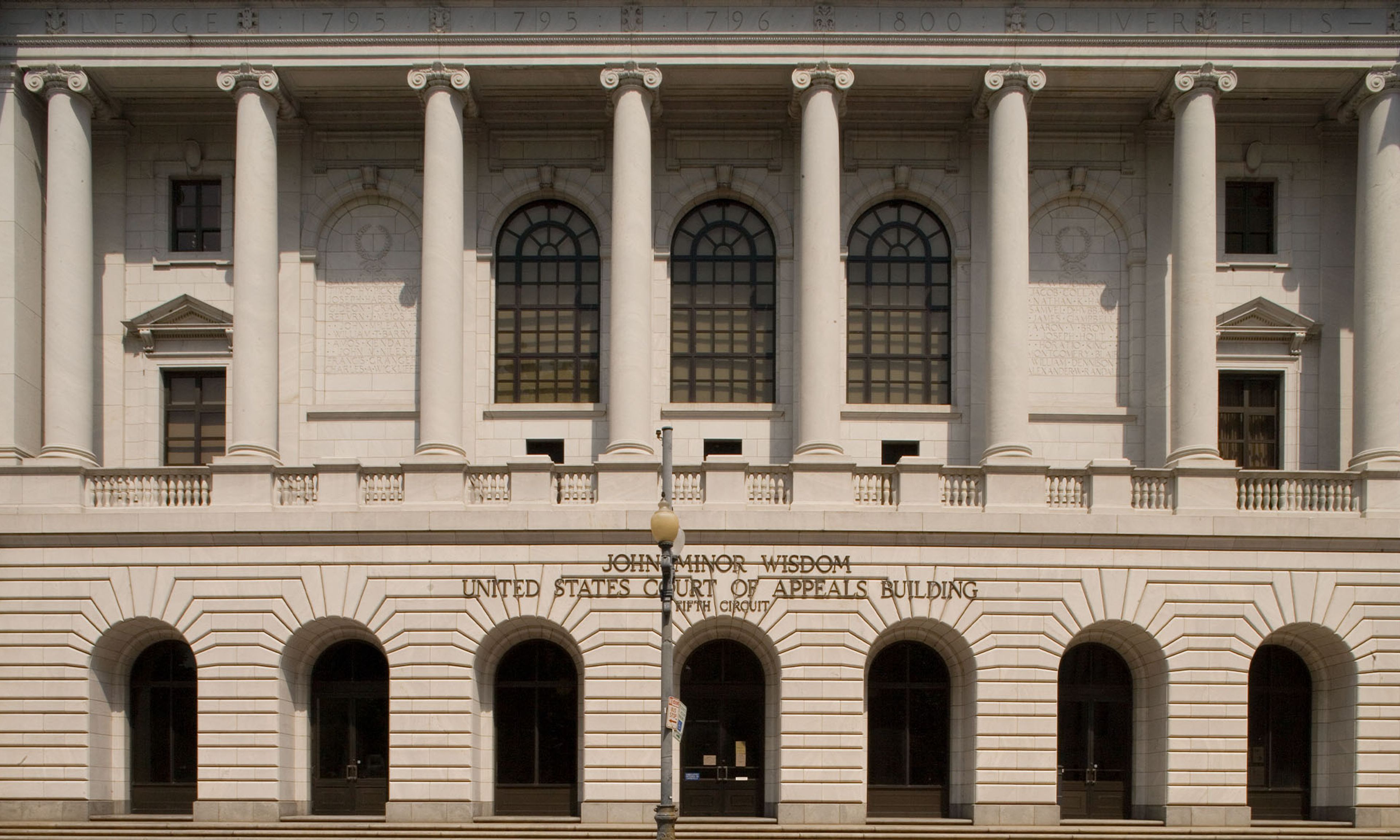
The John Minor Wisdom U.S. Court of Appeals Building, New Orleans, La.
Late Friday afternoon, the Fifth Circuit Court of Appeals issued a significant ruling in Roake v. Brumley, vacating a preliminary injunction that had blocked Louisiana from implementing House Bill 71 — a law requiring the Ten Commandments to be displayed in every public school classroom in the state. The en banc court’s decision is welcome news for religious expression in public life, and there is reason for genuine optimism about what comes next.
The majority vacated the injunction on ripeness grounds, concluding that because Louisiana’s law delegates considerable discretion over the nature of each display to local school boards, the courts cannot yet evaluate the law's constitutionality without resorting to conjecture. Specifically, because HB 71 sets minimum requirements while leaving open precisely how the Ten Commandments will appear alongside other materials, the majority held there is not yet a “real, substantial controversy” ripe for judicial resolution. As the per curiam opinion put it, without knowing how the text will ultimately be used, any ruling would amount to “not judging” but “guessing.”
As an admirer of judicial restraint, I appreciate the majority's logic. Article III courts exist to resolve concrete disputes, not to render advisory opinions in the abstract. The majority’s approach here reflects a principled respect for that limitation. And for those of us who believe these laws are constitutionally sound, there is a practical benefit as well: The injunction is gone, and Louisiana's schools are free to proceed.
Also worth noting is the concurrence from Judge James Ho, who wrote separately to argue the injunction should have been vacated on the merits. His core point is that Stone v. Graham (1980), the principal precedent relied upon by challengers, does not retain any binding force after the Supreme Court’s abandonment of Lemon v. Kurtzman and its progeny in Kennedy v. Bremerton School District (2022). Stone rests entirely on Lemon's "secular legislative purpose" test — a test the Supreme Court has expressly repudiated.
As Professor Mark David Hall of George Fox University and I noted in an amicus brief and law review article — and that Judge Ho’s concurrence cited — the deep historical roots of religious instruction in American public education is well documented, including the pervasive presence of the Ten Commandments in founding-era schoolbooks such as the New England Primer, McGuffey Readers, and Noah Webster’s American Spelling Book. The Framers of the First Amendment did not understand a passive religious display as an “establishment of religion” — the historical hallmarks of which involved coercive measures far more serious: established churches, compelled attendance, government-directed religious instruction, and the like. A poster on a classroom wall is not, by any measure, an establishment.
Which brings me to what is perhaps the most important development to watch going forward. Consolidated with the Louisiana case for oral argument is Nathan v. Alamo Heights Independent School District, a challenge to Texas Senate Bill 10, which similarly requires the posting of the Ten Commandments in public school classrooms. That companion case was heard by the 17 active judges of the Fifth Circuit and remains under consideration. Having listened to oral argument, I am genuinely hopeful that the court will seize the opportunity in the Texas case to address the merits head-on and provide a definitive ruling that these state initiatives are constitutionally permissible.
The court has within its ranks recognized experts in religious freedom and constitutional history. The analytical framework is already well developed. After Kennedy dismantled the Lemon test, the proper inquiry is, as Justice Neil Gorsuch noted in Shurtleff v. City of Boston, to look to the traditional hallmarks of an establishment — and passive classroom displays of a foundational moral and legal text bear no resemblance to any of them. That the Supreme Court’s recent jurisprudence, from American Legion v. American Humanist Association through Kennedy itself, compels that conclusion was not lost on noted religious freedom expert Judge Kyle Duncan, who pressed counsel for the laws’ challengers on what historical examples exist to show that passive displays of the commandments in public schools was like an establishment of religion.
There is also an important contrast worth drawing. Critics of these laws sometimes invoke the Free Exercise Clause and Mahmoud v. Taylor (2025) to argue that families have a constitutional right to shield their children from any religiously tinged content in school. But Mahmoud involved something categorically different: a mandatory LGBTQ+-inclusive curriculum from which parents were barred from opting their elementary-school children out. That was an affirmative program of instruction requiring engagement with content that directly conflicted with the families’ religious beliefs, with no escape. A Ten Commandments poster on a wall is a passive display — it requires no child to do, say, recite, or affirm anything.
The Fifth Circuit has taken a careful, deliberate path in the Louisiana case. The Texas case now offers the court the chance to finish the job.

About the Author
Andrea Picciotti-Bayer is director of the Conscience Project and recipient of the Religious Freedom Institute’s 2025 Religious Freedom Impact Award.
Featured Tags
Advertisement
Advertisement


Comments