Partisanship Should Not Drive the Confirmation Process
Written by Thomas Jipping
Share this story
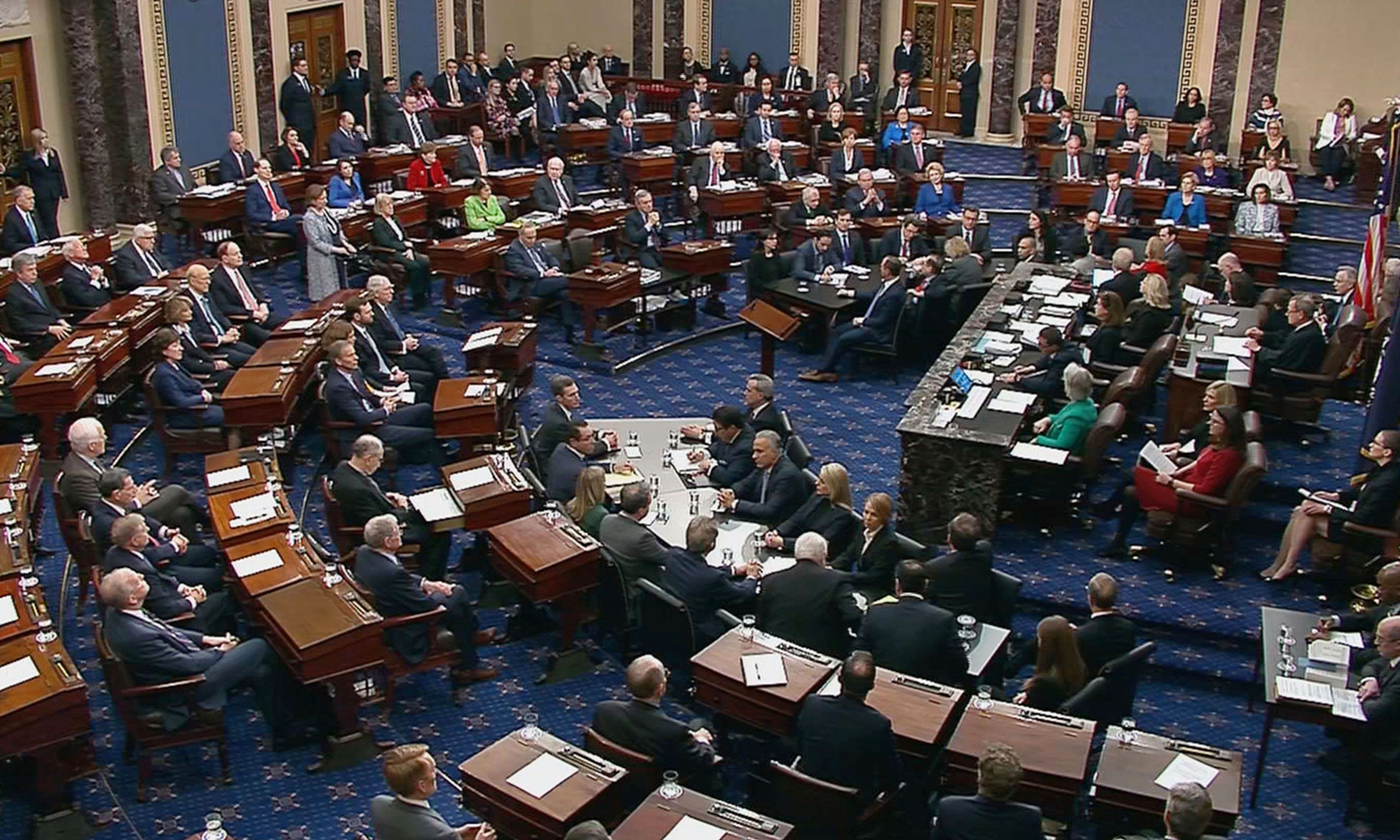
View of the Senate chamber on Capitol Hill in Washington, D.C.
Today, senators of both parties routinely oppose the other party’s nominees as a way of opposing the president who picked them, with little regard for the nominees’ actual qualifications. That is not how the Constitution’s Framers designed the appointment process.
The Constitution gives the president power to nominate and, with the Senate’s approval, to appoint members of the Supreme Court and “Officers of the United States” serving in all three branches of the federal government. Requiring Senate consent is one of the “checks and balances” that prevents too much power from ending up in too few hands. Its role, the Framers explained, would be a “silent” one, with the possibility of rejecting a nominee being a disincentive for the president to nominate “unfit characters,” and the process worked as designed for two centuries.
But no more.
This radical change has been particularly jarring for judicial nominations. Traditionally, senators of one party opposed only a small fraction of the judicial nominations made by a president of the other party. Confirmation conflicts were few and far between and involved specific issues surrounding individual nominees. During the 20th century, that opposition averaged just over 2 percent and was virtually identical between the parties.
Opposition ticked up a bit during George W. Bush’s administration, but it was far from systematically partisan. The 43 Democratic senators who served during at least six of Bush’s eight years in office opposed an average of just 4 percent of his judicial nominations, with only two of those senators barely topping 6 percent.
Opposition ticked up a bit more during Barack Obama’s administration, with the 34 Republican senators who served during most of that time opposing an average of 9 percent of his judicial nominations.
During the first Trump term, Democratic senators began routinely opposing his judicial nominations as a way of opposing him. A vote against a Trump nominee was a vote against Trump, as they saw it. The average Democrat opposed 41 percent of Trump’s judicial nominations, more than ten times the resistance to Bush’s picks and 20 times the 20th century average for either party. Eight Democrats actually voted against a majority of Trump’s first-term judicial nominations, the first to do so in American history. While no senator of either party had ever opposed more than 14 percent of other-party judicial nominations, no Democratic senator opposed less than 19 percent of Trump’s.
Republicans would not be outdone. While eight Democrats had opposed a majority of Trump’s first-term judicial nominees, eight Republicans opposed more than 90 percent of Biden’s and all but three Republicans opposed more nominees than they supported.
In case you thought the damage was finally done, look around you. Trump has been in office for less than half a term, and new vacancies that he can fill are opening much slower than the historical average. Still, the 47 current Senate Democrats have opposed an average of 93 percent of Trump’s judicial nominations, 18 have voted against every single one, and the most supportive -- Tim Kaine of Virginia -- has still opposed 73 percent.
Some may claim that opposition to Trump’s first-term judicial nominations skyrocketed because so many of them were poorly qualified. Not so. The American Bar Association has been rating judicial nominees since the late 1940s and has used the same scale and criteria since 1990. Several academic studies have shown systematic partisan bias in the ABA’s rating (three guesses about which party’s nominees are favored -- and the first two guesses don’t count).
Current Senate Minority Leader Chuck Schumer (D., N.Y.) often called ABA ratings the “gold standard” for evaluating judicial nominations. Using the same scale and criteria as it does today, the ABA gave its highest “well qualified” rating to 65 percent of Bush’s judicial nominees and 71 percent of Trump’s.
But it gets worse. Ten Senate Democrats served while both George W. Bush and Trump were president. They voted against an average of 5 percent of Bush nominees but 44 percent of Trump’s. Odd, I know, but Democrats were more strongly opposed to nominees deemed better qualified under their own “gold standard.” They would have opposed Trump’s nominees no matter what their qualifications.
And they have. Five of those ten Democrats are still in the Senate and have so far voted against a whopping 93 percent of Trump’s second-term judicial nominations.
This systematic, knee-jerk partisanship is a radical departure from how the Framers designed the Senate’s role. In fact, Alexander Hamilton wrote that opposing a nominee would require “special and strong reasons” and that simply preferring someone else was not enough. Today, however, senators of both parties oppose judicial nominees solely because a president of the other party picked them.
Not only does this sabotage the Framers’ design, but it pays no attention to what really matters, namely, the proper role of the judicial branch and how the Framers prescribed that judges should exercise their power.

About the Author
Thomas Jipping is a senior legal fellow in the Edwin Meese III Institute for the Rule of Law at Advancing American Freedom.
Featured Tags
Advertisement
Advertisement



Comments