Share this story
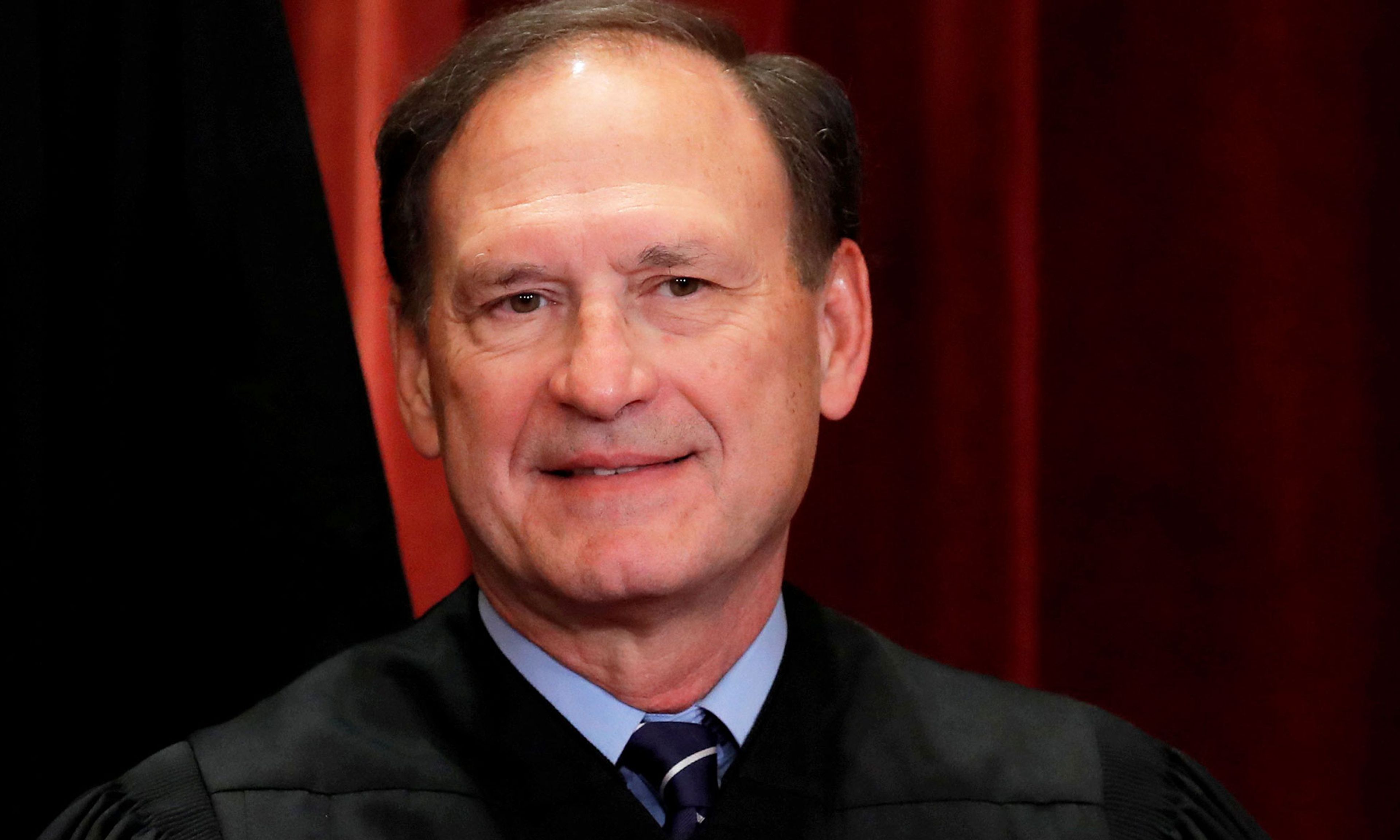
Supreme Court justice Samuel Alito during a group portrait session for the new full court at the Supreme Court in Washington, D.C., in 2018.
A boisterous group of government lawyers showed up to one of the omnipresent summer softball games that fill the parks during the Washington, DC summers. One of the young assistants in the office, instead of joking or bragging, quietly warmed up and then went to lock down the outfield and rack up two home runs before the opposing team knew what had hit them. That quiet MVP was Sam Alito. Mollie Hemingway recounts this story in her superb new biography, Alito: The Justice Who Reshaped the Court and Restored the Constitution, and it captures the man perfectly.
For most Americans, Justice Samuel Alito didn’t exist until June 2022, when the Supreme Court handed down Dobbs v. Jackson Women’s Health Organization and overturned Roe v. Wade. Suddenly, here was this quiet, professorial man from New Jersey at the center of the most consequential Supreme Court decision in a generation. Who was this guy? Where had he come from?
Mollie’s answer is that the evidence was always there for anyone who cared to look. Alito had spent decades as a federal prosecutor, a government lawyer, and then a judge on the Third Circuit, building a body of work defined by intellectual rigor, fidelity to text, and an almost monastic commitment to the job itself. This book is a serious accounting of that career, and it is long overdue.
One of Alito’s great strengths is that it gives us the person, not just the jurist. Hemingway traces Alito’s formation with care—his Italian-American roots in New Jersey, his years at Princeton and Yale Law, and the intellectual journey that brought him to the federal bench. He is not a bomb-thrower. He is not a media personality. He is, in the best sense, a judge’s judge: someone who shows up, reads every word, thinks every question through to its logical conclusion, and writes with devastating precision.
For those who followed his career on the Third Circuit, what happened in Dobbs was not surprising. The legal foundations were laid long before. But for the broader public—and, frankly, for the Left—the ruling may have felt like an ambush. It wasn’t. The other team simply hadn’t been watching the right batter.
For court watchers, the most gripping section of this book is Hemingway’s account of how Dobbs actually unfolded inside One First Street. It is reported with a level of granular detail that I haven’t seen anywhere else, and it is extraordinary.
The case was far from a sure thing even at the certiorari stage. All five justices who would eventually form the Dobbs majority initially voted to take the case—though only four votes are required—but Justice Barrett subsequently changed her vote. In the end, that didn’t matter: the case still had the four votes needed to proceed. But it is a reminder of how close these things can be, and how much turns on individual decisions that the public never sees.
Once the justices decided to hear the case, those in the eventual majority understood the stakes. They went through three full rounds of internal editing before the draft opinion was even circulated to the full Court. By the time it went out on February 10, every justice joining the majority was already comfortable with it. The result was remarkable: justices began joining within minutes of receiving the draft, and within just a few days, the majority had its five votes.
The dissenters were another story entirely.
Justices Sotomayor, Kagan, and Breyer moved slowly—and, Hemingway reports, that appears to have been deliberate. Three months passed. Then, in early May, the draft majority opinion was leaked to Politico in one of the most damaging breaches of Court confidentiality in American history. The leak created an immediate and terrifying security problem. As the would-be assassin of Justice Kavanaugh later made clear, he understood exactly what the stakes were: eliminate one justice from a five-justice majority, and the outcome of the case changes.
Justice Alito asked the dissenters to finish their work quickly. The request was, under the circumstances, entirely reasonable. The response was not. Far from speeding up the writing process, Justice Kagan reportedly visited Justice Breyer’s office to ensure that the more collegial and gentlemanly liberal justice wouldn’t accommodate the majority’s request. According to Hemingway’s account, she made her position known forcefully—shouting loudly enough, sources said, that the walls shook.
Eventually a compromise was reached: the dissenters would complete their drafts by June 1, in exchange for an extension on the deadlines for majority opinions in other pending cases. But even that concession was undermined almost immediately. The dissent cited the blockbuster Second Amendment case New York State Rifle & Pistol Association v. Bruen, which had not yet been finalized. Now Dobbs would have to wait for Bruen, and the delay stretched on. And on June 8, a man armed with a gun, zip ties, and a plan arrived outside Justice Kavanaugh’s home. He later told investigators he had intended to kill Kavanaugh and three of his colleagues.
It is impossible to read this sequence of events without a chill. The deliberate slow-walking of the dissent was not merely a professional discourtesy. It created, and prolonged, the conditions for a potential assassination.
Justice Thomas, speaking just last week at the University of Texas at Austin, put the current moment into devastating relief. Asked about the Court’s atmosphere in light of today’s polarization, he reflected on what he found when he first arrived on the bench: “I joined the court that dealt with differences as friends, as we respected each other. And I don’t know how that civility—I don’t know how you bring it back in the current environment with social media and name-calling and all people accusing each other of various things and animus.”
The episode Hemingway recounts from the Dobbs deliberations is a powerful illustration of Thomas’ point. The willingness to weaponize procedural delay—to exploit the very openness of judicial deliberation—at a moment when a colleague’s life was at genuine risk is not the behavior of an institution that still holds itself together by shared norms. It is the behavior of one that has already come apart.
Don’t let the title fool you. This book is as much a history of the Supreme Court itself as it is a portrait of one justice. Hemingway traces the long arc that brought us here: the Bork debacle, which set the template for the modern confirmation war; the slow, grinding project to build a genuine originalist majority; the Trump appointments; the court-packing schemes floated by the Left when those appointments succeeded; and the coordinated media campaigns to delegitimize, intimidate, and personally destroy conservative justices while treating their liberal counterparts with something approaching reverence.
That double standard is one of the book’s most clarifying threads. The same outlets that treated the Dobbs leak—a serious attack on the integrity of the Court—as a story about abortion rather than a story about institutional sabotage were the ones calling for Justice Thomas’ impeachment over private financial matters they would never have scrutinized on the left. Hemingway documents this asymmetry with care and precision.
And yet, through it all, there is Alito: working, writing, reasoning. Stepping up to the plate while everyone argues about something else.
For those of us who have spent a career watching the courts, this book is a gift. It gives proper credit to a justice who has never sought the spotlight, whose jurisprudence is as careful and rigorous as any on the Court, and whose long record of standing firm under pressure deserves far more recognition than it has received.
For everyone else—the readers who only met Alito the day Dobbs came down—this is the book that explains how he got there. The home runs were always coming. The evidence was always there. The only question was whether you were watching.
Alito makes sure you can’t look away now.
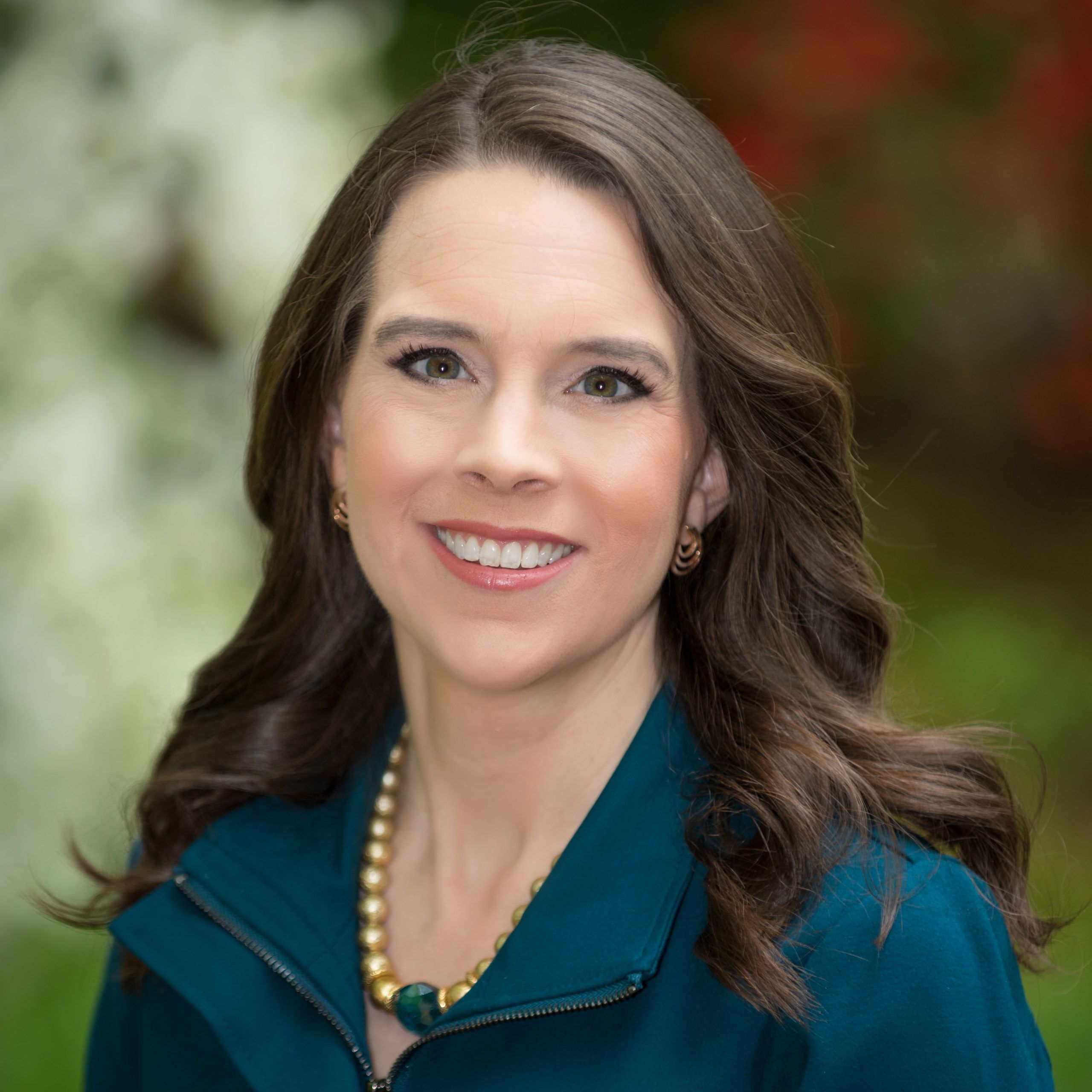
About the Author
Carrie Severino is the president of JCN.
Featured Tags
Advertisement
Advertisement

Comments