Share this story
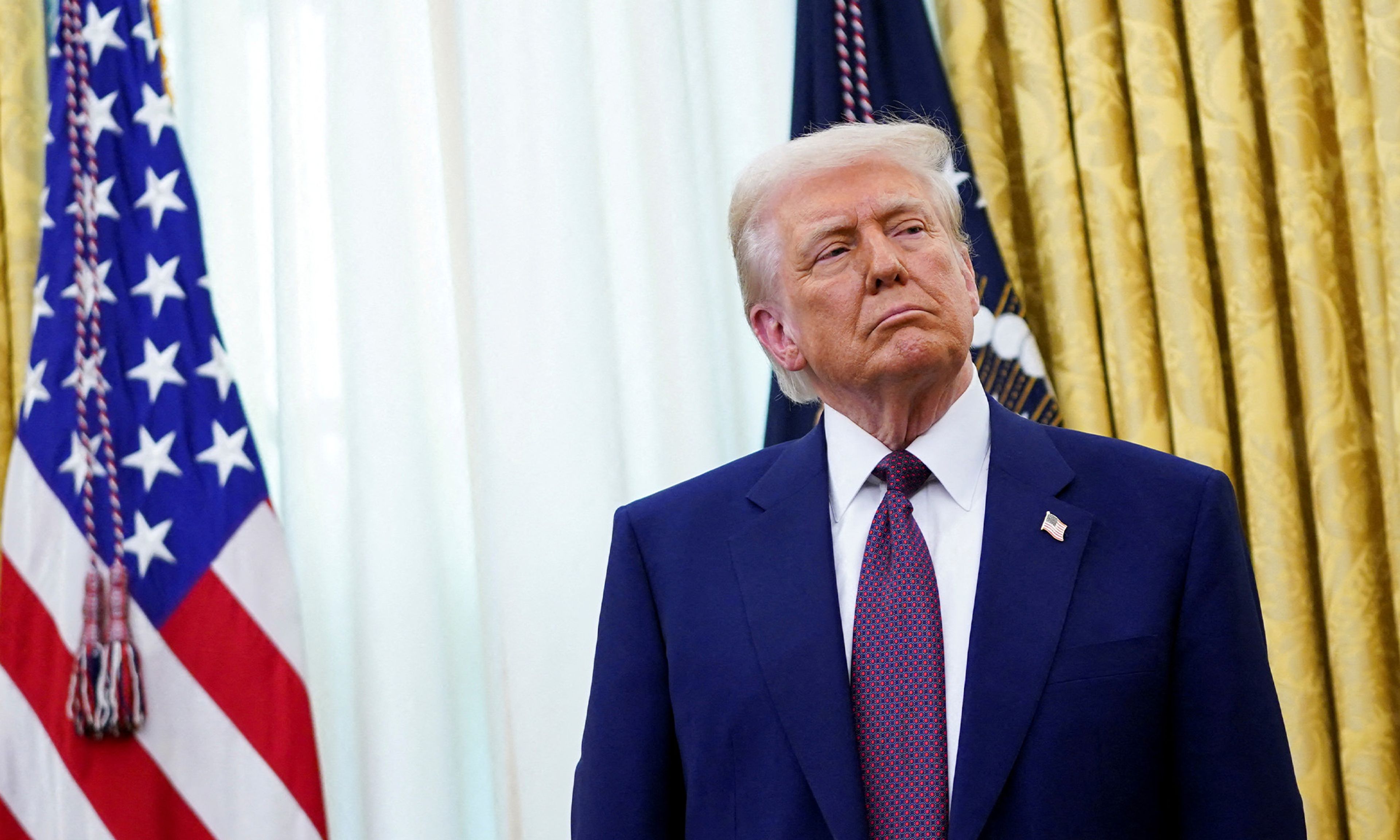
President Donald Trump looks on from the Oval Office of the White House in Washington, D.C., February 13, 2025.
President Donald Trump’s impact on the judiciary during his second term is developing much more slowly than it did in his first.
The latest Judicial Appointments Memo shows that only 3.9 percent of the federal judiciary is currently vacant, by far the lowest vacancy rate among the past seven administrations at the same point. The contrast with Trump's first term is striking. While presidents have appointed an average of 48 judges per year over the past four decades, the Republican-controlled Senate confirmed only 22 judges during President Barack Obama’s last two years in office. As a percentage of the judiciary, this was the lowest confirmation rate for any Congress in American history. As a result, Trump had 106 vacancies — 12.3 percent of the judiciary — to fill when he took office in January 2017.
Trump appointed 234 judges in his first term, the second-highest single-term total until that point. (Jimmy Carter had appointed 258, after Congress created new judgeships). President Joe Biden had 46 vacancies — 5.3 percent of the judiciary — to fill on Inauguration Day 2021. Then an unusual thing happened. During Biden’s first year alone, 55 judges took “senior status,” a kind of semiretirement that opens their position for a new appointment. That’s the highest single-year total in American history and nearly 70 percent above the annual average. In fact, 178 judges took senior status during Biden’s term, enabling him to appoint 235 judges.
The script has flipped again. Only 18 judges took senior status last year, 45 percent below the annual average. Trump’s 37 judicial appointments so far this term have barely moved the needle: 39 vacancies when he took office compared with 34 today.
The Senate is doing its part. The Judiciary Committee has held a hearing on 90 percent of Trump’s judicial nominees, and the Senate has confirmed 75 percent, each of those well above the historical average at this point.
Democrats, of course, are going through their usual confirmation-obstruction motions, forcing an unnecessary cloture vote on 100 percent of Trump’s judicial nominees. Compare that with 10.5 percent of Obama’s judicial nominees at this point and with a total of just three cloture votes on judicial nominees under the five presidents before that.
Another way of assessing a president’s impact on the judiciary looks not only at the judges he appoints but also the judges his appointees replace. More than half of Trump’s nominees so far this term would replace judges appointees by Presidents Clinton (4) or Obama (22). It would be a generalization to say that judges appointed by Democratic and Republican presidents are different in how they approach judging, but the differences have become noticeably consistent enough to be worth the observation.
If Trump matches the historical average, he will have appointed approximately 425 judges during his two terms, more than any president in history and the highest proportion of the judiciary since President Ronald Reagan. Trump’s achievement would be arguably more impressive, since Congress created 89 new judgeships during Reagan’s first term and the appointment process overall was much more efficient.

About the Author
Thomas Jipping is a senior legal fellow in the Edwin Meese III Institute for the Rule of Law at Advancing American Freedom.
Featured Tags
Advertisement
Advertisement




Comments