As Tim Ryan Weighs Ohio Gov Run, the ACLU Questionnaire That Hurt Harris Could Claim Another Victim
Written by Audrey Fahlberg
Share this story
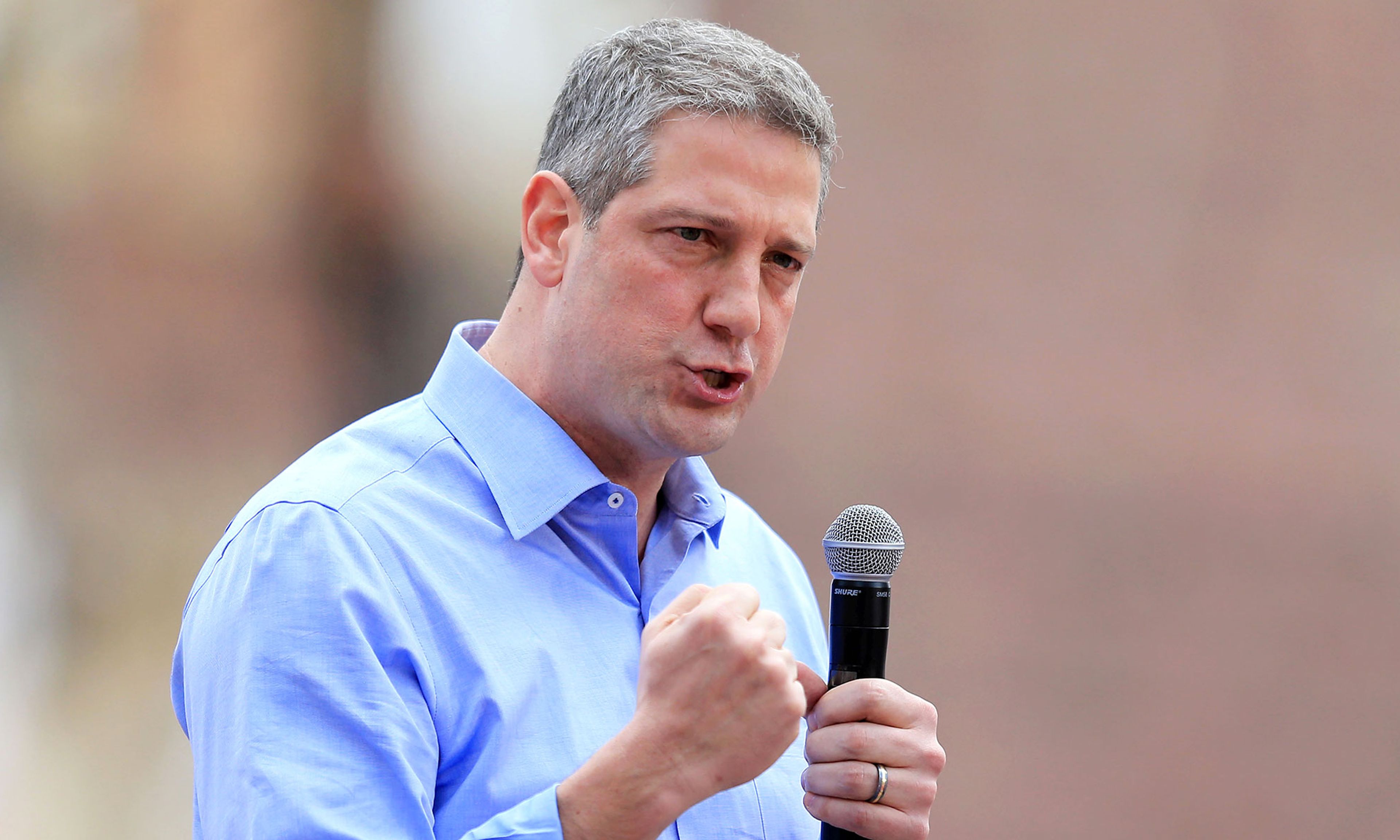
Then–Rep. Tim Ryan (D., Ohio) speaks at a rally during his 2019 presidential campaign in Youngstown, Ohio, April 6, 2019.
In recent election cycles, former representative and prospective 2026 gubernatorial candidate Tim Ryan’s populist, temperamentally moderate political persona in Ohio has endeared him to many Democratic voters in the state.
But his long political career — including representing Ohio in Congress, challenging Nancy Pelosi for speaker of the House, running for president in 2019, and running for U.S. Senate in 2022 — means he has accumulated significant baggage that could weigh him down if he decides to seek two-term GOP Governor Mike DeWine’s seat in 2026.
At the top of that list are his responses to a fateful American Civil Liberties Union (ACLU) questionnaire, which he filled out during his brief 2019 presidential run: the same questionnaire that the Trump campaign used to great effect against Kamala Harris in the abbreviated 2024 race.
"As President will you use your executive authority to ensure that transgender and non-binary people who rely on the state for medical care — including those in prison and immigration detention — will have access to comprehensive treatment associated with gender transition, including all necessary surgical care?" the questionnaire asked.
His response? "Yes."
That survey proved an effective political cudgel for Vice President JD Vance’s 2022 Senate campaign, which cited Ryan’s answer to repeatedly remind voters that he was on the wrong side of the rare issue that the majority of Republicans, independents, and even Democrats agree on.
Ryan is widely expected to announce a run for governor this midterm cycle. If and when he does, he is all but guaranteed to be met by a barrage of attack ads highlighting the questionnaire, just as the Harris campaign was confronted by an avalanche of trans-related attack ads in 2024, one of which featured the now famous tag line: “Kamala is for they/them, Trump is for you.”
Pressed for comment on the 2019 survey, Ryan spokesman Dennis Willard said: “Tim does not support state funded transitions, period. But he will never deny a sick person health care, regardless of their status or situation. Never. Which is why, unlike Vivek Ramaswamy, Tim is not for closing rural and urban hospitals with huge cuts to vital health care programs.”
A source familiar with the matter tells National Review that back in 2019, Ryan read the question as someone who had already transitioned and needed health care. According to this person, he believes there is a big difference between supporting a state-funded transition and supporting health care for someone who has already transitioned and is sick.
Ryan has teased a potential 2026 gubernatorial run for several months now, hinting to Ohio news outlets that he’s the strongest Democratic candidate to beat likely GOP nominee Vivek Ramaswamy in a general election. If he runs, he’ll face a strong Democratic primary challenge from former state health director Amy Acton, who snagged an endorsement this week from the well-funded pro-choice group Emily’s List.
“Tim has not made a decision, but he is seriously considering running for governor because he clearly believes he is the best person to win and stop Ramaswamy from inflicting his harmful, out-of-touch ideology on everyday working Ohioans who want someone like Tim who will fight for them,” said Willard, the Ryan spokesman.
The political baggage extends beyond his affirmative response to a question about taxpayer-funded gender-transition services for individuals in prison and immigration detention. In that 2019 ACLU survey, Ryan also committed to championing “legislation to provide fair and achievable paths to citizenship for 11 million undocumented immigrants.”
“Will you commit to reduce the size of the immigration detention system by at least 75%, including by: 1) cutting ICE’s detention budget; 2) ending the detention of families, asylum seekers, and other vulnerable populations; 3) ending prolonged detention without bond hearings; and 4) ending requirements that immigrants post bonds they cannot afford?”
Again, Ryan checked the “yes” box.
Democrats who are skeptical about Ryan’s candidacy are already warning that the negative ads that could be used against him are already written and would likely prove tremendously effective in a general election in Ohio, a historically purple state that has trended redder in recent election cycles.
If Ryan runs, “You’ll see the same attacks they ran so brutally against Kamala Harris all fall make a return,” former Ohio Democratic chairman David Pepper wrote in a recent Substack post, in which he urged Ohio Democrats to support Acton in the primary instead.
“We’ve seen this movie before, and we know how it ends,” Pepper added.
Meanwhile Republicans are already teasing how they plan to attack Ryan if he runs: painting him as an out of touch career politician who contorts his views depending on the year and the race he’s running.
“He's a career politician that will just say whatever is convenient at the time to try to win an election,” state GOP chairman Alex Triantafilou said in an interview with National Review. “Running for president in the Democratic Party, he was one person. And then, in Ohio here, he's going to try to be another person, and that's just not going to work.”

About the Author
Audrey Fahlberg was a politics reporter for National Review.
Featured Tags
Advertisement
Advertisement



Comments