China Ratchets Up Tariffs on U.S. to 84 Percent as Trump’s Retaliatory Rates Take Effect
Written by James Lynch
Share this story
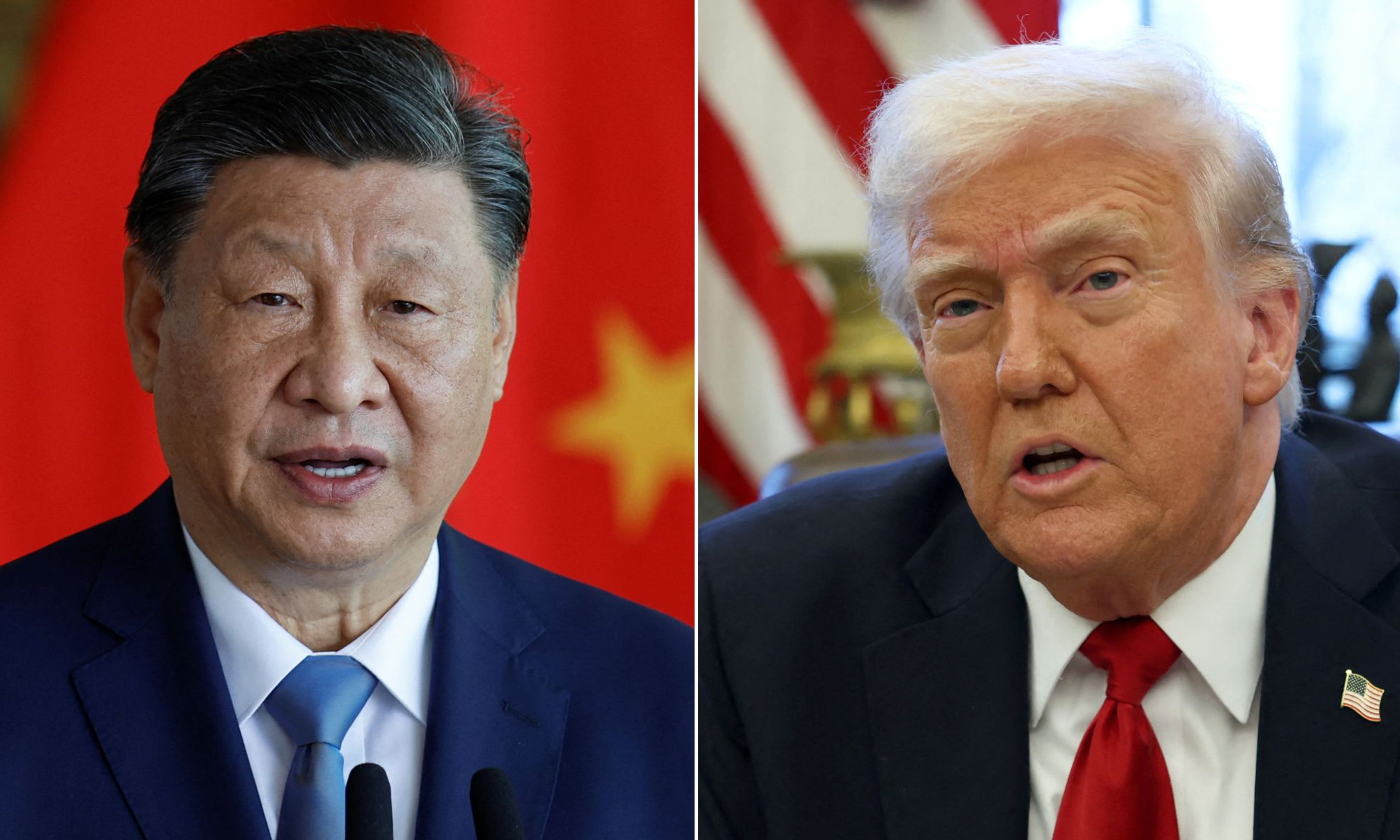
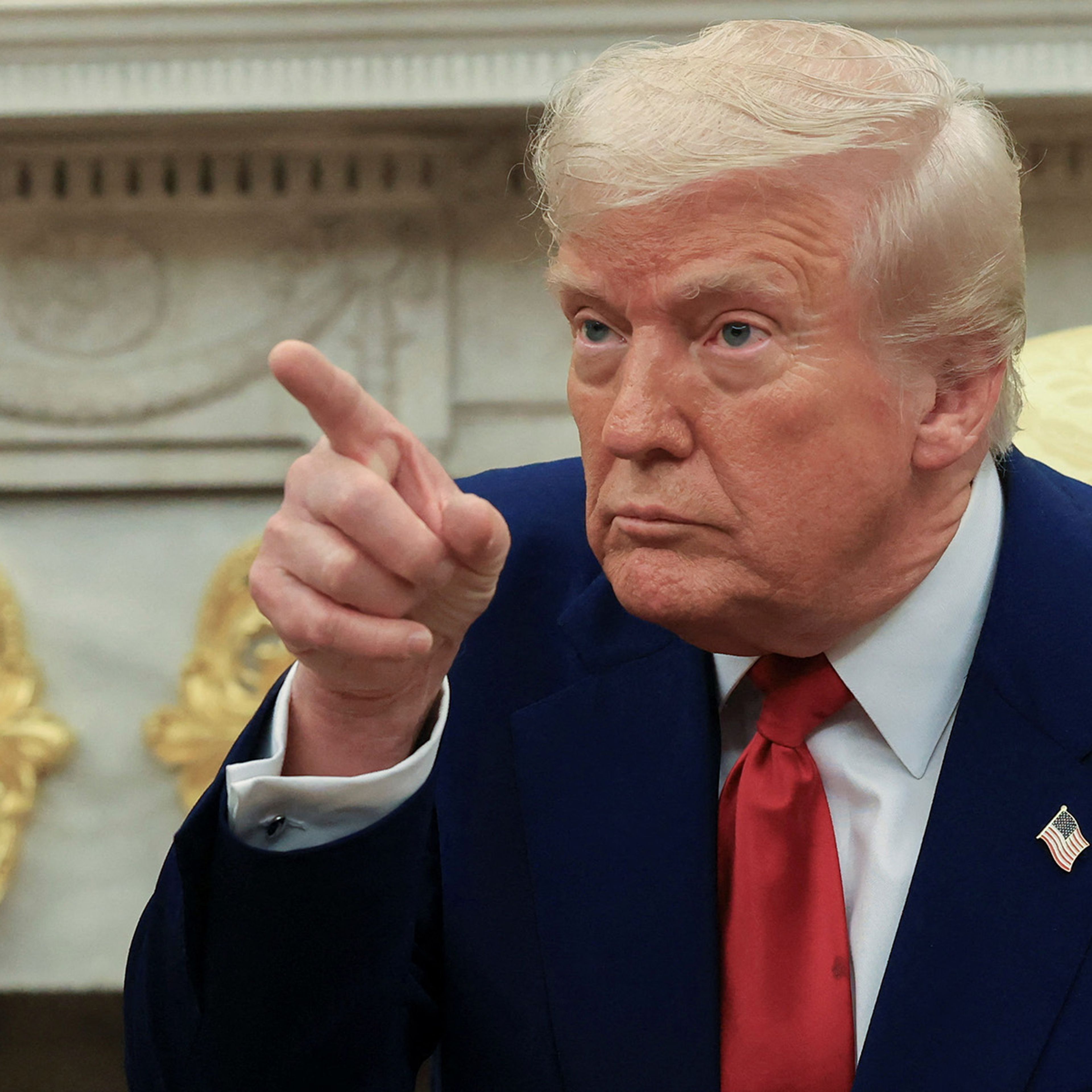
Left: China's President Xi Jinping speaks during a visit to Brasilia, Brazil, November 20, 2024. Right: President Donald Trump speaks in the Oval Office in Washington, D.C., March 26, 2025.
China is responding forcefully to President Donald Trump's latest round of tariffs as the trade war between the world's two largest economies heats up.
Beijing is imposing 84 percent tariffs on the U.S., a 50 percent increase, after Trump hit China with 50 percent retaliatory tariffs earlier this week. Trump's 50 percent tariff brought total U.S. tariffs on Chinese goods to 104 percent, a total that went into effect Wednesday morning.
"If the US insists on further escalating its economic and trade restrictions, China has the firm will and abundant means to take necessary countermeasures and fight to the end," the Chinese commerce ministry said in a statement.
China has consistently stated its intention to fight a prolonged trade war with the U.S. if that is what the Trump administration wants. Neither side appears interested in negotiating an end to the trade war in the foreseeable future.
"I think it's unfortunate that the Chinese actually don't want to come and negotiate because they are the worst offenders in the international trading system," Treasury Secretary Scott Bessent said Wednesday morning on Fox Business's Mornings with Maria.
"They have the most imbalanced economy in the history of the modern world. And I can tell you this escalation is a loser for them."
China also added a dozen U.S. firms to its export control list and six others to its unreliable entities list.
Trump promised the 50 percent tariffs after China put 34 percent retaliatory tariffs on U.S. goods in response to Trump's 34 percent tariff increase last week. The 34 percent tariff was part of Trump's sweeping global tariff package last week that instituted a 10 percent global minimum tariff and much larger tariffs on specific countries.
"Therefore, if China does not withdraw its 34% increase above their already long term trading abuses by tomorrow, April 8th, 2025, the United States will impose ADDITIONAL Tariffs on China of 50%, effective April 9th," Trump said Monday on Truth Social.
"Additionally, all talks with China concerning their requested meetings with us will be terminated! Negotiations with other countries, which have also requested meetings, will begin taking place immediately."
Trump originally enacted 20 percent tariffs on China because of its failure to prevent fentanyl from being made in China and eventually flowing across the U.S. southern border. The 20 percent levies came in two separate increments and similarly prompted a response from China.
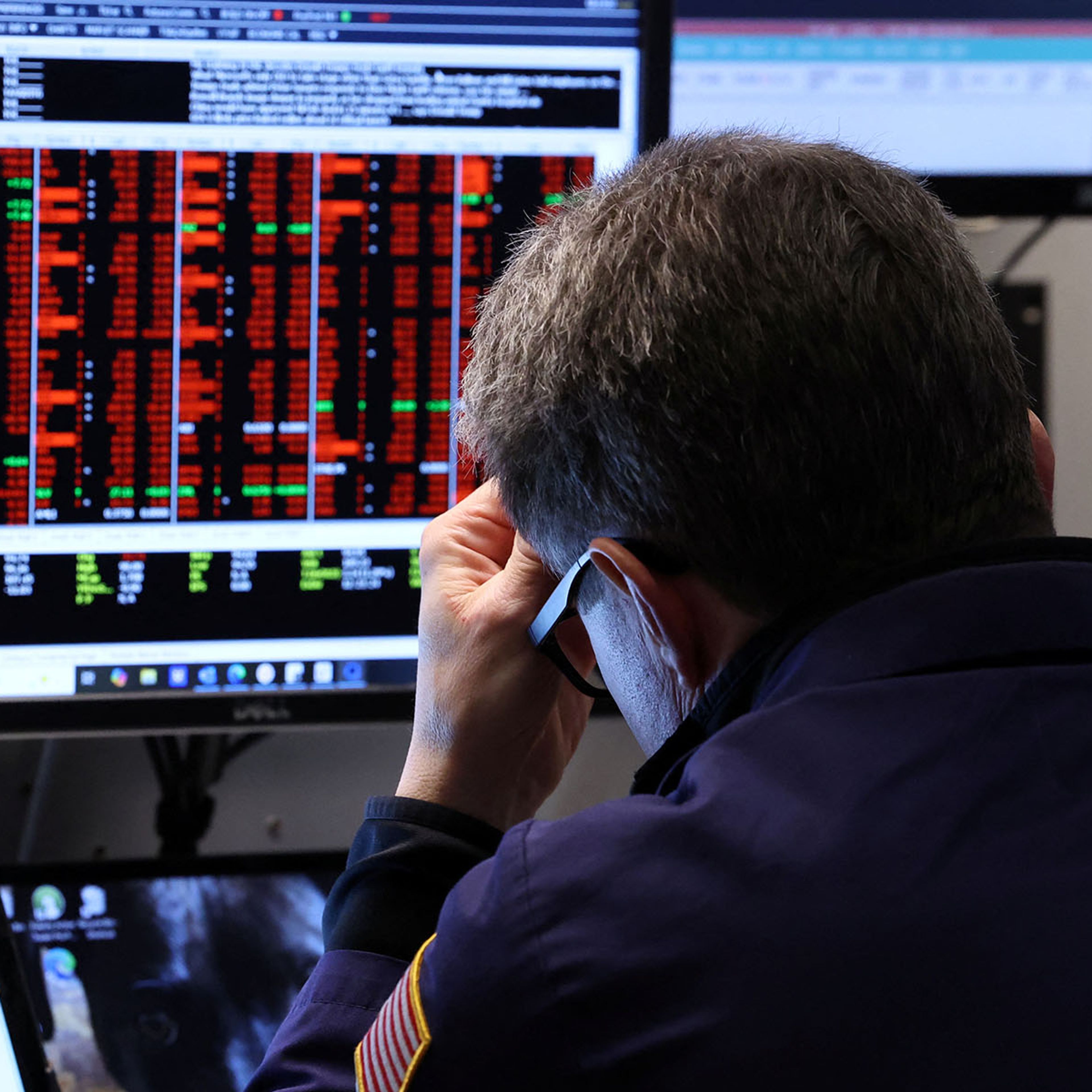
Trump's global tariff package immediately caused the largest stock market free fall since March 2020 at the onset of the Covid-19 pandemic. Wall Street is expecting Trump's tariffs to significantly increase consumer prices and hinder economic growth, while alienating the U.S. from global allies and making it a less reliable economic partner. JP Morgan CEO Jamie Dimon, a loud critic of Trump's tariff regime, predicted Wednesday morning that the U.S. will likely go into a recession as America's trade war with China escalates.
Trump's increased tariff rates on specific nations are based on a controversial formula that looks at a nation's overall trade deficit, not their tariffs on specific U.S. goods.
Trump views trade deficits as an indication that a given country is "ripping off" the U.S., while most economists regard trade deficits as a reflection of the varying levels of economic development and consumer demand across different nations.
The Trump administration's tariff formula received strong criticism from economic analysts over its reliance on trade deficits, which resulted in small impoverished nations, such as Lesotho, facing the top end 50 percent rate.
The administration has said as many as 70 countries have reached out to the U.S. seeking deals to mitigate the tariff situation. Trump already had conversations with Japanese and South Korean leaders to begin negotiations with longstanding U.S. allies in the Indo-Pacific.
The European Union already offered Trump a ideal to mutually reduce tariffs to zero on industrial products, a proposal Trump swiftly rejected because of its failure to address the U.S. trade deficit with the European bloc.
At the same time, Trump's pro-tariff trade advisor Peter Navarro has taken a different tone and downplayed the possibility of negotiations. Navarro's unapologetic tariff advocacy has made him the subject of criticism from billionaire Elon Musk, one of Trump's largest donors and top advisors. Musk called Navarro "Peter Retarrdo" on social media Tuesday after Navarro criticized Tesla, Musk's electric car company, for incorrectly accusing the company of relying on foreign components.

About the Author
James Lynch is a news writer for National Review. He previously was a reporter for the Daily Caller. He is a graduate of the University of Notre Dame and based in the Washington, D.C. area.
Featured Tags
Advertisement
Advertisement
Comments