Exclusive: Iowa Gubernatorial Candidate Rob Sand Unveils ‘Accountability for All’ Platform as Dems Look to Flip State
Written by Audrey Fahlberg
Share this story
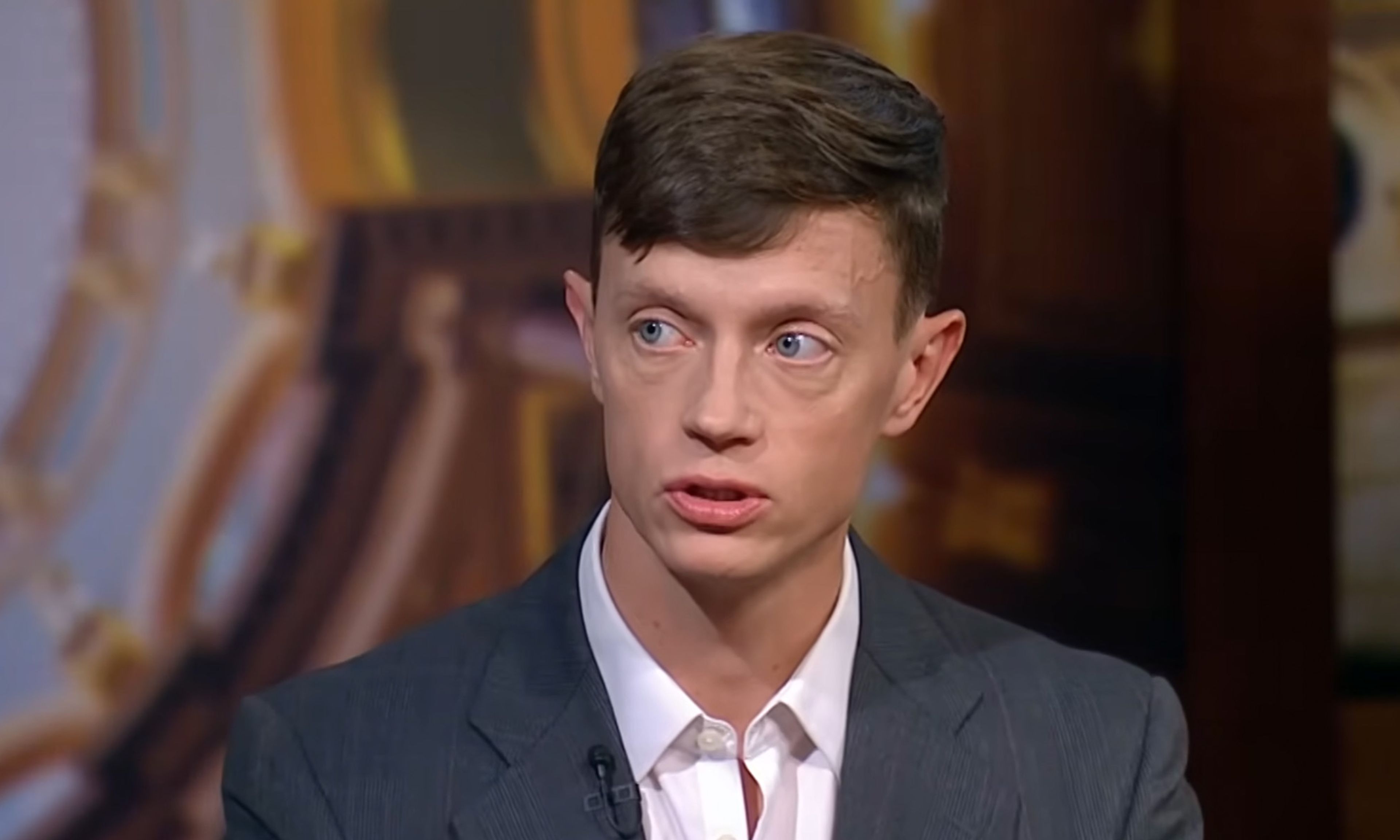
Iowa State Auditor Rob Sand on <i>Iowa PBS</i>, in a video posted November 7, 2025.
Iowa Democrats’ 2026 gubernatorial frontrunner, two-term state auditor Rob Sand, will unveil an ‘Accountability for All’ campaign platform on Monday morning aimed at winning over independent voters in what’s expected to be a competitive 2026 election for retiring GOP Governor Kim Reynolds’s seat.
In a new policy platform shared first with National Review, the state’s lone Democratic statewide official and presumptive gubernatorial nominee is pitching Iowans on a series of accountability-focused campaign proposals, from implementing age limits, stock trading bans, and term limits for state lawmakers to strengthening whistleblower protections and requiring elected officials to take cognitive tests and civics tests.
“It’s time to sound the alarm about the brokenness of our two choice political system,” a baseball-cap-wearing Sand says in a video announcing his new platform. “But you can’t always make repairs when you’ve got a broken foundation. Sometimes you have to tear the whole thing down and start over again.”
First elected as state auditor in 2018, the former assistant attorney general and chief public corruption prosecutor is also proposing stricter punishments for individuals convicted of tax fraud, including mandatory prison time. “The punishment must be severe enough to deter people from committing these crimes in the first place. I support mandatory prison time for anyone found guilty of stealing over $10,000 in taxpayer dollars, banning anyone convicted of fraud from doing business with the state, and stripping them of taxpayer-funded benefits like retirement and health care.”
The gubernatorial candidate argues that his “common-sense” policy platform aims to bring back a “forgotten Iowa tradition” of accountability politics. “We were the first state in the nation to make sure politicians couldn’t gerrymander by setting up an independent redistricting commission. The first state in the nation to make sure politicians couldn’t just appoint their cronies as judges by setting up a merit-based judicial selection system,” he writes in his policy platform. “Iowa set the standard for accountability, but after a decade of one-party control, we’ve lost our way.”
The 43-year-old married father of two has enjoyed frontrunner status for months as likely GOP nominee, U.S. Representative Randy Feenstra, has struggled to nab President Trump’s endorsement in the open race for Reynolds’s seat. The state’s gubernatorial primaries will be held on June 2.
Polling in the race is scant. But a public survey of likely 2026 midterm voters last fall found Sand leading Feenstra by two points, giving Democrats hope that they may be able to pull off an upset if the conditions are right and the cycle turns into a blue wave. The University of Virginia Center for Politics’ election forecaster Sabato’s Crystal Ball currently has the race in the “Leans Republican” category.
Demographically, Iowa has been “a tough state for the Democrats in the Trump era,” says J. Miles Coleman, an election analyst with Sabato’s Crystal Ball. But Iowa is also a state that lends itself to retail politics — and Sand is known for traveling all around the state, even in deep-red counties, to take questions from Republican voters. He does 100 town halls per year.
“For Democrats in some in some of these red areas, not just in Iowa, but across the Midwest or the south, I think there's something to just showing up, right? And I think that's something he tries to prioritize.”
“It's something that Democrats could pull off, I feel like, if enough stars align,” Coleman added.
Simply put, the state may be too red to elect a Democrat at the top of the ticket, particularly if Republicans cut through Sand’s independent brand by highlighting some of his more conventional Democratic views on issues such as abortion. Trump won the state by more than 13 points in 2024.
The formerly purple state has grown increasingly Republican in recent years, backing Trump three cycles in a row after swinging for Barack Obama in 2008 and 2012. As a result, the traditionally first-in-the-nation caucus state has drawn less national attention among Democrats in past years as recent elections and a disastrous 2020 presidential caucus prompted the national party to boot the state from its coveted primary calendar spot.
And yet Democrats maintain that the race is more competitive than operatives in Washington realize, especially since Sand is a strong candidate with high name recognition statewide and retiring Governor Kim Reynolds has consistently polled as the least popular governor in the country for eight quarters in a row, according to Morning Consult.
Iowa is one of 36 gubernatorial races in 2026. Democrats are adamant that Iowa is on the map this time around given the strength of their candidate. They liken Sand to Democratic Governors Laura Kelly in Kansas and Andy Beshear in Kentucky: both of whom have won reelection in ruby-red states Trump carried in 2024 by 16 and 30 points, respectively.
With both Reynolds and U.S. Senator Joni Ernst retiring, the 2026 midterms will mark the first time that Iowa has had open U.S. Senate and governor seats since the 1960s. Reynolds, who signed a bill in 2023 to restrict the state auditor’s powers, maintains that Sand’s politics are too blue for the state.
“He’s been the most partisan auditor I think we have had in our state’s history,” Reynolds told the Wall Street Journal last summer. “He’s opposed to anything I do.”

About the Author
Audrey Fahlberg was a politics reporter for National Review.
Featured Tags
Advertisement
Advertisement

Comments