House Republicans Pass 'Big, Beautiful' Bill in Major Step Toward Delivering Trump's Agenda
Written by Audrey Fahlberg
Share this story

House Speaker Mike Johnson (R., La.) speaks at a press conference with other members of House Republican leadership in Washington, D.C., May 20, 2025.
House Republicans passed their sweeping "big, beautiful" bill early Thursday morning, overcoming opposition from several factions within the caucus and taking a major step toward delivering President Trump's domestic agenda.
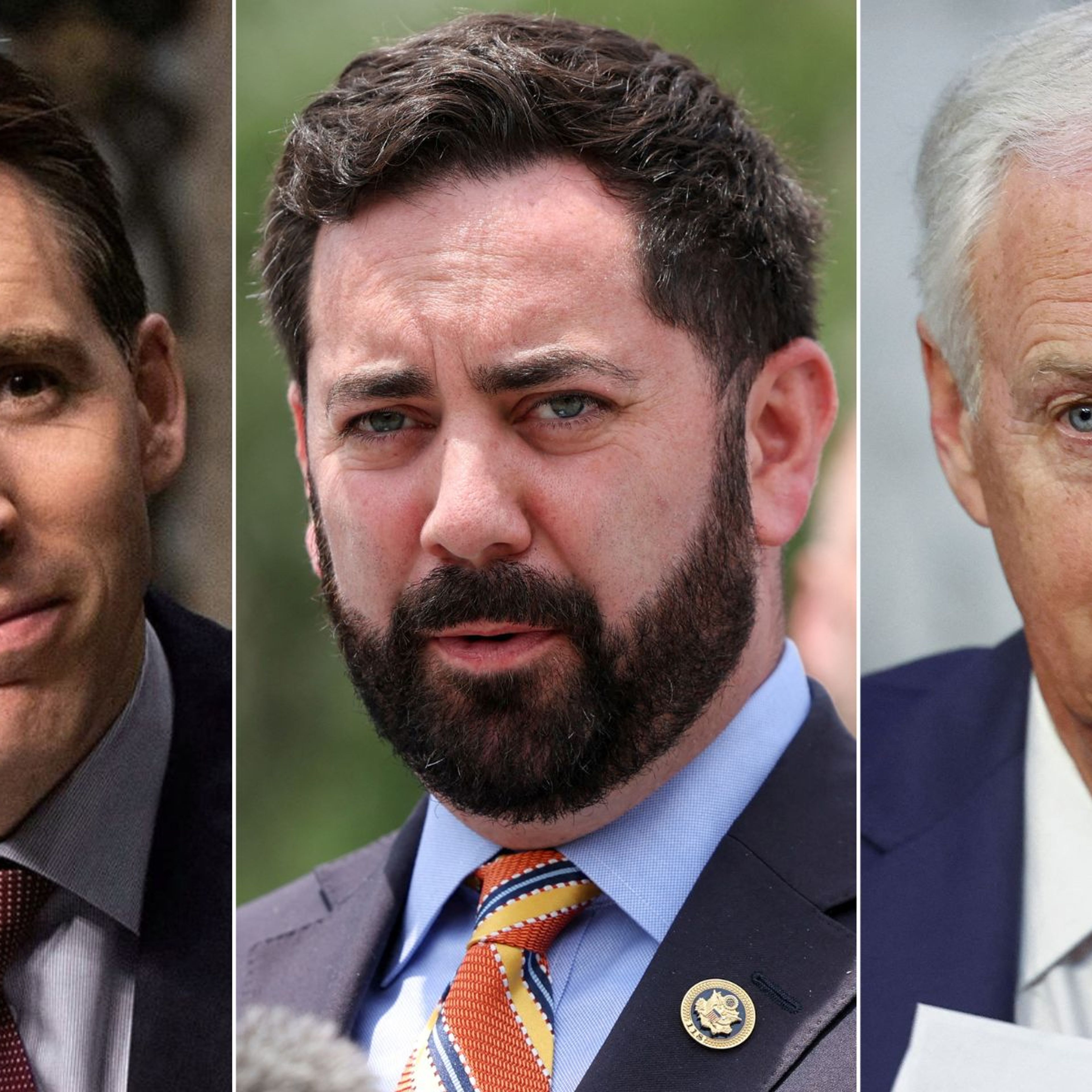
The bill passed 215 to 214, largely along party lines. Republican Representatives Thomas Massie of Kentucky and Warren Davidson of Ohio joined a united Democratic caucus in voting against the legislation. Republican Representative Andy Harris, chairman of the House Freedom Caucus, voted "present."
The bill would extend the 2017 tax cuts, introduce new tax cuts such as Trump's signature "no tax on tips" policy, and add work requirements to Medicaid, among other provisions.
Speaker Mike Johnson overcame significant opposition from members of his caucus who argued the bill should include further spending cuts to offset tax cuts that will add to the country's ballooning deficit. In a whirlwind 21-hour debate session, Johnson was able to strike a deal with fiscal hawks to introduce Medicaid work requirements in 2026, two years earlier than originally proposed. He also agreed to a four-fold increase in the SALT deduction cap, raising the limit from $10,000 to $40,000, in a concession to Republicans from high-tax blue states.
“After a long week and a long night and countless hours of work over the past year, a lot of prayer and a lot of teamwork, my friends, it quite literally is morning in America,” Johnson said early Thursday after presiding over a full night of debate on the House floor. “After four long years of President Biden’s failures, President Trump’s America First agenda is finally here, and we are advancing that today.”
The bill faces an uncertain future in the Senate, where it will be taken up under budget reconciliation, allowing the GOP to meet a lower simple-majority threshold, rather than the full 60-vote majority required to pass standard legislation.
“To our friends in the Senate, I would just say, the president is waiting with his pen,” Johnson said from the House floor ahead of the vote.
While Johnson's late-stage maneuvering was enough to bring around the vast majority of holdouts, Representative Massie, who was personally called out by President Trump earlier this week as a "grandstander," laid into his colleagues for adding to the country's debt crisis.
"This bill is a debt bomb ticking,” Massie said on the House floor ahead of the vote. “We’re not rearranging deck chairs on the Titanic tonight. We’re putting coal in the boiler and setting a course for the iceberg.”
Johnson spent recent days huddling privately with holdouts trying to corral them into supporting the mammoth bill to boost defense spending, increase border security funding, and extend and expand many expiring provisions in the 2017 Tax Cut and Jobs Act (TCJA). Those negotiations bled into Wednesday afternoon, when GOP leaders and budget hardliners met inside the White House to hash out last-minute disagreements over the legislative language surrounding Medicaid, clean-energy tax credits, and the bill’s tax provisions.
The legislation includes some reforms to Medicaid, such as scaling back federal funding to states that provide entitlements to illegal immigrants. The bill would also institute new work requirements for able-bodied Medicaid recipients, requiring them to demonstrate 80 hours of work a month to receive coverage. But the GOP decided against big cuts to Medicaid largely because Trump sees entitlement reform as a political loser.
After huddling with budget hawks who threatened to vote against the bill over concerns with ballooning deficits, House GOP leaders agreed to amend the bill so that new work requirements will kick in beginning in December 2026 instead of the initially proposed 2029 timeline. The amendment also changes legislative language surrounding clean-energy tax breaks, such as prohibiting any tax credits for nuclear energy facilities that begin construction after December 31, 2028. The new legislative language renames child savings accounts from "MAGA accounts" to "Trump accounts," and expands a ban on Medicaid coverage of puberty blockers and gender-transition care for minors to include adults seeking those treatments as well.
Moderate Republicans from high-tax states have spent recent days aggressively lobbying leadership for a larger cap on the state and local tax (SALT) deduction, a controversial provision of the tax code reviled by budget hawks and beloved by moderate Republicans in high-tax states such as California and New York. The previously unlimited write-off was capped at $10,000 in 2017 as a pay-for in that year’s TCJA, allowing individuals and married joint filers to deduct $10,000 in their state and local taxes when filing federally.
According to the manager’s amendment, blue-state Republicans succeeded in pressuring House GOP leaders to raise the initial $30,000 deduction cap proposal up to $40,000 with write-off phaseouts for those earning more than $500,000 a year.
The legislation's success isn’t guaranteed in the upper chamber -- at least in its current form. As National Review previously reported, Senate Republicans are expected to pick up any House-passed bill with an eraser in hand.
This article has been updated with new information.

About the Author
Audrey Fahlberg was a politics reporter for National Review.
Featured Tags
Advertisement
Advertisement


Comments