Jim Banks's AI Chip Legislation Opens Rift Between China Hawks, Industry Leaders
Written by James Lynch
Share this story

Senator Jim Banks (R., Ind.) on Capitol Hill in Washington, D.C., July 27, 2021.
Senator Jim Banks's (R., Ind.) legislation requiring American chipmakers to give U.S. companies first dibs on chips before selling them to China is opening up a rift between China hawks and Silicon Valley accelerationists.
Banks's GAIN AI Act, a proposal included in the fiscal year 2026 National Defense Authorization Act, is generating concern from the chips industry and praise from policymakers in favor of a more aggressive approach to China.
The legislation would create requirements for AI chipmakers to sell products to China and other U.S. adversaries. It would do so by making sure U.S. customers exercise their "right to first refusal" when chip companies apply for export licenses. Another component of the bill includes a requirement that companies do not have a backlog of chip orders from U.S. costumers.
Furthermore, companies would not be allowed to give better prices to foreign customers and they would be made to ensure the chips being sold are not going to be used to compete against American companies.
"The GAIN AI Act helps America beat China in the artificial intelligence race," Banks said in a statement provided to National Review.
"This bill will not restrict chip exports to our allies. It puts America First by securing AI dominance at home before sending critical technology to adversaries like China."
A proponent of President Trump's "America First" approach, Banks is one of the leading China hawks in Congress and has introduced several pieces of legislation targeting CCP influence.
Banks's legislation gained a major endorsement Thursday when Senator Tom Cotton (R., Ark.), the No. 3 Senate Republican, threw his weight behind the GAIN AI Act.
"American companies and customers should have priority access to American AI chips ahead of adversaries like the Chinese Communists. I’m proud to co-sponsor @SenatorBanks’s America First GAIN AI Act," said Cotton, chairman of the Senate Intelligence Committee.
A second key ally in Banks's fight is populist commentator Steve Bannon, who had Banks on his show last week to make the case for the bill. Bannon, a former Trump adviser and key figure in the MAGA movement, emphasized the need to take on the Chinese Communist Party and treat it like the main enemy of U.S. sovereignty. Banks agreed and argued his bill was necessary to prevent AI chips from being used to weaken American economic and national security interests.
Banks credited Senator Roger Wicker (R., Miss.), chairman of the Senate Armed Services Committee, for letting him put the GAIN AI Act into the NDAA. NDAA provisions typically require bipartisan support and backing from leadership to stay in the bill. Progressive Senator Elizabeth Warren (D., Mass.) is another co-sponsor of the bill, giving it bipartisan heft amid industry opposition.
House China Committee chairman John Moolenaar (R., Mich.) and ranking member Raja Krishnamoorthi (D., Ill.) have proposed similar legislation in the House version of the NDAA, a reflection of its appeal among China hawks.
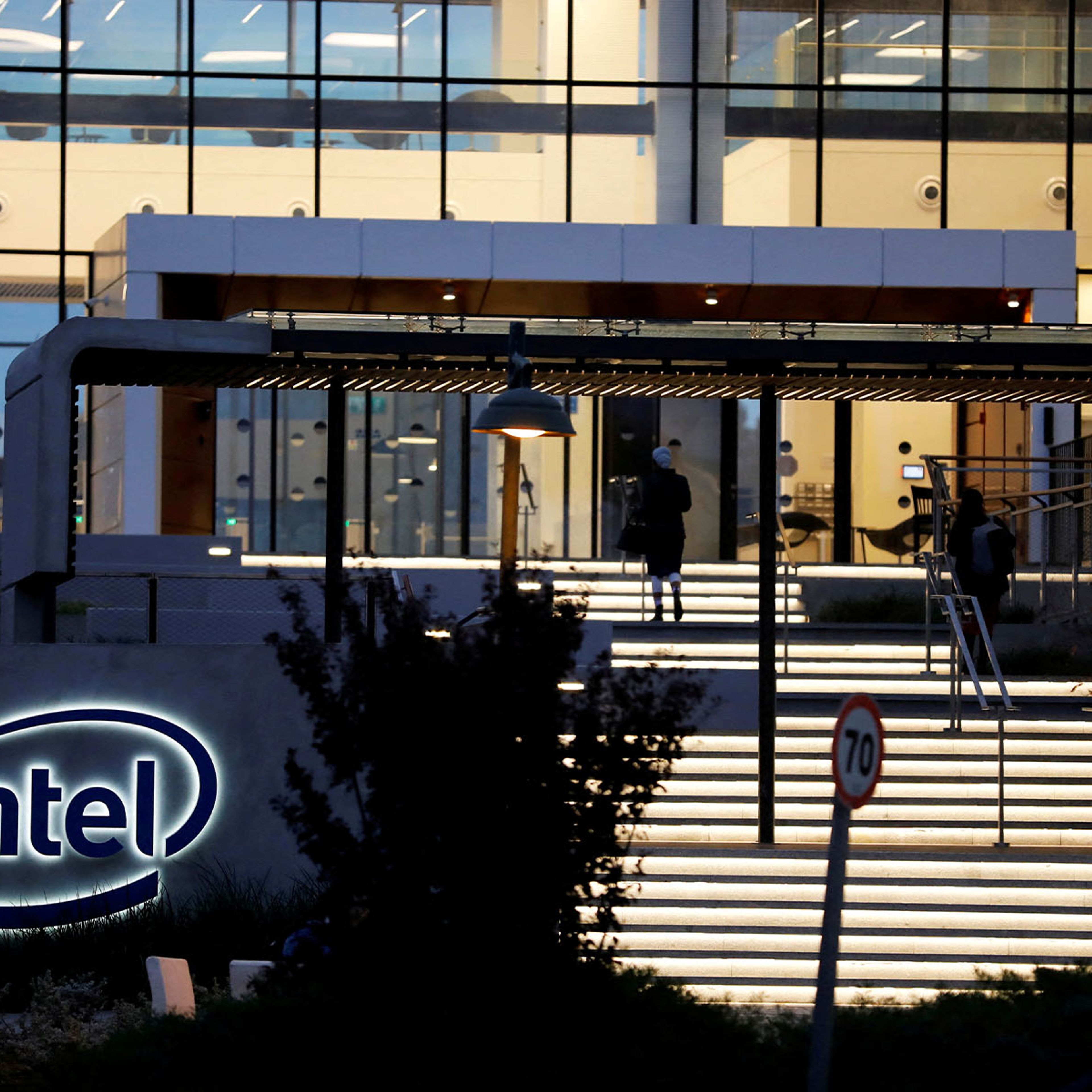
Although it does not target specific companies, Banks's bill would have the greatest impact on Nvidia, the chip designer at the heart of Silicon Valley's AI boom. Nvidia is lobbying furiously against Banks's proposal and countering what it considers to be a problem that does not exist.
Nvidia does not have a shortage of chips to sell to U.S. customers or elsewhere. Nvidia CEO Jensen Huang's recent comments on "sold out" chips refer to the fact that Nvidia is not overproducing and creating a supply glut. The company primarily sells its H20 chip to China, a product with capabilities about a decade behind Nvidia's cutting-edge offerings. H20 chips are compliant with existing U.S. export controls and fulfill market demand in China despite their inferiority.
"The U.S. has always been and will continue to be our largest market. We never deprive American customers in order to serve the rest of the world," a Nvidia spokesperson told NR.
"In trying to solve a problem that does not exist, the proposed bill would restrict competition worldwide in any industry that uses mainstream computing chips. While it may have good intentions, this bill is just another variation of the AI Diffusion Rule and would have similar effects on American leadership and the U.S. economy."
The AI Diffusion Rule refers to a Biden administration rule enacted in January placing export restrictions on AI integrated circuits and advanced AI models. The Trump administration rescinded the rule in May for putting "burdensome" requirements on companies and potentially harming U.S. diplomacy.
The semiconductor industry has voiced similar concerns to Nvidia about how Banks's GAIN AI Act could impact U.S. innovation.
"It introduces complex requirements that would be impossible to comply with as a practical matter and would have a significant adverse impact on the U.S. semiconductor industry," the Semiconductor Industry Association wrote in a letter last week, Punchbowl News first reported.
"If signed into law, the GAIN AI Act would irreparably harm global demand for U.S. chips, directly undermine the administration’s AI Action Plan and the goal of achieving U.S. leadership in AI, and threaten the significant investments being made by the global semiconductor industry in the United States."
President Trump's AI Action Plan, the administration's comprehensive AI agenda released in July, emphasizes the need to accelerate innovation in order to outpace competition. Removing regulatory barriers is a key pillar of the administration's strategy to speed up AI innovation. This philosophy, known as "e/acc" online, is popular in tech circles and contrasts itself with "decels" fearful of AI's potential harms.
Trump's AI czar David Sacks is pushing aggressively for the removal of Banks's proposal and echoing Nvidia's position on the amendment, according to the New York Times. He has publicly attacked AI doomers and called for them to be "Loomered," meaning that pro-Trump activist Laura Loomer should get them fired. Last week, Sacks called Banks last week to discuss the proposal in what was a constructive conversation, Punchbowl News reported.
The two other overarching themes of Trump's AI plan are developing American AI infrastructure and fostering international AI diplomacy. One aspect of U.S. diplomatic leadership listed in the plan is developing new export controls and ending loopholes in existing export controls. Banks's bill seems to fit into the category of creating new export controls to prevent China from gaining an edge in AI.
NR reached out to the Trump administration for comment. The Trump administration has not taken an official position on the GAIN AI Act.
Trump and Huang struck a deal in August to allow Nvidia to continue selling chips to China in exchange for the company giving the U.S. government 15 percent of the proceeds. The agreement permits Nvidia to sell its H20 chip but not its more advanced options.
Banks's legislation would not conflict with Trump's deal allowing Nvidia to continue selling chips to China. Under the GAIN AI Act, Nvidia can still sell the chips after fulfilling demand among American customers.
"This bill will not create a burden for any chipmakers. It gives American customers 15 days to place an order before high-powered chips are shipped off to a foreign adversary like China," a Banks spokesperson said.
China hawks strongly criticized Trump's deal with Nvidia and see the GAIN AI act as a step towards re-orienting the Trump administration back in a hawkish direction.
"The computing power to train and run AI models is an extraordinarily scarce resource that is emerging as vital to economic competitiveness and military superiority. The United States is fortunate to dominate the field and maintaining that lead should be a strategic priority. As has been the case for a generation, corporations are eager to hand American technological leadership over to China for an elusive foothold in an enormous market that the Chinese Communist Party will take away as soon as it can," said Oren Cass, an influential policy expert at the right-leaning think tank American Compass.
"U.S. policymakers have an obligation to prioritize the national interest over corporate profits and the GAIN AI Act makes the choice an especially stark one: if American and Chinese firms both want to buy the same chips, to whom should American producers sell? Giving the American firms right of first refusal is literally 'America First,' and obviously the right policy for the nation."

About the Author
James Lynch is a news writer for National Review. He previously was a reporter for the Daily Caller. He is a graduate of the University of Notre Dame and based in the Washington, D.C. area.
Featured Tags
Advertisement
Advertisement


Comments