Jury Finds Meta, YouTube Liable in Landmark Social Media Addiction Case
Written by James Lynch
Share this story
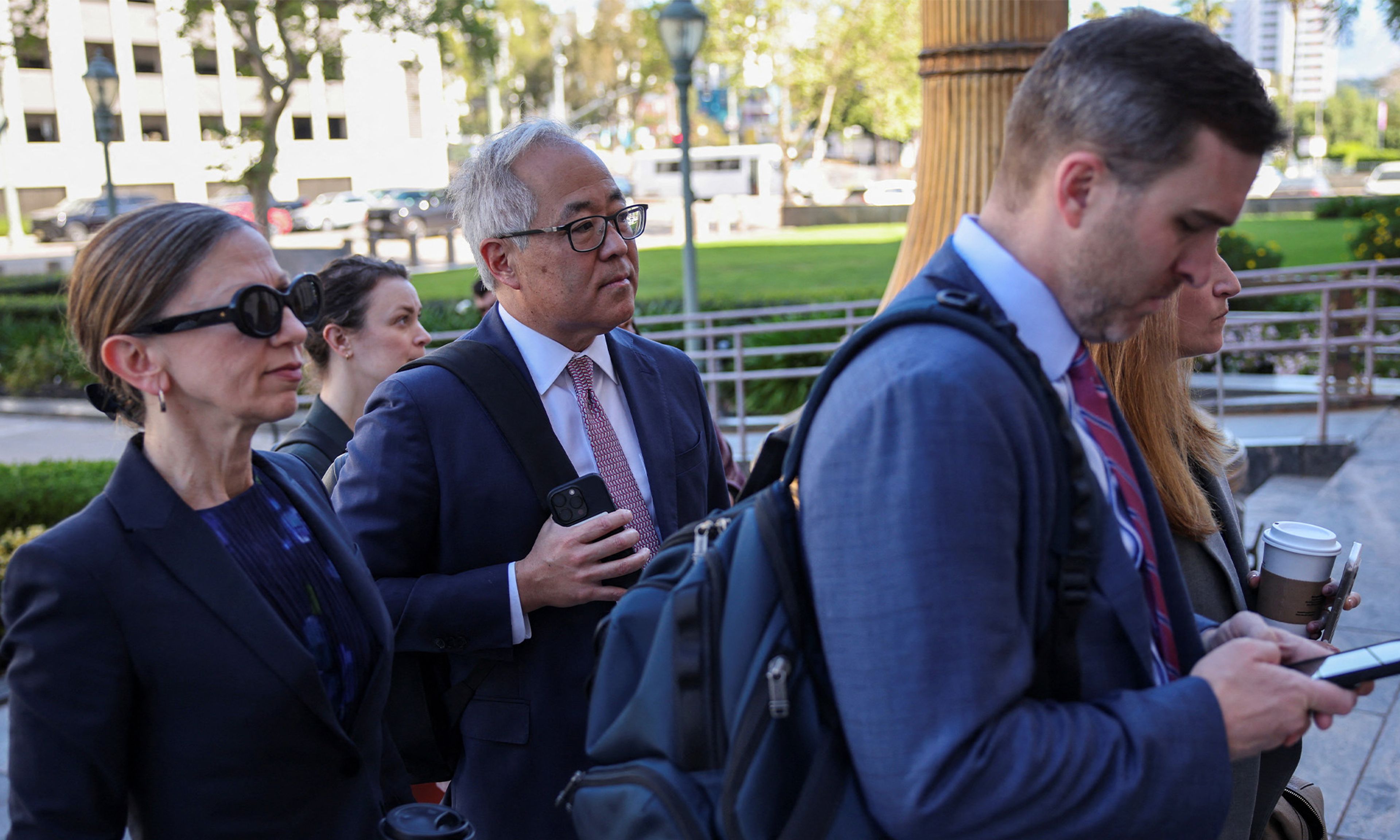
Luis Li, attorney for YouTube and Google, arrives at court as the jury deliberates in a case alleging harm to children’s mental health from addictive social media platforms, in Los Angeles, Calif., March 17, 2026.
A jury found Meta and YouTube liable Wednesday for harming a social media user with addictive platform features that caused her to suffer mental health issues, a landmark ruling that could open the floodgates to more product liability lawsuits against big tech companies.
The main plaintiff, a 20-year-old girl from Los Angeles referred to as "KGM," accused the social media platforms of intentionally addicting her to their products as a child, leading to mental health problems including anxiety and depression. Meta and YouTube will pay a combined $3 million in compensatory damages, with Meta responsible for 70 percent of the total, and an additional $3 million of punitive damages.
"Today, a jury saw the truth and held Meta and Google accountable for designing products that addict and harm children. Top tech executives took the stand, and their own internal documents were put before a jury, revealing that company leadership knew their platforms were hurting kids and repeatedly chose profits over children's safety. This verdict sends an unmistakable message that no company is above accountability when it comes to our children," the plaintiffs attorneys said in a joint statement.
"We look forward to continuing to present evidence of misconduct by Meta and Google, as well as TikTok and Snap. Our nation’s first school district bellwether trial begins in June and seeks to hold social media companies accountable for the damage their platforms have done to schools, schoolchildren and public education."
The "KGM" lawsuit is the first of its kind to challenge tech platforms on product liability rather than content. Platform features such as infinite scroll, auto-play videos, and potent recommendation algorithms are regularly identified as tools for maintaining user engagement. The social media addiction lawsuit argued that those platform features created an addictive product similar to cigarettes.
Tech companies routinely argue they are immune from legal liability under Section 230 of the Communications Decency Act. They also point out newer safety tools on their platforms and content restrictions for young users. Moreover, social media companies consider the research on social media addiction and mental health to be inconclusive.
"We respectfully disagree with the verdict and will appeal. Teen mental health is profoundly complex and cannot be linked to a single app. We will continue to defend ourselves vigorously as every case is different, and we remain confident in our record of protecting teens online," a Meta spokesperson said in a statement.
During the trial, Meta pointed to the mental health challenges the plaintiff faced before her social media usage skyrocketed. She used the platforms constantly despite experiencing cyberbullying, because it was preferable for her to be on the platforms rather than not at all.
Google, the owner of YouTube expressed similar disagreement and said the social-media addiction case incorrectly identifies the kind of platform YouTube is. YouTube is a platform where users log-in and spend most of their time watching videos rather than posting or messaging.
"We disagree with the verdict and plan to appeal. This case misunderstands YouTube, which is a responsibly built streaming platform, not a social media site," said José Castañeda, a spokesman for Google.
The Los Angeles jury ruled against Meta and YouTube following a deliberation process that took 44 hours over nine days. Plaintiffs's counsel sought $1 billion worth of damages and won a small fraction of that with the $6 million sum.
The jury did not rule unanimously, as two jurors of the ten voted no on some counts. For roughly a month, jurors were exposed to testimony from platform executives, engineers, addiction experts, and other witnesses. Snap and TikTok were initial defendants in the case, but both reached settlements prior to trial.
The California verdict marks the second major defeat for Meta in a matter of days. On Tuesday, a jury in New Mexico ruled that Meta misled consumers and endangered children on its platforms by failing to adequately protect them from sexual predators. Meta similarly expressed disagreement with the New Mexico verdict and plans on appealing it.
Fresh off his victory against Meta, New Mexico Attorney General Raul Torrez (D) celebrated the California verdict ahead of the next phase of his litigation, a public-nuisance case against Meta.
"Today’s verdict is another critical step toward justice that puts Meta and other big tech executives on notice that they cannot evade responsibility for design choices that jeopardize child safety," Torrez said.
"Juries in New Mexico and California have recognized that Meta’s public deception and design features are putting children in harm’s way. In the next phase of New Mexico’s trial, my number one priority remains changing the company’s longstanding and dangerous practice of prioritizing profits over children’s safety. We will seek court-mandated changes to Meta’s platforms that offer protections for kids."
The rulings in New Mexico and California mark a turning point for litigators and activists seeking accountability for the tech industry. Tech companies were successful in preventing legal liability with Section 230, but the playbook pioneered by Torrez and the "KGM" attorneys will likely lead to more lawsuits down the line. It also has implications f0r ongoing cases against social media platforms and artificial intelligence companies.
"This verdict is a major win for families who have spent years being told the harms they endured were just the price of using these platforms. When tech companies build and profit from products that fuel addiction and psychological harm, families have every right to fight back — and more of them now will," said Carrie Goldberg a prominent litigator against tech companies who pioneered the product liability approach.
Opponents of the ruling consider it an insult to free speech and a substitute for parental accountability. They believe mental health challenges for kids require parental education and responsibility, rather than enrichment for plaintiffs's attorneys.
"Today’s verdict is a disappointing example of 'tech panic' in place of parental responsibility. Parents are now in control of managing their children’s online screen time and content thanks to safety tools at every level of the tech stack. Instead of engorging the pockets of an already destructive plaintiff’s bar, the focus should be on educating parents to help keep their kids safe online. Hopefully, Meta and YouTube will successfully challenge this ruling," said Jessica Melugin, director of the center for technology and innovation at the Competitive Enterprise Institute, a libertarian think tank in favor of deregulation.
Critics of big tech companies including parent-activists and lawmakers, hailed the verdict against Meta and YouTube as a reflection of the harmful nature of social media platforms. They also urged Congress to pass federal legislation meant to codify greater protections for underage users into law.
"Finally, a jury said, enough. Social media companies can no longer behave with such callous disregard for the health and well-being of their youngest users. Finally, they are being made to pay a price for their greed," said Parents for Safe Online Spaces, a coalition of families who have lost children to suicide, drug overdoses, and dangerous internet challenges fostered by social media.
"We still need federal legislation like the Senate version of the Kids Online Safety Act (KOSA) that requires social media platforms to create products that are safe by design. This bill’s transformative duty of care provision would prevent companies from designing their products to addict children, thus providing meaningful safeguards where none now exist."
Senator Marsha Blackburn (R., Tenn.), a lead author of KOSA and a conservative critic of tech companies, called for Congress to pass her legislation at long last to enshrine protections for children online. Federal efforts to regulate social media have fallen prey to industry lobbying and congressional gridlock, even with large amounts of bipartisan support.
"Big Tech has done everything in its power to blame parents and children instead of taking responsibility for designing their products to addict and harm children. Now that Big Tech has been found liable for the harms they have pushed on our kids, it’s time for Congress to enshrine protections for American families into law by passing the Kids Online Safety Act," Blackburn said.
Other social media addiction cases in Los Angeles and federal courts are set to go to trial later this year. A string of losses in court could prompt tech companies to fundamentally change their platforms voluntarily, especially for underage users.

About the Author
James Lynch is a news writer for National Review. He previously was a reporter for the Daily Caller. He is a graduate of the University of Notre Dame and based in the Washington, D.C. area.
Featured Tags
Advertisement
Advertisement
Comments