Lawmakers Urge FDA to Crack Down on Opioid-Like Substance Sold in Gas Stations, Online
Written by Kamden Mulder
Share this story
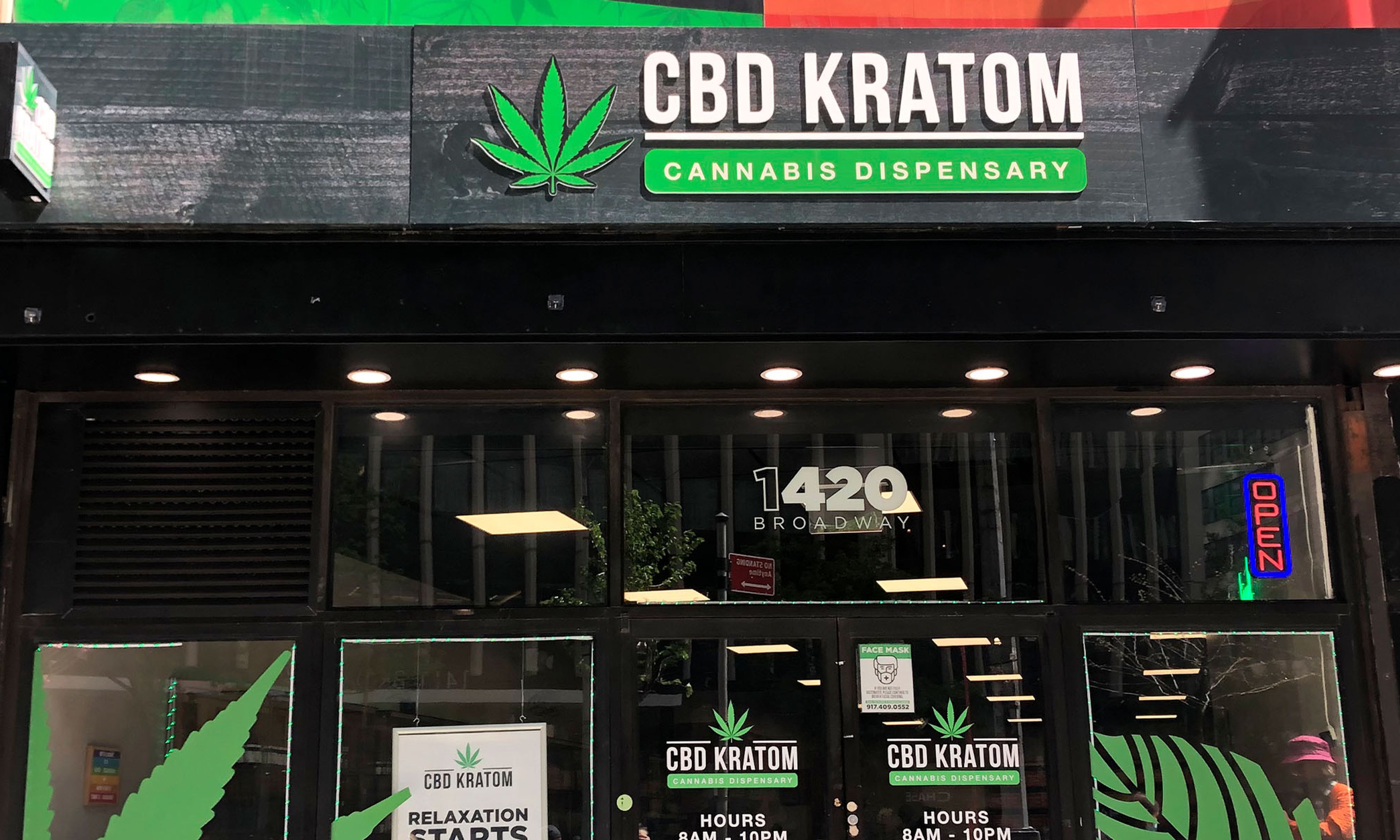
CBD Kratom retail store in New York City
Lawmakers are urging the Food and Drug Administration to crack down on the rapidly expanding market for opioid-like products commonly sold online and in gas stations, calling on regulators to classify both 7-hydroxymitragynine (7-OH) and the kratom leaf as controlled substances.
The letter sent to the FDA Wednesday, led by Senators Pete Ricketts (R., Neb.) and Richard Blumenthal (D., Conn.), calls on the FDA to consider not only scheduling the 7-OH derivative as a controlled substance, which the administration has already suggested, but the entire Kratom leaf, present in some of the "most accessible and addictive products," according to the letter.
"We are particularly concerned with the products that appeal to teenagers and children," the letter reads. "Kratom-derived concentrates in forms like tablets, gummies, and drink mixes are available online and in gas stations. This makes them easily accessible and attractive to young Americans."
The FDA addressed concerns about 7-OH in July, suggesting scheduling the substance. Currently, 7-OH is banned in 13 states and the District of Columbia, yet the Drug Enforcement Agency has not formally classified the substance under the Controlled Substance Act. At this time, "There are no FDA-approved 7-OH drugs, 7-OH is not lawful in dietary supplements and 7-OH cannot be lawfully added to conventional foods," a press release from the FDA reads.
"7-OH is an opioid that can be more potent than morphine. We need regulation and public education to prevent another wave of the opioid epidemic," FDA Commissioner Marty Makary said in the press release.
Lawmakers, however, are asking the FDA to include the kratom leaf in the scheduling; neither substance is scheduled at this time. Because neither kratom nor 7-OH is scheduled, loopholes exist, allowing these products to be sold on the market as botanical or supplement products, masking some of the potential side effects.
"Singling out 7-OH to schedule would leave these addictive products on the shelf and tacitly declare them safe for consumption," the letter reads. "There will be no standardized control over product quality, concentration, or labeling, allowing inconsistent and potentially dangerous products to stay on the market."
The lawmakers are particularly concerned about the accessibility of kratom for minors.
“Young people across the country have reported growing addicted to kratom supplements, consuming up to a dozen products a day and going through severe withdrawal symptoms after ceasing use," the letter reads. "Some cities, counties and states have responded by banning kratom or raising the minimum purchase age to 18 or 21. But in many areas, enforcement remains inconsistent, and some addiction specialists say clearer federal guidance is needed."
The Mayo Clinic released guidance in 2023 regarding the use of kratom to aid in opioid withdrawal, and warned of potential addiction to kratom and withdrawal symptoms following kratom use.
"Commercially available kratom products are not 'natural.' They often have high levels of very addictive substances. And kratom may contain dangerous contaminants, including heavy metals and harmful bacteria," the Mayo Clinic wrote. "When kratom is used during pregnancy, the infant may have symptoms of withdrawal after birth."
The leaf itself acts on mu-opioid receptors, binding sites for endorphins and common narcotics. Kratom overdoses, including overdoses that result in death, however, are rare. Kratom is currently banned in six states and Washington, D.C., with some form of regulation in 18 states.
Side effects of kratom use potentially include hallucinations, liver damage, nausea, seizures, and vomiting, among others.
Signatories on the letter include Senators Alex Padilla (D., Calif.), Jeanne Shaheen (D., N.H.), Jim Justice (R., W.V.), John Boozman (R., Ark.), Katie Britt (R., Ala.), Marsha Blackburn (R., Tenn.), Mike Crapo (R., Idaho), Steve Daines (R., Mont.), and Ted Budd (R., N.C.).
"The FDA has drawn a clear distinction between traditional kratom products and more dangerous, highly concentrated derivatives. The agency's focus is not on banning the kratom leaf itself, but on addressing potent compounds like 7-hydroxymitragynine (7-OH), which the agency has described as an opioid with significant addiction risk," the FDA told National Review in a statement.
The agency continued, saying the approach targets concentrated products, such as gummies and drinks, and continues to evaluate the safety of kratom.
"Recommending scheduling action of 7-OH under the Controlled Substances Act (CSA) is an important first step," the letter reads. "However, we encourage you to consider scheduling the whole kratom leaf, given that some of the most accessible and addictive products contain whole kratom leaf, not 7- OH."

About the Author
Kamden Mulder is a William F. Buckley Jr. Fellow in Political Journalism. She is a graduate of Hillsdale College.
Featured Tags
Advertisement
Advertisement





Comments