State-Level MAHA Regulations Will Lead to Spike in Grocery Prices, Study Finds
Written by James Lynch
Share this story
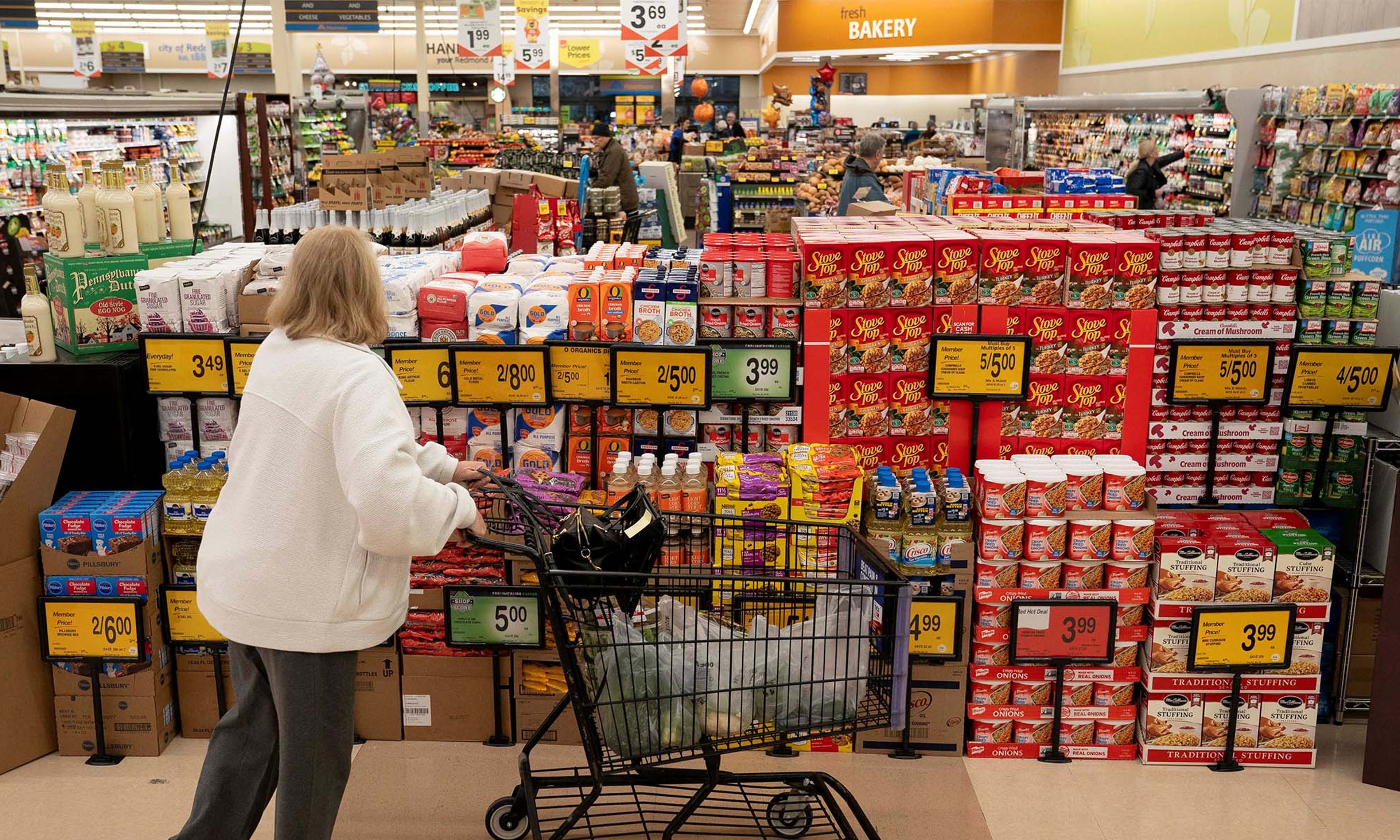
A shopper browses groceries at an Albertsons supermarket in Redmond, Wash., November 24, 2025.
Affordability is top of mind for the American people and a patchwork of state regulations around food ingredients, inspired by Health Secretary Robert F. Kennedy Jr.'s Make America Healthy Again movement, could make the problem worse.
A new study conducted by the Policy Navigation Group, a consulting firm, indicates that MAHA-backed regulations passed in Louisiana, Texas, and West Virginia will lead to a 12 percent increase in grocery prices for American households.
MAHA legislation banning certain ingredients or requiring new labeling on products will effectively function as a 12 percent tax increase in those three states, with spillover effects in neighboring states, the study concludes. Similar effects could result elsewhere if other states pass likeminded MAHA bills.
"While this study looked at three specific state laws, legislatures across the country are considering comparable ingredient bans, labeling, and other restrictions on ingredient uses. It is reasonable to assume that similar impacts would be replicated in states that adopt comparable food regulatory requirements to Louisiana, Texas, or West Virginia. If these laws are enacted, consumers across the country could face at least a 12 percent increase in annual grocery costs in the coming years," the study reads.
Americans for Ingredient Transparency, an advocacy group backed by major food companies, is releasing the study Thursday. The group says it supports a national standard for ingredient transparency rather than a patchwork of state regulations that could drive up costs nationwide.
The regulations in Louisiana, Texas, and West Virginia, will cost consumers in those states $17.1 billion combined, the study found. Due to regional distribution networks, almost a million consumers in neighboring states such as Arkansas, Oklahoma, and New Mexico could see higher prices. The study is the first one of its nature to put a price estimate on the potential costs of MAHA regulations on food ingredients and disclosure rules.
"At a time when President Trump is delivering on his promise to make life more affordable for American families, the proposed patchwork of conflicting state ingredient laws threatens to undo that progress with an effective tax increase of 12% on groceries nationwide," said Andy Koenig, a senior advisor to Americans for Ingredient Transparency and a former staffer in the first Trump administration.
"The only way to prevent this massive cost hike is for Congress to take the lead on the issue instead of the states and pass a uniform national standard for ingredient safety and transparency that keeps food affordable."
Kennedy has expressed openness to a national standard for MAHA-oriented ingredient regulations, putting him in alignment with the goal of Americans for Ingredient Transparency. The conservative activist group is pushing for federal legislation designed to balance Kennedy's transparency goals with the urgent need to tackle affordability. Opinion polls regularly indicate affordability and economic conditions are hugely important for the American people, who blame Trump for what they consider a sluggish economy.
In September, Americans for Ingredient Transparency commissioned a poll from Trump pollster Tony Fabrizio showing overwhelming support for a national ingredient regulatory standard rather than a state-by-state approach. The poll found 87 percent of voters believe it is important for food and beverage ingredient labeling to be regulated nationally.
The state laws passed in West Virginia, Louisiana, and Texas were among the victories Kennedy secured last year in his push to increase food regulations. MAHA took red states by storm in 2025 once Kennedy became Health and Human Services Secretary and one of the most prominent Trump administration officials. As the MAHA standard-bearer, Kennedy has been given a mandate from President Trump to run "wild" on healthcare policy.
Kennedy has worked with food companies to have them voluntarily comply with his demands rather than imposing new federal regulations and going through lengthy processes. Surprisingly, Kennedy has praised the companies for their cooperation after spending years lambasting them for poisoning children with their offerings. Artificial food dyes, ultra-processed foods, sugary drinks, and other standard features of America's food supply have faced Kennedy's ire for being unhealthy and easily accessible.
More broadly, Kennedy's MAHA movement is concerned about chronic diseases and unhealthy lifestyles. MAHA advocates promote alternative medicines, healthier eating, and physical fitness to address the public health problems they frequently highlight. Kennedy's critics have lambasted his opposition to vaccines and scientific research cuts for being significant detriments to public health in the immediate present and the long term.

About the Author
James Lynch is a news writer for National Review. He previously was a reporter for the Daily Caller. He is a graduate of the University of Notre Dame and based in the Washington, D.C. area.
Featured Tags
Advertisement
Advertisement


Comments