Trump Announces 90-Day Pause on Reciprocal Tariffs for Negotiating Countries, Hits China with 125 Percent Rate
Written by James Lynch
Share this story
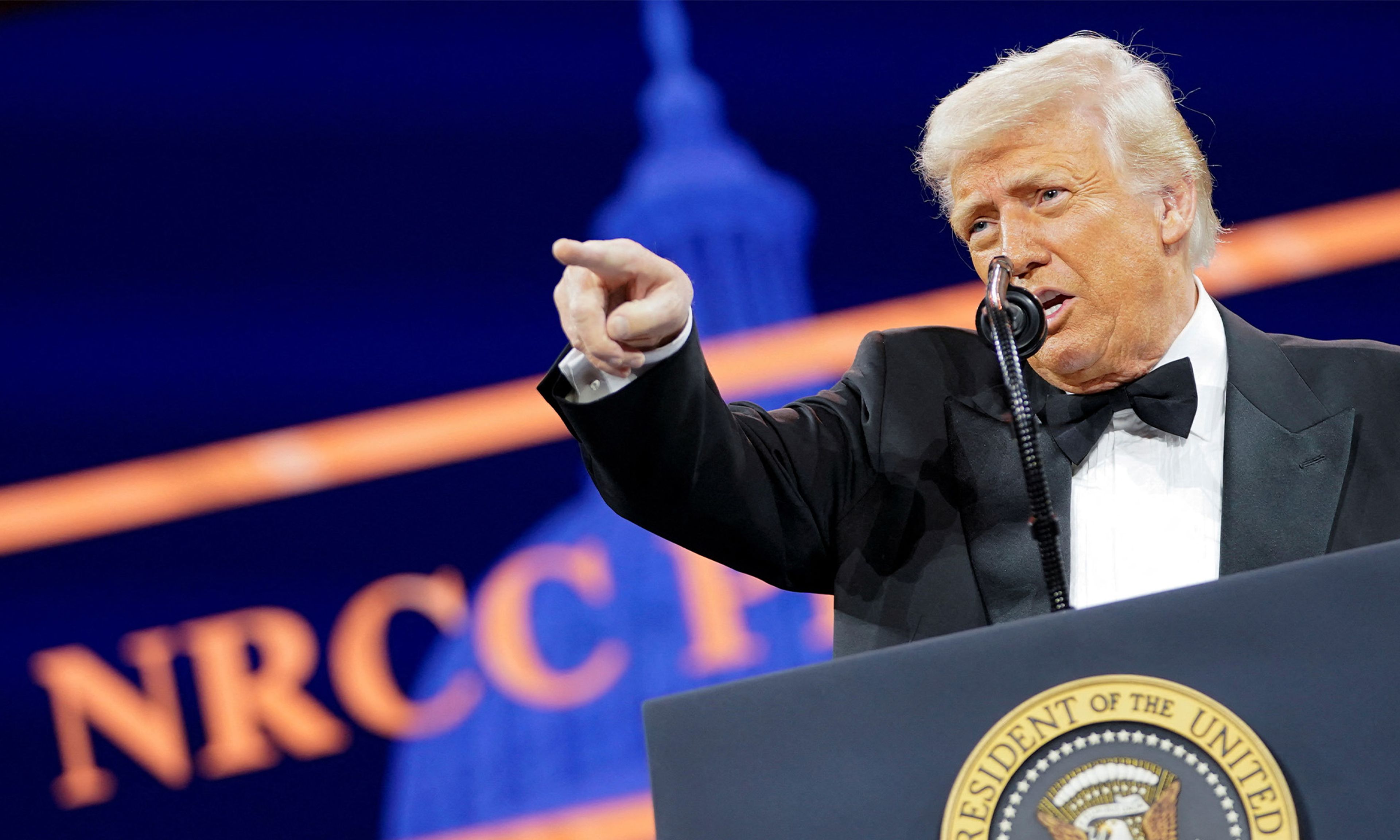
President Donald Trump speaks at the National Building Museum in Washington, D.C., April 8, 2025.
President Donald Trump announced Wednesday that he is implementing a 90-day pause on retaliatory tariffs for countries that have come to the negotiating table, while raising tariffs on China to 125 percent following Beijing's latest retaliatory levies.
Trump stated on Truth Social that he is lowering the retaliatory tariffs he unveiled earlier this week for the "worst offenders" to the baseline rate of 10 percent after more than 75 nations expressed a willingness to negotiate new trade deals with the U.S. He vowed not to raise rates on those countries for 90 days while negotiations proceed.
"Based on the lack of respect that China has shown to the World’s Markets, I am hereby raising the Tariff charged to China by the United States of America to 125%, effective immediately," Trump posted.
"Conversely, and based on the fact that more than 75 Countries have called Representatives of the United States, including the Departments of Commerce, Treasury, and the USTR, to negotiate a solution to the subjects being discussed relative to Trade, Trade Barriers, Tariffs, Currency Manipulation, and Non Monetary Tariffs, and that these Countries have not, at my strong suggestion, retaliated in any way, shape, or form against the United States, I have authorized a 90 day PAUSE, and a substantially lowered Reciprocal Tariff during this period, of 10%, also effective immediately," Trump added.
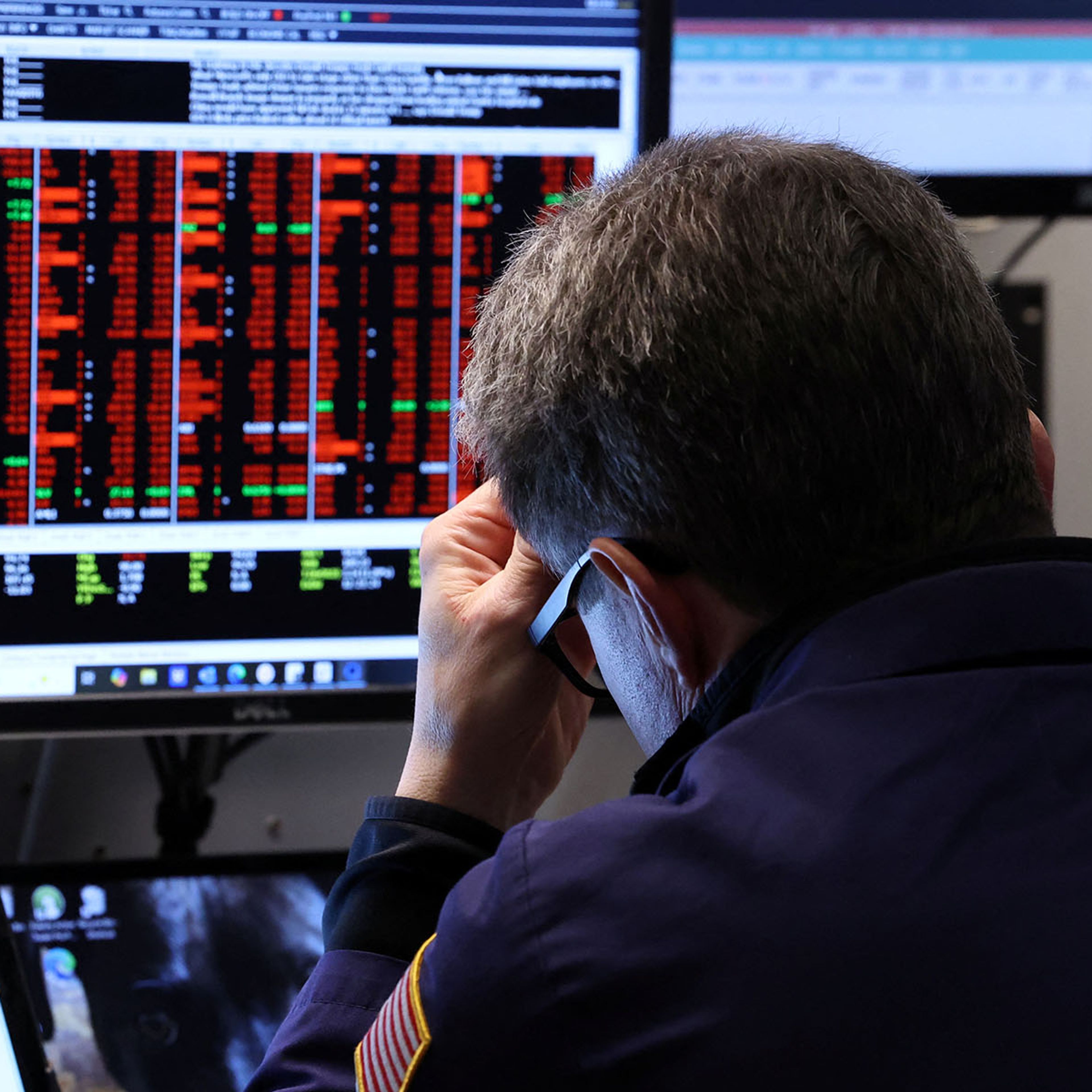
Stocks immediately surged upon Trump's announcement with each of the three major indexes jumping by over 7 percent. The Dow Jones and S&P 500 saw their biggest gains in five years, and the tech-oriented Nasdaq jumped over 10 percent. Wall Street had been reeling since last week when Trump announced a dramatic global tariff package consisting of a 10 percent minimum tariff and much higher tariff rates for many countries worldwide.
Many forecasters predicted Trump's tariffs would immediately cause a significant uptick in consumer prices and reduce economic growth, with some expecting tariffs to quickly send the U.S. economy into a recession. Trump announced the suite of tariffs last week and markets responded with their worst downturn since March 2020 at the onset of the Covid-19 pandemic.
Trump-supporting billionaire hedge fund manager Bill Ackman and JP Morgan CEO Jamie Dimon were among the Wall Street voices predicting economic calamity unless Trump changed course on tariffs. Goldman Sachs also predicted an upcoming recession, but reversed its forecast because of Trump's tariff pause.
Asked later about the 90 day pause, Trump indicated that it was because of the Wall Street panic. "I thought that people were jumping a little bit out of line. They were getting yippee, you know, they were getting a little bit yippee. A little bit afraid," Trump confessed.
Trump's retaliatory tariff rates for targeted countries were based primarily on the total U.S. trade deficit with those countries, rather than on their tariff rates. Trump believes trade deficits mean the U.S. is getting ripped off, dismissing the argument made by economists that trade deficits represent varying consumer demands and specialization of production across different countries.
Treasury Secretary Scott Bessent previously suggested that the Trump administration was open to negotiating deals with willing partners. Trump had discussions with Japanese and South Korean leaders earlier this week about trade and other important issues.
"Scott Bessent and I sat with the President while he wrote one of the most extraordinary Truth posts of his Presidency. The world is ready to work with President Trump to fix global trade, and China has chosen the opposite direction," said Commerce Secretary Howard Lutnick.
Bessent clarified that all countries besides China would have the 10 percent baseline rate as the negotiations take place. Canada and Mexico will have the 25 percent rates Trump previously imposed, except for goods covered under the U.S. Mexico Canada agreement. The Trump administration's tariff pause does not apply to sector specific levies, like the 25 percent tariff imposed on cars.
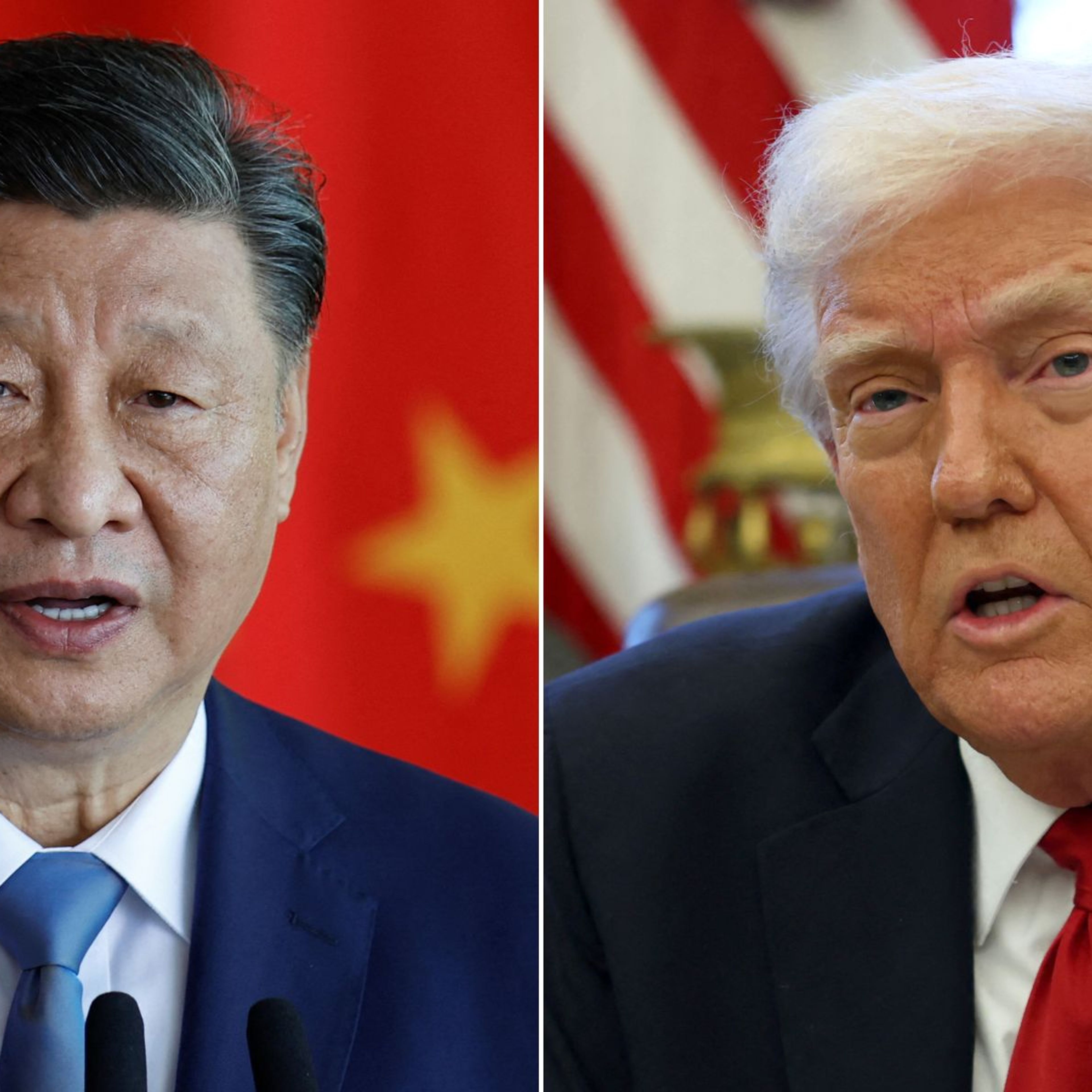
Trump's increased U.S. tariffs on China from 104 percent to 125 percent following China's decision to raise its tariffs up to 84 percent. The mutual escalation happened after Trump raised China's tariffs by 50 percent in response to China's 34 percent retaliatory tariff.
"Trump’s ten percent universal tariff remains in place, and China tariffs in excess of 100 percent remain in place. These will continue to raise prices, and uncertainty will continue to paralyze long-term investment," said Ryan Young, a senior economist at the Competitive Enterprise Institute, a free-market think tank.
Beijing's tariffs matched the 34 percent Trump imposed on China with his "Liberation Day" tariff package last week. Before that, Trump had placed 20 percent tariffs on China in two separate increments because of China's failure to mitigate the flow of fentanyl out of its country and across the U.S. southern border. China has said it is prepared to fight a trade war with the U.S. as long as the Trump administration wants one.
"I think it’s unfortunate that the Chinese actually don’t want to come and negotiate because they are the worst offenders in the international trading system," Bessent said Wednesday morning on Fox Business's Mornings with Maria.
"They have the most imbalanced economy in the history of the modern world. And I can tell you this escalation is a loser for them."
Trump's pro-tariff trade advisor Peter Navarro adamantly suggested the tariffs were not simply a negotiating tactic, leading some to conclude Trump would not back off from the tariffs no matter the economic consequences. The White House had been putting out mixed messages about whether it was interested in negotiating tariff deals, adding to the economic uncertainty.
"Many of you in the media clearly missed the art of the deal," said White House press secretary Karoline Leavitt. "You clearly failed to see what President Trump is doing here."
Navarro's staunch pro-tariff position ignited a public feud with billionaire Elon Musk, one of Trump's top donors and advisors, whose businesses would be impacted by high tariffs. The stock price of Tesla, Musk's EV maker, went up over 14 percent after Trump's announcement as many large cap companies saw enormous gains.
The European Union already offered Trump a deal to mutually lower industrial tariffs to zero instead of waging a tit-for-tat trade war. Trump rejected the bloc's offer because it would not resolve the U.S. trade deficit with the group of 27 nations. Afterwards, the EU approved its first set of retaliatory tariffs against the U.S. to go into effect April 15.
Other nations such as Israel and Italy have made clear their willingness to negotiate with President Trump and work out deals to reduce tariffs. Bessent made clear that each "bespoke" negotiation would be separate and Trump would be personally involved in the talks.

About the Author
James Lynch is a news writer for National Review. He previously was a reporter for the Daily Caller. He is a graduate of the University of Notre Dame and based in the Washington, D.C. area.
Featured Tags
Advertisement
Advertisement
Comments