Trump Urges Peace After Israel Accuses Iran of Violating Cease-Fire
Written by James Lynch
Share this story
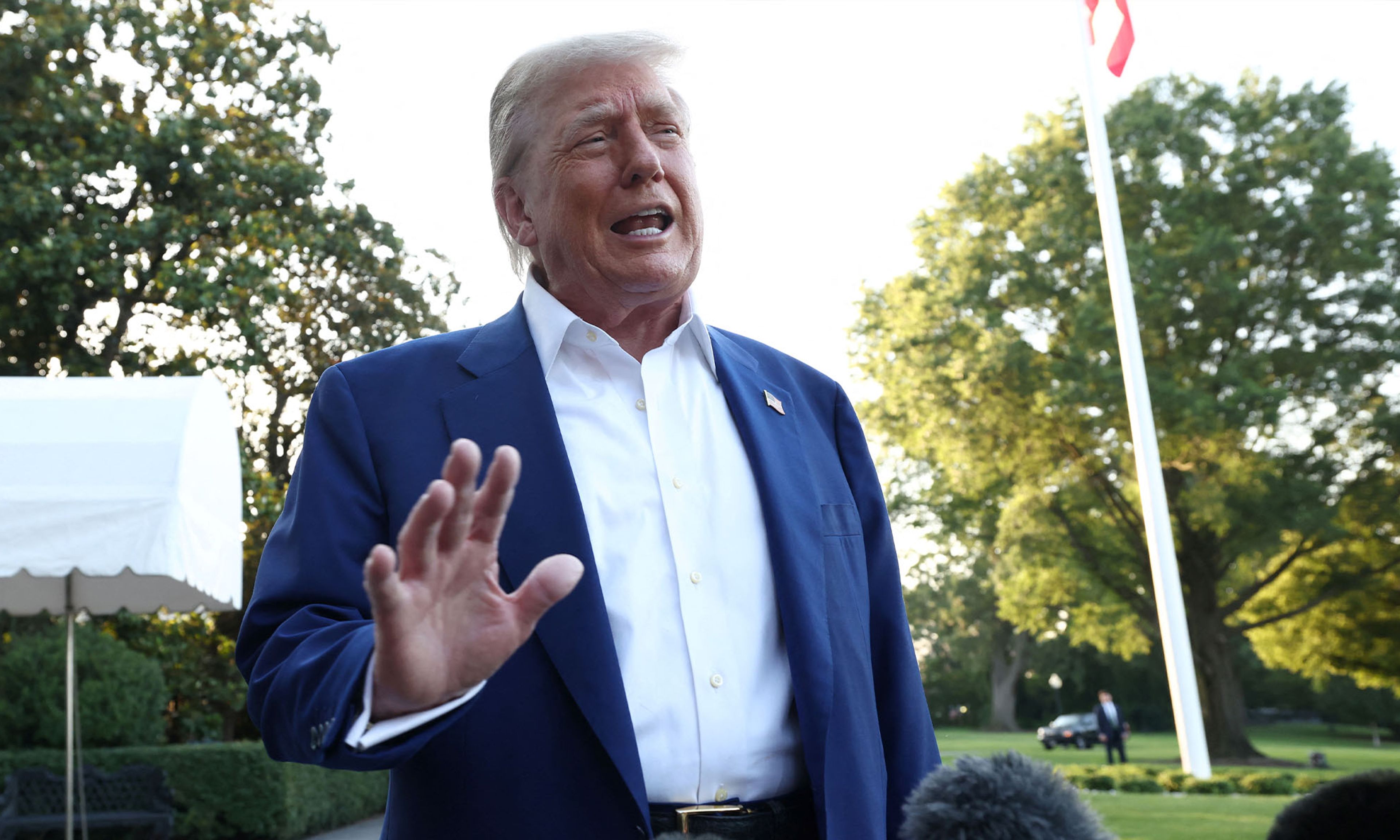
President Donald Trump speaks to media ahead of boarding Marine One from the South Lawn at the White House in Washington, D.C., June 24, 2025.
President Donald Trump urged Israel and Iran to honor the cease-fire deal he announced Monday as Israel prepares to retaliate against Iran for launching missiles right before the cease-fire was supposed to come into effect.
"THE CEASEFIRE IS NOW IN EFFECT. PLEASE DO NOT VIOLATE IT!" Trump posted on Truth Social.
"ISRAEL. DO NOT DROP THOSE BOMBS. IF YOU DO IT IS A MAJOR VIOLATION. BRING YOUR PILOTS HOME, NOW! DONALD J. TRUMP, PRESIDENT OF THE UNITED STATES" Trump said in another post.
Speaking to reporters outside the White House, Trump said both countries "don’t know what the f*ck they’re doing" because they have been fighting for so long.
View this post on X
Shortly after admonishing Israel to turn its bombers around, Trump announced that Israel "is not going to attack Iran. All Planes will turn around and head home, while doing a friendly 'Plane Wave' to Iran. Nobody will be hurt. The Ceasefire is in effect!"
Hours after Trump announced the cease-fire Monday night, the Israelis accused Iran of violating the terms and promised to respond accordingly.
"In light of the severe violation of the ceasefire carried out by the Iranian regime, we will respond with force," Eyal Zamir, chief of staff of the Israeli military, said in a statement early Tuesday morning.
Israeli prime minister Benjamin Netanyahu spoke to Trump about the situation Tuesday after Iran fired missiles at Israel after the time period when the cease-fire was supposed to begin, Netanyahu's office said. Israel destroyed an Iranian radar system but chose not to launch further strikes following the call between Trump and Netanyahu.
Iran, for its part, denied violating the cease-fire.
Trump announced Monday evening a cease-fire agreement between Israel and Iran to end the war between them after twelve days of strikes from both sides. Hours later, Iran launched several waves missiles at Israel, killing at least three in the process.
Trump suggested that, absent the cease-fire, the war could have gone on for years and destabilized the Middle East. He did not specify the terms of the cease-fire agreement. It remains to be seen whether the U.S. and Iran will resume diplomatic talks related to Tehran's nuclear buildup.
Vice President JD Vance addressed the cease-fire deal during an interview on Fox News moments after it was announced.
"We have taken what was a threatening nuclear program that could have destabilized the entire world — now that program is gone. We did it through effective presidential leadership and also some very, very competent work from our troops," Vance said on Special Report with Bret Baier.
Iran initially denied the existence of a cease-fire deal but said it would stop its response to the U.S. and Israel if the Jewish state ended its operations no later than 4 a.m. Tehran time.
Iranian Minister of Foreign Affairs Abbas Aragchi later announced the end of Iran's military campaign against Israel at 4 a.m. Iranian time and thanked his country's troops. His statement all but confirmed the cease-fire deal to halt the war against Israel. Not long after, Iran launched missiles at Israel.
"Sirens sounding in Israel due to a missile launch from Iran," the Israel Defense Forces announced. About 20 minutes later, the IDF said Iran launched more missiles, right as the cease-fire was set to go into effect. Iran quickly fired off another barrage of missiles, prompting Israelis to go back into their bomb shelters, the IDF said.
"For the third time in the last hour, Israelis are currently running to shelter due to another missile launch from Iran," the IDF posted on X.
Three Israelis are reported dead because of the missile strikes.
As the missiles launched, Iranian state TV announced a cease-fire deal that was "imposed on the enemy" following Iran's retaliatory strikes, which the broadcast claimed were successful.
Earlier Monday, Iran launched missiles at a U.S. military base in Qatar that did not cause any casualties or damage. Trump said the Iranians notified the U.S. before the attack and all but one missile was intercepted.
"Thanks to the professional, competent, rapid and coordinated response of U.S. and Qatari forces, the ballistic missile attack was defeated by U.S. and Qatari Patriot batteries and there were no casualties to American or Qatari personnel," U.S. Central Command said in a statement.
After the Iranian strikes, Trump called for peace instead of further escalation. With the cease-fire deal in place, it is unlikely that the U.S. will retaliate against the Iranian attack.
The U.S. launched strikes on Iranian nuclear-enrichment facilities in Fordow, Natanz, and Isfahan over the weekend, resulting in significant damage. During an address Saturday night, Trump said Iran's nuclear facilities were "obliterated" by the strikes and called for peace in the Middle East.
On Sunday, the Pentagon said the strikes caused "severe damage and destruction" to the Iranian nuclear facilities, but it was too early to fully assess the state of Iran's nuclear capabilities. Defense Secretary Pete Hegseth emphasized that the administration was not planning on launching a broader regime-change war after the strikes on the nuclear facilities, although Trump raised the possibility in a subsequent Truth Social post. The cease-fire agreement is consistent with the administration's messaging that it would not be launching a regime-change war and would limit itself to attacking Iran's nuclear sites.
The war began earlier this month when Israel launched targeted strikes on Iranian nuclear sites and killed several top Iranian military commanders. The bold Israeli operation also killed two of Tehran's top nuclear scientists, with the goal of eliminating the Iranian nuclear threat. Israel and Iran exchanged strikes in the days following the initial Israeli operation as the U.S. weighed direct involvement.
Iran is the leading sponsor of terrorist organizations in the Middle East, including Hamas in Gaza, Hezbollah in Lebanon, and the Houthis in Yemen and the Red Sea. Israel has been fighting a war against Hamas since the terrorist group's attack on October 7, 2023, killed 1,200 innocent civilians and saw the abduction of 251 hostages.
The Iranian operations have not been limited to the Middle East. The regime has presented a credible threat to the lives of Trump and senior officials from his previous administration. Trump took a hardline approach to Iran in his first term, ripping up former President Obama's nuclear deal and imposing harsh sanctions. Trump also ordered the drone strike on top Iranian commander Qasem Soleimani in 2020, a similarly tense situation that did not escalate into a protracted military conflict.
Since the inception of Iran's Islamist regime, Tehran has been responsible for the deaths of hundreds of U.S. Marines and for attacks on American embassies. Iranian forces have called for death to America, and the regime's terror proxies have the goal of wiping Israel off the map.

About the Author
James Lynch is a news writer for National Review. He previously was a reporter for the Daily Caller. He is a graduate of the University of Notre Dame and based in the Washington, D.C. area.
Featured Tags
Advertisement
Advertisement

Comments