Trump Backs Moratorium on State AI Regulation, Placing Him at Odds with GOP Governors
Written by James Lynch
Share this story
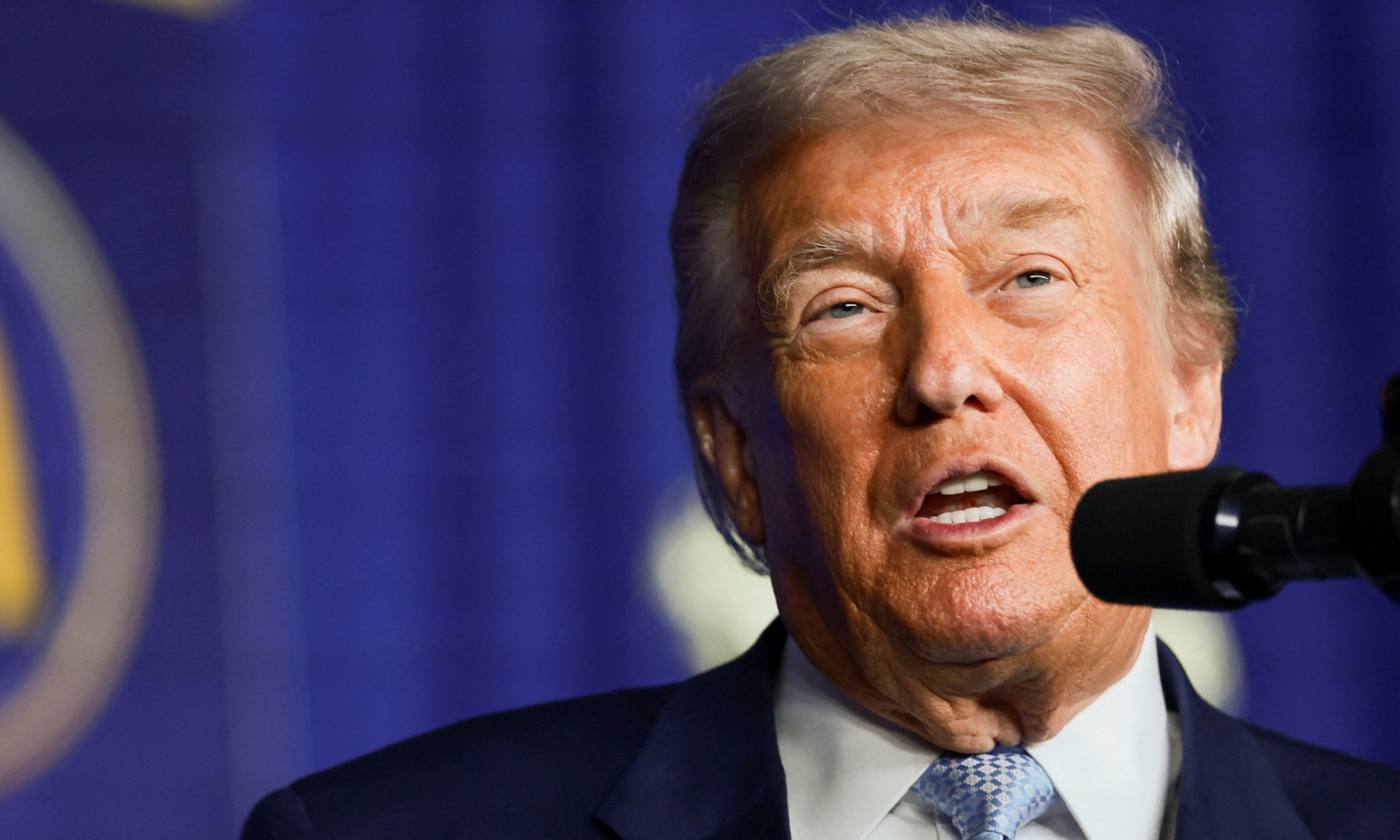
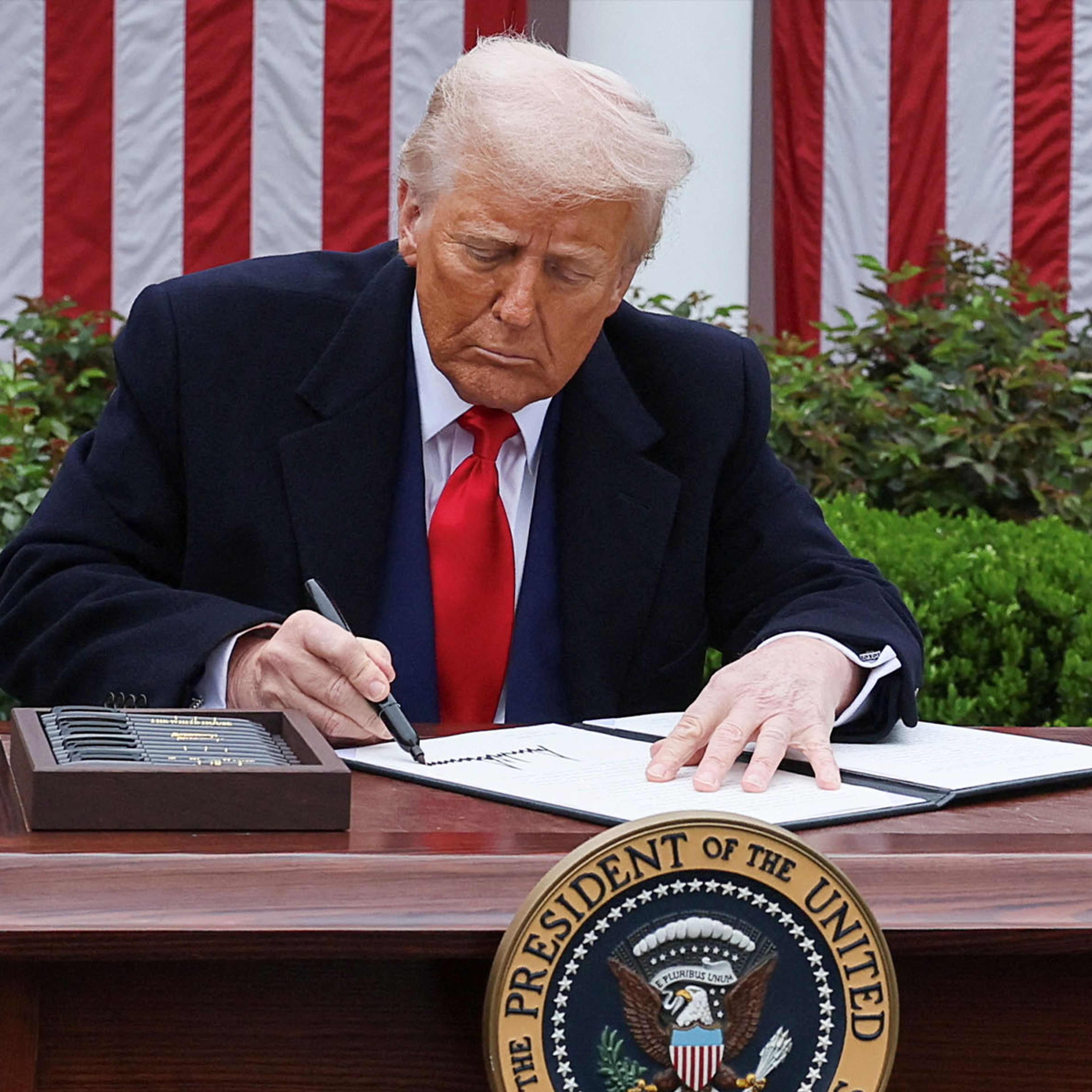
President Donald Trump delivers remarks at the Westin Hotel in Washington, D.C., November 17, 2025.
President Trump is throwing his weight behind a congressional push to place a moratorium on state-level AI regulations, taking a stand against several prominent Republican governors who believe states need to be able to enforce guardrails around AI as the technology continues to make rapid gains.
Trump voiced support Tuesday for rolling back state-level regulations after House Majority Leader Steve Scalise (R., La.) told Punchbowl News earlier this week that lawmakers were discussing the possibility of attaching the AI regulatory moratorium onto the annual defense policy bill.
"Investment in AI is helping to make the U.S. Economy the 'HOTTEST' in the World, but overregulation by the States is threatening to undermine this Major Growth 'Engine.' Some States are even trying to embed DEI ideology into AI models, producing 'Woke AI,'" Trump posted on Truth Social.
"We MUST have one Federal Standard instead of a patchwork of 50 State Regulatory Regimes. If we don’t, then China will easily catch us in the AI race. Put it in the NDAA, or pass a separate Bill, and nobody will ever be able to compete with America," he added.
Trump's post garnered praise from tech industry leaders and policy experts opposed to AI regulations across the board. The president's position is consistent with the administration's AI action plan, which calls for a lax regulatory regime in order to accelerate American innovation.
"The President is right. A 50-state patchwork is a startup killer. Federal AI legislation is essential. There’s no bigger issue for Little Tech — the builders who create the future, for America," pro-Trump venture capitalist Marc Andreessen said on X.
Proponents of AI safety and multiple Republican governors criticized the renewed possibility of Congress enacting a moratorium on state-level AI regulation.
"Stripping states of jurisdiction to regulate AI is a subsidy to Big Tech and will prevent states from protecting against online censorship of political speech, predatory applications that target children, violations of intellectual property rights and data center intrusions on power/water resources," said Florida governor Ron DeSantis (R).
"The rise of AI is the most significant economic and cultural shift occurring at the moment; denying the people the ability to channel these technologies in a productive way via self-government constitutes federal government overreach and lets technology companies run wild."
DeSantis later said that adding the AI regulatory moratorium to the annual defense policy bill, is an "insult to voters." He was responding to a post from MAGA activist Mike Davis urging people to call their lawmakers to oppose the potential legislation.
Another Trump ally, Arkansas governor Sarah Huckabee Sanders (R), reacted similarly and called for Congress to drop the regulatory moratorium.
"This summer I led 20 GOP governors to pressure Congress to vote down its 10 year prohibition on state-level AI regulations — protecting Arkansas’ AI child-exploitation ban and other commonsense safeguards. Now isn’t the time to backtrack. Drop the preemption plan now and protect our kids and communities," Huckabee Sanders said.
Trump's endorsement could revitalize a congressional push for legislation to prevent states from regulating AI. An attempt from Senator Ted Cruz (R., Texas) to include such a provision in the GOP's budget megabill earlier this year failed after the Senate voted overwhelmingly to strike it down. Cruz is chairman of the Senate Commerce Committee and a proponent of accelerating AI innovation.
Senator Brian Schatz (D., Hawaii), suggested that Democrats would block limits on states's ability to regulate AI if it becomes a lively issue again.
"This is a poison pill and we will block it," Schatz posted on X. In a reply to another user, Schatz said the congressional proposal would create a federal pre-emption for state regulation without adding any federal guidelines.
The bipartisan opposition reflects the AI safety movement's growing prominence in federal and state politics. AI safety advocates support baseline regulatory standards surrounding AI usage, especially when it involves children.
A poll from the conservative Institute for Family Studies taken in June found the majority of American voters opposed the AI regulatory moratorium. The survey showed 55 percent were against it, compared to 18 percent who favored it, a three to one ratio of opposition to support. The remaining 27 percent of respondents were unsure. Strong opposition to the limits on state-level AI regulation spanned partisan lines and age classifications.
"The American people have learned the hard way. When you shield Big Tech companies from liability, kids get hurt, communities and families get sacrificed, and now with AI, religious voices and workers get sidelined. This explains why preemption is wildly unpopular with American voters of all ages, income brackets, and of both major parties, Trump and Harris voters alike," said Michael Toscano, director of the Institute for Family Studies's family first technology initiative.
"There is no precedent for preemption without a federal standard, because it leaves citizens exposed to exploitation and without recourse to political remedy. Instead of spending so much political capital on circumventing the democratic process on the most important policy issue of this generation, we should trust in democracy, let the people have a say, and put every effort into formulating and adopting a federal standard."

About the Author
James Lynch is a news writer for National Review. He previously was a reporter for the Daily Caller. He is a graduate of the University of Notre Dame and based in the Washington, D.C. area.
Featured Tags
Advertisement
Advertisement

Comments