Why NASA Is Racing to Build a Nuclear Reactor on the Moon
Written by Audrey Fahlberg
Share this story
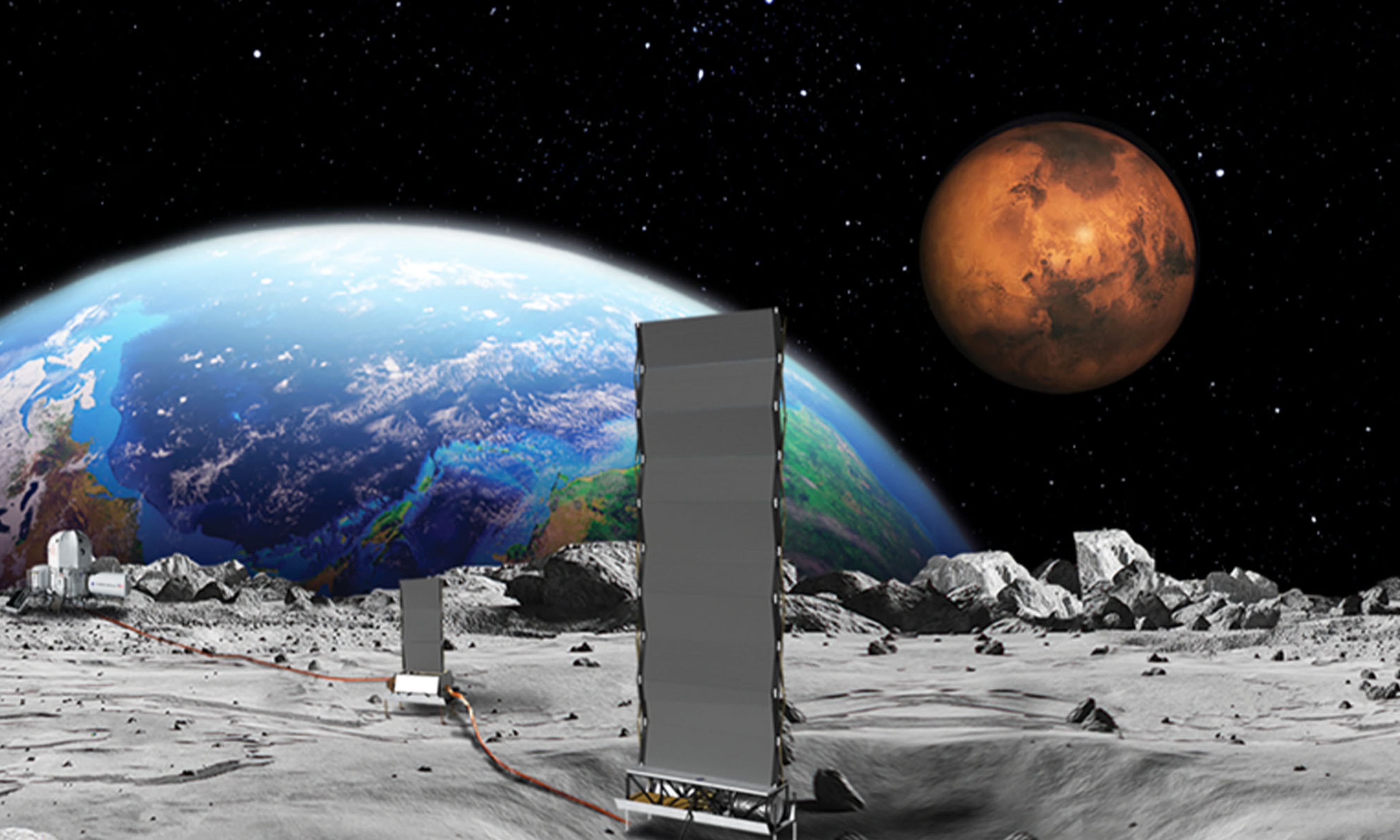
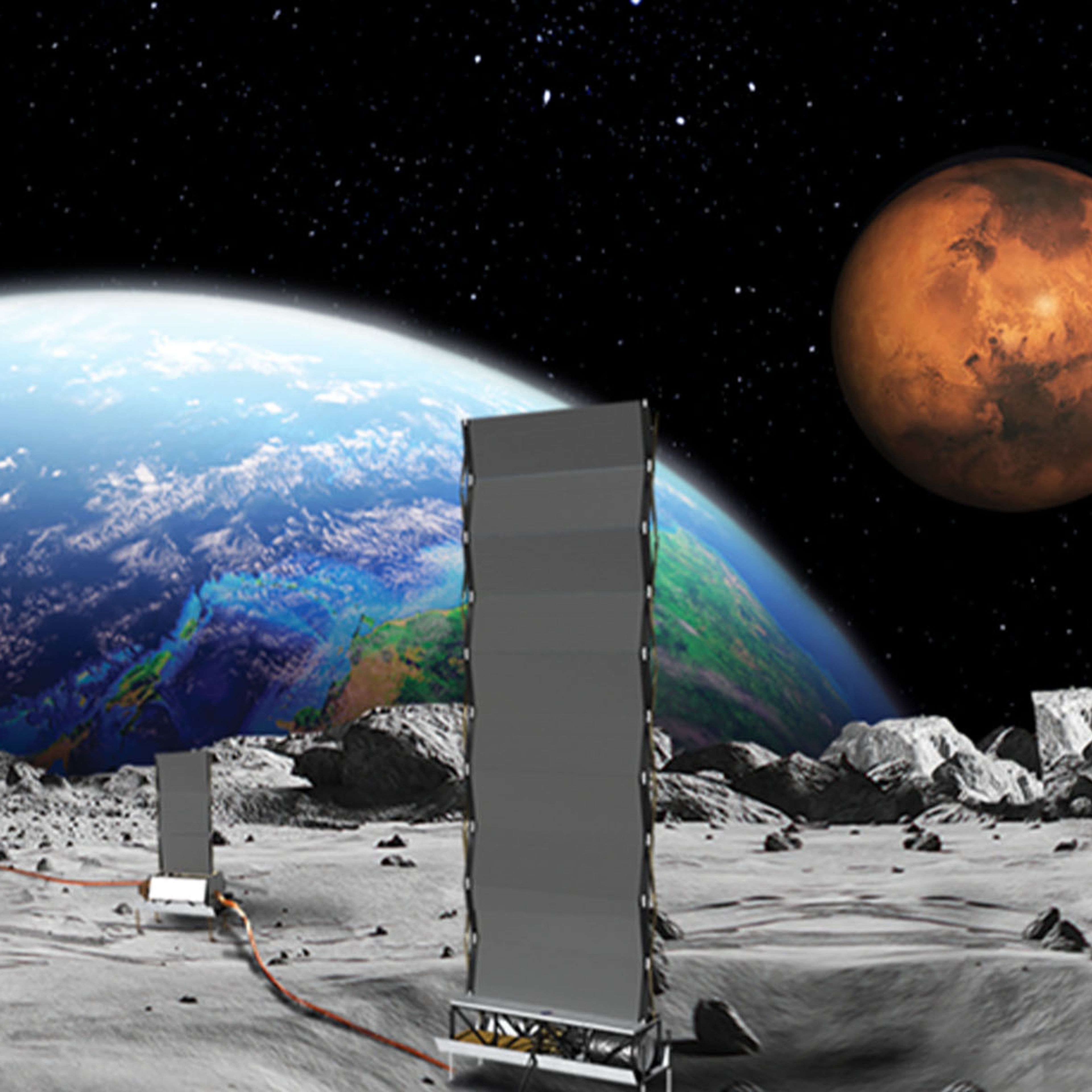
A concept image of NASA's Fission Surface Power project.
Transportation Secretary Sean Duffy announced this month his first major policy directives as acting head of NASA: speeding up the agency’s timeline for getting a 100-kilowatt nuclear reactor on the moon to 2030 and bolstering its public-private partnerships with space companies.
“We’re in a race to the moon, in a race with China to the moon, and to have a base on the moon, we need energy,” Duffy told reporters. “This fission technology is critically important, and so we’ve spent hundreds of million dollars studying, ‘Can we do it?’ We are now going to move beyond studying.”
“Let’s start to deploy our technology to move to actually make this a reality,” he added.
Space nuclear power has long been a Trump White House priority for national security, scientific, and exploration objectives. During his first term, Trump created the U.S. Space Force and signed a memorandum prioritizing space propulsion technology and nuclear power. This time around, second-term Trump NASA officials are now hopeful this new timeline will mark a big step in eventual human habitation on the moon, and someday, Mars.
The hope among senior NASA officials is that nuclear energy will provide a new power source for everything required to live in space, from rovers and equipment to robotics and the habitats themselves.
“We could accept the notion that that you don't put anything in advance of arrival. You just go and make do with what you brought until you can bring more and build more. But why would we do that if we have the plan to get back to the moon?” explained one senior NASA official. “It's the difference between getting a new set of keys at the apartment building versus going into the wilderness with an ax.”
A small fission reactor would also serve as a substitute for solar power on the moon, which runs into trouble during two-week-long lunar nights and can be difficult to transport given how heavy batteries are. Nuclear power will help NASA navigate the moon’s harsh environment by powering technology on cold, dark nights. NASA officials are quick to point out that the U.S. Naval submarines and aircraft carriers relye on nuclear power for propulsion technology and electricity.
“What it will power is everything we want to do on the moon,” another senior NASA official tells National Review. “What Secretary Duffy has made very clear is: he wants to differentiate Artemis from Apollo. Up to this point, we focused most of our attention on transportation, getting there, which we've already done for Apollo. What we want to change, and what we'll focus on, is staying there. And what you need to stay anywhere is power.”
National security concerns are also at play. Beyond Duffy’s public remarks citing American adversaries’ space motivations, the acting NASA chief’s July 31 directive also namechecks plans by China and Russia to place a reactor on the moon “by the mid-2030s.” As NASA officials see it, U.S. lunar nuclear reactor would mark a key step in maintaining American space dominance. Whoever gets there first “could potentially declare a keep-out zone which would significantly inhibit the United States from establishing a planned Artemis presence if not there first,” Duffy’s directive reads.
Along with fast-tracking a nuclear reactor on the moon, Duffy also signed a directive ramping up NASA’s partnerships with commercial space stations to ensure NASA has a “cost-effective” Low Earth Orbit (LEO) platform replacement for the International Space Station soon given the International Space Station is on track for decommissioning in 2030.
Leading up to this point, Trump NASA officials saw three main options for how to proceed. First, spend billions trying to keep the old ISS in orbit. Second, use the old-fashioned model government model and create a new ISS. Or third, replacing the ISS by working with industry.
The agency went with option three, seeing it as the best way to find a quick, cost-effective, high-quality replacement that merges commercial interests with government needs.
“That's what commercial low Earth orbit is about,” a NASA official said. “How do we get these commercial interests synced up, and how do we get a few players incentivized to solve the problem and ultimately have initially one or two viable commercial platforms ready by the time the ISS is decommissioned?”
As the Trump NASA officials see it, the Biden administration relied too much on regulatory requirements. Private space companies have pushed back against onerous government control, prompting agreement from Trump administration officials who are eager to partner with industry when it comes to space exploration efforts. On Tuesday, Trump bolstered Duffy’s push for commercial LEO partnerships by signing an executive order urging relevant agency heads to accelerate permit authorizations, environmental reviews, real property leases, and other regulatory burdens relating to spacecraft development.
“We're saying, ‘Get in space now.’ We're not saying, ‘Do more studies. Do more work,’” a senior NASA officials explained to NR. “We're saying, ‘Build the hardware. Go show you can do it.’ And that will be the way we can prevent a gap. Studies will not get us there.”
The move is part of the agency’s broader efforts to narrow NASA’s aperture to space exploration, which has invited criticism from Democrats who say that the administration is cutting too much research and driving brilliant researchers into early retirement.
The official also push back on the framing that the agency is giving free rein to private companies to “whatever you want anytime with a free check,” instead maintaining NASA works with industry to operate public-private partnerships. “SpaceX going to the space station, was a huge public-private partnership success. All these are meant to build on that, to do more of that. Doesn't mean SpaceX replaces NASA, and a lot of people like to say that. No, it's a partnership. We work together. We achieve our objectives together.”

About the Author
Audrey Fahlberg was a politics reporter for National Review.
Featured Tags
Advertisement
Advertisement



Comments