Share this story
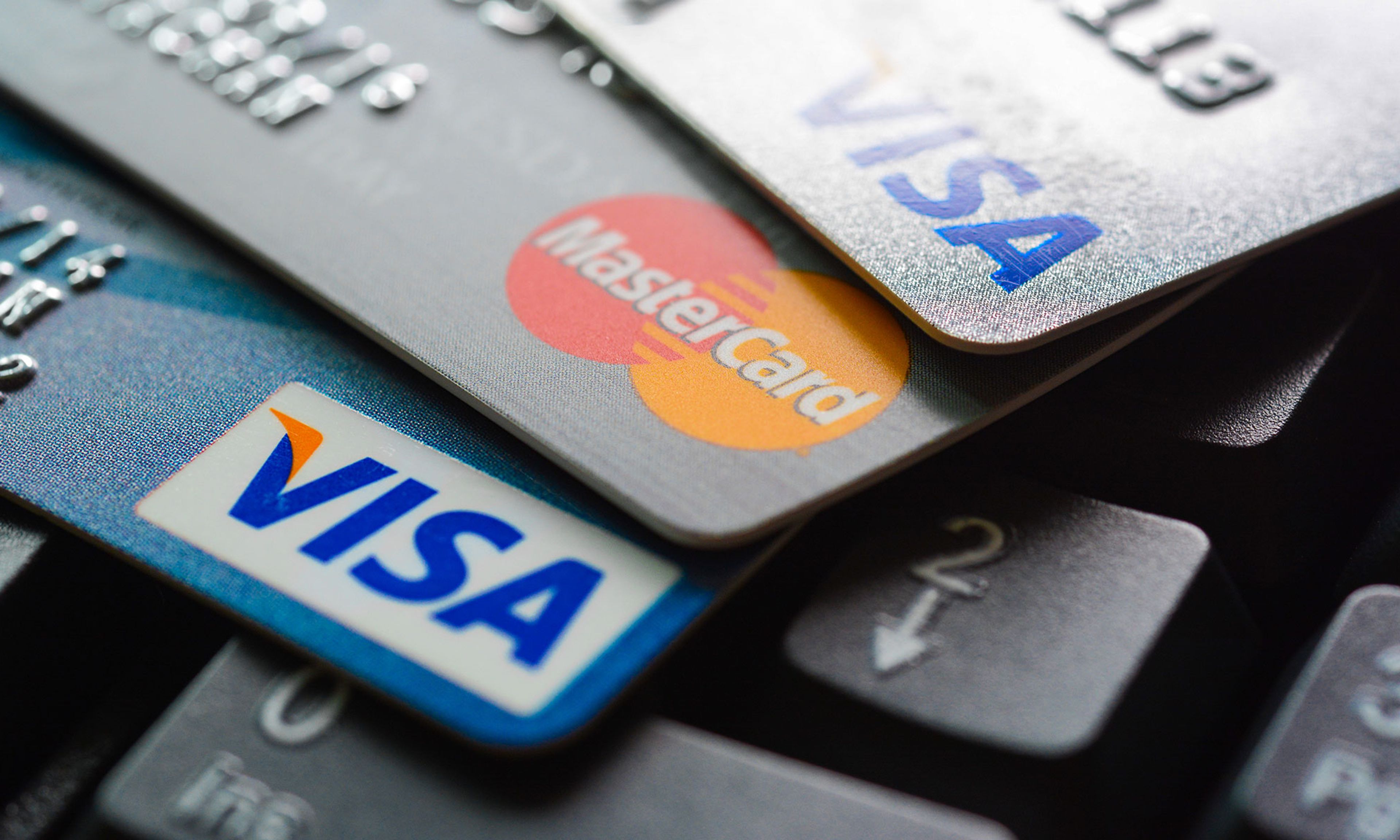
Atstock Productions/iStock Editorial/Getty Images
I've read Dave Bahnsen's and Charlie's pieces — wherein they thwack Trump and his proposal that would cap credit card interest at 10 upside the head — and nodded along to every line. If the current relatively high-interest model with its associated $1.2 trillion of consumer debt (approximately $6,000 per cardholder, with half paying off their accounts each month) wasn't working for all parties, then banks would stop offering them and/or consumers would stop signing up for them.
Incredibly, a full fifth of American GDP passes through wallet-sized plastic. So foolishly mucking about with how many of us engage with the economy, all to hit an arbitrary rate, reeks of populist service akin to cries for a federal $15 minimum wage, rather than any coherent attempt to protect consumers or prevent banks from overextending themselves. Access to capital allows those with relatively little to acquire the things they need to succeed in business, move across the country for opportunities, or pay for weddings. We're historically wealthy, and it's desirable that Americans can leverage that near-universal wealth to pursue happiness.
However, I really dislike credit cards.
Life is pain . . . or so it may have been once upon a time. Credit card companies have figured out how to make one thing in life painless: spending tens of thousands with the smallest flexion of the wrist. Cards make satisfying base urges easy. Any whim, any desire, and one can use the card in one's pocket, saved to one's browser, or embedded in one's phone to make it happen. Dave Ramsey and Caleb Hammer have made livings extricating people from credit abuse. Time and again, the two easiest types of debt to acquire — car loans and credit cards — walk onto their sets. Your neighbors and mine, in debt up to their eyeballs, blithely smiling as the money experts try to get through their heads just how much trouble they're in. Yes, these debtors are rational actors doing irrational things, reaping the rewards of their folly. But maybe we've explored this open season for credit as far as we ought. I worry about moral hazard and the public's growing disconnect with the value of money.
If I may analogize, credit has more than a few similarities to pharmaceuticals. Properly applied, with foresight and intentional planning, credit and drugs produce amazing results. But our credit industry looks more like Hamsterdam than it does a pharmacy. A loan officer and a prescribing doctor exist for the same reason: to get the customer what he wants while managing risk. Credit card companies are dealers, asking, "How f***ed up do you want to get?" and then eyeballing the dose before shoving it in a plastic bag. It was hearing my shipmates in the shop aboard the USS Carl Vinson talking about their $20,000, $30,000 $50,000! in credit card debt (not included car note) that made this clear. Because how in the world are sailors making $29,500 a year getting approved to carry that credit?
Spending money should have friction attached to it. This is why Ramsey argues for using cash whenever possible — simple creatures that we are, we need to see the money leaving our hands. Covid and touchless hyperventilations further cemented cards as the primary, and more and more often only, way to pay. The fact that the credit industry is more than happy to send me a new card with an attached offer in the mail practically every day since I turned 18 seems to suggest that their business model appreciates the young, dumb, and suggestible. I want the first loan a kid takes out to be mediated by a loan officer who can impress on the young person that the money is not, in fact, free. (The youth will then be ushered to the student-loan department to sign his life away, but maybe he's marginally more financially literate before doing so. Ah bien.)
The practical problem with Trump's plan is that the credit industry is comfortable with the status quo and won't change easily or quickly without significant pain for consumers. With rates between 17 percent and 29 percent, cards' rates have less to do with the borrower's credit than they do with the market share the card enjoys. Chase Sapphire Reserve, a card that markets itself to wealthy, worldly clientele, starts at 19.49 percent and has a max rate of 29.99 percent . . . the poors aren't applying for that card, so why eye-watering penalty rates? Well, Chase spends out the wazoo on promotion, it has the market power to set whatever rate it wants, and, as an article from the Federal Reserve Bank of New York finds, the poor and wealthy alike will forsake payments in a downturn, so the risk across all incomes and credit scores is about the same. This means a 10 percent cap wouldn't just irritate the voiceless, it would infuriate all strata of American society except those who don't interact with any bank products.
If there is a change to be made to the credit industry, it would be to require lenders to either write off debt to reduce their tax burden (ALLL) or sell the debt to a collections agency, rather than permit a kind of double-dipping wherein banks do both concurrently. This change would disincentivize banks from loaning to serially risky borrowers while still protecting them from mass missed payments in a downturn. Those starting out would still have the "secured" option that worked well for Charlie upon his arrival in America, and an acclimation with leveraging credit would develop.
Credit is a valuable tool that augments American dynamism. So, too, it can also be a slavemaster. If the federal government has any role to play here, it should be in preserving the advantages of credit availability while making an understandable allowance for the intel disparity between credit issuers and their targets/customers. A nation that has an increasingly tenuous relationship with a dollar's worth is not one that is going to buckle down and reform entitlements or budget for future calamity. Federal fiscal discipline starts with Americans and lenders acknowledging that we have a problem and making small, incremental adjustments before circumstances force us into a national rice and beans, beans and rice diet.

About the Author
Luther Ray Abel is an Associate Editor for National Review. A veteran of the U.S. Navy, Luther is a proud native of Sheboygan, Wis.
Featured Tags
Advertisement
Advertisement
Comments