Does Iran Still Control the Strait of Hormuz?
Written by John R. Puri
Share this story
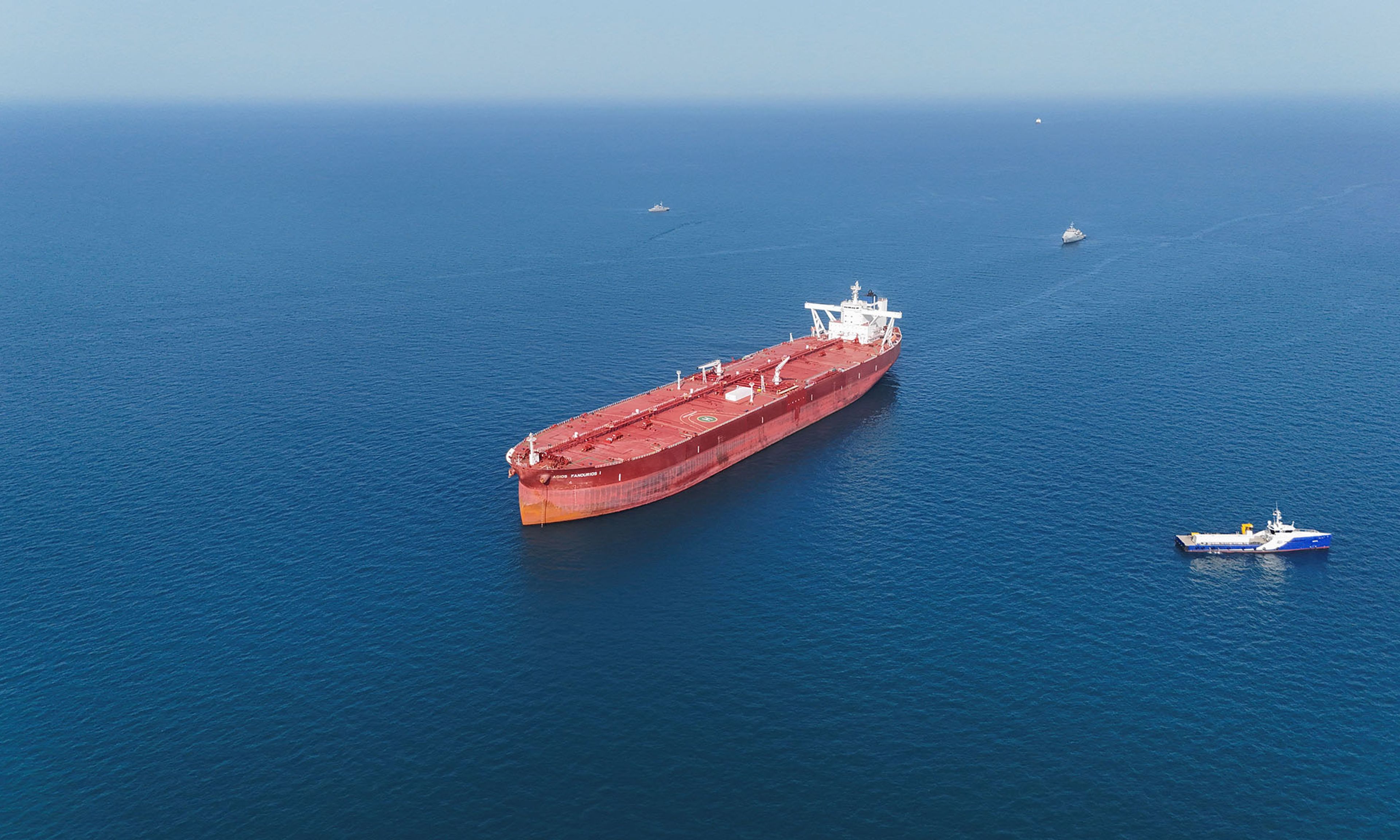
A drone view shows an oil tanker that sailed through the Strait of Hormuz, arriving in Iraq’s territorial waters off Basra, Iraq, April 17, 2026.
On the Iran war, my journalistic credibility is already on the line at the ripe age of 22. That was my doing, so I will live with the consequences. Today's news demands an update.
I argued last week that the war had become a "debacle" because, by spending American deterrence, we had made Iran more willing to strike ships in the Strait of Hormuz, which it can now effectively control at will. This was my conclusion on where things stood:
Here is the reality as it currently stands: Iran can cut off a fifth of the global energy trade whenever it wants, and it’s doing so right now. The United States and its allies — if it has any left — are unable or unwilling to change that. President Trump has agreed to stop all bombing of Iran for the chance that the regime might decide to open the Strait of Hormuz. If it does, Iran can still block all Western-aligned vessels and charge everyone else a toll, providing the mullahs with an enormous new revenue stream in perpetuity. If this new status quo holds, Iran can wield its control of the strait as a catastrophic weapon against the global economy, closing it again whenever the regime feels threatened — or simply wishes to issue demands.
Today, both Iran and the United States announced that the Strait of Hormuz was "completely open" to commercial traffic, following a cease-fire agreement between Israel and Lebanon. Iran's foreign minister, however, added a condition to its announcement:
https://x.com/araghchi/status/2045121573124759713?s=20
The Strait of Hormuz may be open, but at Iran's discretion. I am impressed that the U.S. blockade of Iranian ports has forced major concessions. That said, it appears that Iran remains ultimately in charge of who passes through the strait. With a single missile or drone strike, it could close the strait again. I believe that the leverage the U.S. forces are bringing to bear -- a naval blockade of Iran, requiring over 100 fighter and surveillance aircraft and a dozen ships -- is much less sustainable than Iran's leverage, which is geography.
We will not always be blockading Iran — just as a matter of limited resources, if nothing else — but Iran will always be a few minutes away from shutting down one-fifth of the global energy trade. What will deter the mullahs from doing so a year from now? And what concessions will America need to offer to keep the strait open beyond the next ten days? The world still awaits answers to these questions, even as it breathes a sigh of temporary relief.

About the Author
John R. Puri is the Thomas L. Rhodes Fellow at National Review.
Featured Tags
Advertisement
Advertisement



Comments