Share this story
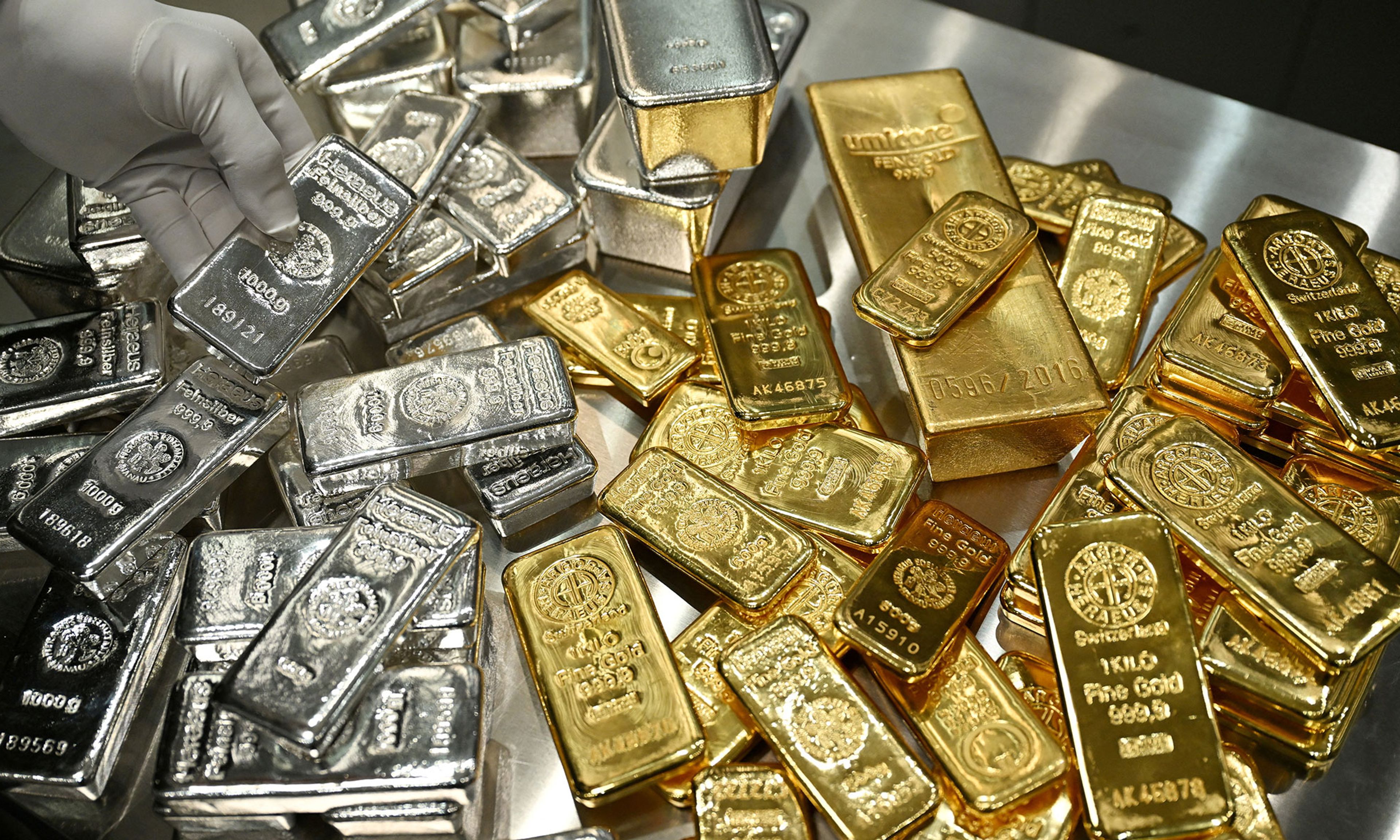
Gold and silver bars in the safe deposit boxes room of the Pro Aurum gold house in Munich, Germany, January 10, 2025.
As everyone (surely) must know by now, gold has had a good couple of years. Trading at around $2,000 at the beginning of 2024, the current price is around $4,300 despite a sharp drop today (profit taking, probably, and tougher margin requirements from the CME). That compares with an increase of roughly 45 percent in the S&P over the same period and can be partly explained by mounting global tensions as well as by declining faith in the ability or willingness of financially overextended governments to resist the temptation of inflating their debt away, although for now the greenback (as measured by the DXY) has, after a sharp fall early in the year, been relatively stable.
Other metals, too, have been moving up, perhaps most notably silver. As I noted back at the beginning of September, silver had been seen as a “cheaper” alternative and had outperformed gold over the previous eight months. In January 2025, the gold/silver ratio (how many ounces of silver it takes to buy an ounce of gold) was around 80, at the upper end of the normal range. It is now about 60. Since early September, the gold price is up a little under 30 percent, silver has risen about 75 percent, although it has fallen at the time of writing by just under 9 percent (more than twice today's gold’s slump) a shortfall that may have been exacerbated by the pace of silver's recent rise, and the fact that is typically more thinly traded than gold. Platinum, which has doubled this year, is also off sharply today. All this may have made for a grim day on some trading desks.
It is worth noting that silver is less of a financial asset than gold, due to a far greater range of industrial uses.
According to the Silver Institute:
From electrical switches and solar panels to chemical-producing catalysts and medical equipment, silver is an essential component in many industries. Its unique properties make it nearly impossible to substitute and its uses span a wide range of applications.
Almost every computer, mobile phone, automobile and appliance contains silver. It is the perfect substance for coating electrical contacts – like those in printed circuit boards and switches – because of its high electrical conductivity and durability. Painting silver ink on any non-metal surface provides an electrical pathway, eliminating the need for wires. For example, Radio Frequency Identification Device (RFID) chips with their tiny, thin antennas made of sprayed-on silver, are replacing bar codes on many items in supermarkets and supply chain inventories. Slender silver wires can also be used as filaments-feed for 3D printers to produce intricate items.
This (and the fact that global silver demand has exceeded production for some years) almost undoubtedly explains why China (which has been stockpiling a lot of materials recently) is introducing export restrictions on silver from January 1 after a surge in exports in 2025. “This is not good,” posted Elon Musk. “Silver is needed in many industrial processes.”
Indeed.
China controls around 60–70 percent of the world's refined silver production. It also accounts for 13–14 percent of global silver mining, a long way behind Mexico, and about the same amount as Peru.
Refine, baby, refine.

About the Author
Andrew Stuttaford is the editor of National Review's Capital Matters.
Featured Tags
Advertisement
Advertisement





Comments