<em>Learning Resources</em> Tariff Case: The Majority Opinion on the 'How' Questions
Written by Dan McLaughlin
Share this story
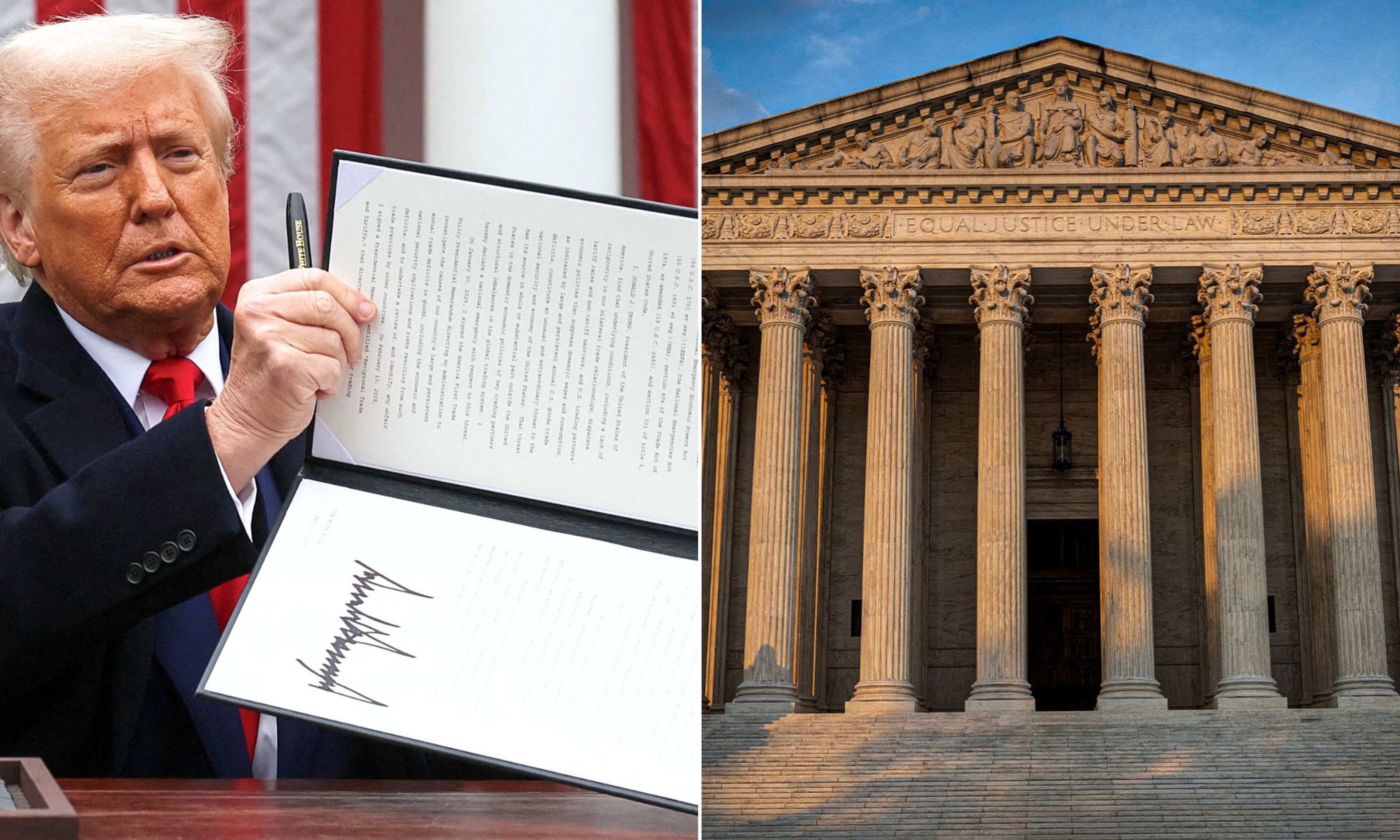
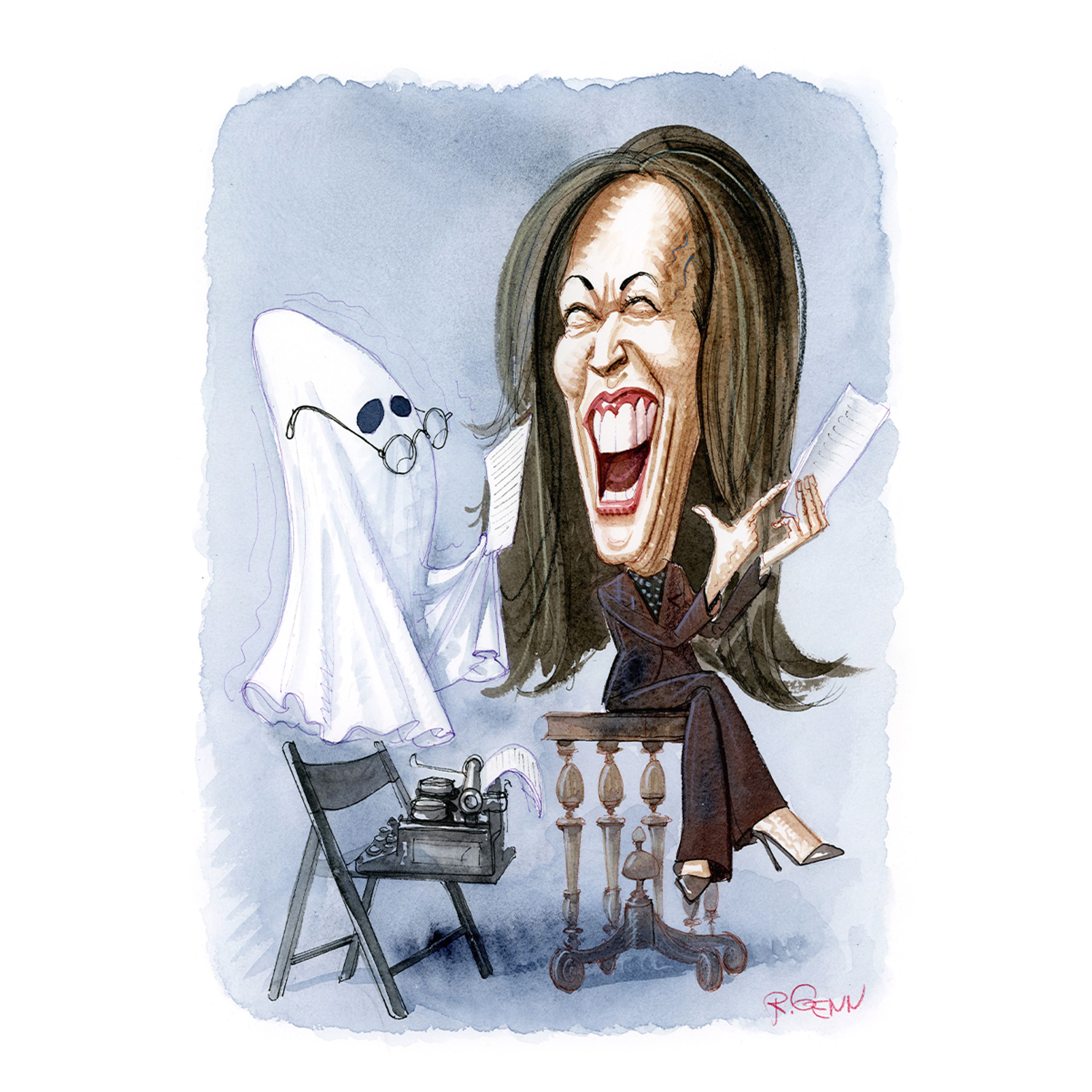
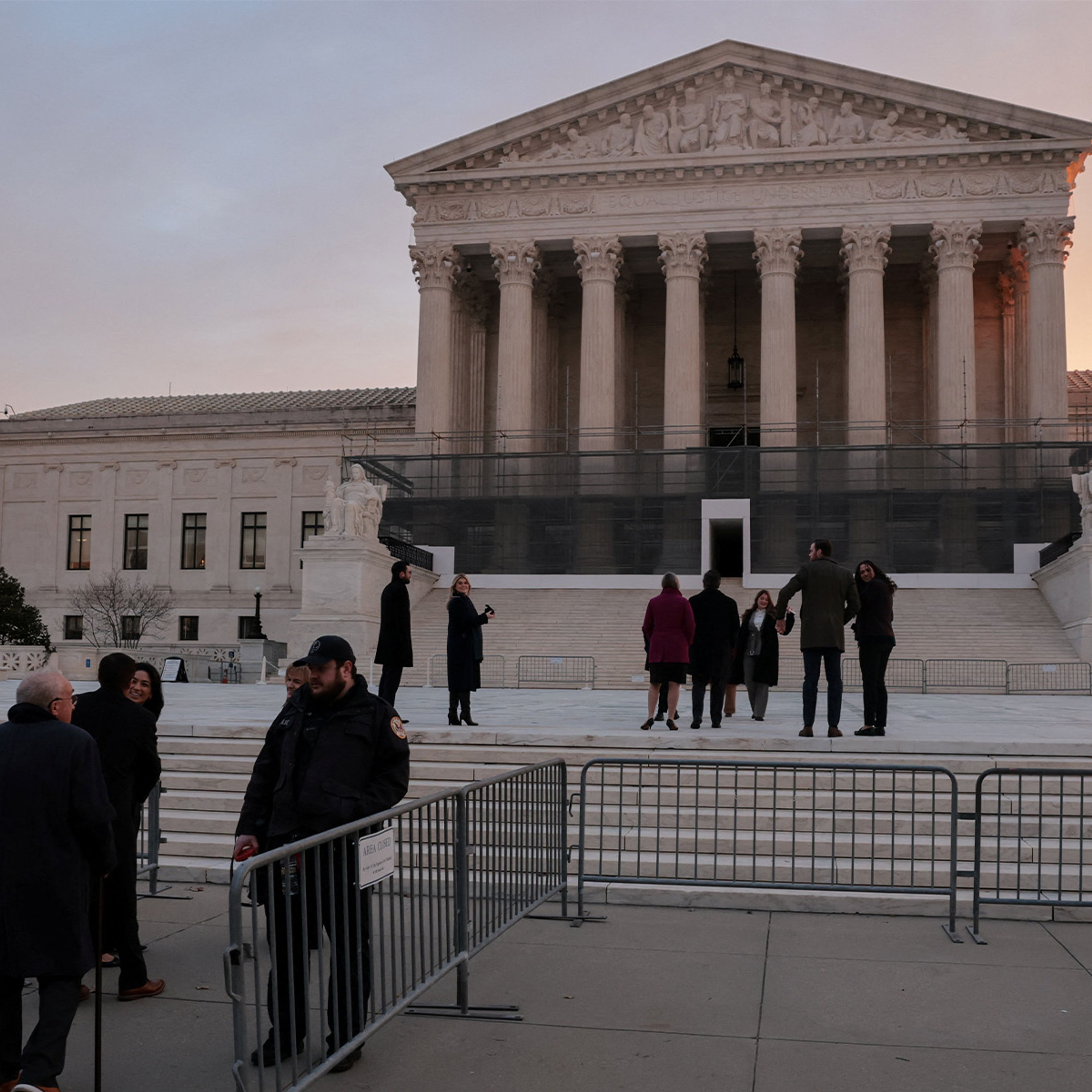
Left: President Donald Trump holds up a signed executive order on tariffs in the Rose Garden at the White House, April 2, 2025. Right: The U.S. Supreme Court building in Washington, D.C., October 4, 2023.
I'll be walking through today's big tariff decision in a series of posts, starting with this one on the bottom-line result and the breakdown of the justices.
How We Got Here
The Court, in Learning Resources, Inc. v. Trump, was asked to rule on a pair of challenges to three categories of Trump tariffs: the global 10 percent tariff; the country-by-country “Liberation Day” tariffs; and the fentanyl-trafficking-related tariffs against Canada, Mexico, and China. Trump claimed the power to override existing trade agreements and unilaterally set and constantly adjust tariff rates never set by Congress, a power he located in the emergency presidential powers granted in the International Emergency Economic Powers Act of 1977 (IEEPA). All of the tariffs went down, as a result of the Court's conclusion that IEEPA does not grant the power to set tariff rates.
The challengers raised three main arguments: that IEEPA does not grant presidents the power to set tariffs, at least not ones of global scope, indefinite duration, and bearing no relationship to a rate set by Congress; that Trump had not satisfied the requirements of IEEPA because the “emergency” was trade deficits that have been ongoing for half a century, and because the fentanyl tariffs were essentially a pretext, not tied closely enough to the remedy chosen by Trump; and that if IEEPA gave Trump such open-ended discretion to set a core congressional power, this violated the nondelegation doctrine, because this was a power Congress could not give away.
The Court of International Trade (CIT) struck down the tariffs mostly on the second ground. A divided Federal Circuit affirmed that decision, but mostly on the first ground. Only the first was decided today. Unlike the CIT, the justices were disinclined to wade into second-guessing the nature of emergencies required to trigger IEEPA's powers. Even Justice Neil Gorsuch, while noting the importance of the nondelegation principle, didn't pin most of his argument on it.
The Federal Circuit ruled that if IEEPA grants any tariff power, it surely doesn’t grant one far broader than the powers exercised by Richard Nixon in a trade “surcharge” controversy a few years before IEEPA was passed (powers which were upheld by the predecessor to the Federal Circuit in 1975 in a case called Yoshida). That history cuts two ways: IEEPA maintained some of the Nixon-era powers under the Trading with the Enemy act (TWEA), but its design and intent were to limit presidential peacetime emergency powers, and there was only tenuous evidence that the 1977 Congress had paid careful attention to Yoshida.
At argument, while Gorsuch appeared very concerned (as usual) by the nondelegation issue, attention focused largely on two sets of issues. The first set of questions was how to read IEEPA: whether the Court would apply the major questions doctrine (which would favor the challengers by reading the statutory text narrowly) or treat this as a foreign policy case (which would favor Trump by reading presidential power broadly). The problem for the White House was that the solicitor general was compelled to concede that the president has no freestanding Article II power to impose tariffs in peacetime, so that power must come from Congress. The Court's opinion noted that concession:
The Government thus concedes, as it must, that the President enjoys no inherent authority to impose tariffs during peacetime. . . . And it does not defend the challenged tariffs as an exercise of the President’s warmaking powers. The United States, after all, is not at war with every nation in the world. [Citation omitted.]
The second set of issues was the statutory language itself, which never mentions tariffs or any synonym for tariffs. The Trump case was that tariffs are either a way to “regulate” trade or that prior cases suggest reading a tariff power into IEEPA’s references to “licenses” as a means of regulation:
The President may, under such regulations as he may prescribe, by means of instructions, licenses, or otherwise . . . investigate, block during the pendency of an investigation, regulate, direct and compel, nullify, void, prevent or prohibit, any acquisition, holding, withholding, use, transfer, withdrawal, transportation, importation or exportation of, or dealing in, or exercising any right, power, or privilege with respect to, or transactions involving, any property in which any foreign country or a national thereof has any interest by any person, or with respect to any property, subject to the jurisdiction of the United States. [Emphasis added.]
That didn't fly.
What the Majority Said: The "How" Question
The "how" questions were a major point of fracture. The Court's analysis began with the central role that taxation plays in the legislative power, and the importance the Framers placed upon taxation requiring representation. But it then moved into a discussion of the major questions doctrine that gained the support for Chief Justice John Roberts's opinion only from Gorsuch and Justice Amy Coney Barrett. Part II-A-2 of the opinion (starting on page seven of the PDF, if you're reading along at home) stressed the four most prominent instances of the Court invoking that doctrine against Joe Biden's creative efforts to spin vast presidential powers out of highly attenuated statutory language: the student loan amnesty case (Biden v. Nebraska), the emissions rule (West Virginia v. EPA), the eviction moratorium case (Alabama Assn. of Realtors v. Department of Health and Human Servs.) and the national workplace vaccine mandate (National Federation of Independent Business v. OSHA).
Surprisingly, the Court for the first time in the decade since it was decided even cited King v. Burwell as if it was a real precedent, although that case stood the statutory language on its head to uphold a regulation on the theory that the regulation served Obamacare's major purpose.
Roberts, writing in this section just for the three justices, effectively applied the major questions doctrine with particular force to the taxing power, noting as well the traditional statutory-interpretation point that IEEPA did not read like other statutes actually delegating the tariff power:
In each [of the Biden-era major questions cases], the Government claimed broad, expansive power on an uncertain statutory basis. And in each, the statutory text might as a matter of definitional possibilities have been read to delegate the asserted power. . . . But context counseled skepticism. . . . That context included not just other language within the statute, but constitutional structure and common sense. . . . Both separation of powers principles and a practical understanding of legislative intent suggested Congress would not have delegated highly consequential power through ambiguous language.
These considerations apply with particular force where, as here, the purported delegation involves the core congressional power of the purse. Congress would likely intend for itself the basic and consequential tradeoffs, inherent in uses of this “most complete and effectual weapon,” The Federalist No. 58. . . . And if Congress were to relinquish that weapon to another branch, a reasonable interpreter would expect it to do so clearly.
What common sense suggests, congressional practice confirms. When Congress has delegated its tariff powers, it has done so in explicit terms, and subject to strict limits. Congress has consistently used words like “duty” in statutes delegating authority to impose tariffs. . . . And it has conditioned exercise of the tariff power on demanding procedural prerequisites. [Citations and quotations omitted.]
Trump, like Biden, simply claimed a power too vast for the Court to assume it must be in there somewhere:
Against this backdrop of clear and limited delegations, the Government reads IEEPA to give the President power to unilaterally impose unbounded tariffs. On this reading, moreover, the President is unconstrained by the significant procedural limitations in other tariff statutes and free to issue a dizzying array of modifications at will. . . . All it takes to unlock that extraordinary power is a Presidential declaration of emergency, which the Government asserts is unreviewable. . . . And the only way of restraining the exercise of that power is a veto-proof majority in Congress. . . . That view, if credited, would represent a transformative expansion of the President’s authority over tariff policy, and indeed — as demonstrated by the exercise of that authority in this case—over the broader economy as well. . . . It would replace the longstanding executive-legislative collaboration over trade policy with unchecked Presidential policymaking. . . . Congress seldom effects such sea changes through vague language. [Citations and quotations omitted.]
Notably, Roberts, in a footnote, observed that the closest thing to a Supreme Court precedent in the government's favor, Federal Energy Administration v. Algonquin SNG, Inc. (1976), involved a delegation more clearly tied to particular articles of commerce and constrained by more procedures:
The same is true of Section 232 of the Trade Expansion Act of 1962 . . . which we have held authorizes sector-specific import “license fees.” Section 232(a) expressly references “duties.". . . And [it] authorizes the President to “adjust the imports” of an “article,” but only after the Secretary of Commerce, in consultation with the Secretary of Defense, conducts an investigation and prepares a report finding that the “article is being imported into the United States in such quantities or under such circumstances as to threaten to impair the national security.” [Citations and quotations omitted.]
As for the Nixon tariffs at issue in Yoshida, "Those tariffs were also of limited amount, duration, and scope."
Roberts observed that the Trump invocation of "emergency" powers needing to be read broadly was "nearly identical to one it already advanced in Nebraska" by Biden. As for the invocation of foreign policy powers, Roberts was careful to distinguish these from presidential war powers and other foreign policy powers more grounded in Article II:
Flipping the presumption under the major questions doctrine . . . makes little sense when it comes to tariffs. As the Government admits, the President and Congress do not enjoy concurrent constitutional authority to impose tariffs during peacetime. . . . The Framers gave that power to Congress alone — notwithstanding the obvious foreign affairs implications of tariffs. . . . And whatever may be said of other powers that implicate foreign affairs, we would not expect Congress to relinquish its tariff power through vague language, or without careful limits. [Citations and quotations omitted.]
In the next installment, I'll walk through what the Court did in reading the language under this standard.

About the Author
Dan McLaughlin is a senior writer at National Review Online and a fellow at National Review Institute.
Featured Tags
Advertisement
Advertisement
Comments