Share this story
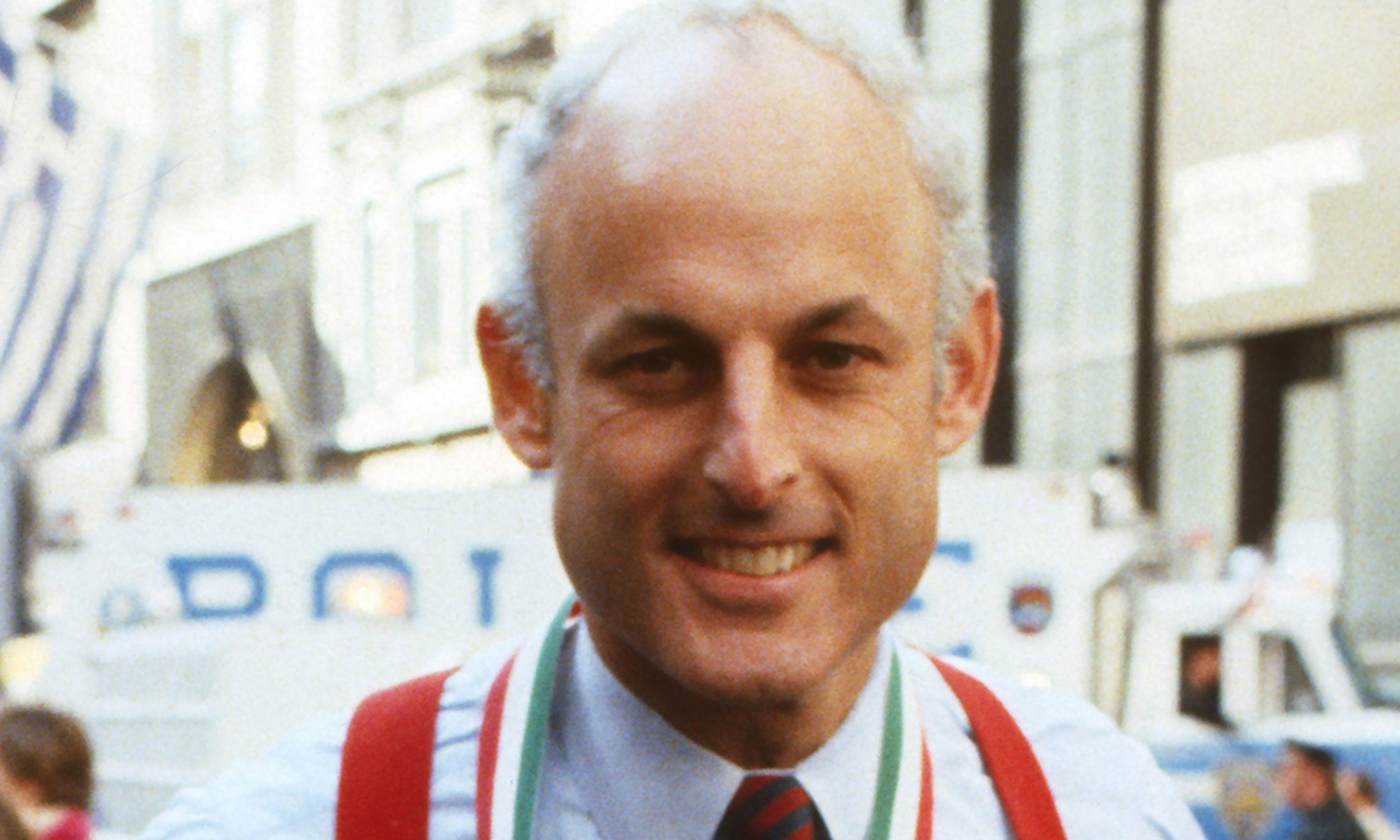
Lewis Lehrman in New York City in 1980
I met Lewis Lehrman when he was pursuing his second career, running for public office. It was the 1982 race for governor of New York. The Democratic front-runner, ebullient NYC mayor Ed Koch, was beaten in the primary by Mario Cuomo, the gloomy but somehow romantic Queens liberal.
Both men were lifelong pols. Lew, on the Republican side, was parachuting in from outside, willing to spend what it took to get on the ballot, and win. He ended up spending -- what was it, $10 million? -- which was written about as if it was the End of Days. (Nowadays ten million is what rolls out of a campaign's pockets into the sofa cushions.)
Lew was earnest, eager, and charmingly awkward. November was not a nail-biter, nor yet was it a rout. Lew lost, and Cuomo began his long career as liberalism's pope.
He did a service to the American mind, however, for Lew's loss freed him to pursue his first career, which was American history. I am not neglecting his years at the helm of Rite Aid, the drugstore chain that grew out of the family grocery store business. But before Lew stepped into that corporation, he had been pursuing a doctorate in history from Yale. When the family called, he took a sabbatical. But it was always in him to return.
With his friend and partner Richard Gilder, another successful businessman with a love for American history, he amassed a collection of historical documents focusing on the Civil War and the founding era, with excursions into the Cold War and other topics. I once met a collector who lived in some fancy corner of Connecticut. When he learned that I knew Lew (and also Dick), he said regretfully that they had monopolized the market. They had resources, and they had will.
They also had a vision of sharing their treasures with educators, who would share them with their students. The Gilder Lehrman Institute was the vessel of this ambition. It now has a network of tens of thousands of schools, to which it sends teaching materials and links to the items of the collection. Documents come with scholarly lecturers. It's like having the New York Public Library in your classroom, with Gordon Wood to show you around.
An old journalistic staple is the horror story about what kids don't know. If they don't know American history, it is not the fault of the Gilder Lehrman Institute.
I remember talking with Lew about Lincoln ("Mr. Lincoln," always). His speech in Peoria, Ill., on October 16, 1854, was the first salvo in his campaign to contain the spread of slavery, and the overture of his mature political career. Lew had written a book on it. It was three hours long, I remarked, as of a universally known fact. Three hours and ten minutes, Lew interjected. He had read and timed it.
Precision, dedication, respect. R.I.P.

About the Author
Historian Richard Brookhiser is a senior editor of National Review and a senior fellow at the National Review Institute.
Featured Tags
Advertisement
Advertisement
Comments