New Gallup Poll Shows Gains in Religiosity Among Young Men
Written by Michael J. New
Share this story
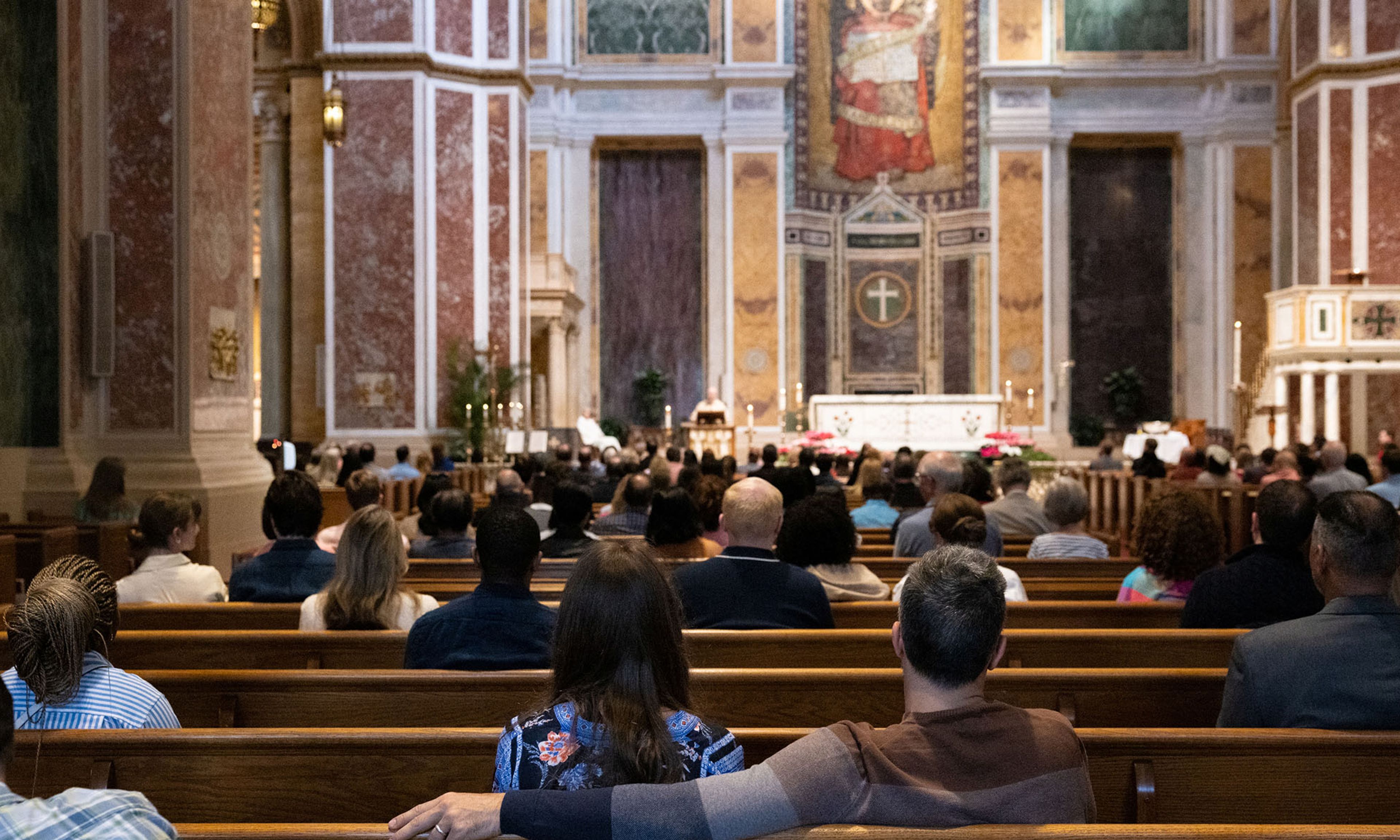
People attend Sunday Mass at the Cathedral of St. Matthew the Apostle in Washington, D.C., May 11, 2025.
Today Gallup released the results of a new poll that confirms what many people of faith have observed. There has been a recent upsurge in religiosity among young men. The new Gallup poll shows 42 percent of men ages 18–29 say that religion is “very important” in their lives — a 14-percentage-point gain since 2022–23. The poll also shows that 40 percent of those men 18–29 report attending church at least monthly. This represents a 7 percentage point increase since 2022–23.
Historically, a substantial body of polling and survey data show that women are more religious than men among a range of age demographics. This generation of young adults is proving to be an exception to that rule. Indeed, the Gallup survey finds that today, young men are more likely than young women to say religion is “very important” in their lives, identify with a specific faith tradition, and attend a house of worship at least monthly.
The partisan breakdown is also interesting. Much of the gain in church attendance among young adults is because young Republicans, both men and women, are more likely to attend a house of worship. In 2024–25, Republican young women and Republican young men were at least seven percentage points more likely to attend a religious service at least monthly. The increase in religious attendance among young Democrats was smaller.
This Easter, many Catholic dioceses and Newman centers announced large increases in the number of converts to the Catholic faith. Furthermore, many religion reporters have noticed that there has been an increase in church attendance among college-age men. During the 2000s, many thought that increased secularization among the young was inevitable. However, a variety of factors, including the pandemic, an interest in community, and pushback against secular liberalism, has interested many young people — especially young men — in religion.
About the Author
Michael J. New is an assistant professor of practice at the Busch School of Business at the Catholic University of America and a senior associate scholar at the Charlotte Lozier Institute.
Featured Tags
Advertisement
Advertisement

Comments