Share this story
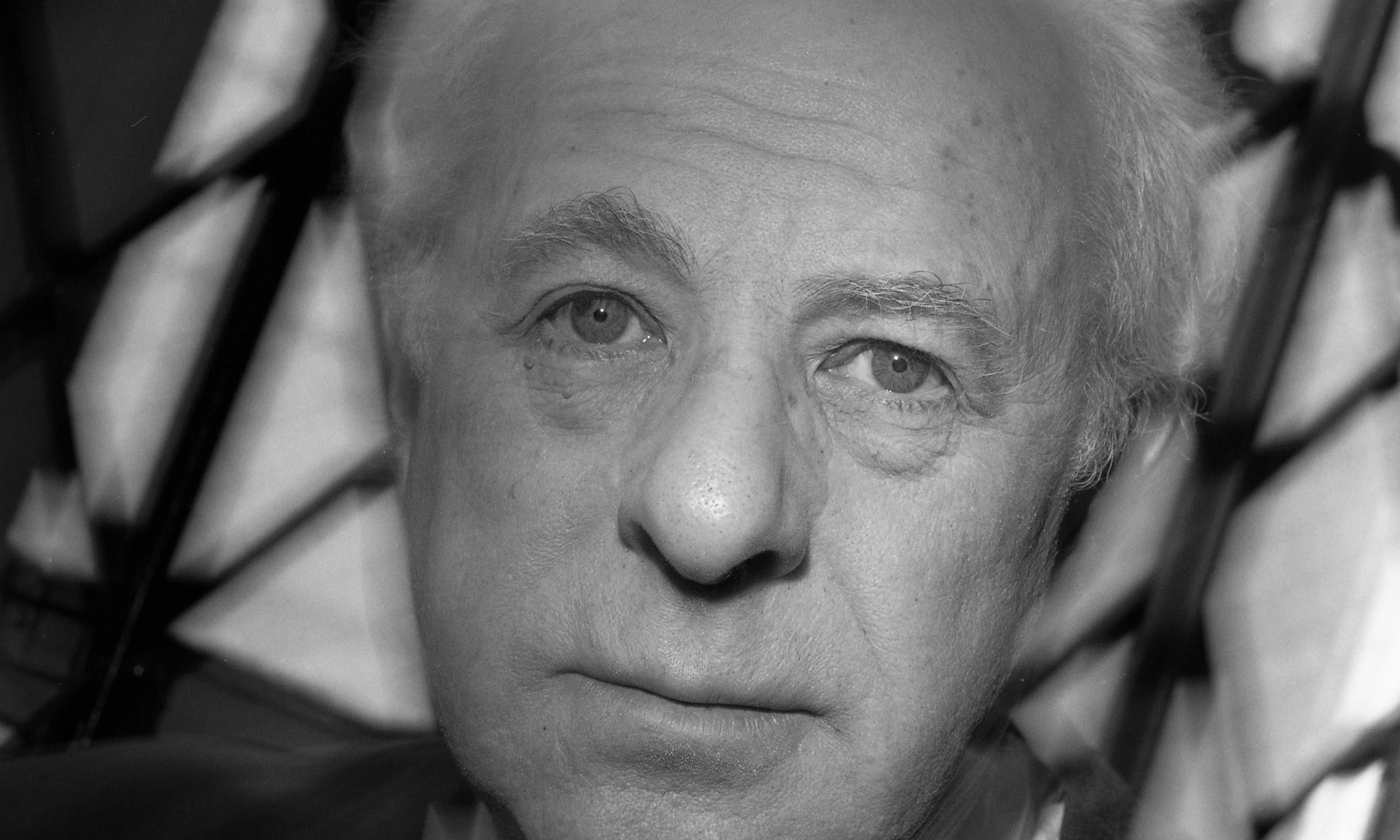
Norman Podhoretz in the office of <i>Commentary</i> magazine, 1987
The great Norman Podhoretz died yesterday at the age of 95.
His son, (the also great) John Podhoretz, offers a lovely first remembrance at Commentary today, and it is sure to be followed by a great many appreciations. Noah Rothman’s tribute around here wonderfully captures the spirit of the man, as does K-Lo’s observation on his generosity.
There have also already been a few grudging acknowledgements of his sheer importance in venues that don’t like to admit it. The obituaries in the New York Times and the Washington Post are both well worth your while, despite the “but critics say” tone they both can’t help falling into. (I like to think Podhoretz might have been amused by how the Post obituary, without a hint of institutional self-reflection, interrupts its description of the arc of his work with: “by then, detractors said, he had transformed from a thoughtful commentator into a Manichaean ideologue, trumpeting a with-us-or-against-us worldview.”)
But as usual, it was Norman Podhoretz himself who has put his story best. There are a lot of places to find it, including several beautifully written memoirs. The first, Making It, which was published in 1967 and recently reissued, is one of the great American autobiographies. But for a quick sense of the man and his life, you could read his final autobiographical essay, and perhaps the last piece published under his byline, in the Free Press just this fall.
I only knew him from a distance, and from that distance he seemed to define for me that peculiar phrase “larger than life.”
This was not in the sense that his personality was overwhelming — again, from a distance, that wasn’t something I could know. Rather, it was that he fully inhabited a sort of human type that seemed larger than the painfully small moment we are living in. He was like a Victorian-era literary intellectual walking around in 21st-century Manhattan. He was impossibly well read and learned not only in history and political ideas but in the literary tradition of the West. He was a truly great writer, who appreciated great writing as a high art, full of beauty and meaning. And he embodied, in his attitudes and arguments, a grasp of what may be the deepest insight of the philosophical tradition of the West: that the true, the good, and the beautiful are one. Arguing about art and arguing about politics and arguing about fundamental moral commitments were different ways of doing the same thing — and that one thing was what Podhoretz had a gift for.
For this reason, he was larger than this moment in a simpler sense, too: He thought that the subject of all of those arguments was serious. It mattered. This is the way in which our moment feels small. Everyone runs away from the seriousness and importance of living by the truth. Everything in the public arena now is said in a kind of half jest, as if we are afraid to think deeply and speak plainly of things that aren’t a joke. This attitude tries to present itself as cool and knowing, but it is an expression of ignorance and terror. It’s small, and it makes our culture and our politics small.
Norman Podhoretz was not afraid to take culture and politics seriously. That didn’t mean he was humorless — far from it. He took the comedy of life seriously too. And it didn’t mean he was dispassionate and rational about it all. On the contrary, he was intensely emotionally engaged in the battles he waged, because he believed those battles mattered. As Podhoretz told the New York Times in 2017, reflecting on the intellectual circles he was part of, “Nobody cares that much anymore. We really cared.”
Norman Podhoretz really cared. He cared deeply about the flourishing family that surrounded him. He cared about his country and was unabashedly grateful for it. He cared about great writing and good thinking. He cared about the truth, and was willing to fight for his view of it. That he seemed larger than the time we are living in tells us something we already know about this time, but it says a lot about him too.
He was a great man, and we were lucky to have him.

About the Author
Yuval Levin is the director of social, cultural, and constitutional studies at the American Enterprise Institute and the editor of National Affairs. His most recent book is American Covenant: How the Constitution Unified Our Nation -- and Could Again.
Featured Tags
Advertisement
Advertisement

Comments