Share this story
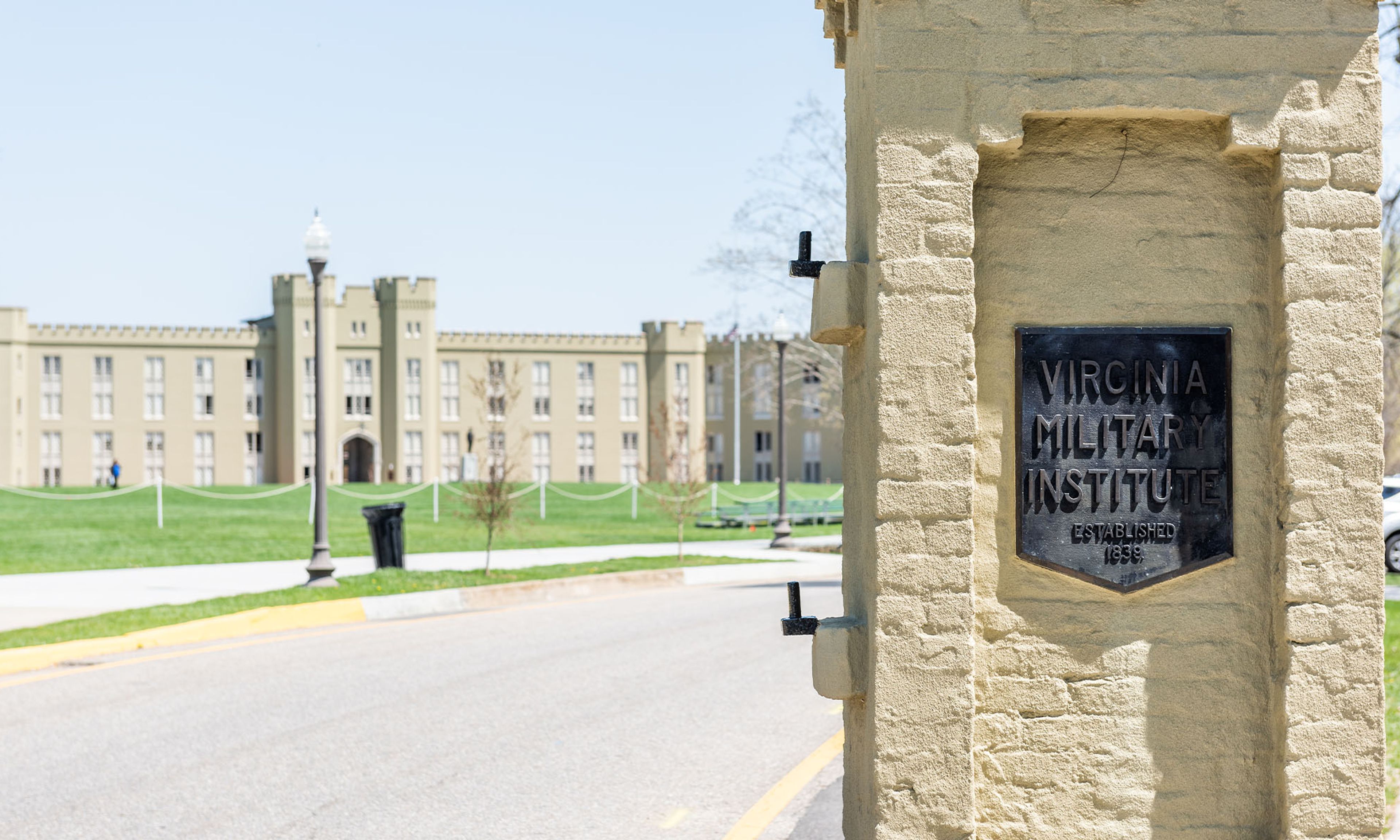
VMI Virginia Military Institute entrance sign in Virginia closeup university campus, Lexington, Va., April 18, 2018.
Following last month’s elections, Virginia now has a newly elected general assembly. The state's off-cycle election was brutal for the incumbent president's party, holding to historic custom. Democrats swept into power, with former Representative Abigail Spanberger elected governor by a comfortable double-digit margin.
Virginia is a purple state, yet the slate of bills introduced by the new house and senate points to a governing agenda well to the left of the electorate. There are many dumb proposals, including California-level taxation, radical crackdowns on legal gun owners, the end of right-to-work laws implying forced union dues for certain workers, lighter sentences for violent offenders, and even bans on gas-powered leaf blowers (the latter of which they can pry from my cold, dead fingers — along with my twelve-round magazines). If passed, Virginia's communist manifesto will all but certainly promote emigration from the state akin to what we have witnessed in California, New York, Illinois, and Massachusetts, where the now common "high taxes, low services, high regulation" blue-state model of governance has contributed to large national GOP gains in congressional seats and the Electoral College.
But what has animated many state residents is the general assembly's bizarre assault on the small Virginia Military Institute, the nation's oldest state-supported military college. I would bore you to tears trying to explain how poor VMI, which has done its absolute damndest to stay out of politics, found itself dragged by the fingernails into a charged culture-wars debate. A full disclosure: I am an alumnus of this institution, where I proudly set school records for demerits earned, penalty tours marched, and time on barracks confinement.
Here is the best I can summarize the ugly fight over this crown jewel of military education: In 2020 during the Great Moral Panic about race, the Washington Post ran a series of poorly sourced, specious articles that portrayed VMI as a deeply bigoted, backward, and perhaps the worst sin, insufficiently progressive school of higher education. VMI was and is stringent in its political neutrality; the school just wants to build great citizens. But neutral compared with other U.S. campuses makes neutral appear partisan and political.
Because VMI is guilty of political neutrality and resistant to adopting the modern trends so common on other campuses, the Washington Post made the school its pet project for over a year, working closely with the Governor Northam administration and general assembly Democrats to smear the school as irredeemably racist. Governor Glenn Youngkin undid much of the politicization in Virginia's university system including VMI, but Democrats are now back in power and have not forgotten their culture-war loss. The fight is back on.
What is worth explaining, in detail, was the near criminal journalistic assault on VMI, which represented the worst impulses of increasingly politicized newsrooms. There were a lot of big journalism no-nos that went into Post's long series of stories about the institute. The most noteworthy tactic employed by the Post was using a small number of isolated incidents where bad things like racism and sexism happened, and portraying them over the course of multiple stories and supporting without data or longitudinal evidence as systemic. There were stories where the main sources were anonymous accounts by cadets who had been expelled for cause, where VMI was legally prohibited from sharing the evidence as to why. There was the farming and selective curation of anonymous (anonymity was a recurring motif) school message boards, where a tiny number of dumb and ill-advised posts were the only evidence needed to level sweeping and inflated charges against the school.
One by one, the stories built to a climax of hysteria and in some cases patent absurdity. The reporter ran a 3,000-plus-word piece about a single, quarter-century-old photo of cadet sergeants yelling at a female freshman, perhaps unaware that military schools feature a lot of yelling. When today's alumni protested a newly imposed DEI regimen as counter to the school's merit-and-achievement-based culture, the Post wrote: "VMI's first Black superintendent under attack by conservative White alumni" (the verbatim headline). The reporter interviewed black alumni who were cadets over four decades ago to look for damning evidence to tie to the present and didn't find much (they heard some unpleasant words, but the alumni still valued the school and their degrees). In barracks and alumni circles, female cadets shared cold-emails from the reporter, thirsty for any damaging information he could find. Many found the outreach creepier than anything they'd ever experienced in barracks.
When an exasperated official finally condemned the paper's "lynching of VMI," the the Washington Post retaliated by finding him guilty of word crimes: "Virginia Senate Minority Leader Thomas K. Norment Jr. used inflammatory language Monday as he denounced the resignation of Virginia Military Institute’s superintendent, warning lawmakers: 'You cannot let the media lynch VMI.'” That is, the single use of a common political metaphor prompted a full story and connected it, with more insinuations of racism, to the institute.
The one legitimate bullet against VMI was that one of its most famous graduates was caught in a yearbook photo wearing either blackface or a klan hood. That was Democratic Governor Northam, who fortunately had the right politics and thus escaped the scrutiny of this particular reporter (outside the occasional, passing mention). The strongest story prompted the least attention. I'd encourage you to do a search on the Washington Post's website for VMI and witness the full spectacle for yourself.
Young people say and do dumb things. This is true of all college campuses, which are full of young people who . . . say and do dumb things. The trick the reporter pulled, and I almost admire the game here, was gathering enough individual scraps of anecdotal evidence to mask the flimsy case that VMI was systemically racist and sexist.
The evidence was far too light to smear VMI over the course of just one story, so the reporter's inspired approach was to spread the accusations out over not one headlines but many, each with the same insinuation. Think one thin layer of peanut butter over a slice of bread, done repeatedly until thin became thick. What the reporter tried valiantly to do, but ultimately failed, was uncover evidence that the institute administration tolerated or failed to discipline incidents of racism or sexism as they arose and could be adjudicated. That is what the definition of "systemic" is, not the individual sins of the occasional flawed human, but rather when an organization tolerates bad behavior and refuses to punish transgressions when they occur. Nor could he demonstrate that the individual transgressions occurred at rates higher than or even parallel to other civilian colleges and universities, undercutting the notion that VMI bore some unique guilt atypical of a normal campus.
Indeed, one of the many problems the Post encountered in the reporting was that when it comes to matters of discipline, VMI is like a maestro in front of an orchestra. It is where the school excels. VMI demands that cadets treat their classmates with the utmost respect and has a host of other strict rules that emphasize integrity, good character, restraint in words and deeds, and the dignity of the individual. As such, racism and sexism are squarely at odds with VMI's mission of producing honorable citizens and rightly earn harsh penalties that often involve suspension or expulsion. Cadets fall short, as young people often do. The institute's strict disciplinary regimen, where punishment for "conduct unbecoming a cadet" is swift and just, made for a sticky challenge when attempting to build a case that the school was systemically racist. The reporter, determined as he was, could never really square that circle. VMI was able to offer an account of the times when they uncovered incidents of racism and sexism and also disclosed the harsh penalties that matched those crimes. Because the school was able to provide sound data that absolved it of any suggestion that it was tolerant of bigotry, the skillful approach that the Post took was to bypass the data by bringing up the school's inescapable past (fought for the Confederacy as a cadet corps, won the battle, lost the war, did a remembrance ceremony for the dead cadets), used anonymous accusations or message board posts, identified uneven trends in discipline rates between white cadets and black (while omitting the fact that the disparity matched nationwide trends), resurrecting ancient stories from the American South's ugly past, or stripping one-off incidents of important context while pumping them up with hysterical headlines.
Accusations are sexy and attention-grabbing and only require a bit of powder to travel at the speed of a bullet, while truth and context and fairness are boring and slow and tedious and require enough powder to propel an artillery shell to have an impact. Such a structural inequity, in an era of limited attention spans, gives a powerful accuser like the Washington Post the ultimate home field advantage. The pièce de résistance was getting Governor Northam, fresh off his own racial scandal and an alumnus himself, to fund an investigation into VMI's culture. I could talk for days about the Northam-directed survey, rushed out at warp speed to meet the upcoming legislative session, with its appallingly sloppy methodology, the conclusion all but written before the first interview was conducted, and the panicked and hysterical political climate precluding even the possibility of a fair report. And how that report was used to validate the Post's agenda, which in turn provided more political messaging from the reporter to obscure the utter absence of data-based evidence that systemic racism was pervasive at the school. The goal was achieved; it is a perfect case study in how ideologically aligned entities in the press and government can mutually credential, reinforce, and validate each other -- providing both credibility and in some cases, infallibility when leveling charges. "Oh you think my reporting is inaccurate? Did you see the independent survey validating it?" Or, "Oh, you think our methodology is flawed? Did you see the Washington Post's exhaustive exposé on the school?"
A national political journalist told me, during the height of this stupidity, that the reporter in question was very clearly angling for a Pulitzer. And why not? The timing was perfect for it. Newsrooms were already overwhelmingly left-leaning, America was at the height of the 2020 Moral Panic over race, and the Washington Post had just hired a dozen reporters and editors to focus purely on equity and racial reporting. You almost can't blame the guy. He was serving an inflamed progressive electorate the content they so desperately craved. The incentive structure in journalism had shifted from speaking truth to power to cultivating a loyal audience through narrative enforcement and the validation of partisan identities. The Washington Post went from the paper that broke Watergate to the National Enquirer for affluent Georgetown wine moms. The problem for the paper, and its new stable of activist journalists, was that the demand for racism far outpaced supply. VMI wasn't guilty of tolerating it, but the school had enough of a past and was different enough from other colleges that the Post had adequate clay to shape its narrative. Editorial creativity, some liberty with story framing, blending light fact with heavy suggestive innuendo, masking the lack of data and longitudinal evidence with hyperbole, and screaming headlines all were employed to sate the Post's partisan audience and its ravenous appetite for systemic bigotry -- even in places it did not exist.
The reporter was, of course, honored with the George Polk Award for state reporting and the Educational Writers Association Public Service Award. I was shocked he did not get the Pulitzer. That honor went to other stories about race, the poor guy. But I bet he came close.
Now whether you believe that awarding agenda reporting is appropriate is irrelevant; that is for the journalistic profession and its plummeting public trust to sort out amongst themselves. A modern journalist is one of the least trusted and least respected members of society; fewer than three in ten Americans find newspaper journalism credible today, according to October 2025 polling.
The real story here is not the journalist and the new activist tactics that newsrooms are employing. It is rather how progressive legislators work synergistically with agenda-driven reporters to advance progressive causes and force institutions to bend the knee to goofy political imperatives. In 2020, the demands were that VMI adopt the standard menu of diversity, equity, and inclusion demands -- new bureaucrats charged with ending meritocracy and instituting race and gender-based advancement, lots of fake laptop work and training seminars extolling the virtues of equity, and trainings deriding the inherent evils of rigor, merit, and achievement as oppressive tools of white bro culture and the patriarchy.
VMI caved to all the demands, as did most of corporate America, Hollywood, the federal government, and Silicon Valley. Governor Youngkin's upset election in 2021 was the first salvo in what became a nationwide rejection of the identity politics that the Post sought (and succeeded) in shaming VMI into accepting. The pendulum swung back first in Virginia and then nationwide, an insult state progressives have not forgotten. Fortune 500s gutted their equity departments, recognizing the harm and division the ideology sows internally. The Pentagon removed all DEI hires and instead focused on a message of unity of purpose, realigning the harvested savings into better military training, kit, and procurement. The Post itself swung away from its hard 2020 lean into racial-based reporting -- perhaps recognizing that the 2024 election revealed some deep exasperation with the odd partisan fancies of the make-work, managerial class.
Sadly, the damage was done. VMI is once again in an existential fight for its existence. This week, the Trump administration and the War Department signaled that they will protect the school, citing its unique value and outsized service to the nation. It may be a stay of execution, though a temporary one if so.
VMI doesn't want to be a political football on the culture wars' scrimmage field. The school just wants to be left alone to produce upright citizen-soldiers who, in time of national crisis, are prepared to rise to answer the call during an urgent national emergency. It is in everyone's interest that VMI simply be left in peace. It may be a military college, but the institute has the right to be treated as a political noncombatant. The Post wasn't reporting in 2020, it was bullying. And it is that institution, not VMI, that owes the public an explanation.
As for the Post, the reporter remains, but the paper has had to contend with a slow collapse in readership and subscriptions. Yesterday, it fired a third of its workforce.

About the Author
John Noonan is an adviser to POLARIS National Security. He is a former congressional staffer and veteran of the United States Air Force.
Featured Tags
Advertisement
Advertisement
Comments