Share this story
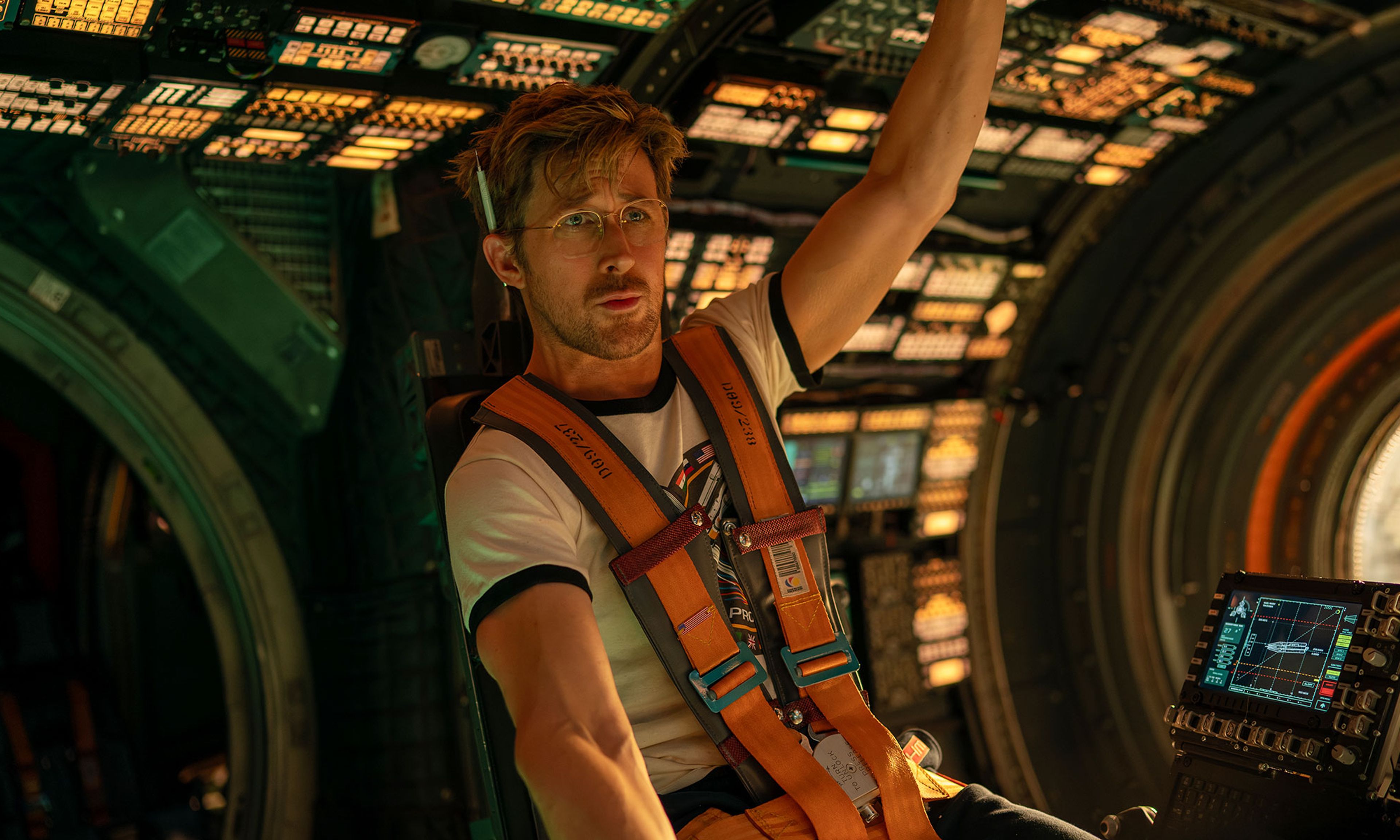
Ryan Gosling in <i>Project Hail Mary</i>
Editor's Note: This review contains spoilers.
There is a scene early in Project Hail Mary that tells you everything about the kind of film you are watching. Ryland Grace (Ryan Gosling), a middle-school science teacher who emerges from a medically induced coma aboard an interstellar spacecraft with only the scantiest memory of how he got there, discovers his two crewmates dead in their pods. He could ignore them. Instead, he holds a small funeral ceremony for a man and a woman he barely knew. Before he releases their bodies into space, he lingers on the family photographs each of them brought along for the journey.
There is no audience, no custom to observe, no authority demanding it. Grace does it because it is right. Because these people belonged to something beyond themselves and deserved to be sent off as if that mattered. A materialist might call that irrational. I would call it pious, and a film that opens this way has already told you where its heart is.
Directed by Phil Lord and Christopher Miller in their return to live-action after a decade in animation, Project Hail Mary is adapted from Andy Weir's novel by screenwriter Drew Goddard, who previously brought Weir's The Martian to the screen. The kinship between the two films is real: Both follow a man who refuses to stop solving problems and ask what that refusal finally costs. This time, a microorganism is consuming our sun, threatening an ice age that will end life on Earth within a generation. Scientists have identified one nearby star system, Tau Ceti, twelve light years away, that has somehow resisted infection. Grace is the world's foremost expert on the organism. He declined the mission, was given three hours to reconsider, declined again, and was drugged and launched into space against his will. He had no family, no pets, no one waiting. The mission planners considered this a qualification. The film treats it as a wound.
Where The Martian is ultimately a story about self-reliance, Project Hail Mary is warmer and more searching, landing somewhere closer to self-giving as its main theme. The title (and the name of the crew’s starship) carries its double meaning lightly. A Hail Mary is a desperate last throw with no reasonable expectation of success. It is also a prayer. When Grace asks Eva Stratt, the mission commander played with cool precision by Sandra Hüller, whether she believes in God, her answer is, "It's better than the alternative." The film leaves it there.
From that foundation, the film builds an improbable and deeply affecting friendship between Grace and an extraterrestrial. The scientist initiates contact with his fellow traveler by tapping out borrowed notes from Close Encounters of the Third Kind, one of several cinephile flourishes the film deploys with genuine affection. He names his companion Rocky, after both his stone-like appearance and a certain South Philly boxer. The planet they orbit is, fittingly, named Adrian. The pair cannot share the same air, let alone the same world.
The five-limbed space traveler is one of cinema's great recent creations: mating for life, constitutionally unable to sleep without someone standing watch, and capable of expressing an entire emotional range through sound alone, with something of R2-D2's genius for making you love a creature that cannot speak your language. The film has profound things to say about what it costs two beings to construct a bridge of understanding across the void of mutual incomprehension. (I look forward to hearing linguist Spencer Klavan's thoughts on that.)
Production designer Charles Wood built the Hail Mary's interiors to feel assembled under pressure by a coalition of nations, each section distinct in color and material, the whole thing slightly imperfect and entirely human. Greig Fraser photographs it with the warmth he brought to Denis Villeneuve’s Dune, staying close to Gosling's face without losing the vastness surrounding him. Daniel Pemberton's score, built from voices, woodblock, and the stomping of children recorded at Abbey Road, expands from near-silence to something choral by the close. When the film deploys Mercedes Sosa's "Gracias a la Vida" at its moral climax, a hymn of gratitude for the sheer gift of existence, the choice lands with the weight of everything that preceded it.
That weight is earned image by image. The Hail Mary's interior is lined with golden plaques depicting the arc of human civilization and the creatures we share the Earth with. The ship carries the record of what we are. The film understands the transmission of knowledge across generations, civilizations, and finally species as something close to a sacred obligation. If it has a single limitation, it is that Grace has no one waiting on Earth, which frees him morally but costs the film something. A glimpse of what he is surrendering might have made the final sacrifice land with even greater force, but I’ll admit I might just be nitpicking. As it stands, it trusts us to supply the weight ourselves.
That trust is the mark of a film made for grown-ups and kids alike. I walked out of the theater grinning, already thinking about who I wanted to share it with. My daughter just turned one a few weeks ago, and I have been thinking about what the first film we watch together will be when she's a bit older that wasn't made for people who write with crayons. E.T. has always been at the top of that list; Project Hail Mary is not far behind. Both are, at their core, films about lonely souls who find each other across an impossible distance — and the pure joy of discovering that the universe, or its loving Creator, is not indifferent to that search.
[slideshow slideshow="1924033" /]

About the Author
A veteran of political campaigns, Giancarlo Sopo is a cultural writer exploring the intersection of cinema, politics, and the conservative imagination. In addition to National Review, his commentary on culture, aesthetics, and public life has been featured in IndieWire, the New York Times, and CNN. Follow him on X (@giancarlosopo) and Letterboxd.
Featured Tags
Advertisement
Advertisement





Comments