The Powell Investigation Was Everything Wrong with Trump's Second Term
Written by Dan McLaughlin
Share this story
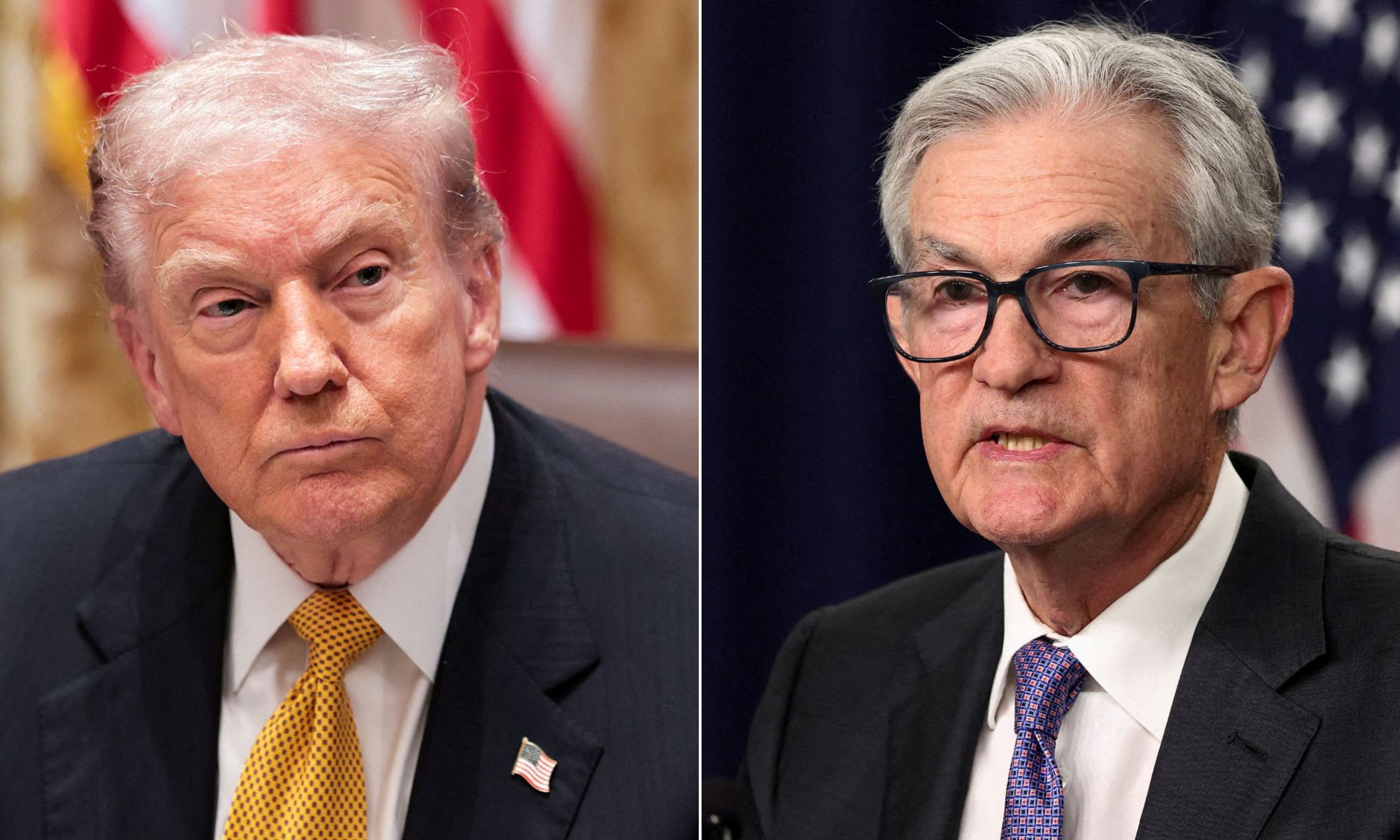
Left: President Donald Trump during a meeting at the White House in Washington, D.C., November 7, 2025. Right Federal Reserve Chair Jerome Powell holds a press conference at the U.S. Federal Reserve in Washington, D.C., December 10, 2025.
The Justice Department has dropped its investigation into Fed chairman Jerome Powell, just in time for the Senate to confirm Kevin Warsh as his replacement -- which it has been resisting doing so long as the Powell probe was ongoing. Score this as a win for retiring North Carolina Republican Thom Tillis, who made that quid pro quo explicit and won the game of chicken with the Trump White House.
Our editorials made the case against Trump's anti-Powell campaign, against the president's threats to fire Powell, against the trumped-up criminal investigation, and in favor of Trump dropping the investigation to clear the way for Warsh. So, the end of this standoff in a Trump fold is good news. But the fact that it got this far is still bad.
When the history of Trump's second term is written, the Powell investigation will be a textbook summary of everything that has gone wrong:
- Elected in good part to fight inflation, Trump has instead waged a scorched-earth campaign to get the Fed to pursue an inflationary monetary policy.
- Elected in spite of -- or perhaps in part because of -- the Democrats' abusive lawfare campaign against him, Trump has chosen not de-escalation but the abuse of the law to harass political opponents. He has done so incompetently (no charges have been brought against Powell, saving him from the humiliating retreats of the retaliatory cases against James Comey and Letitia James), and the ineptitude is not coincidental; it's what happens when you first select your lawyers by the litmus test of being willing to endorse lies and bogus legal theories, and then fire anybody who exercises professional judgment to caution the boss against acting like the client from hell.
- Over-relying on the unilateral powers of the executive branch, Trump has marched into a box canyon in which he was simultaneously at odds with the Fed, the Senate, and the Supreme Court, which appears ready to grant him broad removal powers over the executive branch but to draw the line at the Fed. Fighting all your enemies and all your allies simultaneously is a recipe for defeat.
- There was no popular constituency or coherent message for any of this. Presidents can stare down the other branches when they get the upper hand with the public. But rather than try to persuade the voters of some sensible argument for what Trump was doing, he and his team just assumed that the sheer will to power and the blind loyalty of his supporters was all they needed. You can get that high on your own supply when you run a 70/30 or 60/40 jurisdiction, but not when you got elected with 49.7 percent of the vote after years of drawing 47 percent support in the best of times.
- There was no strategy for how to respond if brute force didn't work. When Powell fought back, senators sided with him, and the Court sent its signals of skepticism in the Lisa Cook case, Trump had no counter-move: All he could do was bank on winning a battle of wills. Having already chased Tillis into retirement, he had no further levers with which to move him.
- In the end, nothing was accomplished to justify all the bad press and animosity. The most arguable case for Trump has always been that he gets results and so one shouldn't look too closely at how he makes the sausage. Sometimes, that's a plausible argument. But not when one of his schemes blows up in his face like Wile E. Coyote deploying the Acme Fed Chairman Remover and Interest Rate Lowerer.
If it is time to move on from arguing about Trump's personal fitness for the job and start thinking about how Republicans should govern going forward, then the Powell investigation ought to be an object lesson in how not to imitate the Trump approach, and specifically the hubristic follies of the second term.

About the Author
Dan McLaughlin is a senior writer at National Review Online and a fellow at National Review Institute.
Featured Tags
Advertisement
Advertisement



Comments