Share this story
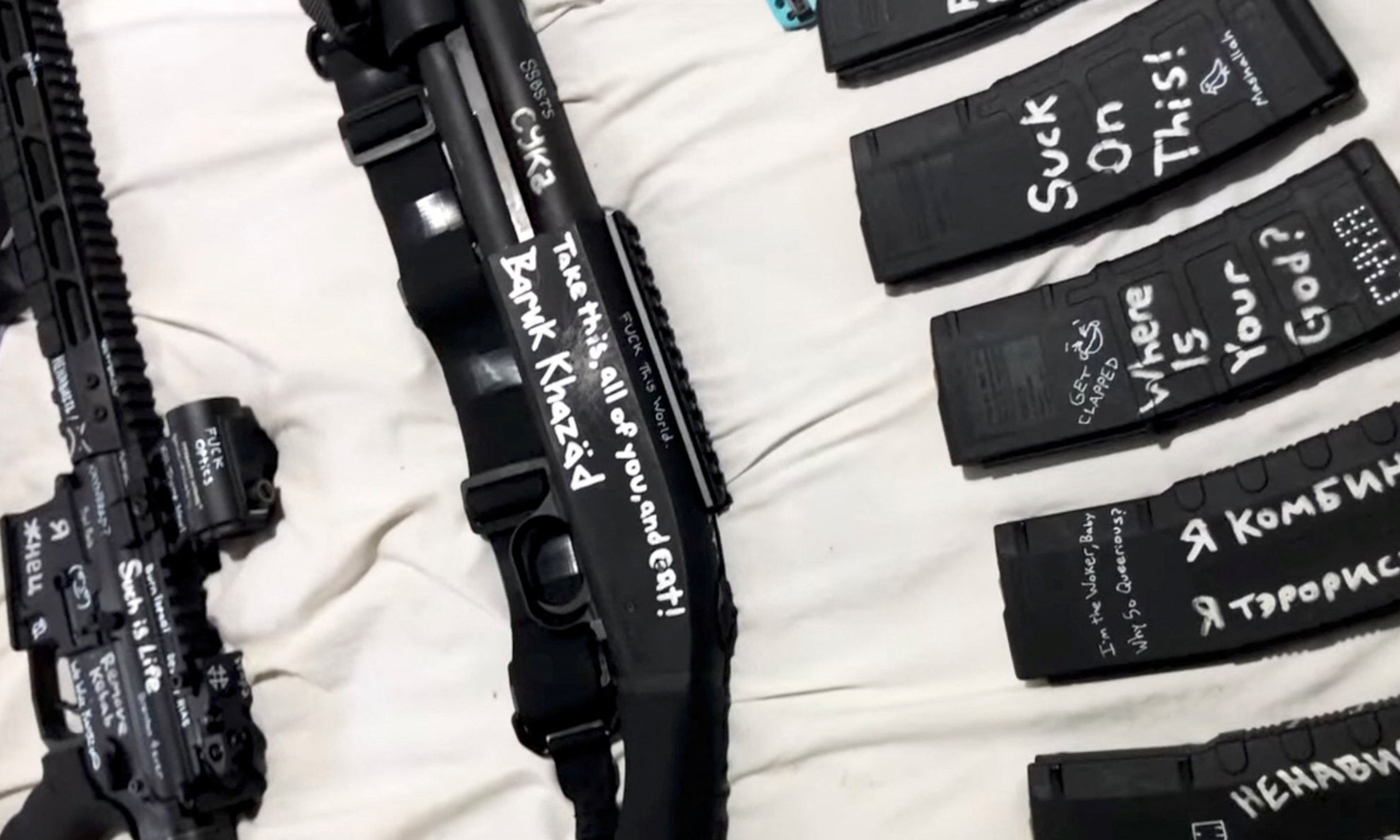
Weapons and rifle magazines, adorned with messages and names, filmed by Robin Westman, the suspected shooter in the Annunciation Church attack in Minneapolis, Minn., in a still image from an undated video.
In Edgar Allan Poe’s “The Tell-Tale Heart,” a man is driven mad after murdering an old timer who, he claims, looked at him with “his vulture eye.” The narrator tells us how he carefully planned the murder in an attempt at the perfect crime, and then tried to hide his tracks by dismembering the body in his bathtub and burying it under the floor boards.
“It’s true! Yes, I have been ill, very ill,” Poe’s narrator tells us as the story opens. “But why do you say that I have lost control of my mind, why do you say that I am mad? Can you not see that I have full control of my mind?”
But of course the man is indeed losing his grip, as any reader will see clearly. His guilty conscience rebels as he contemplates his evil acts, as he goes over them again and again in his mind. And that’s why he begins to hear — or so he believes — the dead man’s heart beating beneath the floor boards. His confession comes when he can't take it anymore; it comes when he must be rescued from the consequences of his own actions by external authorities. In so many ways, it's a pitiful ending for a miserable man.
Today, we are seeing something of a different pattern: a motif that is even more sinister, because of its premeditated timing, though it is rooted in the same poisoned soil of guilt and shame. As information trickles out about the circumstances around the shooting at the ICE facility in Dallas today that left two dead and one injured, FBI Director Kash Patel released information that investigators have found unspent rounds with the slogan “ANTI ICE” written on the casings. It would be hard for anyone to argue that the fact pattern here does not point to another bout of left-wing political violence. And this is becoming a familiar calling card in this genre of murders: Charlie Kirk’s assassin had inscribed his rounds with anti-fascist slogans; the shooter who murdered students at the Annunciation Catholic School in Minneapolis took the time to write out his grievances on his guns and bullets.
What is all this but a premeditated attempt at self-justification and absolution before the spilling of blood?
These assassins are crying out, as with Poe’s murderer, “Listen! Listen, and I will tell you how it happened.” What unites these latter-day shooters and Poe’s character is that they are not insisting that they are innocent, but rather that they are sane and that their actions are altogether justified.
“You will see, you will hear how healthy my mind is,” they plead with us.
Yes, we see. But all that is there is broken minds and black hearts.

About the Author
Mark Antonio Wright is the executive editor of National Review.
Featured Tags
Advertisement
Advertisement


Comments