Share this story
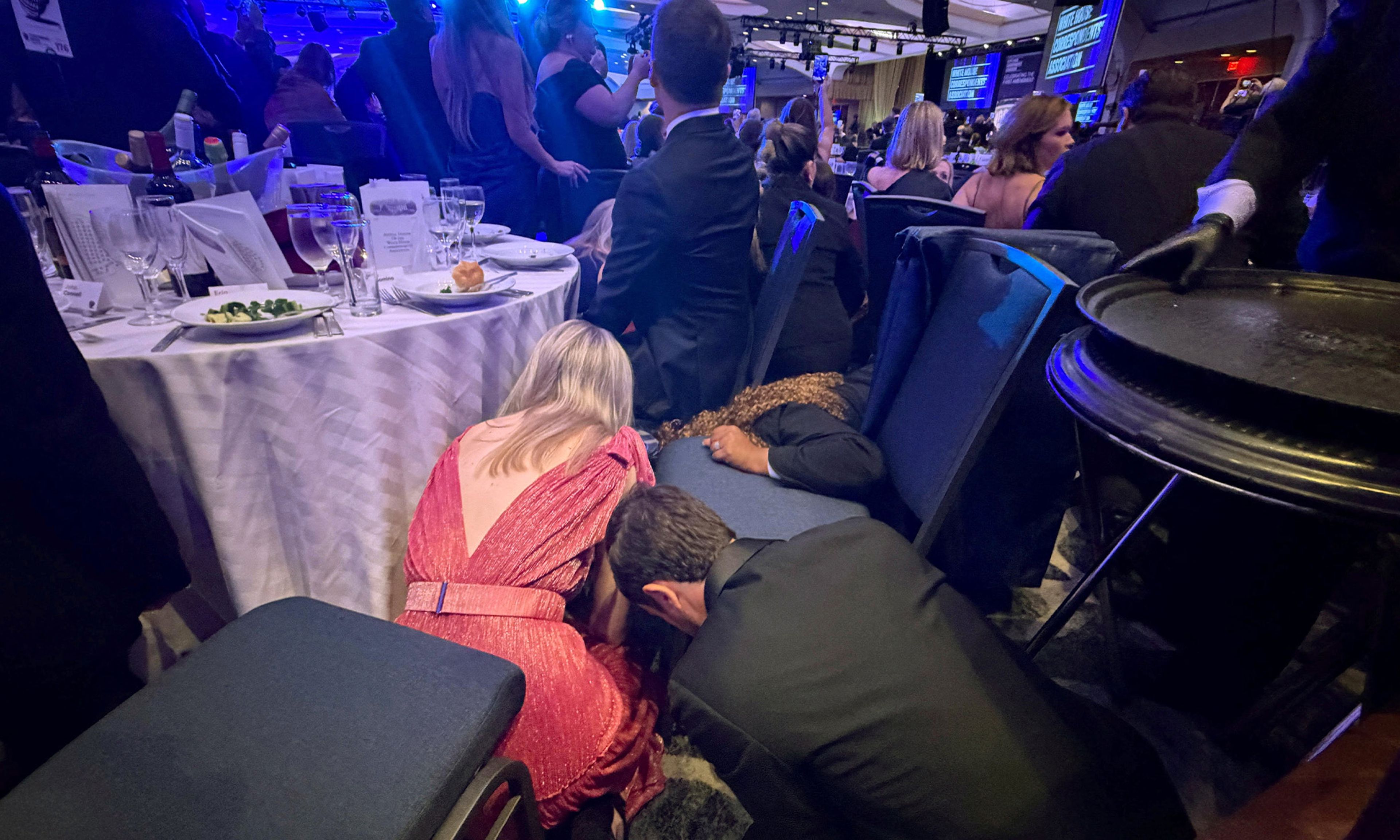
Guests take cover after the shooting at the White House Correspondents' Association dinner in Washington, D.C., April 25, 2026.
Having attended the White House Correspondents’ Dinner on several occasions (though not recently), I find several views of the shooting a bit off.
To start, I’ve seen the episode portrayed as a colossal security failure. But from my perspective, the security did exactly what it was designed to do. That is, the checkpoint outside the ballroom was effective in preventing an active shooter from getting within firing range of President Trump or any other top government officials. Yet the security footprint was never conceived to eliminate all potential threats to any part of the hotel. Failing to note this distinction is like not recognizing the difference between a terrorist being able to smuggle a bomb onto an airplane -- and a lone gunman opening fire on the sidewalk outside the baggage claim where travelers are waiting for taxis.
It’s perfectly understandable for people to see what happened as too close for comfort. To avoid a repeat of this weekend or something worse, organizers of the dinner will either have to make a decision about changing the current nature of the dinner, or find a different venue.
As it currently functions, for several hours in the run-up to the actual dinner, there are pre-parties hosted by different media organizations. The Washington Hilton is well-suited for this purpose because in addition to a large ballroom, it has dozens of smaller meeting rooms, some of which spill out into an outdoor courtyard. Attendees typically circulate from one to the other until it is time to go through the metal detectors to get into the dinner itself.
When I first heard of the shooting, it initially struck me that the most obvious solution would be to move the security screening to outside the hotel rather than just outside the entrance to the dinner. But the fact that the shooter was a guest at the hotel means that such measures wouldn’t have mattered. To prevent what happened, security would have had to screen every hotel guest with a room reservation extending to Saturday night and search all of their luggage, and re-screen them each time they enter and exit the hotel for days leading up to the event. Yet in no way is there any sort of budget to support this sort of arrangement. This isn’t something like the G-7 summit, with major leaders flying in from around the world. Ultimately, it’s a media fundraising event. Trump is there, of course. But again -- the security in place effectively protected him. So what we're talking about now is protecting the entire hotel, including during the freewheeling pre-party period.
So, it seems to me there are two options. One would be to keep the venue and the experience largely the same, but simply don’t have high-ranking government officials in attendance. This wouldn’t be without precedent -- Trump didn’t attend the dinner during his first term or last year, for instance. This would reduce the threat level considerably and, thus, the need for as extensive security.
If having the president or other top officials is seen as crucial, then the event needs to be moved outside of an active hotel and into a secured building that allows all guests to be screened before they enter.
A number of people have said that this makes the case for Trump’s White House ballroom idea. While in theory this would work as a venue for the dinner itself, it wouldn’t recreate the experience as it currently stands -- with all of the various pre-parties held by media organizations spilling into lots of different rooms. Typically, the preliminary period is more fun than the actual dinner itself, which features boring speeches and lame jokes and can be viewed on C-SPAN anyway. So if organizers want to best approximate the existing experience while attracting high-profile officials, they will have to choose a different venue -- but not a hotel -- with a large central space and a number of smaller meeting rooms. The good news is that there are plenty of those in the nation’s capital.

About the Author
Philip Klein is the editor of National Review Online.
Featured Tags
Advertisement
Advertisement

Comments