Share this story
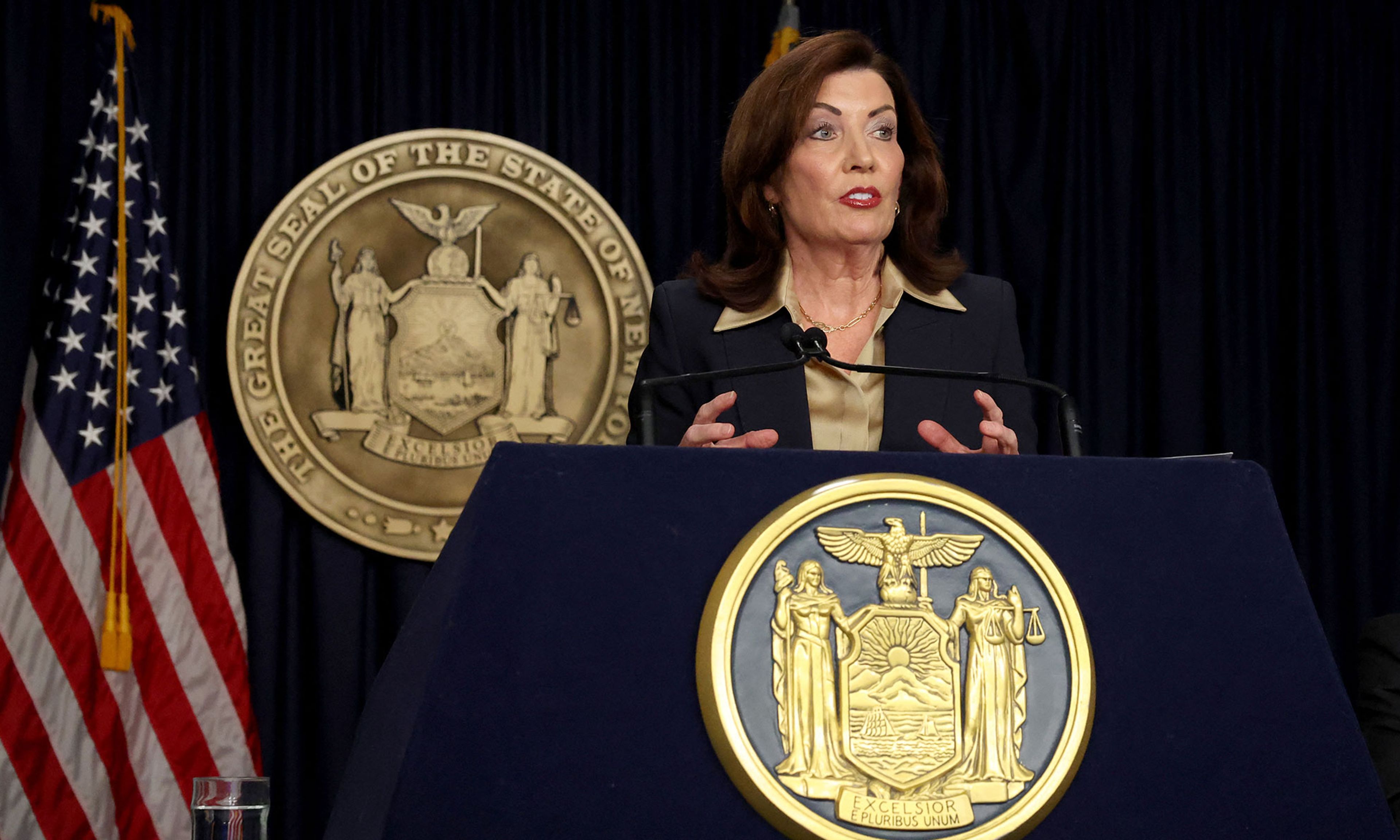
New York Governor Kathy Hochul speaks at a press conference in New York City, February 20, 2025.
Here in New York, while some of us daydream about Andrew Cuomo dropping out of the mayoral race and a late groundswell forming for Curtis Sliwa, we more seriously continue to wait for Kathy Hochul to decide what she’s going to do about assisted suicide legislation. There’s no reason to expect that she will reject it. Still, she should do the right thing. Read on.
Friends Try to Keep Friends from Being Killed by Their Doctors
In an editorial on the above-mentioned bill, the New York Post points out:
Consider Canada, which in 2016 adopted a MAID measure just like what’s proposed in New York — and has kept on “liberalizing” the rules, to include non-terminal severe illness, with the current government now planning to expand MAID to cover purely psychological suffering in 2027.
Right now, MAID already accounts for one in 20 Canadian deaths.
The personal stories behind the assisted suicide statistics should be enough to stop the spread of this cruel practice.
Matt Vallière is the executive director of the Patient Rights Action Fund and the Institute for Patients’ Rights, dedicated to helping vulnerable patients get true health care, not an unnecessary expedition of death.
I first got to know Matt through the witness of Kris Hanson and her late husband, J. J., a Marine with a brain tumor — the same diagnosis as Brittany Maynard’s, a young woman whose assisted suicide in 2014 was heralded and glamorized by People magazine and other propagandists for the culture of death. J. J. fought for as much life as he could have — and he and Kris had a second child. They also advocated protection for the vulnerable and gratitude for every last minute we have to live and love.
If you don’t know about the Hansons, take a look here and here.
Speaking of young people, my old friend Asra Nomani, a former Wall Street Journal reporter, such a brave, bold soul, writes about what she is calling Assisted Suicide Inc. — “a sprawling network changing laws worldwide, developing euthanasia services for funeral parlors, selling ‘suicide pods,’ promoting ‘suicide tourism’ and even training ‘doulas for death.’”
Life on Ice Is Still Life
If there is any good in the Trump administration’s in vitro fertilization policy (read NR’s editorial here), it’s that it’s forcing an education. Mind you, the Oval Office rollout wasn’t all that educational — the president even gave up pretending that he knew any of the medications he was talking about offering to the American people at a cheaper price through trade negotiations.
But Emily Zanotti, writing about her struggles with infertility, encourages the White House to look beyond IVF:
“NaPro” is a brand that refers exclusively to a small, specific collection of medical providers, and since it has a much longer road to success than IVF’s, many who might have been success stories give up or discern a different path, for whatever reason. It also doesn’t address every type of infertility out there, certainly not age, or quantity and quality of eggs.
And that’s where President Trump’s plan could come in. Instead of pushing couples struggling with infertility automatically to IVF, it could encourage couples to seek more holistic treatment, push research into conditions at the heart of infertility like endometriosis and polycystic ovary syndrome (PCOS) and extend his schematic to allow for patients of all fertility care providers to access cheaper medications and insurance that includes procedures like excision surgery.
Infertility is probably the most difficult cross I’ve ever had to bear, but I firmly believe that Catholics have the right idea when it comes to handling it: looking for the root cause and treating the whole human. And the White House could create a fantastic, truly pro-life policy that embraces these whole-human methods with just a bit more work.
Why Is the West Suicidal?
The great human-rights advocate Lord David Alton writes against the “barbaric” attempt in the United Kingdom to expand abortion:
The unintended consequences of this abortion up to birth amendment would mean that rather than protecting women, they would be placed at greater risk — to say nothing of the implications for unborn babies, even so very late in pregnancy.
To be clear, in this country, abortion is already permitted up to 24 weeks, almost six months into pregnancy and beyond the point when increasing numbers of babies are able to survive outside the womb.
The supposedly limited grounds for abortion in the Abortion Act are now interpreted so loosely that abortion is essentially available on demand up to this point. . . .
And now they want to go even further by decriminalising those who perform their own abortions for any reason and at any time, all the way up to and even during birth.
This radical and disturbing proposal would endanger women by removing any legal deterrent against performing dangerous late-term abortions at home and likely lead to an increase in viable babies’ lives being ended.
Like in the United States, it is euphemisms and convenience and outright denial of what is happening right in front of us — seen on sonograms, dispensed in drugstores, performed by elite hospitals and the Kermit Gosnells of the world alike. Barbaric any way it happens. It’s the ending of life. Science knows it. We can choose to lie to ourselves, look away. Or, we can accompany and help those who might otherwise be subject to what a pro-life advocate on the front lines once described as a search-and-destroy mission to convince poor, single, and especially black and Hispanic women to end their pregnancies, even when they want to try raising their children.
Reproductive Futures Means No Future for the Unfortunate Unborn
Somehow, I’m pretty sure that pro-lifers are supposed to be the bad guys in this story. From the Washington Post:
On Wednesday, a group of attorneys, advocates and abortion providers launched Reproductive Futures, a group that aims to increase the number of telehealth services offering medication abortion and other reproductive care in the United States and bolster legal protections for their workers and volunteers. The growing popularity and availability of medication abortion has made it a top target for the antiabortion movement, with conservative officials pursuing fines and jail time for providers they suspect of mailing the drugs across state lines in defiance of local laws.
Human rights lawyer Julie F. Kay, who is leading the new effort, has helped craft state-level “shield laws” to protect medical providers who prescribe abortion pills from out-of-state prosecution. Kay previously helped start the Abortion Coalition for Telemedicine alongside Margaret Carpenter, a New York doctor who is one of two physicians known to be facing an arrest warrant and other legal action from Republican-led states for allegedly prescribing abortion pills in violation of state law.
Allegedly?
Around National Review
Our own beloved Ramesh Ponnuru is battling cancer. Read his note here. Please pray for him and his family.
By Wesley J. Smith:
• Medical Journal Screed Decries All Fetal Personhood Laws
• Assisted-Suicide Slippery Slope Keeps Slip-Sliding Away
• George Clooney, Annette Bening to Star in Pro-Assisted-Suicide Movie
Michael Brendan Dougherty:
By me:
• Andrew Cuomo Shows Us How to Do a New York Political Ad
Other Things
• Elizabeth Kirk warns against a Pennsylvania constitutional amendment that would expand abortion even beyond what the Roe regime allowed. It is so extreme that it would make it an “outlier” even among states where abortion is quite legal in post-Dobbs.
• John Stonestreet, at the Colson Center: The President’s Plan to Cheapen IVF (and Human Life)
• Eithan Haim, known as the whistleblower who revealed the transgender treatment program of the Texas Children’s Hospital, asks: “Are people in the pro-life movement aware that doctors are miscoding abortions as miscarriages to bypass state and federal law?”
• A resource for birth moms from BraveLove
• You may recall actor Kieran Culkin’s story of making a bet with his wife about having a third child. The baby is on the way — any day now.
Upcoming
• November 9 is what the Christian Alliance for Orphans calls Pure Religion Sunday. It’s an opportunity to explore what it means to love and care for the orphan. Springs of Love is a Catholic ministry (I’m on its board) that was on-site this year at CAFO’s annual summit in Houston and is introducing Mother Cabrini Sunday, inspired by the CAFO initiative. Mother Cabrini is an example of living the Gospel as a missionary and leaving no orphan or widow behind. What does that mean in your local church? What does that mean in your family? What does that mean for each and every one of us? Not everyone is called to foster or adopt, but everyone has a role to play in caring for children and supporting families.
• My friends at the Respect Life office in New York are partnering with Red Bird Ministries for a retreat for women who have suffered miscarriages or the death of an infant or young child. If you have lost a child — or children — consider signing up. It could have been this year; it could have been three decades ago. If you think you need to grieve, if you long for some healing, do please consider it. Details here. It will be in March at a quiet Marian shrine outside the city.
• The Archdiocese of New York is also hosting a Feminine Genius brunch in Yonkers that’s coming up, on Saturday, November 8.
• There’s a National Night of Prayer for Life, from 9 p.m. on December 8 to 1 a.m. on December 9.
• Do you know about the symposium on men coming up at the National Press Club in Washington, D.C., on Monday, November 5? I’ll be moderating a panel on mental health. (I joke that I’ve been asked because I’m neither a man nor an exemplar of mental health.)
I may have opened this edition of the Lifeline with New York, but I’ll close it with Grand Rapids, Mich., where I am currently with our friends at the Acton Institute, the Russell Kirk Center, and the Gerald Ford Museum, celebrating Bill Buckley’s 100th birthday, which is coming up on November 24. I’ll be covering different aspects of his life and legacy at Yale, at the University of Dallas, and at the Franciscan University of Steubenville next month. And National Review Institute’s annual dinner is in Palm Beach on November 5.
If you found this even remotely interesting or useful, please sign some people up to receive this weekly newsletter in their inboxes every Friday.
Keep an eye on National Review Online during the week. And if you are on X, I’m @kathrynlopez.
God bless you and all those you love. Especially if you are facing a difficult struggle: you have more of a community than you realize that remembers you in prayer. Never hesitate to ask for help. We are not made to be alone. And we don’t have to be. Give others the gift of being with you, helping you, knowing the depth and extent of true love.
About the Author
Kathryn Jean Lopez is a senior fellow at the National Review Institute and the religion editor of National Review. Sign up for her weekly newsletter here. She is the author of A Year with the Mystics: Visionary Wisdom for Daily Living.
Featured Tags
Advertisement
Advertisement




Comments