Share this story
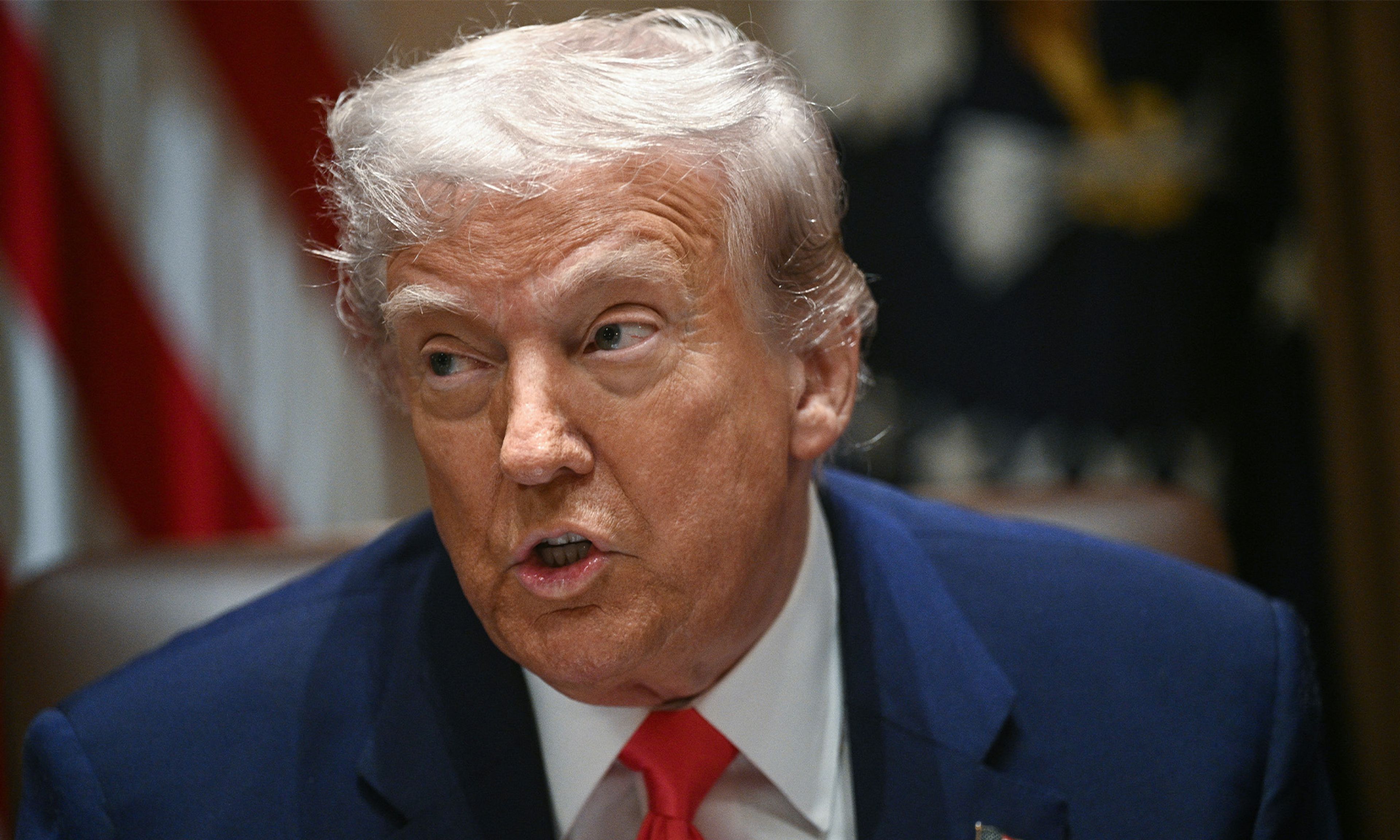
President Donald Trump speaks during a meeting in the Cabinet Room of the White House in Washington, D.C., April 10, 2025.
On the menu today: Happy Tuesday. Audrey Fahlberg here, National Review’s political reporter filling in today for Jim Geraghty. You can look forward to substitute Morning Jolters Noah Rothman on Wednesday and Dominic Pino on Thursday. We won’t be in your inboxes on Friday in observance of Good Friday.
Let’s talk taxes!
Raise Taxes on the Rich?
GOP congressional leaders breathed a collective sigh of relief last Thursday when House Republicans finally passed this year’s budget blueprint for the president’s “one big, beautiful bill.” But along with that major political success come two even bigger challenges: 1) settling on the legislative language surrounding the president’s border security, energy, defense, and tax-related legislative priorities, and 2) figuring out how to pay for it all.
Among the many “pay for” proposals that White House officials are currently considering is the possibility of raising the tax rate on the wealthiest Americans. One proposal is to raise rates on incomes greater than $626,350 from 37 percent to the Barack Obama-era 39.6 percent. Another option is to create a new bracket for those earning $1 million or more. President Donald Trump has yet to endorse either idea publicly, but he reportedly entertained raising taxes on some of the highest earners during a meeting with Republican senators earlier this month, according to Semafor.
And Treasury Secretary Scott Bessent said the proposal is indeed under consideration. “We’re going to see where the president is” on the issue, Bessent told Bloomberg on Monday. “Everything’s on the table.”
The millionaire tax bracket proposal has gained traction with fiscal hawks like Representative Andy Harris (R., Md.), chairman of the House Freedom Caucus who is worried about how the budget blueprint will address spending cuts. “If we slightly increase the rate on the highest earners or create a million-dollar earner bracket that’s a little bit higher than the current highest level, I’d be okay with that,” he said last week.
Nationalist populists are thrilled by the idea. That includes Steve Bannon, a longtime supporter of raising taxes on the wealthy, who served as White House chief strategist during Trump’s first term. For Bannon, hiking taxes for the rich doubles as an effective means of paying for the costly provisions in this year’s reconciliation bill while also delivering a nationalist populist tax plan for working-class Americans.
“As insane as it sounds, there are spending increases in these bills,” Bannon said in an interview with National Review on Monday of this year’s reconciliation legislation. Tariff revenue and Department of Government Efficiency (DOGE)-led spending cuts won’t be enough to offset those costs, he said.
Bannon praised the president for proposing exempting tips, overtime pay, and Social Security benefits from taxes. “He’s furthering the economics of working-class and middle-class America, and it cements the fact that the Republicans are not the country club Republicans of the Bush junta,” Bannon told NR. “That’s why it's so important to not extend the tax cuts for the wealthy and actually do more tax cuts for working class people. We do this, that is a fundamental shift politically that will cement in the foundational elements for a 1932-type realignment.”
What Say You, Congressional GOP Leaders?
Not much!
- Senate Majority Leader John Thune (R., S.D.): “That has been proposed by some. . . . I don’t know how that’s going to land.”
- House Speaker Mike Johnson (R., La.): “Generally we’re trying to reduce taxes here.”
- House Majority Leader Steve Scalise (R., La.): “No. 1 goal is keeping rates where they are and preventing a tax increase.”
- House Ways and Means Committee Chairman Jason Smith (R., Mo.): “We are going to create a tax code that grows the economy, that grows wages, is the focus to help deliver tax relief for America. The way you provide tax relief is, you cut tax rates.”
- House Republican Policy Chairman Kevin Hern (R., Okla.) to National Review: “We’re talking about a lot of things.” When lawmakers return from their mid-April recess, they’ll figure out how to write the tax bill language surrounding the president’s campaign related promises, such as no taxes on tips and overtime pay. “Then we’ll see at the end of the day if we’ve got enough stuff in there to pay for it.”
These responses are notable in pouring a splash of cold water on the proposal without ruling it out. In other words, it’s on the table until they say it isn’t.
“Republicans in Congress are not committing to not raising the top rate, and that’s making me and a lot of other supply siders very nervous,” says economist Stephen Moore, a visiting fellow at the Heritage Foundation and former economic adviser to Trump.
Raising rates on the highest earners wasn’t exactly a big theme for Trump on the 2024 campaign trail. Instead, he pledged to make permanent and expand his 2017 tax cuts: “Instead of a Biden tax hike, I’ll give you a Trump middle-class, upper-class, lower-class, business-class — big tax cut. You’re going to have the biggest tax cut.” He echoed this sentiment during his March 4 joint address before Congress. “The next phase of our plan to deliver the greatest economy in history is for this Congress to pass tax cuts for everybody. . . . We’re seeking permanent income tax cuts all across the board.”
It should come as no surprise that not every Republican in Washington is gung-ho about increasing taxes on the wealthy. Pressed in an interview last Thursday about whether the idea has any momentum in the halls of Congress, Representative Max Miller (R., Ohio) said he was unsure. “It hasn’t been socialized on the committee, and I haven’t been able to gauge the members in terms of how they would respond to it,” Miller told NR. “I believe the wealthy already get taxed at a pretty high rate. It’s something that we'd have to take a look at, if that's what the president would want to do, I'd have to hear a pretty convincing argument as to why.”
Added fellow Ways and Means member Darin LaHood (R., Ill.) in an interview with NR last week: “I'm not aware of those conversations within the Ways and Means Committee -- that’s not something we're advocating for.”
About the Author
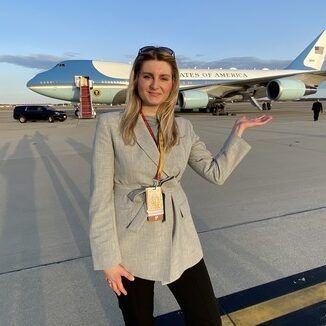
Audrey Fahlberg was a politics reporter for National Review.
Featured Tags
Advertisement
Advertisement

Comments