The Houthis Just Turned a U.S. Super Hornet Fighter Jet into a Submarine
Written by Jim Geraghty
Share this story
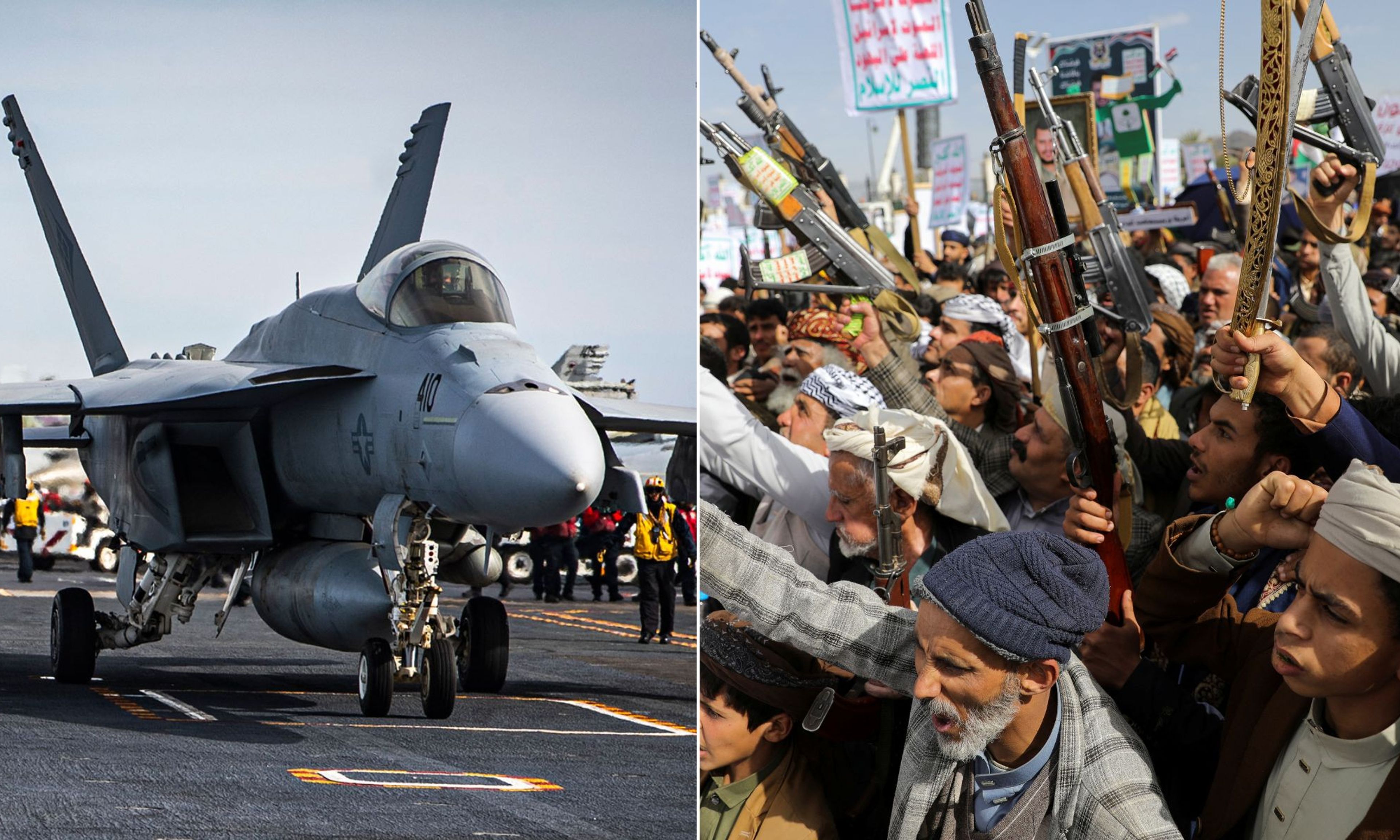
Left: A U.S. Navy F/A-18E Super Hornet from the “Blue Diamonds” of Strike Fighter Squadron VFA-146 taxis across the flight deck of the aircraft carrier USS <i>Nimitz</i> (CVN-68), under way in the Pacific Ocean, January 21, 2025. Right: Houthi supporters rally in Sanaa, Yemen, April 25, 2025.
On the menu today: One week ago, this newsletter gathered what publicly available information it could -- often from foreign news media -- to give a sense of how the U.S. effort against the Houthis in Yemen is going. The conflict is back in the news again, but for the second-worst possible reason (casualties would be the first).
Houthis: 1, Super Hornet: 0
Every week, National Review publishes “Defending America,” a series of photos taken by the photographers serving in the Army, Navy, Air Force, Marine Corps, and Coast Guard. On March 2, we featured photos from the USS Harry S. Truman aircraft carrier, with several shots showcasing the carrier’s F/A-18 Super Hornet fighter jets lined up, wings folded, right along the edge of the deck.
If you’ve ever wondered, “How do they park them so close to the edge and so precisely that none of them ever fall off?” Well . . . apparently, it can happen if the carrier has to make a hard turn:
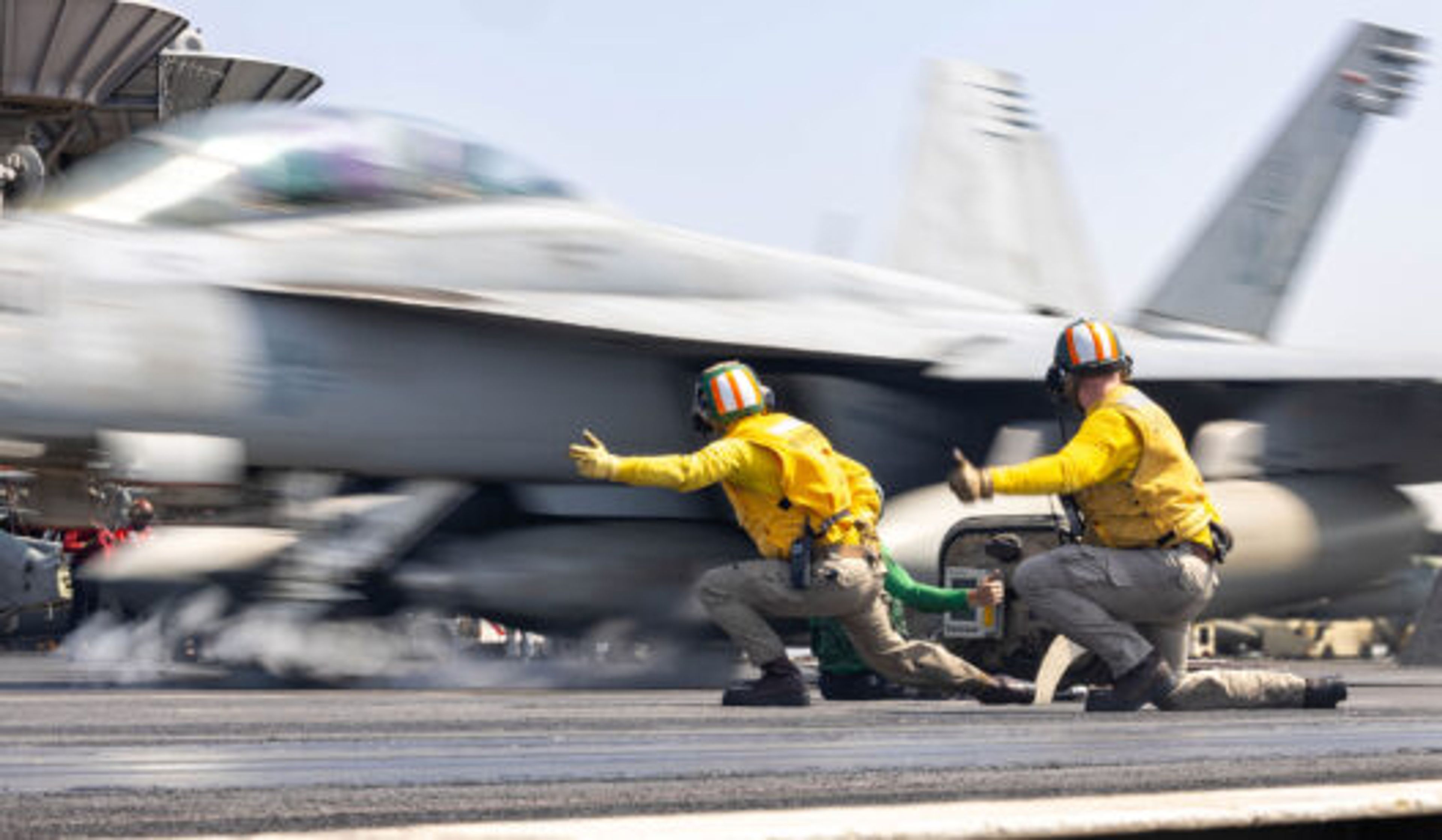
A US Navy F/A-18 Super Hornet fighter jet has been lost at sea after it fell overboard from the USS Harry S. Truman aircraft carrier while it was being towed on board, the Navy said in a statement on Monday.
A US official said initial reports from the scene indicated the Truman made a hard turn to evade Houthi fire, which contributed to the fighter jet falling overboard. Yemen’s Houthi rebels claimed on Monday to have launched a drone and missile attack on the aircraft carrier, which is in the Red Sea as part of the US military’s major operation against the Iran-backed group.
All personnel aboard are accounted for, and one sailor sustained a minor injury, the Navy said.
“The F/A-18E was actively under tow in the hangar bay when the move crew lost control of the aircraft. The aircraft and tow tractor were lost overboard,” the statement said. “Sailors towing the aircraft took immediate action to move clear of the aircraft before it fell overboard. An investigation is underway.”
A second US official told CNN that the aircraft had sunk. An individual F/A-18 fighter jet costs more than $60 million, according to the Navy.
Sixty million dollars! I don’t suppose Jake from State Farm sells insurance policies for that.
The U.S. Navy emphasized on Monday that the strike group and its air wing “remain fully mission capable.” But this lost aircraft comes atop a surprising number of lost drones in the past month and a half -- heck, in the past week or so:
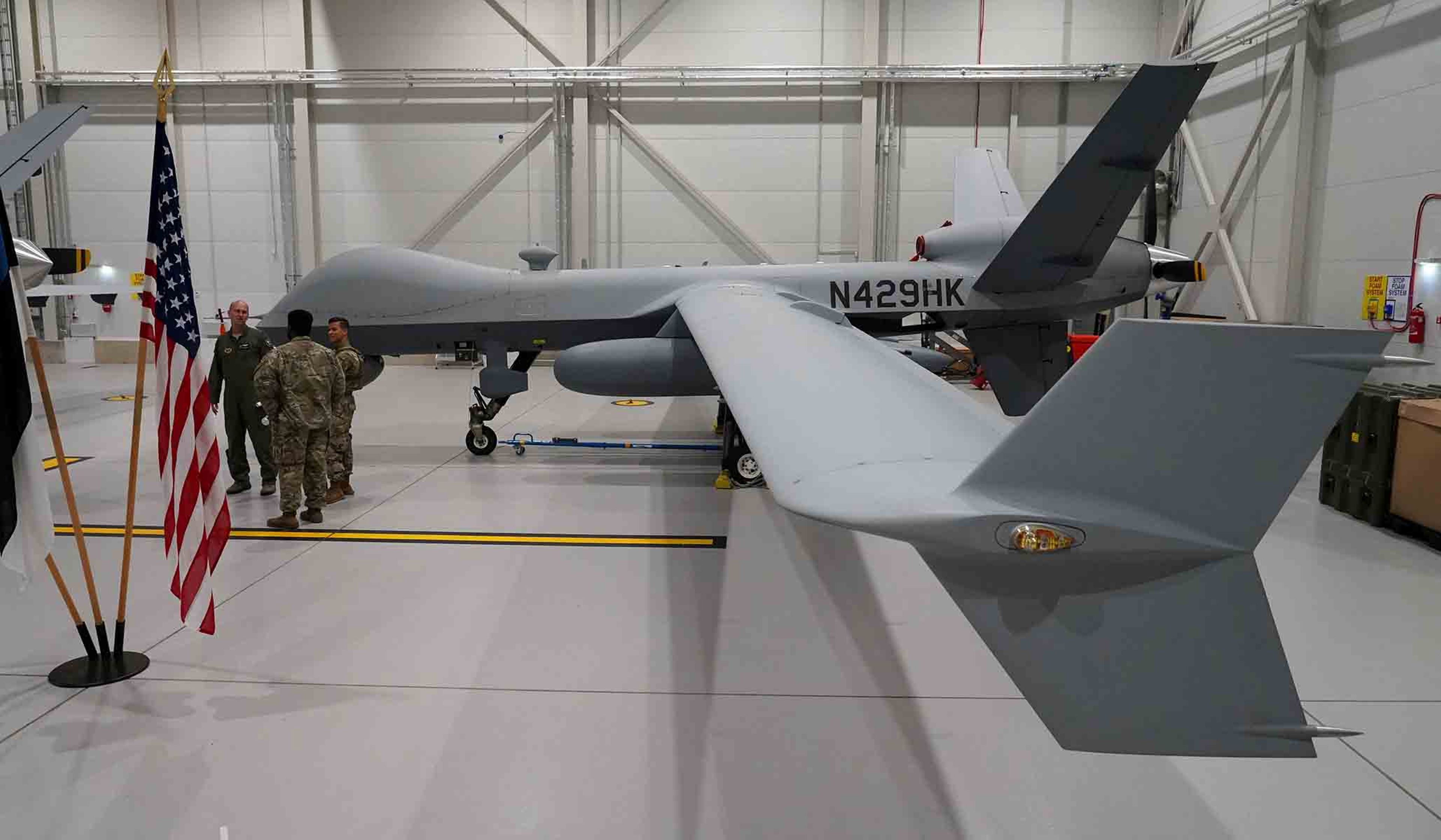
Houthi rebels in Yemen have shot down seven U.S. Reaper drones in less than six weeks, a loss of aircraft worth more than $200 million in what is becoming the most dramatic cost to the Pentagon of the military campaign against the Iran-backed militants.
According to defense officials, three of the drones were shot down in the past week — suggesting the militants’ targeting of the unmanned aircraft flying over Yemen has improved. The drones were doing attack runs or conducting surveillance, and they crashed both into the water and onto land, said the officials, who spoke on condition of anonymity to discuss military operations.
A U.S. defense official told Fox News that the U.S. had 230 MQ-9 Reaper drones in its arsenal as of December 2024 . . . which I guess takes us down to 223 today, as far as we know.
Every U.S. military operation entails a degree of risk, and these seven lost drones and one lost plane occurred while American forces carried out airstrikes on more than 800 targets in Houthi-controlled parts of Yemen.
According to U.S. Central Command:
These strikes have killed hundreds of Houthi fighters and numerous Houthi leaders, including senior Houthi missile and UAV officials. The strikes have destroyed multiple command-and-control facilities, air defense systems, advanced weapons manufacturing facilities, and advanced weapons storage locations. While the Houthis have continued to attack our vessels, our operations have degraded the pace and effectiveness of their attacks. Ballistic missile launches have dropped by 69 percent. Additionally, attacks from one way attack drones have decreased by 55 percent. U.S. strikes destroyed the ability of Ras Isa Port.
You’d like to think that after airstrikes on more than 800 targets, the Houthis’s forces would be degraded enough that they couldn’t take down U.S. drones or force a U.S. aircraft carrier make a sudden evasive maneuver that makes a plane fall into the ocean. But apparently, they can.
Pictures of the Houthis tend to make them look like just another rag-tag band of Middle Eastern extremists, no more sophisticated than the Taliban. But as last week’s newsletter reported, the Trump administration contended that Chang Guang Satellite Technology (CGST), a commercial group with ties to the People’s Liberation Army (PLA), are helping the Houthis with their strikes.
(According to U.S. officials, Chang Guang Satellite Technology is also providing high-resolution battlefield images to Russian fighters in Ukraine.)
CGST runs the Jilin-1, a constellation of 117 networked satellites, with photos where each pixel represents less than two feet. If you buy the reporting of the South China Morning Post, those networks can cover more than 770,000 square miles in a day. In January, the company boasted that it “achieved a 100 gigabit per second ultra-high-speed image data transmission rate in testing,” ten times the speed of its previous record. Seems like the sort of tool that would be useful if you wanted to determine where U.S. military forces were.
A Chinese company with ties to the PLA has 117 satellites orbiting the earth, giving them the ability to see just about anywhere -- including the Red Sea, the Gulf of Aden, the Indian Ocean, etc. -- and an ability to communicate those images down to the ground really fast to any clients, such as Houthi drone operators. As C+C Music Factory used to say, that’s one of those things that makes you say, “Hmm.”
And that’s separate from the Russian help in finding targets:
Russia provided targeting data for Yemen’s Houthi rebels as they attacked Western ships in the Red Sea with missiles and drones earlier this year, helping the Iranian-backed group assault a major artery for global trade and further destabilizing the region.
The Houthis, which began their attacks [in 2023] year over the Gaza war, eventually began using Russian satellite data as they expanded their strikes, said a person familiar with the matter and two European defense officials. The data was passed through members of Iran’s Islamic Revolutionary Guard Corps, who were embedded with the Houthis in Yemen, one of the people said.
In August 2024, the publication Middle East Eye reported that a U.S. official stated that members of Russia’s GRU military intelligence had been operating in Yemen for “several months” to assist the Houthis in their targeting of commercial shipping. A few months earlier, the publication reported that Vladimir Putin had considered providing Houthi rebel fighters with sophisticated anti-ship cruise missiles, but Saudi Arabian Crown Prince Mohammed bin Salman reached out to dissuade him.
Remember Viktor Bout, the notorious Russian arms dealer who the U.S. traded back to Russia in in exchange for basketball star Brittney Griner in 2022? Remember how we were assured he was an old man, and his arms dealing days were behind him? Eh, never mind. “When Houthi emissaries went to Moscow in August to negotiate the purchase of $10 million worth of automatic weapons, they encountered a familiar face: the mustachioed Bout, according to a European security official and other people familiar with the matter.”
And that is separate from all the assistance that Iran has provided the Houthis over the years. In just one shipment seized by the U.S. Coast Guard in the Arabian Sea in February 2024, U.S. authorities found “medium-range ballistic missile components, explosives, unmanned underwater/surface vehicle (UUV/USV) components, military-grade communication and network equipment, anti-tank guided missile launcher assemblies, and other military components.”
In Yemen, we’re fighting the Houthis, but we’re also fighting Chinese and Russian technology and weapons and Iranian weapons and assistance. The stakes are considerably higher than the average American probably realizes, which makes the lack of coverage and discussion increasingly troubling.
You may have noticed that Secretary of Defense Pete Hegseth has had a bit of a rough stretch these past few weeks.
I notice that the Department of Defense Rapid Response account on X is taking shots at Democratic senators, arguing, “The previous Secretary of Defense went missing for days in the ICU without informing the President,” rebuking NBC News headlines of “chaos” at the Pentagon, and responding to reports from Gateway Pundit. Hegseth’s account on X features a pledge to “never back down,” videos and photos from his visit to the U.S.-Mexico border, and declaring overweight troops in the reserves “completely unacceptable.”
That’s all well and good, but there’s more to life than bashing media coverage you find objectionable. One thing that Hegseth hasn’t done is give a detailed, televised briefing about the progress of operations in Yemen. If you’re a certain age, you remember the ones by then-Secretary of Defense Dick Cheney, Chairman of the Joint Chiefs Colin Powell, and General Norman Schwarzkopf during the Persian Gulf War, or the ones by Donald Rumsfeld about Afghanistan and Iraq -- maps, charts, video footage. (Remember “the luckiest man in Iraq”?)
That recent statement from U.S. Central Command noted, “To preserve operational security, we have intentionally limited disclosing details of our ongoing or future operations. We are very deliberate in our operational approach, but will not reveal specifics about what we’ve done or what we will do.”
That’s understandable, and no one wants to endanger ongoing or future operations. But keeping the American public informed about what the U.S. military is doing is part of the mission as well. If the Pentagon could showcase the accomplishments of completed missions in the not-so-distant past, there’s no reason the current crew can’t do it as well.
Or I suppose Hegseth or National Security Adviser Mike Waltz could just invite the whole country to their next Signal thread discussing the progress of operations in Yemen.
ADDENDA: Over in that other Washington publication I write for, a look at how the supply chain is already disrupted by the tariffs and global trade war. Also, Ramesh Ponnuru, Jason Willick, and I examine the reasons behind Trump’s sinking job approval numbers as he hits the 100-day mark.
For everyone who enjoyed yesterday’s newsletter about the arrest of Judge Hannah Dugan, you should read Andy McCarthy’s more skeptical take. Andy’s spent a lot more time in courthouses than I have, and likely has a better sense of how the judicial branch will perceive an arrest of a judge -- and then there’s the factor of the high odds that any case against Dugan that goes to trial will likely be argued before a jury of Milwaukee citizens.
Separately, our Dan McLaughlin notices, “Prosecutors in Hennepin County will be required to consider race when offering plea deals, according to a new policy from County Attorney Mary Moriarty.” That seems like a straight up middle finger to the U.S. Constitution’s 14th Amendment, but what do I know?

About the Author
Jim Geraghty is the senior political correspondent of National Review.
Featured Tags
Advertisement
Advertisement



Comments