Share this story
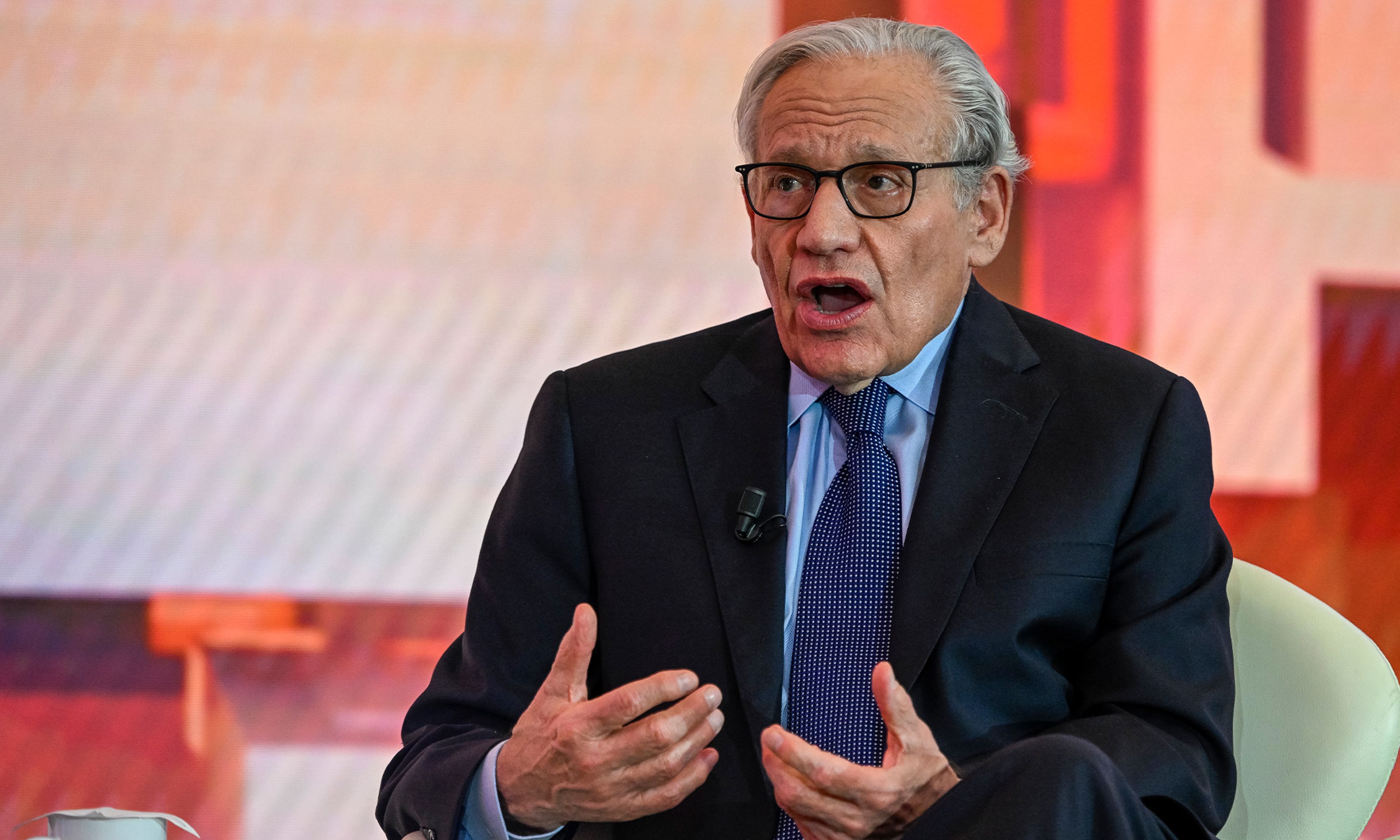
Bob Woodward speaks at the CNN International Summit in Lisbon, Portugal, November 21, 2022.
Dear Weekend Jolter,
Five years and a couple thousand news cycles ago, Bob Woodward was the cause of his own “gate.” Now a distant memory, the fuss concerned allegations that he had withheld for months quotes from President Trump about Covid-19’s severity, so that he could include them in his book in late 2020.
“Bob Woodward knew the truth behind the administration’s deadly bungling—and worse—and he saved it for his book, which will be released to wild acclaim and huge profits after nearly 200,000 Americans have died,” Esquire’s Charles P. Pierce charged.
“Why wasn't this reported *checks calendar* six months ago?” a Philadelphia Inquirer reporter asked at the time.
And so forth.
It seems Woodward is owed an apology. The media establishment that condemned him is now emulating him, to tell the real story of Joe Biden’s mental decline and the efforts to hide it during his final years in office and ill-fated reelection campaign. Some of the authors are acting in good faith; they either reported on the concerns about Biden’s fitness for office at the time (Alex Thompson) or are not traditional reporters connected to a news publication (Chris Whipple). Others are facing questions about why they weren’t so dogged last year. But the most pointed condemnation must be reserved for the political operatives doing 180’s in the accounts now being told.
Woodward held on to quotes of Trump saying early on that the virus was “deadly” and airborne and that he was playing it down; the legendary journo later argued that he didn’t know at the time whether Trump was right and that, once he was confident, the information was widely known anyway. Former White House Chief of Staff Ron Klain, on the other hand, held on to his verified first-hand experience, which Whipple’s Uncharted, out this week, describes in alarming detail. As the New York Times review put it, the book is part “voyage into the unforgivable,” showing that “Biden’s closest advisers were in little doubt about the heavy toll old age had taken on his capacity to perform as president in 2024,” and yet “they persisted regardless in feeding his delusions.” According to the book, Klain observed that Biden struggled immensely during debate prep and couldn’t articulate his second-term goals. (He has since denied to Politico that he was saying Biden “lacked mental acuity.”)
Yet Klain gave the public a very different account. Becket Adams brings receipts:
You may recall Klain was the one who said in July of last year, after the debate and after voters had for years correctly called out Biden’s obvious infirmities, that the “president is absolutely sharp, fit, on top of his game.” . . .
Elsewhere, on CNN, Klain blamed a cold and overseas travel for Biden’s debate implosion.
“I don’t deny that it was a bad debate performance; that’s different than whether or not the president is up to the job,” Klain said. “He’s clearly up to the job. He’s doing it every day. He’s doing it successfully.”
Sure, this was spin -- and given the circumstances, the most reckless variety of it imaginable. “Klain knew the risks his party was running by renominating Biden,” Noah Rothman writes, and the spectacle of Biden’s debate implosion “might have been avoided if Klain and those in his orbit hadn’t kept their concerns to themselves.”
Jake Tapper and Thompson have their own book forthcoming on Biden's "decline, its cover-up, and his disastrous choice to run again,” which reportedly describes that debate as “not an anomaly” but “the natural result of an eighty-one-year-old man whose faculties had been diminishing for years.”
Jonathan Allen and Amie Parnes just published their campaign book, writing that, “privately, some [Democrats] worried all along that they were putting too much stock in an old man who, at best, had long since lost his fastball.” Speaking to Vanity Fair, Allen said they didn’t hold back anything crucial just for the book, as most of the interviews were conducted postelection. Parnes faulted the Biden camp for clamping down on information about the president’s health.
The authors of these books -- and of those inevitably joining the genre in the coming months -- may not have sat on bombshell evidence about Biden’s mental state. But it appears that suspicions were, in fact, widespread in the media and not confined to conservative publications like this one, as it seemed at the time. What would have happened if outlets had put serious reportorial muscle into investigating one of the biggest political scandals of the last 50 years, when it mattered? (Woodward, for the record, published before the election.) What if pangs of conscience were acted on by the operatives who were selling a lie to the voting public before the rickety struts gave out and threw their party into crisis?
That work, instead, was left belatedly to George Clooney, now on Broadway playing a newsman.
* * *
If you’ll indulge the appeal one last time (at least, I think this is the last time), our webathon is winding down but aiming to finish strong. We know, this fundraising drive came at a tough time in the markets, but we’ve seen a surge of contributions the past few days. We hope that, if you haven’t yet chipped in to assist the National Review operation and all the writers, editors, artists, production and marketing and business folks, and others who make it happen, you’ll consider a donation. Thank you, so much, for your continued readership either way.
NAME. RANK. LINK.
EDITORIALS
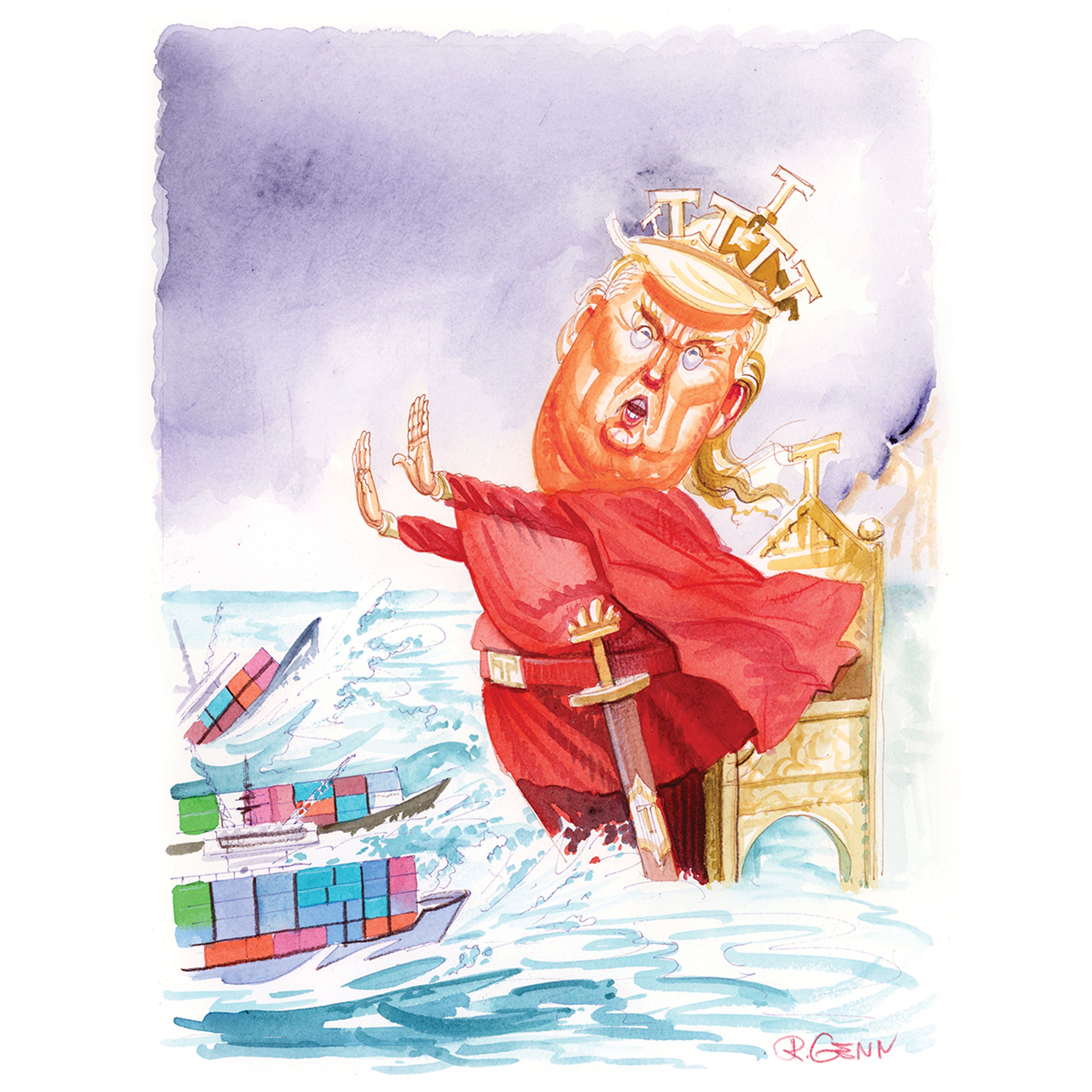
We are still left to ask, Why? The Tariff Pause
Pause or not, Congress should step up: Congress Should End Trump’s Trade War
Credit where credit’s due: Trump Is Right About Showerheads
Against government by executive vendetta: Trump’s War on Law Firms Goes Too Far
ARTICLES
James Lynch: Trump Announces 90-Day Pause on Reciprocal Tariffs for Negotiating Countries, Hits China with 125 Percent Rate
Audrey Fahlberg: Negotiable or Permanent? Deep Disagreements Emerge in GOP over Strategic Aim of Tariffs
Rand Paul: Congress Must Assert Itself on Tariffs
Robert D. Atkinson: Globalists Brought Trump’s Trade Revolution on Themselves
Rich Lowry: Trump Is the New FDR
Dan McLaughlin: The Grand Strategic Folly of a War on Trade
Dan McLaughlin: The Five Biggest Challenges Facing America
David Zimmermann: Doctors Committing Insurance Fraud to Conceal Trans Procedures, Whistleblower Testifies
Andrew McCarthy: Trump DOJ Suspends Its Top Immigration Lawyer, Apparently for Admitting Error in Deporting Illegal Alien to El Salvador
Andrew McCarthy: Supremes Uphold Due Process While Handing Trump ‘Win’ in Venezuelan Deportations Case
Brittany Bernstein: Is Gen Z Really Behind Luigi Mangione?
Richard Reinsch: Mahmoud Khalil Invites America to Judgment
CAPITAL MATTERS
Abigail Hall, on “tariff engineering”: How Tariffs Encourage Waste
LIGHTS. CAMERA. REVIEW.
Armond White has at it with Season 3: The Willful Decadence of The White Lotus
Brian Allen tells all, on being hired and fired by Trump: Libraries Take a Hit in the Latest White House Order
YOU GOTTA FIGHT FOR YOUR RIGHT TO READ EXCERPTS
With the trade war now partly de-escalated, Dan McLaughlin zooms out, in questioning the basis for and purpose of Trump’s tariffs:
Trade is commerce. Commerce is money, jobs, and prices. The economic case against high “protective” tariffs is well known. But foreign trade is never just about economics. It’s also about our grand strategic vision for our place in the world.
If so, what exactly is the Trump team thinking? I’ve written about the strategic folly of launching a global war on trade with no clear adversary, no identified victory conditions, no allies, no exit strategy, and a vast overestimate of American capacity to “reset” the entire global economic order. The odds against success are steep, and the perils many. But even aside from that, step back and consider this at the level of grand strategy. What sort of new world order do Donald Trump and JD Vance think they are creating? . . .
A major critique of the current regime of open American markets is that trade with the People’s Republic of China has empowered and enriched a malignant Chinese tyranny that represses its people, menaces its neighbors, and means us ill. There is merit to this argument. The PRC has spent its expanded wealth on a defense buildup that threatens Taiwan and challenges our supremacy on the high seas. It pours resources into initiatives to ensnare nations across the Southern Hemisphere into its web of influence. China’s economic interdependence with the United States, rather than liberalize the Chinese Communist Party, has seduced and extorted big American companies, Hollywood studios, and the NBA to become the party’s propaganda arms. During a pandemic birthed from a Chinese state laboratory, we found ourselves supplicant to China for medical supplies. In a future war, we could find ourselves in the same position with regard to war matériel. We don’t want to end up like the British officers in 1861 who discovered that they could organize the defense of Canada against the United States only by taking American railroads to get there from Boston.
But if the problem is that free trade makes China rich and dangerous, why are we punishing Taiwan, when China’s conquering it would strengthen the PRC? Why is the White House, amid a crackdown on foreign trade, protecting the Chinese-owned ByteDance from congressionally mandated divestment in TikTok? Why are we punishing countries such as Vietnam, which have stolen jobs from China, and pulling up the drawbridge against the allies we would need if we ever found ourselves in a direct confrontation with the PRC?
More broadly, if the problem is that we’re indiscriminately using free trade to benefit our own consumers in the short term rather than strategically using it to strengthen our global position in the long term, then slapping higher tariffs on our friends than on our enemies — hitting Israel and Ukraine harder than we’ve hit Russia or Iran or Afghanistan — is positively counterproductive. Yet that’s what the second Trump administration is doing.
The grand strategic benefit of free trade, if it is applied selectively rather than across the board, is to create economic communities of interest among nations that have like-minded systems and/or common strategic interests. The great foreign policy impetus for the growth of an American-led free trade order after World War II — as well as Europe’s post-WWII impetus for the growth of a common market — was to bind together the free nations of the world by commercial ties that would strengthen their military alliances as well as enrich their people. That was good economics, and it was also good grand strategy. The effort to bring China into that fold in the 1990s was well intentioned, but it lacked that unity of purpose in the absence of great-power rivalries.
But the second Trump administration now acts as if the objection to trade with China is not China but trade itself, with friend and foe alike. If the problem is not that the Chinese regime is particularly malignant but instead that every American ally must pay in steady cash for our protection, then we have abandoned the path of strategy in pursuit of a pure economic ideal — just a different and wrongheaded one.
Robert D. Atkinson of the Information Technology and Innovation Foundation, with an alternative take:
With one fell swoop, Trump has brought an abrupt end to globalization as we have known it to date.
And yet, the prevailing reaction to Trump’s tariff revolution on “liberation day” has been a combination of mocking (he slapped tariffs on an island populated by penguins!), confusion (what the hell is he doing and why?), and disdainful rejection (Trump is a dangerous fool who is destroying America). The two main outlets for globalist experts — Foreign Policy and Foreign Affairs — both have aired responses in that vein. The former published an article about how Trump tariffs will “shatter the world economy,” another about how China is firing back, and still another essentially calling Trump an economic idiot. Commentary in Foreign Affairs decries the coming economic turbulence and laments Trump’s tariff fixation.
What is missing is any attempt to objectively assess how the Trumpian revolution came to be. Sure, Trump is a unique personality, but he couldn’t have done what he has done if the globalist system was working the way we were promised it would. This is not to defend Trump’s actions, but unless defenders of globalization, at home and abroad, recognize that they screwed up by refusing to acknowledge that there were significant challenges and a need for real reform, the West will not be able to salvage much, if anything, from the carcass of the now-deceased system.
The plain fact is that Trumpian global economics is a direct reaction to the failures of trade and globalization and an attack on those who championed the globalist order. For years, U.S. and foreign globalists stood by quietly as more and more problems from globalization emerged, especially for the United States. Anyone who pointed out these problems was ignored or mocked as a simpleton or a crude nativist. There was no attempt to have an open, honest dialogue with those who said, “Wait, the system is not working the way it’s supposed to be.” To be sure, some of those calling out problems were anti-corporate, anti-capitalist, and ultimately anti-Western idealogues, while others were dyed-in-the-wool protectionists. But many critics wanted to save globalization, not destroy it. Nonetheless, the globalist establishment treated them all the same.
U.S. allies also contributed to the revolution. They knew that Uncle Sam was the only adult in the room committed to keeping the globalist project on track. So, as in the case of the EU’s free-riding on U.S. defense spending, these nations free-rode on the U.S. commitment to free trade. Many blithely violated the spirit if not the letter of the rules under the World Trade Organization (WTO) to unfairly hurt the U.S. economy. Many refused to engage in new trade agreements, such as Biden’s Indo-Pacific Economic Framework for Prosperity, unless the United States cut its tariffs — even though, in most cases, our tariffs were already lower than theirs. And they could afford to selfishly advance their own economic and business interests knowing that America would step in and sacrifice its own interests for the good of the global order.
And finally, there was China. It was China that broke globalization, not Trump. China joined the WTO because doing so gave it access to foreign markets while stymieing those other nations’ ability to take unilateral action when it was clearly warranted. Chinese Communist Party leaders knew that the WTO would be largely incapable of doing anything to restrain China’s outrageous mercantilism.
From NR’s editorial on Trump’s law-firm targeting:
Through a series of executive orders targeting individual law firms by name, Donald Trump has brought the weight of the federal government down on several of the nation’s largest law firms, one at a time. While Trump’s objectives range from the laudable to the dubious to the vindictive, the weapons he has deployed are disproportionate overkill. They wield powers no one man in America should have. Right-of-center Americans will live to regret this innovation.
The biggest problem is the extraordinarily coercive tactics that Trump has deployed against private businesses. These include barring entire firms from federal courthouses and agency buildings and blacklisting even their most junior attorneys and staff from seeking federal jobs. Sanctions of this nature are designed to make it impossible for the firms to defend themselves. An administration that came to office decrying lawfare is all too willing to let the process be the punishment.
Trump’s grievances are varied. Pressuring firms to stop discriminating on the basis of race, gender, and sexuality — in short, dismantling the whole “diversity, equity, and inclusion” (DEI) complex — is both a noble cause and a vindication of federal law, properly understood. If Trump’s use of federal power against DEI causes a rethinking of federal intrusions, all the better; but we doubt it.
Targeting individual lawyers who participated in lawfare against Trump is personal, but there is at least a legitimate case for responding to the abuse of government power with individualized, proportional disciplinary actions such as the removal of security clearances of people who engaged in such abuses. Going after firms that hire such people, especially long after the individual lawyers have departed, is disproportionate collective punishment.
Punishing firms that represent Democrats and left-wing causes in activist litigation oversteps how government should respond to legitimate advocacy — even when it entails frivolous legal theories. John Eastman should not have been sanctioned for frivolous legal arguments, and neither should his counterparts on the left. Firms are rightly criticized for their lockstep ideological and partisan loyalties in the causes they represent and those to which they donate their time pro bono, but Americans have a right to associate in partisan and ideological groups; it is dangerous to get the government involved in policing those choices more than it already is.
CODA
I had a chance to watch the Dylan biopic last weekend. I have to say, I had never really understood the Timothée Chalamet hype, but he’s damn good in this. He learned how to play guitar and harmonica -- and Dylan’s songs -- for the part, and nails it. Maybe this is blasphemy (okay, it is), but some of his performances sound better than the originals (*ducks*). Here’s a side by side of “Song to Woody.” Do you think so?

About the Author
Judson Berger is the managing editor of National Review Online.
Featured Tags
Advertisement
Advertisement
Comments