Share this story
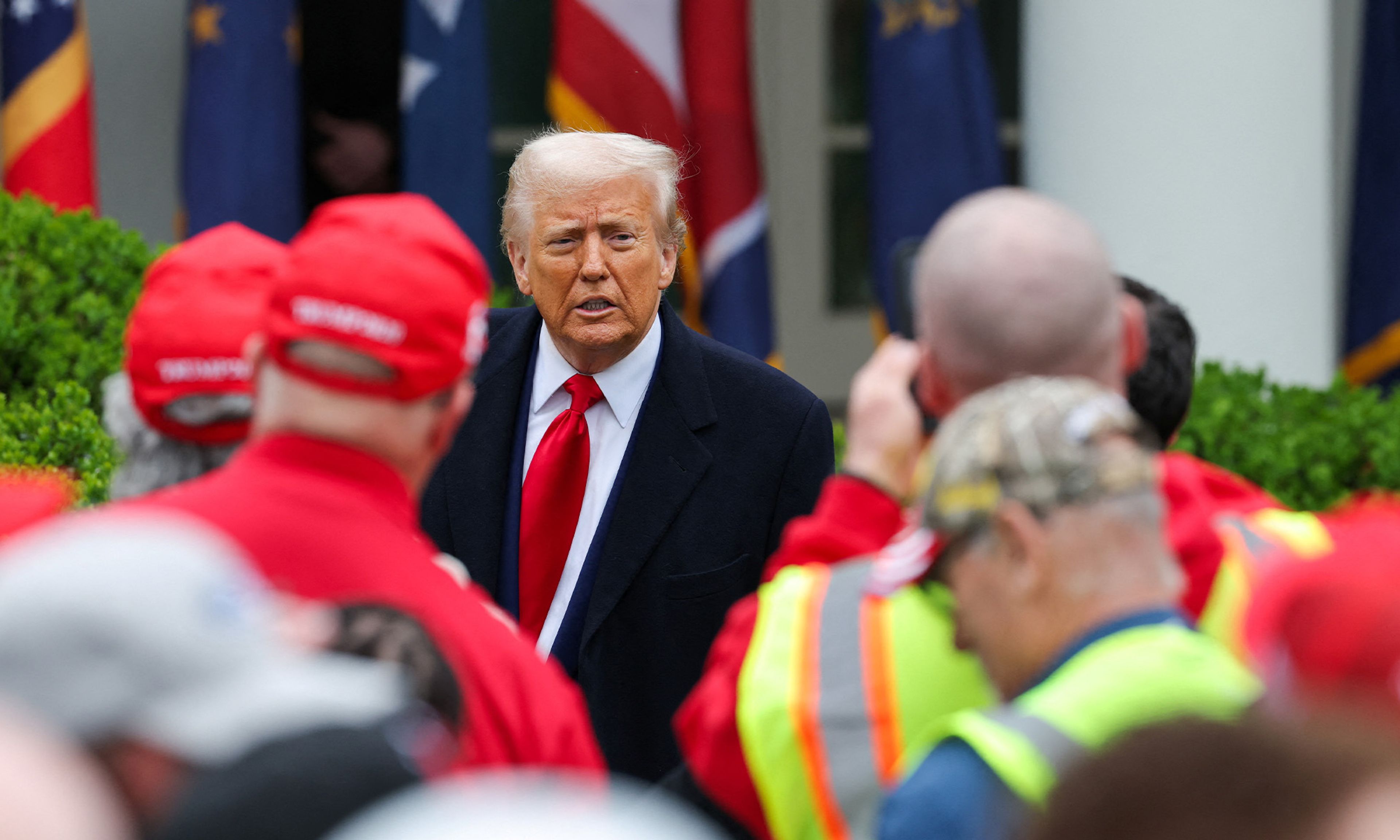
President Donald Trump stands on the day of his remarks on tariffs in the Rose Garden at the White House in Washington, D.C., April 2, 2025.
Dear Weekend Jolter,
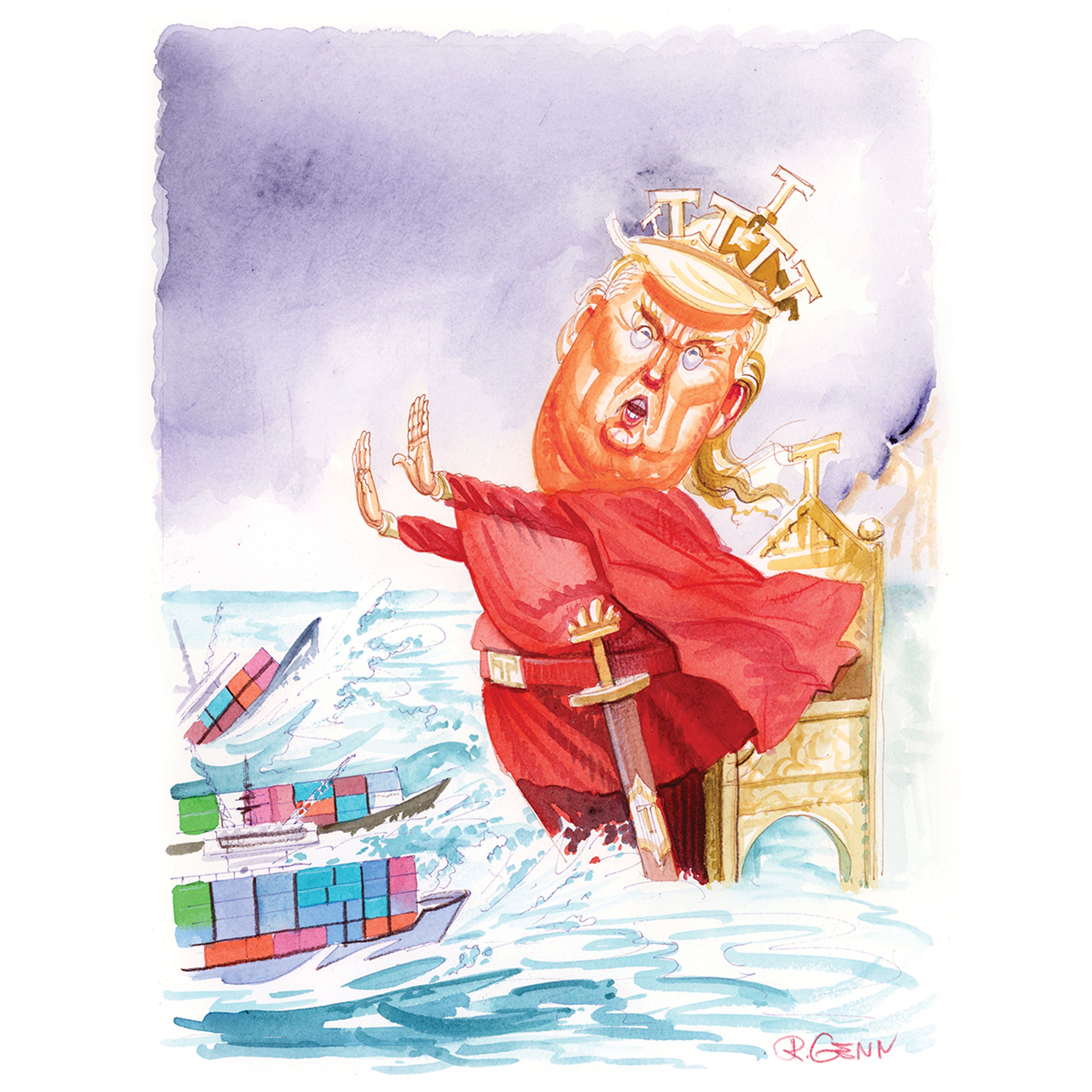
President Trump’s pause on tariffs and all that has transpired since have brought little clarity -- if anything, more confusion -- to the question of what the threats and pullbacks are meant to achieve.
Is it a remaking of global trade that sees America keep the tariffs in place more or less permanently, even at reduced levels from those initially set? Is it all “art of the deal” to compel nations to chop down tariffs everywhere and bring about free trade? Are these even the right questions to be asking -- is there little more to this than the fact that, as Jeff Blehar has written, Trump loves tariffs and hates trade deficits, and the result is whatever the result is, #YOLO?
As Ted Cruz told NR’s Audrey Fahlberg, if it’s a world without tariffs to speak of, “that will be one of the most extraordinary economic victories any president has ever produced.” But if it’s sustained, high tariffs for all trading partners, the Texan said, “the result, I believe, would be disastrous.”
Reducing the U.S. trade deficit is a general, stated purpose of the tariffs. Supporters also want to raise revenue, bring back manufacturing, and apply pressure to other nations to change their ways. However, as NR’s editorial explains, last weekend’s reported exemptions for smartphones, computers, and other electronics from reciprocal tariffs would not appear to align with those goals. Trump added to the uncertainty by then denying there were any exceptions; Commerce Secretary Howard Lutnick described the reprieve as only temporary. In other words, per our editorial: “More tariffs are coming, including on electronics, and businesses still can’t breathe a sigh of relief.”
Neither can they predict with any confidence how the self-imposed crisis will resolve (if it does), and which goods from which countries tariffs will affect, at which rates, along the way: Higher tariffs might or might not snap back after 90 days; a 10 percent baseline tariff remains in effect; and there are separate tariffs on Mexico and Canada, forthcoming sector-specific tariffs, and ever-escalating, stratospheric tariffs on China.
The trade-war endgame is a riddle, wrapped in a Truth Social post, inside a formula with Greek letters.
Henry Olsen and Jim Geraghty both conclude, reasonably, that tariffs will stick around for a while, whatever their goal. One senior economist at Capital Economics speculated that the long-term play may be to “repeatedly extend the ‘pause’ meaning that this will end up looking a lot like the 10% universal tariff that he campaigned on,” in exchange for minor concessions from other countries. The Washington Post reports, based on interviews with people involved in or briefed on trade talks, that sought-after concessions include “more natural gas purchases from American firms,” “fewer tariffs on U.S. exports,” and “lower taxes on Silicon Valley tech giants.”
If this were all to restore America’s place in the global economic pecking order, that would be one thing. But, as Rich Lowry writes -- reinforcing once more the question of what the shock is meant to achieve -- “we’ve been outpacing the rest of the advanced world since the early 1990s.”
The normal impulse is to want to change the rules in the middle of the game when you are losing, not when you are winning. . . . Here, Trump is using a defibrillator on a patient who not only passed a stress test with flying colors but is beating everyone else in the 100-yard dash.
Unless and until Congress reclaims the authority to set these policies, Trump alone wields the paddles.
NAME. RANK. LINK.
EDITORIALS
This can, and should, be resolved in the U.S.: Abrego Garcia Should Be Returned from El Salvador
On the escalating clash between the Trump administration and higher ed: Harvard Discovers What Federal Money Costs
ARTICLES
Jeffrey Blehar: Trump Tests the True Limits of Presidential Power
Joseph Palange: Free Traders Are Talking Past the Working Class
Ryan Mills: North America’s Auto Supply Chain Took Decades to Build. Trump’s Tariffs Could Crush It
James Lynch: U.K. Supreme Court Rules Males Don’t Qualify as Women Under Anti-Discrimination Law, in Landmark Ruling
Caroline Downey: How the Trans Debate Fractured Maine’s Cooperative Political Culture
Andrew McCarthy: What the Abrego Garcia Dispute Is Really About
Abigail Anthony: Dozens of Universities Rebranded DEI Offices After Trump Administration Crackdown
Brittany Bernstein: Democrats Decide the Supreme Court Is Once Again Worth Defending
Noah Rothman: CNN Special’s Delusions a Recipe for More Political Violence
Noah Rothman: The Firebombing of Josh Shapiro’s Home Was a Pro-Palestinian Terror Attack
Jack Butler: The Hollywood Upside of Trump’s Trade War
CAPITAL MATTERS
Sally Pipes writes about mathematical reality: To Save Medicaid, We Have to Cut It
LIGHTS. CAMERA. REVIEW.
What, the Frick? Yes, and Brian Allen hails a magnificent restoration: The Fabulous Frick Redo, a Fundraising and Architectural Success
Armond White, on a family flick that “recaptures the innocence that Steven Spielberg has lost”: A Minecraft Movie Fights Cultural Inertia with Joy
FROM THE NEW, JUNE 2025 ISSUE OF NR
Douglas Murray: Israel Understands the Enemy It Faces — Do the Rest of Us?
Shay Khatiri: Khamenei’s Last Hope
Christine Rosen: How Low Can It Go?
Jack Butler: RFK Jr.’s MAHA Brouhaha
Andrew Stuttaford: The Trump Slump
Ryan Mills: It’s Hurricane Season in Florida Republican Politics
Jeffrey Blehar: Chicago’s Longest Weekend: The George Floyd Riots Five Years Later
Vahaken Mouradian: American Becoming: The Making of a New U.S. Citizen
Mary Katharine Ham: Lionheart
TRULY TARIFFIC EXCERPTS
The new issue of NR is out. Flip, or click, through it at your leisure. Sharing the cover with Shay Khatiri (essay above) is Douglas Murray, on the Iranian menace:
Today the government most responsible for spreading the accusation that Israel is expansionist and colonialist is the revolutionary Islamic government in Iran, which has spent recent years assiduously expanding its colonies. What has Gaza become but a colony of Iran? What has Iraq become since Iran moved into the vacuum left by America after the overthrow of Saddam Hussein? Or Yemen? Or Syria, into which Iran had poured Hezbollah and other forces? Iran and its proxies and mouthpieces in the West have spent years accusing Israel of being a colonial, expansionist state while all the time expanding and colonizing everywhere they can reach in the region. Why did the mullahs order Hezbollah to engage in the Syrian civil war except to prop up Syria as a forward base of Iran? And what of Lebanon, which even in 2006 still had a government able to distance itself from the actions of Iran’s army, Hezbollah. By the time Hamas started its October 2023 war against Israel and Hezbollah joined in, Lebanon had become practically a colony of Iran — with Hezbollah ruling the country by terror and setting up its weaponry among Lebanese civilians. For years Hezbollah had set up checkpoints at Beirut Airport for passport control and had acted as the government of that country, whether the people wanted that or not. And there is much evidence that they do not.
Everywhere the same rule holds. Groups like Hamas that delight in their bloodlust accuse the Israelis of being insatiable killers. Palestinian groups and their supporters who encourage their youth to view death through “martyrdom” as the highest form of valor claim that the Jews are bloodthirsty child-killers. People who use rape as a weapon of war accuse the Israelis of insatiably raping prisoners in Israeli jails. . . .
While decrying Western imperialism, the Iran of the ayatollahs became one of the biggest imperial powers of the age. At every military parade in Tehran, and at Friday prayers across the country, the regime called for “Death to America,” calling America “the Great Satan” and Israel “the Little Satan.” While accusing Israel of being a colonial outpost of America, Tehran was busy setting up colonial outposts everywhere. At a “World Without Zionism” conference held in Tehran in October 2005, Iranian President Mahmoud Ahmadinejad reiterated a famous phrase of the late Ayatollah Khomeini. The “Jerusalem-occupying regime,” he said, “must be erased from the page of time.” For years Western academics and politicians debated whether Iranian leaders meant what they said.
In May 2024, the supreme leader of the revolutionary Islamic government, Ayatollah Ali Khamenei, wrote a letter to the students of America. In his opening, the leader of the Islamic Revolution thanked and praised the students protesting on American campuses: “You are now part of the Resistance Front, and you have begun a dignified struggle under the ruthless police pressure of your government that evidently defends the oppressive and brutal Zionist regime.”
There’s more than one irony in this, but in the years since the Islamic Revolution in 1979, Khamenei and his predecessor, Ayatollah Khomeini, have killed, tortured, and imprisoned thousands of Iranian students — especially when they have protested against their own government. In 2009 alone, during the thwarted “Green Revolution,” many students came out onto the streets of Iran. The government’s Basij security forces shot them in public. The young Iranian philosophy student Neda Agha-Soltan was shot through the chest by a member of Khamenei’s police force; the shooting was caught on camera. After the crackdown, the Iranian authorities ordered the digging of mass graves for the bodies of those who were murdered and tortured. Students who were detained in the regime’s prisons in the aftermath of these protests attested to having been raped in prison with batons and bottles.
But the ayatollah wasn’t going to allow something like his own track record to get in the way of destabilizing America. In his letter to American students, Khamenei talked about “Zionist” and U.S. government involvement in “state terrorism and ongoing injustice.” He said, “I want to assure you that today, the situation is changing. Another fate awaits the sensitive region of West Asia. Many consciences have awakened on a global scale, and the truth is becoming clear. The Resistance Front has also grown stronger and will continue to strengthen while history is also turning a new page.” He concluded his salutations with citations from the Koran and said, “I empathize with you, young people, and I respect your steadfastness.”
The fact that 2024 saw a record surge in executions inside Iran was left out of Khamenei’s letter to American students, as was the fact that his regime publicly executes people convicted of homosexuality by hanging them from cranes. Khamenei was clearly pleased with the ignorance of America’s students and his own ability to foment dissent in the land of “the Great Satan.”
Do you subscribe to Jeff Blehar’s Carnival of Fools newsletter? If not, may I humbly suggest you do so. In this week’s edition, he gets to the core of what the Trump administration’s immigration and other moves signify:
For those unaware of the details of the Kilmar Abrego Garcia controversy, I commend to you National Review’s excellent, concise editorial explaining it, and I advise you to read it before proceeding. Briefly, a Salvadoran illegal immigrant here under an asylum claim was erroneously and hastily deported without due process of law, and the Trump administration is refusing to return him to the United States for his proper day in court.
For those who already know the specifics of the controversy, allow me to state my understanding of its true stakes: This is the latest and most perfectly emblematic example of the new Trump administration’s willingness to test the law well past its limits and do so by demonstrating gleefully naked contempt for it. It is all too easy to see why it is being either cheered on or winked at by Trump’s supporters and regarded with indifference by the masses. But it should alarm you deeply.
In a unanimous ruling, the Supreme Court ordered the Trump administration to “facilitate” the return of Abrego Garcia to America from El Salvador so that his claims can be adjudicated. (He currently sits there under an agreement negotiated by the Trump administration with Salvadoran President Nayib Bukele for the use of his notoriously brutal mega-prisons to house potential deportees.) This weekend the Trump administration refused, claiming, on stunningly disingenuous logic, that because Abrego Garcia had been dumped quickly into El Salvador he was now beyond American jurisdiction. (“He is detained pursuant to the sovereign, domestic authority of El Salvador.”)
Why not just ask El Salvador to return him? Conveniently, President Bukele — who just happened to be in America on an official state visit — sat in the Oval Office yesterday morning and was able to answer that question: There’s just nothing I can do, alas. “How can I smuggle a terrorist into the United States? I don’t have the power to return him to the United States.” (Bukele proceeded to smugly chuckle with Trump about how it would be nice to be able to send Americans, too, to his mega-prisons.)
What matters most about this cynical shell game is the transparent contempt for the law on display. Bukele is not his own man, after all; the purpose of his appearance yesterday was to read lines I can only speculate were at least reviewed by Stephen Miller, who sat in on the press conference to pretend that the Supreme Court had ruled 9–0 in favor of Trump rather than against him. Bukele, Trump, and Miller all wore Cheshire cat grins as they calmly told the world that the matter was out of their hands, even though all know the opposite to be true. . . .
We have seen this attitude on display already in various other facets of the Trump administration: in the casual disregard for protocol embodied by Elon Musk’s DOGE, yes, but also with other bungled deportations and most flagrantly with Trump’s openly lawless decision, ten days ago, to delay closing TikTok in direct contravention of the black letter of a bill voted for by Congress and signed into law by his predecessor. The Abrego Garcia case is only the freshest example of what is now a clearly demonstrated pattern of willingness — indeed, desire — on the part of the administration to flaunt the procedural, constitutional, and prudential limits of the law in every field.
How did Maine suddenly emerge as a #resistance state? Caroline Downey explains:
During her fifth and final term in the Maine House of Representatives in 2022, Beth O’Connor felt the state’s political winds change in a perilous direction.
O’Connor had proposed what she believed to be a commonsense bill to ban men in women’s sports.
But instead of seeing the usual bipartisan spirit that Republicans in the state legislature had come to expect from their Democratic neighbors, the proposal was met with a flood of ugly messages from special interest groups claiming she was inventing a fake crisis — an argument she knew to be false given that she had personally heard many stories of trans-identifying men displacing female athletes, both in Maine and elsewhere. . . .
The transgender debate would reach a fever pitch in February, two years after O’Connor introduced her bill, when Maine’s Democratic governor Janet Mills informed President Trump during a televised inauguration event that her state would not comply with his executive order prohibiting men in women’s sports. Trump made clear that she would regret it.
In early March, the Trump administration put the Maine Department of Education on notice that it is violating federal civil rights law by continuing to allow males to compete in women’s sports. The Department of Health and Human Service’s Office for Civil Rights informed Mills and the state’s attorney general that Maine is in violation of Title IX, which prohibits sex-based discrimination in educational programs or activities, and that federal funding is in jeopardy. The letter notes the more than $700,000 in federal funding the state’s education department receives.
Shortly before that kerfuffle, GOP Maine State Representative Laurel Libby spoke out about the issue, at great political cost. She wrote a Facebook post noting the disparity between a male high school pole vaulter’s performance in the boys’ versus the girls’ division. He placed fifth in a boys’ competition last year and then won the girls’ state championship this year, leading Greely High School to win the state track-and-field championship by one point. House Democrats subsequently censured Libby for her post.
It’s perhaps unsurprising that the transgender debate led to a true clash of values in Maine, which has historically been a political maverick among the progressive northeast states, thanks to its blue-collar backbone in lobstering and lumber.
Like Nebraska, Maine in general elections allocates two electoral votes to the state popular vote winner and one electoral vote to the popular vote winner in each congressional district. Unlike the winner-take-all systems of Massachusetts, Vermont, and the rest of New England, the Pine Tree State’s gives a voice to rural counties beyond the affluent coastal areas. In 2016, Donald Trump won Maine’s second district, covering most of the state outside Portland and Augusta, leading to a split electoral vote in the state.
But like in many states, the pandemic shifted Maine’s political makeup.
“What happened, and it’s almost irreversible, during Covid we had an abundance of people coming in from Massachusetts, Connecticut, New York, Pennsylvania,” Republican former governor of Maine Paul LePage told National Review. “I mean a lot of them, a quarter of a million people. About 50,000 people went to the north, but a significant amount of people went to the south, York and Cumberland County and Sagadahoc. That made it more liberal. We were outnumbered.”
Honorable Mention
Mario Vargas Llosa died on Sunday. A staggering talent, the Nobel Prize–winning writer warned over and over in his books about the terrifying places that fanaticism leads to, for those who wield power as well as those who yearn for it. The Peruvian was a stylist in narrative structure also. In the way daring directors weave together past and present scenes without signaling to the audience, Vargas Llosa playfully toggled between now and then as if to whisper to his readers, Keep up.
I need to read more of him; there’s so much to read. But I’ll recommend here the book I often do: The Feast of the Goat. R.I.P. (More from Jay Nordlinger, something of an authority on MVL.)
CODA
A few weeks back, I snuck out to see the legendary Al Di Meola (mentioned recently in this very newsletter) at a local club. Even recovering from an on-stage heart attack in 2023, the 70-year-old guitarist performed for nearly three hours (!) and is still in top form. He and his traveling band were playing “the early stuff,” including songs by Return to Forever, that rotating ensemble of fusionists (the other kind) with the late Chick Corea at their core.
So, here’s some of that good stuff.
Thanks for reading/listening, and Happy Easter (and belated Passover) to all.

About the Author
Judson Berger is the managing editor of National Review Online.
Featured Tags
Advertisement
Advertisement
Comments