Share this story
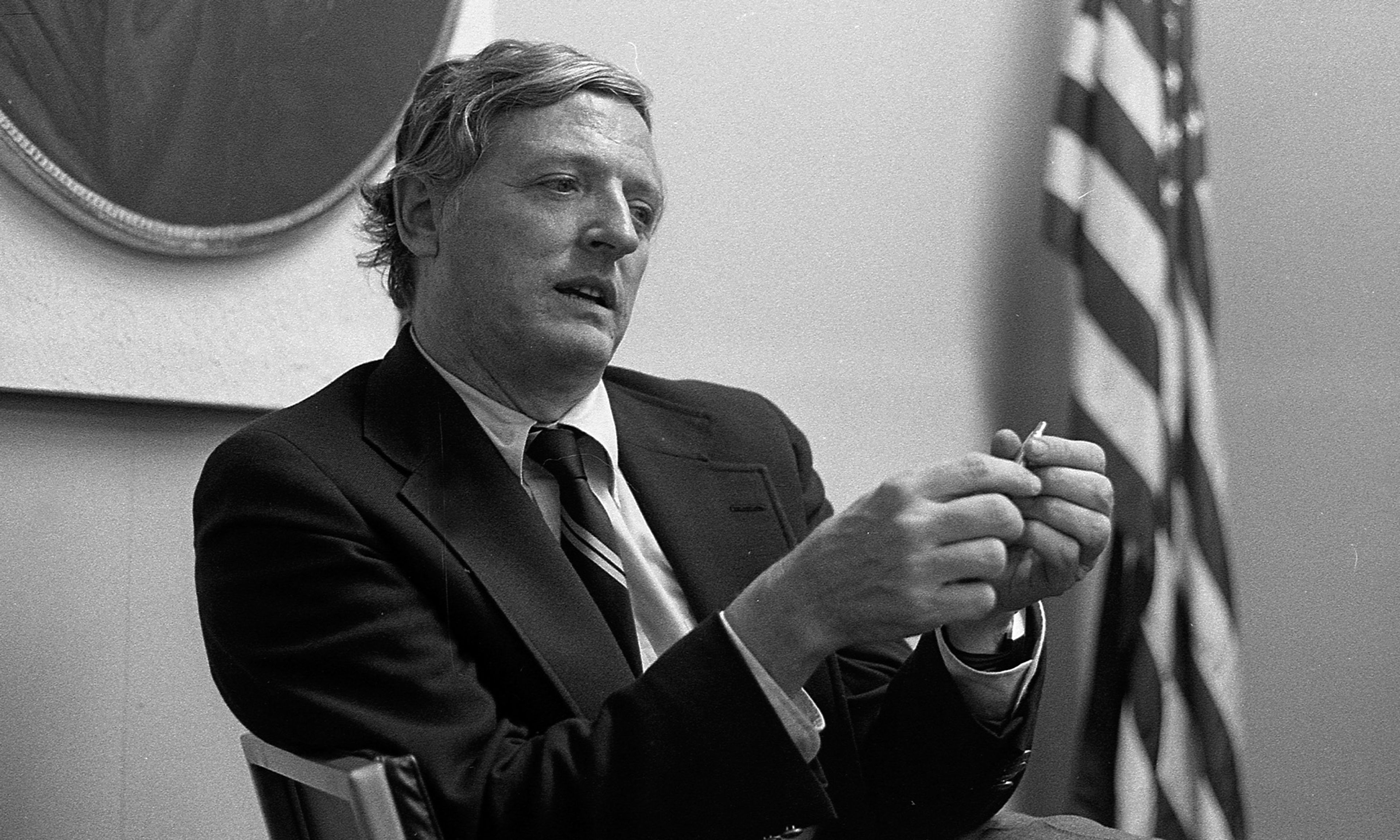
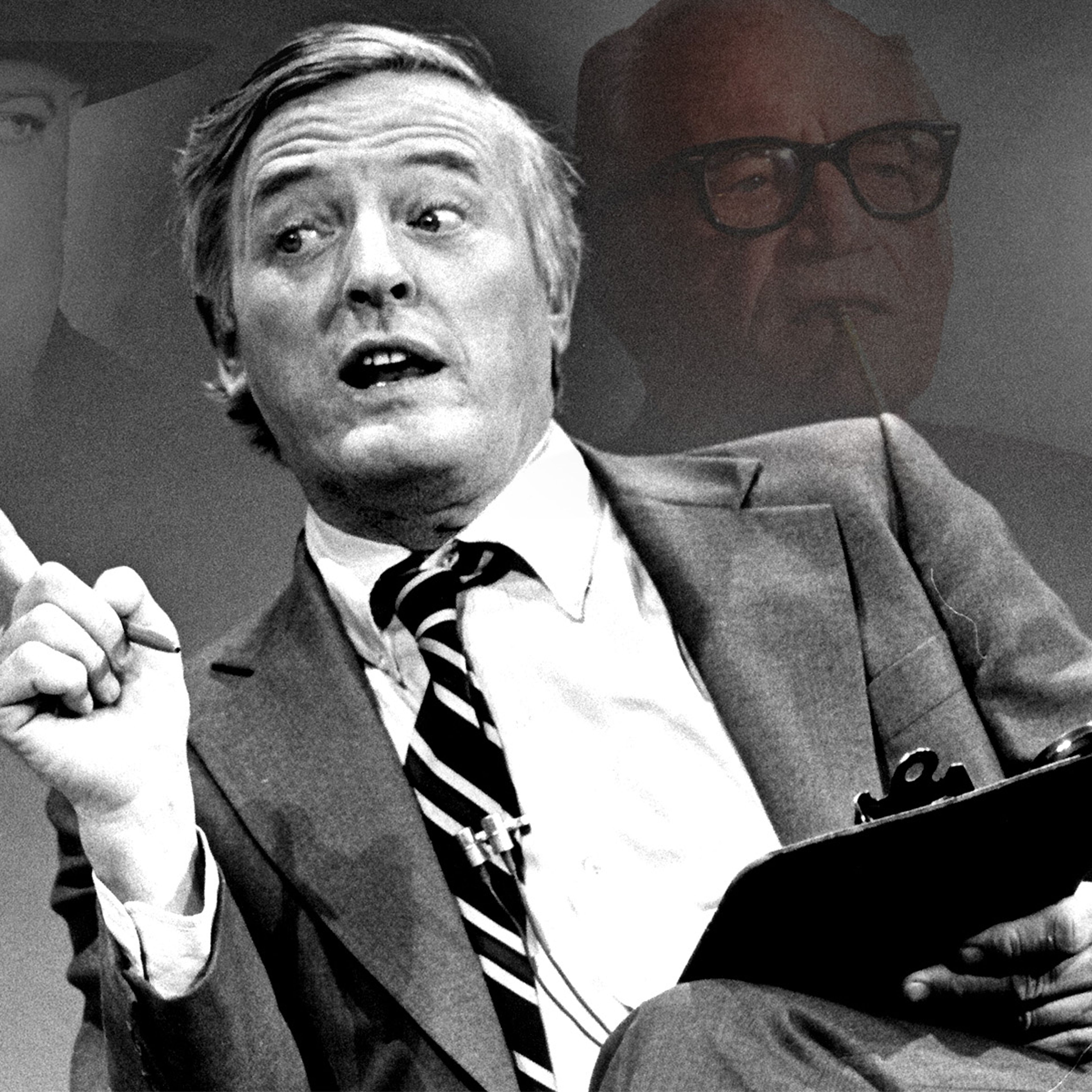
William F. Buckley Jr. during a press conference in Buenos Aires, Argentina, 1970s
My old friend Ed Feulner, the man who built the Heritage Foundation from the ground up, used to say that in politics, “there are no permanent victories and no permanent defeats.” Quite so. But that doesn’t mean that we should let our victories, always too few in number, go unremarked.
Late-reporting precincts have now checked in, and it’s clear that, while there may be no permanent victories here, we won a big game last year.
Almost a decade ago, the management of National Review Institute began preparations to defend the legacy of Wm. F. Buckley Jr. (as his personal stationery chose eccentrically to identify him). The centennial of his birth, in 2025, seemed likely to provide opportunities both to recognize his outsized achievements and to solidify his reputation for rising generations. For the battle-scarred veterans among us, it seemed likely to provide opportunities, as well, for the progressive left to mount recycled attacks on his career and his character.
This Legacy Project, as it came to be known, attracted a formidable crew -- journalists, academics, generous donors, savvy political types -- but over time, of course, it suffered attrition. NR publisher Jack Fowler left for greener pastures elsewhere; former NR editor John O’Sullivan decamped to Budapest; movement historian George Nash cut back his travel schedule. And so on. But a few stalwarts, sufficient to the task, persevered, conspicuous among them Kathryn Jean Lopez, a Buckley protégé and the beating heart of America’s pro-life movement; Lee Edwards, the chronicler of all things conservative; and Nick Mosvick, our young project director who excelled at deep-dive research. Kudos all around.
As we began to roll out the campaign early last year, credible reports arrived that Sam Tanenhaus, Buckley’s “authorized biographer,” would soon be publishing his book -- by then, already more than 27 years in gestation. That was electrifying news. The Tanenhaus book could be “the big book,” the one that might define Buckley’s legacy for all time. It would in any event be the story of Bill Buckley as told by the man Bill Buckley chose to tell it.
Buckley: The Life and the Revolution That Changed America was published on June 3. For readers, it was long and dense, ending abruptly, and unsatisfyingly, with Reagan winning the White House. One friend described the experience as akin to reading a biography of George Lucas that ended just as he began work on Star Wars. For the publisher, sales were respectable but not good enough, leaving on the corporate books an unearned author advance from the previous century. And for the ideologically inflamed, who had hoped that Tanenhaus, a man of the left, would take down a conservative icon, the book became a missile that refused to seek heat. From all sides, the Tanenhaus book was something of a disappointment.
But the book’s publication, and more specifically the Stakhanovite publicity tour conducted by its author, generated second-level effects. It became clear almost immediately that Tanenhaus had provided at least one service to the left. He had traced the outlines of possible attacks for those more trigger-happy than himself, including the tired atavisms that WFB had been a bigot or a hypocrite in one sense or another.
A more important second-level effect was the revival of interest in the book’s charismatic subject and, more generally, in the “revolution that changed America.” Media invitations poured in for those of us who had been associated with the man and his movement -- speeches, debates, talk shows, GOP events, campus events, podcasts. (Some of those creatures from the podcast swamps proved to be a rough lot. To many of them, we second-generation conservatives “don’t know what time it is.” We are “wax museum conservatives” and represent the “dead hand of zombie Reaganism.” These young hard-rightists seem less interested in building on WFB’s historic success than in tearing it down. All things considered, I’d rather debate a lefty.) I could not accept every invitation, but during the calendar year I made 39 appearances, culminating in a warm and wine-soaked dinner in Florida this past November. That special night turned into a rollicking birthday party for our man Buckley. George Will spoke, brilliantly. John O’Sullivan spoke, movingly. Rich Lowry and Chuck DeFeo hosted, graciously. (My own remarks can be found here.) It was the best of WFB’s 100 birthday parties.
I wish to salute here a few people who were unable to attend that night. These are men who were prominent in the second generation of the conservative movement, men whose bylines graced the pages of this journal from time to time, men who stood in for me last year when I couldn’t bear to let an opportunity to support WFB go unconsummated, men who gave the last full measure of devotion to our common cause. My thanks to Stanley Stillman, Edwin J. Feulner, John R. Coyne Jr., William Murchison, and Lee Edwards. R.I.P., my brothers.
The legacy stands. Long live the legacy.
About the Author
Neal B. Freeman, businessman and journalist, was a director of National Review Inc. for 38 years.
Featured Tags
Advertisement
Advertisement
Comments