The Fight for the Latin Mass Is a Fight for the Faith
Written by Michael Brendan Dougherty
Even progressive Catholics understand this.
Share this story
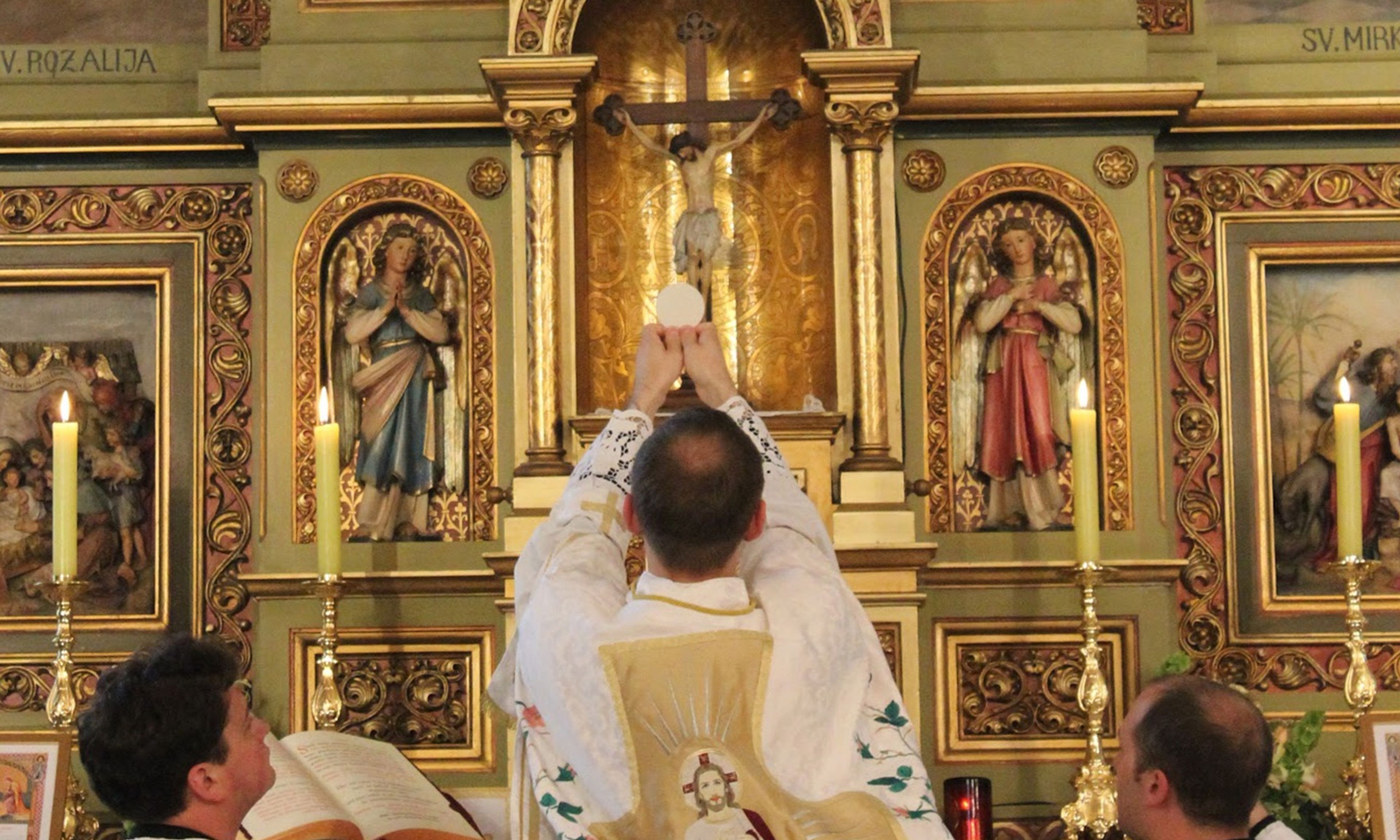
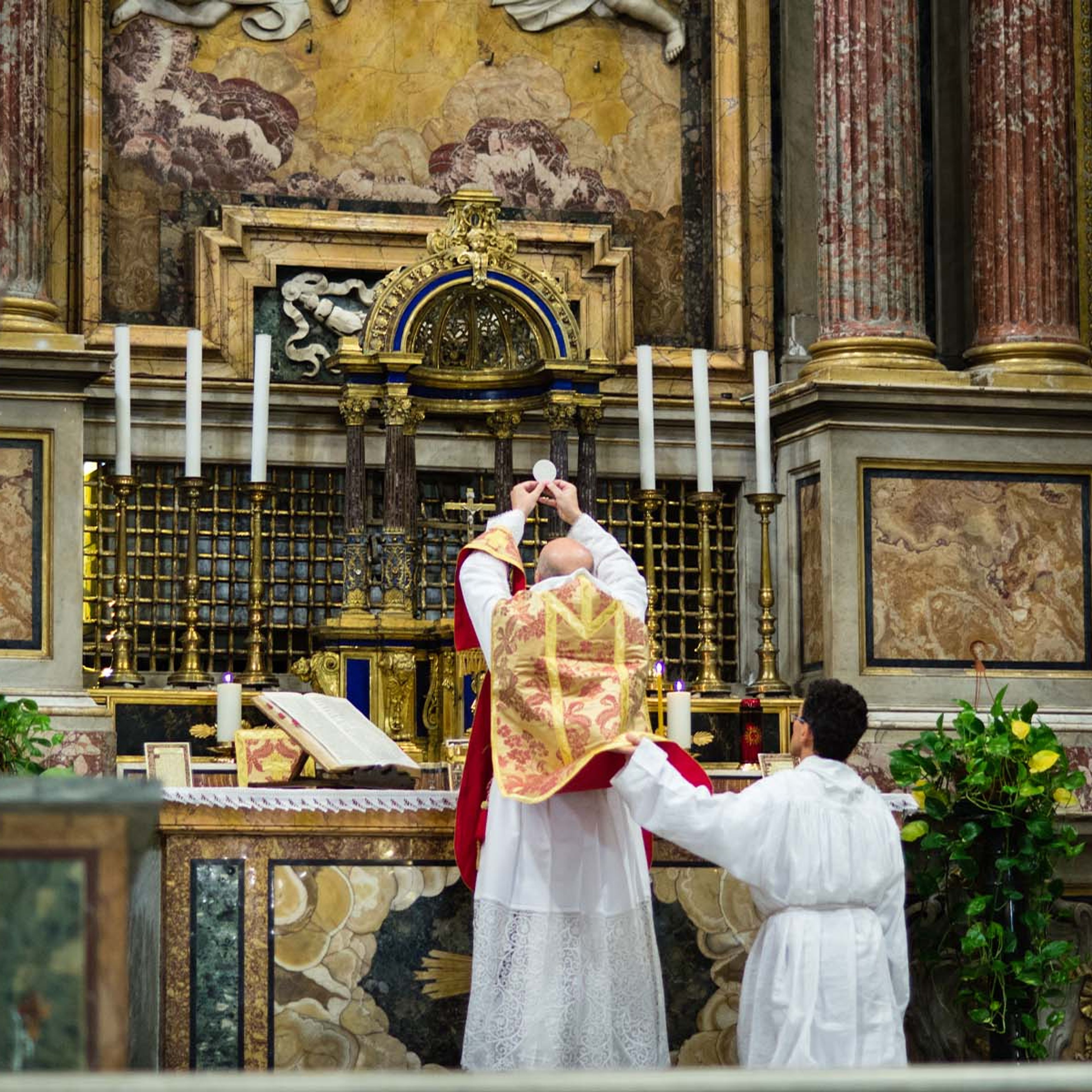
The Traditional Latin Mass being celebrated.
The new Pope Leo XIV has kept relatively quiet on all the cultural and theological fissures that seemed to be roiling the Catholic Church under Pope Benedict XVI and Pope Francis. An Augustinian priest operating in Peru, he seemed removed from the curiously intense debate about the “Traditional Latin Mass” (TLM) -- the traditional form of the Roman Rite that was practiced up until the post-Vatican II reforms of the 1970s. That debate was curiously intense because it seemed to involve a relatively small number of Catholics worldwide. However, it had been obvious since Benedict XVI’s reign that this small group of Catholics was young and energetic, and amounted to an avant-garde for Catholicism in France and the United States.
Leo XIV had said nothing substantial on this question before his pontificate, but has admitted that in private audiences and in private letters he is facing many requests to relax the restrictions put on the traditional rite by his predecessor. (Pope Francis reversed the generous permissions given by Benedict in 2021.) So far, Leo has indicated only that he wanted to meet with groups advocating for the Old Rite, and has cautioned against polarization.
And so now the lobbying has begun, and it’s quite apparent why this issue has roiled two papacies and may yet become a defining one for a third.
For an example of the progressive push against any relaxation of restrictions on the TLM, look no further than longtime Vatican correspondent Robert Mickens, who has said that reviving the old Latin Mass would be a colossal mistake.
Why? Mickens has helpfully pointed out that the crux of the debate isn’t actually about the use of Latin, or the exterior “smells and bells.” Indeed, the modern Mass of Pope Paul VI could be, though very rarely is, celebrated with much stricter attention to the rubrics, and with greater reverence and solemnity. And, although he doesn’t mention it, it’s also true that the old Latin Mass can be celebrated in a way that is quite plain and simple.
It's actually something much more profound and foundational. It's called ecclesiology, which regards what the Church believes about its very nature, identity and mission within its own house, towards other ecclesial bodies and religions, and even in its engagement with the world at large.
Liturgy expresses what the Church believes about God, itself, and the world around it.
The fact is that the Second Vatican Council deeply developed and reformed the Catholic Church's ecclesiology.
On this point, progressives and ultra-traditionalists agree. Benedict XVI had formulated the idea that the old and the new masses could co-exist because they express the same faith. Mickens contends that they do not. In that, Mickens is an ally of the late traditionalist Archbishop Marcel Lefebvre, who founded a society of priests dedicated to the old Mass, under the theory that the new one was an attempt to impose a new faith, something different than that “once delivered to the saints.”
Mickens defends the new ecclesiology as one that opens the church up to “dialogue” with non-believers. In most cases this means little more than talking panels and bureaucratic commissions for elites. But progressives take these trifles as evidence that the church now “reaches out to unbelievers” in a way it didn’t before the Council. In fact, the effect of the council was to destroy the zeal of missionary orders, who foreswore evangelizing under the new slur term “proselytism” in favor of this “dialogue,” which leads to no conversions, except those away from a Catholic faith that has lost confidence in the Gospel.
Mickens goes on to paint the TLM as a haven for “white supremacy” -- a lazy progressive smear that he is too educated to believe, but not too treacherous to use. He knows full well that Cardinal Robert Sarah, from Guinea, was perhaps the favorite candidate of traditionalists going into the conclave.
Still, Mickens has identified the issue at hand. If the liturgy can “develop” into something fundamentally new, can Catholic teaching similarly “develop” into saying the opposite of what it held before? If it can, Mickens and his progressive allies will happily await all their desired “developments” on same-sex marriage, on pre-marital sexual relations, perhaps even on heaven and hell themselves. It’s important for Pope Leo to understand that this debate isn’t just about our preferences for worship, it’s fundamentally about the substance of the Catholic faith.

About the Author
Michael Brendan Dougherty is a senior writer at National Review Online.
Featured Tags
Advertisement
Advertisement
Comments