Share this story
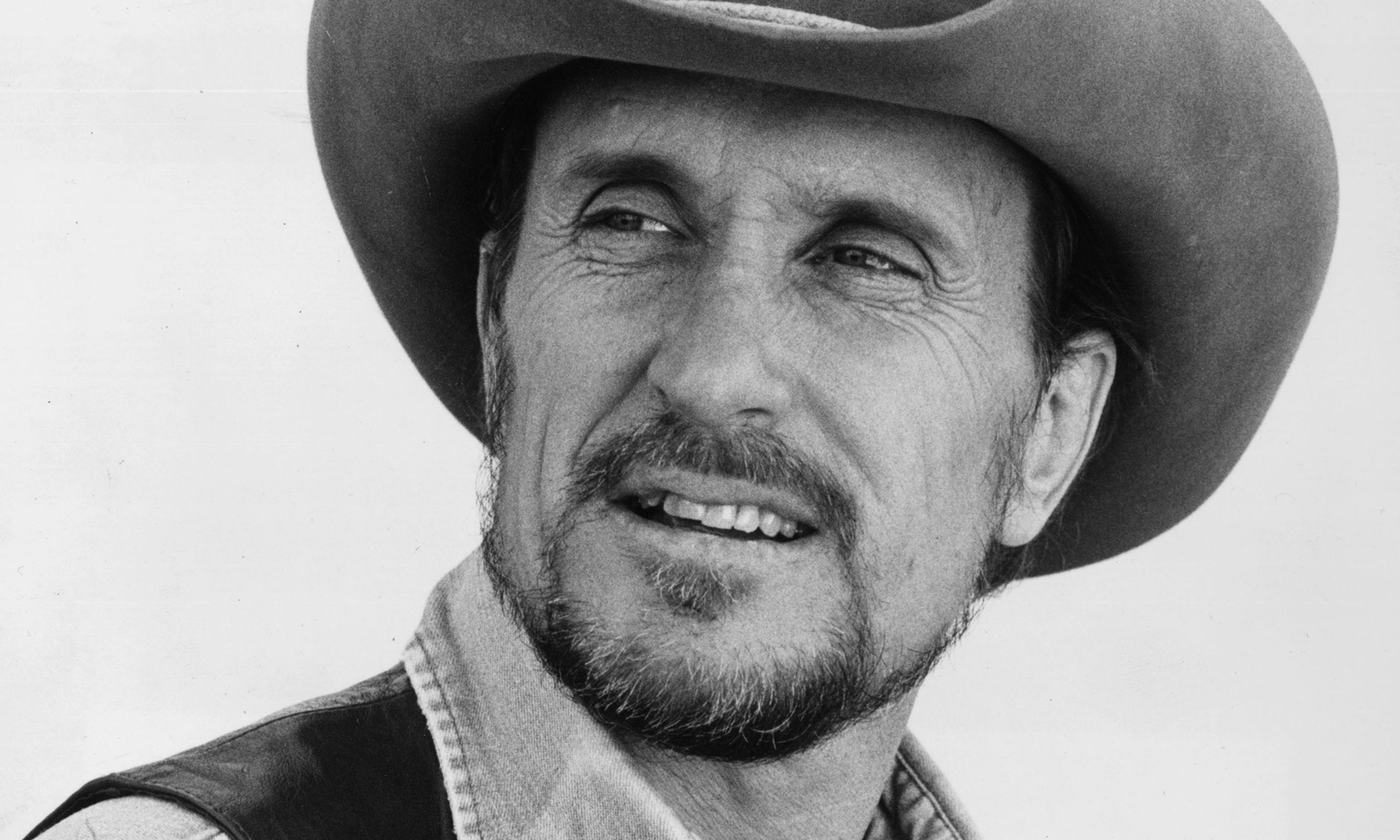
Robert Duvall in <i>Tender Mercies</i>
Robert Duvall didn't belong to any era of Hollywood. He preceded New Hollywood, thrived in it, and outlasted it. He was a Mafia lawyer, a surfing colonel, a ruthless network executive, a country drunk, a Pentecostal preacher, a Texas Ranger. In none of them could you find the seams. He never gave you a "Duvall performance." He delivered a character, and then he disappeared.
Duvall died Sunday at his home in rural Virginia, with his wife Luciana at his side. He was 95.
"To the world, he was an Academy Award-winning actor, a director, a storyteller," she wrote. "To me, he was simply everything."
Born in San Diego in 1931 to a Navy rear admiral and an amateur actress, Duvall grew up on military bases, served two years in the Army during Korea, then studied under Sanford Meisner at the Neighborhood Playhouse. His classmates included Dustin Hoffman, Gene Hackman, and James Caan. In those lean years he roomed with Hoffman and Hackman in New York and worked odd jobs to survive. "The feeling was that Bobby was the new Brando," Hoffman later told Vanity Fair. "I felt he was the one, and probably I wasn't."
His first film role had no dialogue. As Boo Radley in To Kill a Mockingbird, Duvall appeared in only a handful of scenes, but the moment his hollow features softened into kindness was enough to launch a career. Harper Lee sent him a telegram when he landed the part. It read: "Hey, Boo." It was, he said, his only contact with her.
Everything changed a decade later when Francis Ford Coppola cast him as Tom Hagen, the Corleone family's consigliere, a man of terrifying calmness amid operatic fury, in two Godfather films. Then as Lieutenant Colonel Kilgore in Apocalypse Now, onscreen for only minutes yet responsible for a line that embedded itself permanently in the culture. He was the bullying Marine pilot Bull Meechum in The Great Santini. Seven Oscar nominations across six decades -- a number matched by very few. His seventh and final nomination came at age 84, opposite Robert Downey Jr. in The Judge.
Those are the roles that will play in highlight reels this week. The performances that meant the most to him lived elsewhere. If you want to understand Robert Duvall, watch Tender Mercies, the 1983 film that won him his only Oscar. He played Mac Sledge, a washed-up country singer who finds God through a small Baptist church in rural Texas. He did his own singing. Near the end of the film, Sledge tells his wife: "I don't trust happiness. I never did, I never will." That was Duvall's gift. He could hold grace and grief in the same hand.
In The Apostle, which he spent 13 years getting made, writing, directing, and financing with $5 million of his own money, he played a Pentecostal preacher chasing redemption in the Louisiana bayous. He said the film grew out of visiting a small church in Hughes, Ark., where "with no warning something awakened within me that had always been there, dormant and untouched until that day."
And then Lonesome Dove, the role Luciana told him to fight for. He insisted on playing Gus McCrae over Woodrow Call. The result may be the finest performance in the history of the television miniseries. He put it simply: "I was fortunate to be in the two big film epics of the last part of the 20th century: Godfather and Lonesome Dove."
Critic Vincent Canby once called him "the American Olivier." Michael Keaton put it even plainer in a tribute: "He was greatness personified as an actor." Duvall would have waved it all off. "Being a star is an agent's dream, not an actor's," he once said. He loved tango, steaks, his Argentine bride, and holding court over a meal. He was a quiet believer in an industry full of loud ones. "There was nothing wrong with shouting at God," he said.
He may not have been a wartime consigliere, but he was a damn fine actor, and he didn't need you to tell him so. Perhaps the best way to remember him is to do as his family asked: Watch a great film, tell a good story around a table with friends, or take a drive through the countryside, the way Mac would have — windows down, with nowhere in particular to be.

About the Author
A veteran of political campaigns, Giancarlo Sopo is a cultural writer exploring the intersection of cinema, politics, and the conservative imagination. In addition to National Review, his commentary on culture, aesthetics, and public life has been featured in IndieWire, the New York Times, and CNN. Follow him on X (@giancarlosopo) and Letterboxd.
Featured Tags
Advertisement
Advertisement


Comments