Share this story
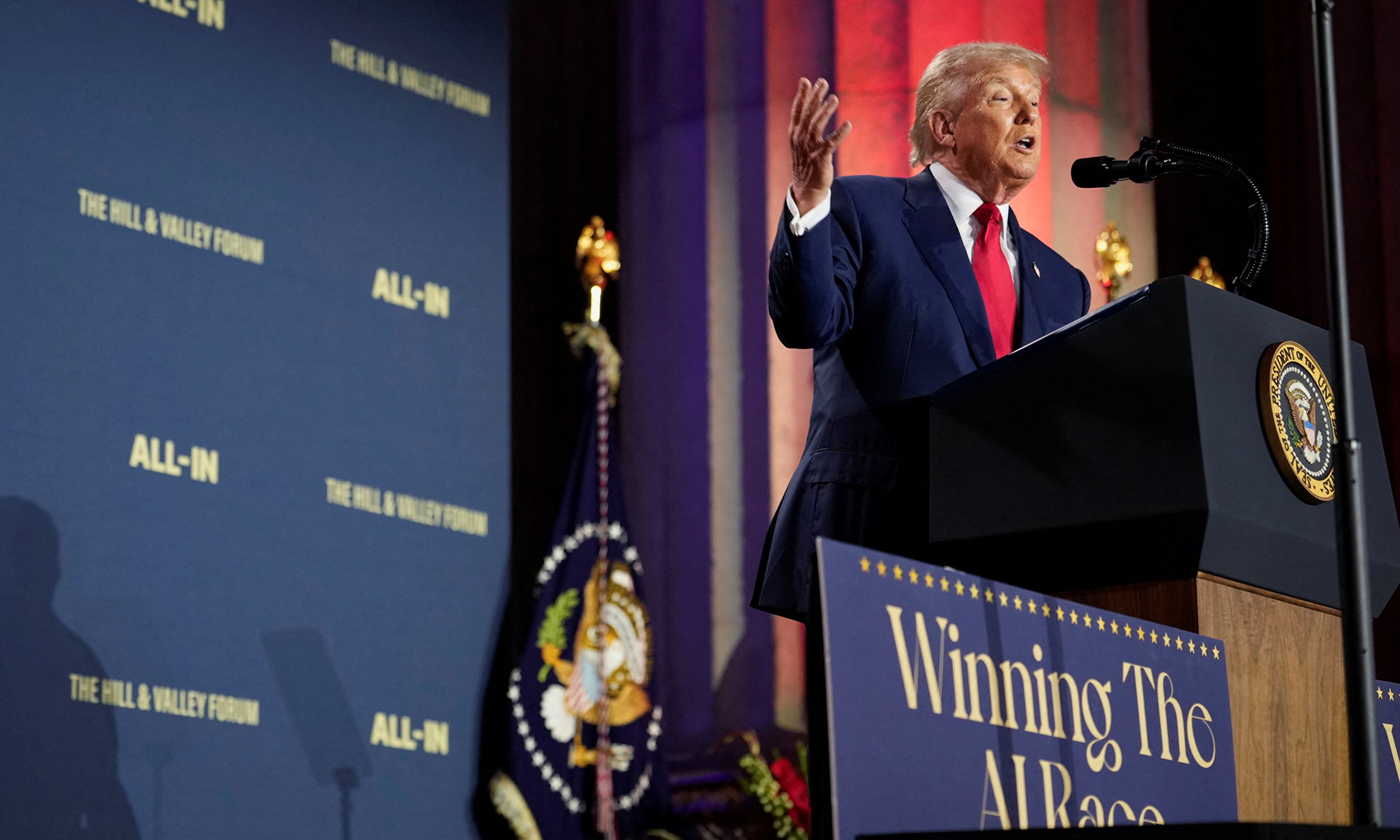
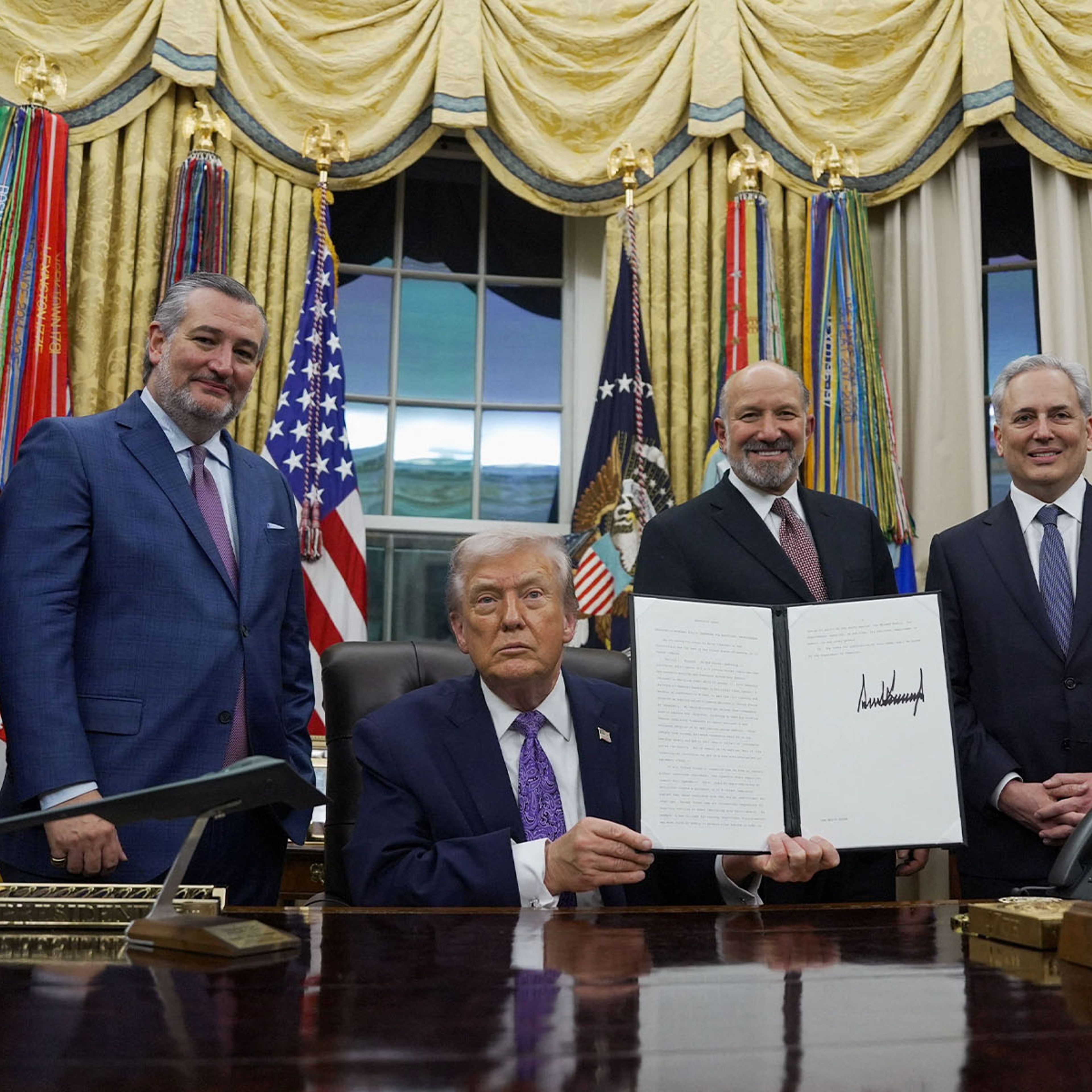
President Donald Trump delivers remarks on artificial intelligence at the "Winning the AI Race" summit in Washington D.C., July 23, 2025.
The Wall Street Journal reported over the weekend that in at least six GOP-led states, the Trump administration has lobbied against the enactment of state-level artificial intelligence regulation:
A White House office focused on coordinating with states has contacted lawmakers and governor offices in Florida and Utah in recent weeks to tell them that AI bills being proposed go against President Trump’s agenda, according to lawmakers and lobbyists. The campaign has also targeted measures in Nebraska, Missouri, Tennessee and Louisiana, which have attempted to pass bills imposing transparency requirements or safety guardrails for AI model developers.
The administration has argued to state leaders that a disparate batch of state rules would hurt the U.S. in the AI race, a White House official said. The official described the conversations as routine discussions that didn’t amount to pressure.
The White House is absolutely doing the right thing. AI is the strongest potential tailwind for advancing long-term prosperity on the horizon. The U.S. should be encouraging the development and diffusion of AI technology, and a patchwork of state-level laws and regulations could significantly slow AI's development and diffusion.
President Trump's December 2025 executive order stated the issue well:
. . . United States AI companies must be free to innovate without cumbersome regulation. But excessive State regulation thwarts this imperative. First, State-by-State regulation by definition creates a patchwork of 50 different regulatory regimes that makes compliance more challenging, particularly for start-ups. Second, State laws are increasingly responsible for requiring entities to embed ideological bias within models. For example, a new Colorado law banning “algorithmic discrimination” may even force AI models to produce false results in order to avoid a “differential treatment or impact” on protected groups. Third, State laws sometimes impermissibly regulate beyond State borders, impinging on interstate commerce.
My Administration must act with the Congress to ensure that there is a minimally burdensome national standard — not 50 discordant State ones. The resulting framework must forbid State laws that conflict with the policy set forth in this order. That framework should also ensure that children are protected, censorship is prevented, copyrights are respected, and communities are safeguarded. A carefully crafted national framework can ensure that the United States wins the AI race, as we must.
Until such a national standard exists, however, it is imperative that my Administration takes action to check the most onerous and excessive laws emerging from the States that threaten to stymie innovation.

About the Author
Michael R. Strain holds the Paul F. Oreffice Chair in Political Economy at the American Enterprise Institute.
Featured Tags
Advertisement
Advertisement

Comments